
10 New Mexico Stops Where The Landscape Looks Like It Belongs On Another Planet
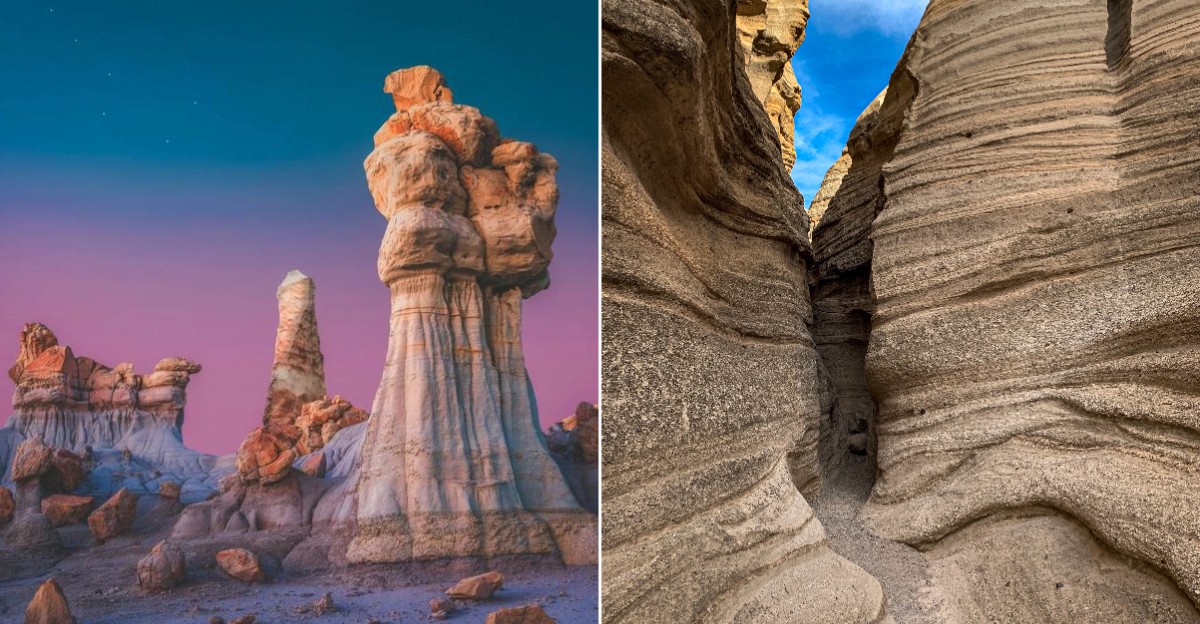
Apollo astronauts trained for the moon in a New Mexico volcanic crater. So yes, NASA basically scouted this state as a lunar stunt double.
And that’s only one weird corner. Some badlands have rock formations nicknamed the Alien Egg Hatchery.
Elsewhere, white gypsum dunes look like snow that forgot to melt.
The best part is that you don’t need a rocket for any of this. You need a full gas tank, way more water than seems reasonable, and a camera with a lot of storage.
A sense of humor about dirt roads helps too.
Lava fields, hoodoos, cone-shaped spires, and an ancient volcano you can drive into. New Mexico has enough otherworldly scenery to make Tatooine look a little less far-fetched.
Ready to see which spots deserve a place on your itinerary?
1. Bisti/De-Na-Zin Wilderness
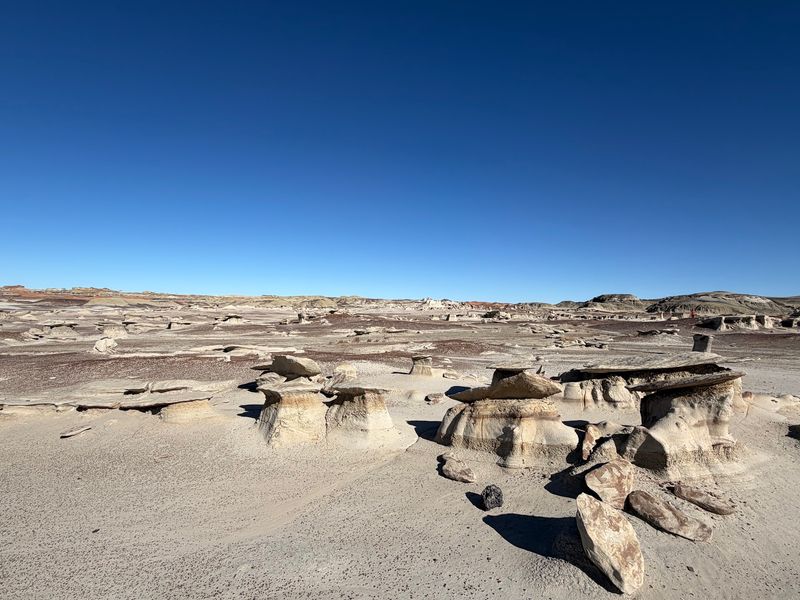
Somebody looked at these rocks and named a spot the Alien Egg Hatchery. Honestly, that name does most of the selling for you.
Out in northwestern New Mexico, this 45,000-acre wilderness shows off badlands carved by time. Around 70 million years ago, the area was a swampy delta plain near an ancient inland sea.
Today you get hoodoos, desert spires, and natural arches. Popular spots carry fun nicknames like City of Hoodoos, Manta Ray Wing, and King of Wings.
Here’s the catch. There are no marked trails, so you’ll need to find your own way.
Download maps before you go, since cell service ranges from limited to missing. Bring plenty of water too, because none is available on site.
The good news? The wilderness is open year-round, around the clock, with no fees.
You can hike, take photos, stargaze, or set up a primitive camp.
Access roads are unpaved. After rain or snow, a high-clearance vehicle is the smart choice.
The wilderness was established in 1984 and expanded in 2019. Petrified wood also turns up here, adding another strange texture to the scene.
Address: County Road 7297, Bloomfield, NM 87413
2. White Sands National Park
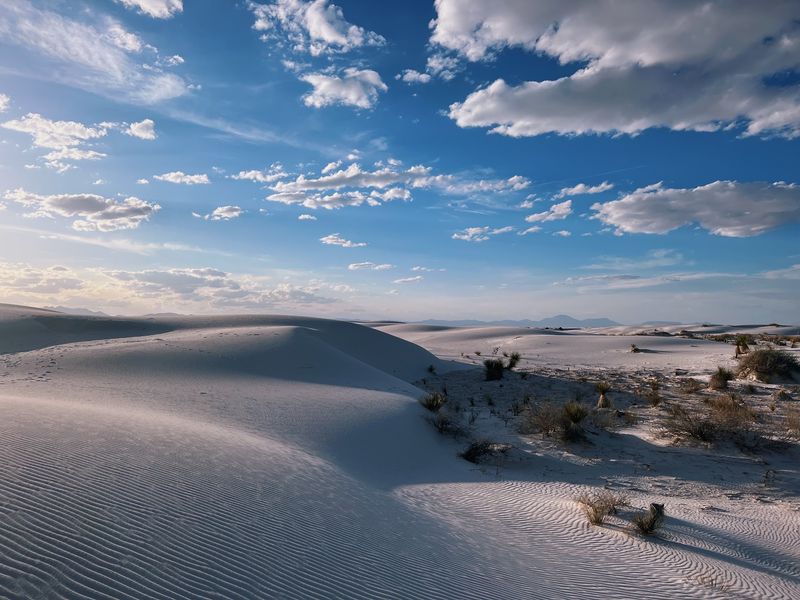
Snow in the desert? Not quite, but your brain might argue otherwise.
These glistening dunes are made of gypsum, forming the world’s largest gypsum dunefield. It stretches across 275 square miles of the Tularosa Basin.
The gypsum comes from a playa, a lake that appears and vanishes, on the western side of the dunefield. Wind carries the sand into dunes, and some of them creep up to 30 feet per year.
So the scenery literally moves. That’s a pretty wild flex for a pile of sand.
Dunes Drive is an eight-mile road into the heart of the dunes, or 16 miles round trip. Five established hiking trails let you explore on foot.
Want the classic move? Dune sledding is a year-round daytime activity here, and kids tend to treat it like a playground.
Dogs are welcome on a leash. Some areas, like the Interdune Boardwalk and backcountry camping, are currently closed.
The park sits next to White Sands Missile Range. Missile testing can trigger temporary closures, sometimes with little notice, so check conditions before driving out.
History buffs, take note. The site became a national monument in 1933 and a national park in 2019, and the visitor center dates to 1936.
Address: 19955 Highway 70 West, Alamogordo, NM 88310
3. City of Rocks State Park
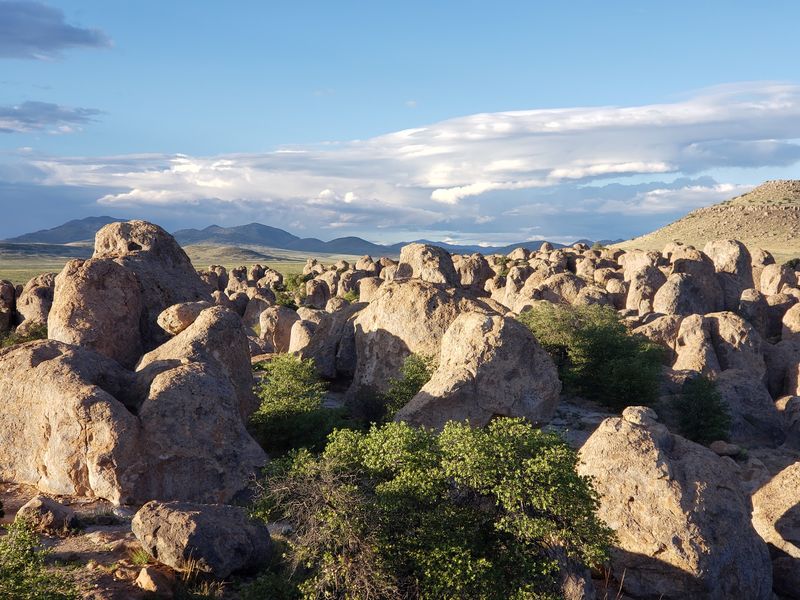
Rush hour here involves zero cars and a lot of very tall boulders. The rock columns rise as high as 40 feet and look like the streets and buildings of a tiny town.
Formations like these appear in only a few other places worldwide. They began about 34.9 million years ago as volcanic ash from the Emory Caldera.
Wind and water then spent millions of years sculpting them. The result feels like a downtown built by a very patient planet.
The park covers one square mile in the Chihuahuan desert. It’s open year-round from 7 AM to 9 PM, with day-use or camping fees.
You can camp among the rocks, and campsites tucked between formations are a big draw. There are 5.5 miles of hiking trails, plus mountain biking and birding.
Don’t skip the desert botanical garden. It’s a nice break from staring up at stone skyscrapers.
After dark, the sky steals the show. The park has the Gene and Elisabeth Simon Observatory, which makes stargazing extra fun.
The visitor center has modern restrooms and hot showers. Leashed pets can come along, too.
People lived here long before campers. The Mimbreno settled the area between 750 and 1250 AD and left arrowheads and pottery shards behind.
Address: 327 NM-61, Faywood, NM 88034
4. Valley of Fires Recreation Area
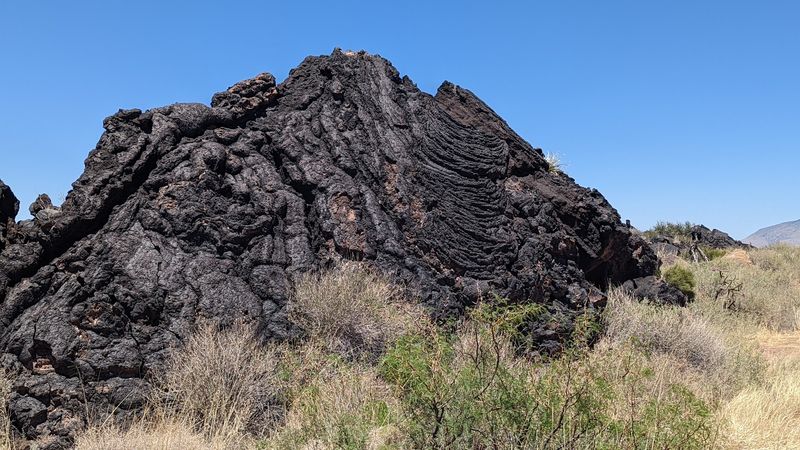
A volcano spilled lava 44 miles across the desert, and you get to stroll right over it. No heat shield required.
The Malpais Lava Flow is roughly 5,000 years old. It poured from Little Black Peak into the Tularosa Basin.
That flow covers 125 square miles and reaches up to 160 feet thick. It ranks among the youngest lava flows in the continental United States.
From far away, it looks like barren black rock. Up close, the story changes.
The 0.6-mile paved Malpais Nature Trail takes you right into the lava formations. A Kipuka Trail offers another route across the rugged surface.
Keep your eyes open for life in the cracks. Bats, roadrunners, quail, mule deer, and plenty of birds call this place home.
Want to stay the night? RV and tent sites come with picnic shelters, tables, and barbecue grills.
Some sites offer electric and water hookups. A shower house has flush toilets and hot showers, and there’s an RV dump station.
The visitor center keeps limited hours and closes Tuesdays and Wednesdays. Plan around that if you want to stop in.
Quiet hours run from 10 PM to 7 AM. Perfect for listening to a lava field do absolutely nothing loudly.
Address: 6158 US-380, Carrizozo, NM 88301
5. El Malpais National Monument
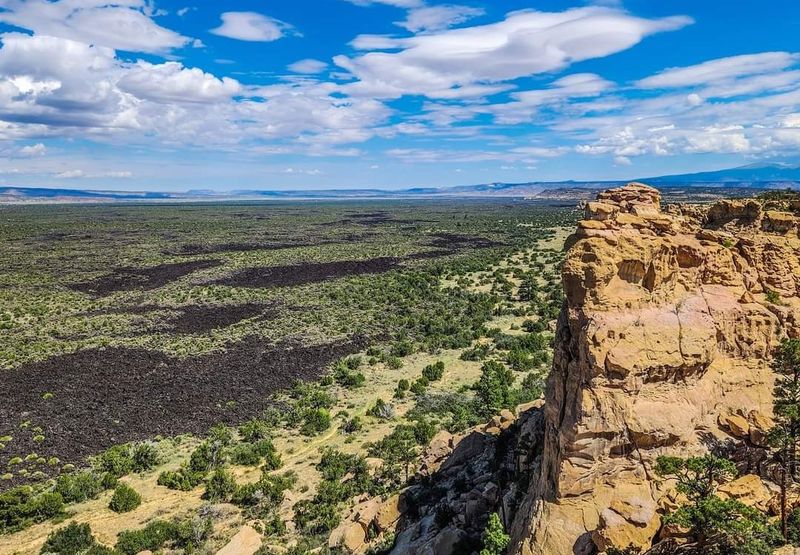
Spanish speakers named it the badlands, which sounds like a warning. Trust me, it’s more of an invitation.
Established on December 31, 1987, this western New Mexico monument protects a wild volcanic mix. Think young lava flows, cinder cones, lava tube caves, and sandstone bluffs.
Caving fans, listen up. Giant Ice Cave and Lava Bomb Cave are open to you with a free caving permit.
Above ground, La Ventana Arch steals attention. It’s the second-largest accessible natural arch in New Mexico.
For a big view, head to the Sandstone Bluffs Overlook. It looks out over the volcanic terrain like a balcony seat on Mars.
The overlook is open sunrise to sunset, as is the West Zuni-Acoma Trail parking lot. Most other trails and parking areas stay open 24 hours.
Wildlife adds surprise cameos here. Elk, prairie dogs, and chipmunks show up across the landscape.
Some backcountry spots sit at the end of primitive dirt roads. A high-clearance four-wheel-drive vehicle helps, especially when wet.
One heads-up: El Calderon Trail and its parking lot are closed through November 2026 for improvements.
Address: 1900 E Santa Fe Ave, Grants, NM 87020
6. Ah-Shi-Sle-Pah Wilderness
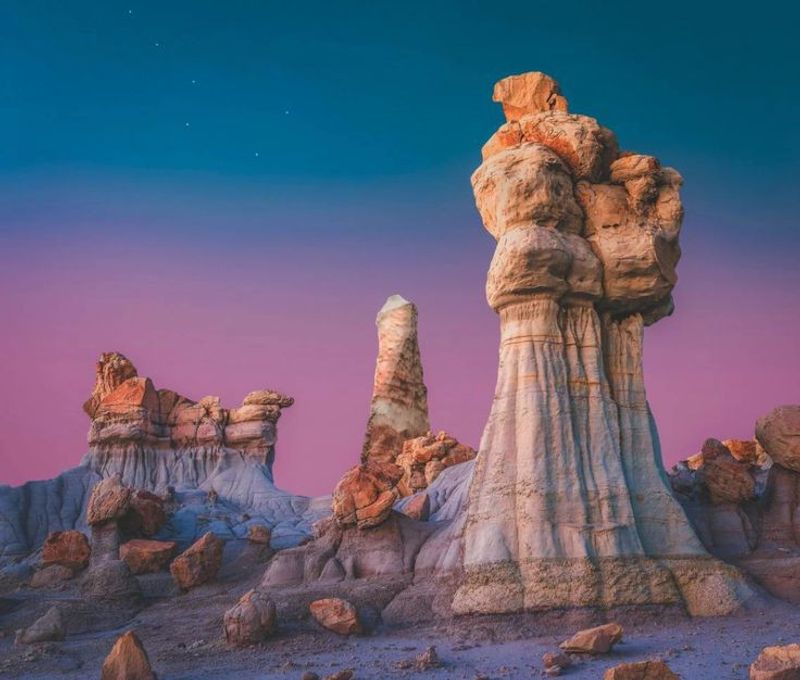
Got a favorite band that only true fans know? This wilderness is the landscape version.
It sits in San Juan County between Chaco Canyon and the De-Na-Zin Wilderness. The rolling clay hills were carved by water and come in striped, multicolored layers.
Those layers are serious time capsules. Sandstone, shale, mudstone, and coal were laid down about 75 million years ago, in the Late Cretaceous period.
You’ll find sandstone hoodoos, petrified wood, and even dinosaur bones. Look, but leave them, since fossil collecting without a permit is prohibited.
Nearby formations have names that fit the mood perfectly. Look up the Valley of the Dreams and the Alien Throne before your trip.
The name itself is a Navajo transliteration meaning grey salt. It’s a short, plain name for a very strange place.
Bring your own everything. There are no marked trails, no facilities, and water is scarce.
Cell service is minimal or missing, so offline maps matter. A GPS device is a smart backup.
Primitive dispersed camping is allowed, and the area is open around the clock. That means sunsets and dark skies are fair game.
The land became a Wilderness Study Area in 1992. In 2019, it joined the National Wilderness Preservation System.
Address: Bloomfield, NM 87413 (San Juan County, access from US-550 via NM-57)
7. Plaza Blanca
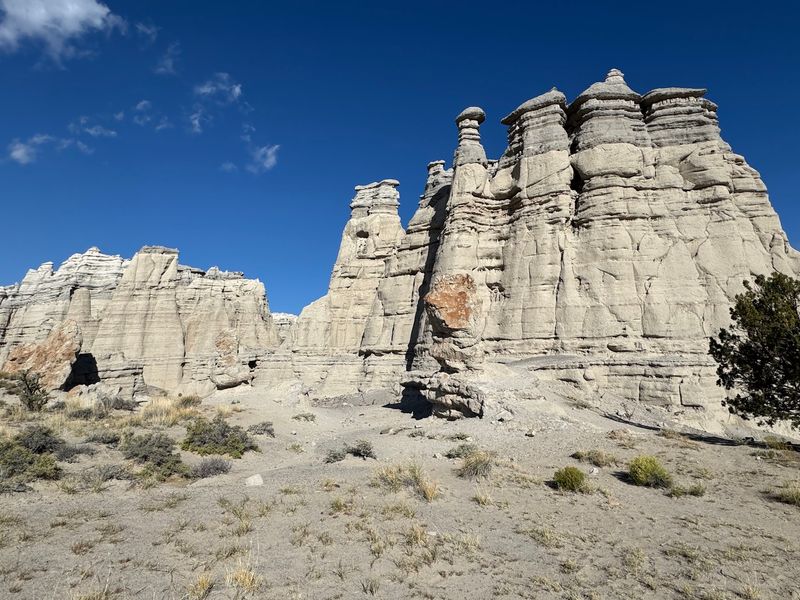
White cliffs this bright almost look photoshopped, even when you’re standing in front of them. Plaza Blanca, near Abiquiu, leans hard into that dreamlike look.
The area features stark white rock formations and slot canyons. Pale towers rise from the ground like a sci-fi movie set waiting for its spaceship.
Here’s what makes it different from the others on this list. Plaza Blanca is a privately owned hiking area.
You’ll need to register in advance before visiting. Skip that step, and your space mission ends at the parking lot.
Hours run from 9 AM to 5 PM daily. Plan your arrival with time to wander, since the trails are short but the photo stops are many.
Photographers love this place for good reason. The white rock against blue sky creates huge contrast.
Keep an eye out for a visible fault line in the rock. It’s a cool reminder that this scenery came from real geologic forces.
Parking is free, which is always a pleasant surprise. Hiking the trails is free too.
Since you’re a guest on private land, treat it kindly. Stay on the paths and follow any posted guidance.
Bring water, sun protection, and comfy shoes. Then let the slot canyons do the rest.
Address: 342 Co Rd 155, Abiquiu, NM 87510
8. Kasha-Katuwe Tent Rocks National Monument
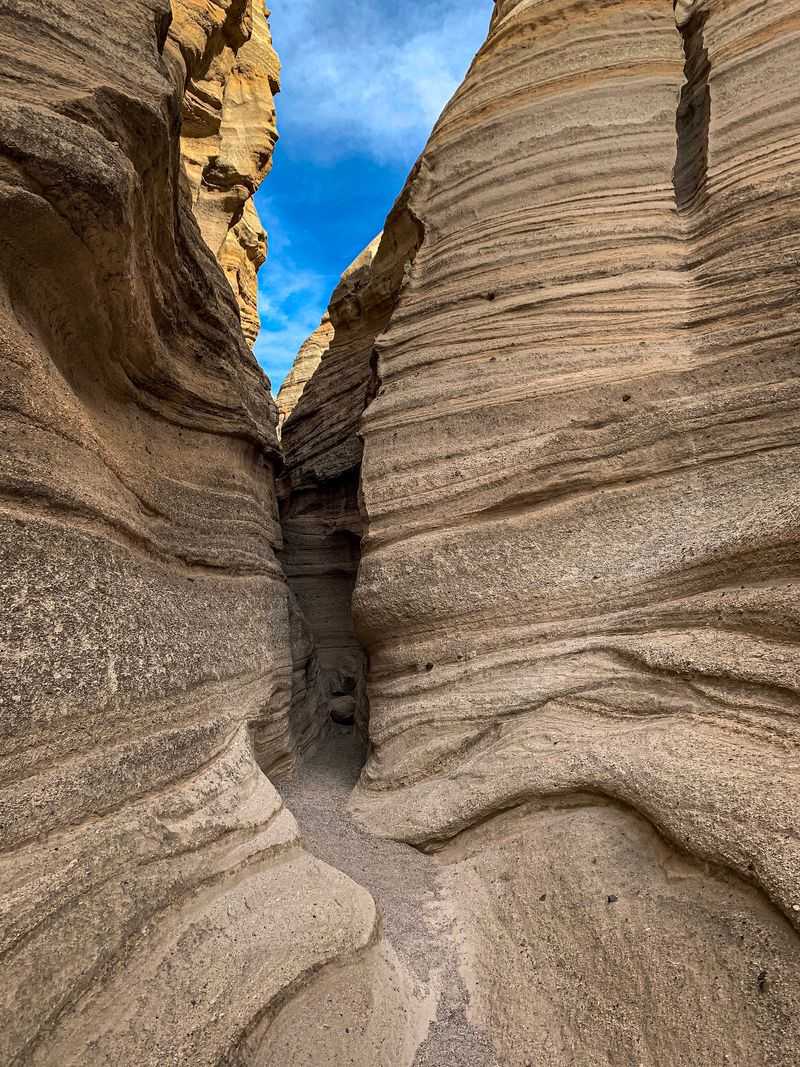
Imagine a campground where the tents are made of volcanic rock and stand 90 feet tall. Okay, that’s the closest thing to a campground you’ll find here.
The cone-shaped formations, called tent rocks or hoodoos, came from eruptions in the Jemez volcanic field. Those eruptions happened 6 to 7 million years ago.
Pumice, ash, and tuff piled up more than 1,000 feet thick. Erosion then shaped the pointy cones you see today.
Kasha-Katuwe means white cliffs in the Keresan language of the Pueblo de Cochiti. The Pueblo co-manages the monument with federal land managers.
Planning is essential. You need a Cochiti Pueblo Tribal Access Pass and a BLM ticket reservation.
It runs Thursday through Monday, 8 AM to 4 PM, with last entry at 1 PM. It’s closed Tuesdays and Wednesdays.
Choose your trail. The Cave Loop Trail is an easy 1.2 miles.
The Canyon Trail is tougher, at 1.5 miles one way. It climbs 630 feet to a mesa top with sweeping views.
Leave pets at home, since they aren’t allowed. The monument closes every year from December 15 through January 31.
It may also close for tribal observances, weather, or maintenance. Visitors must first check in at the Cochiti Visitor Center.
Address: 0 NM-22, Cochiti Pueblo, NM 87072
9. Ojito Wilderness Area
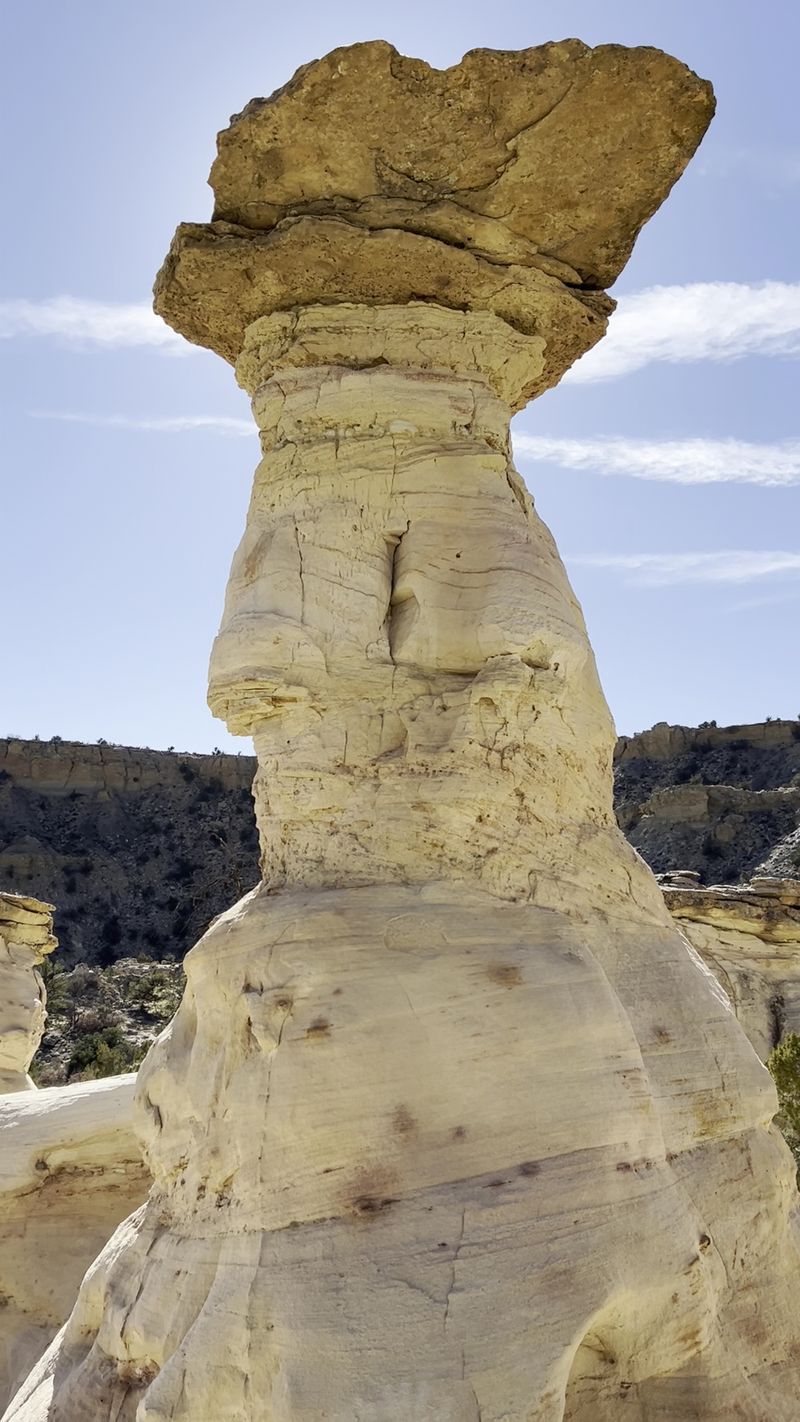
Dinosaur bones, petrified trees, and hoodoos, all about an hour from Albuquerque? That’s a pretty great lineup for one wilderness.
Ojito covers more than 11,000 acres of rugged high desert southwest of San Ysidro. Steep mesas and box canyons give it plenty of drama.
Millions of years of erosion shaped the multicolored sandstone. You’ll also spot petrified sand dunes and rare ponderosa pines.
Fossil beds here include dinosaur fossils and petrified trees dating back 150 million years. Gypsum-laden mineral springs add one more odd detail.
Two designated trails make exploring easier. The Seismosaurus Trail leads to a dinosaur excavation site.
Prefer strange shapes over fossils? The Hoodoo Trail is a 2-mile round trip past hoodoos and other erosional features.
Archaeological sites also lie within the wilderness. Admire them gently and leave them untouched.
The area is open year-round for primitive camping, hiking, and horseback riding. It’s a solid pick for kids who like a little adventure.
Pack like you’re heading to a distant planet. There are no toilets, no drinking water, and cell service is spotty or absent.
Access roads can turn rough when wet, so high-clearance 4WD is strongly recommended. The wilderness was established in 2005.
Address: G3CJ+JH, Zia Pueblo, NM (via Cabezon Road, CR 906, near San Ysidro)
10. Valles Caldera National Preserve
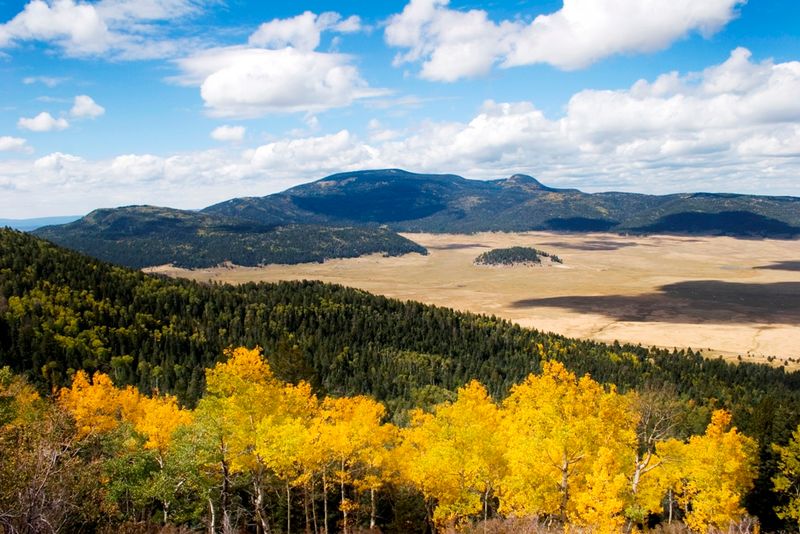
Most volcanoes don’t let you drive across their floor. This one hands you a meadow, a stream, and maybe an elk sighting.
Valles Caldera National Preserve sits in the Jemez Mountains of New Mexico. Its centerpiece is a huge meadow, about 13 miles wide, inside an ancient volcanic caldera.
The main meadow is called the Valle Grande. Rolling in on the road feels like landing on a grassy alien world.
Wildlife is a major part of the fun. Elk and prairie dogs are common sights.
Early mornings can be great for spotting elk along the edges of the grassland. Bring binoculars for a better look.
Streams wind through the preserve. Fly fishing is a popular way to spend time here.
Families will find kid-friendly hikes. Picnics are a classic move too.
Restrooms are available, and parking is free. Pack layers, since mountain weather can shift quickly.
This stop is the gentlest finale on the list. Green grass instead of black lava makes a nice change.
Still, it’s the same story of fire and time. Earth just added a softer blanket on top.
Address: 39201 NM-4, Jemez Springs, NM 87025