
10 Tiny Tourist Habits In Texas That Make Locals Shake Their Heads And Smile

Texas tends to reward careful looking rather than quick conclusions, opening itself slowly to anyone willing to notice how the skies sprawl like stage lights over empty highways, how brisket smoke curls easily into conversations, and how towns carry their histories lightly, almost casually, until someone asks in a way that feels genuinely interested rather than performative.
Visitors often arrive with cameras already raised, shiny hats freshly unpacked, schedules mapped to the minute, and a thousand small gestures meant to show respect, many of which earn polite smiles from locals who have seen it all before and are quietly deciding how much to say next.
What happens after that moment matters. If you pay attention, you start to read the cues.
You pause before speaking, you listen longer than feels efficient, you let meals take the time they need, and you learn that questions land better when they aren’t rushed toward an answer.
The rhythm here isn’t slow so much as deliberate, shaped by heat, distance, and a deep familiarity with waiting until something is worth doing or sharing.
Stories surface organically, usually halfway through a conversation or meal, once it’s clear you’re not collecting souvenirs but moments.
Think of these small habits as friendly trail markers rather than rules, quiet signals that help you move with the place instead of against it.
Follow them with curiosity and humility, and Texas opens up in ways no plan ever really could.
1. Taking Lots Of Street Photos

Neon reflections along streets like South Congress or Deep Ellum trigger an almost automatic lift of phones, as visitors pause mid-stride to frame murals, signage, and façades that feel unusually cinematic under Texas light.
That pause often lands directly in the current of bike traffic or foot flow, which locals navigate daily without thinking, smiling patiently as they drift around a small constellation of lenses and outstretched arms.
What looks like a spontaneous discovery is usually a site shaped by long neighborhood conversations, repaintings after storms, and quiet agreements between artists and shop owners who understand these walls as living surfaces rather than static props.
The affection Texans have for public art runs deep, but it is paired with an expectation that movement continues and shared space remains usable, even while admiration happens.
Stepping a few feet aside allows the street to breathe again, returning the rhythm to something conversational rather than stalled.
Snapping quickly and lowering the phone sooner lets sound, heat, and passerby expressions reenter the moment, which often makes the memory stronger than another dozen versions of the same frame.
The best images tend to come from brief attention followed by full presence, rather than prolonged capture that flattens a lively place into a frozen background.
2. Wearing Brand New Souvenir Hats

A spotless souvenir hat, stiff at the brim and untouched by sweat or sun, announces itself immediately in places where most headwear carries the softened geometry of use and weather.
Locals notice with amusement rather than judgment, because hats here have historically functioned as tools first, shaped by shade needs, rain habits, and hours spent outdoors rather than by logos or novelty stitching.
Traditional hat fitting, especially in long-standing boot and western wear shops, treats brim curve and crown height as matters of function, comfort, and wind behavior, not display.
Wearing a new hat straight from the rack is understood as enthusiasm rather than ignorance, though it inevitably reads as temporary, like shoes not yet broken into their own stride.
A quick stop for steaming and shaping transforms the hat from souvenir into companion, altering the way it sits, moves, and survives a long day.
Simple care rules, like keeping it off oily counters or car dashboards, quietly signal respect for the object’s purpose.
Over time, sun fades fabric and creases soften edges, and the hat stops announcing itself at all, which is usually the point.
3. Taking Selfies With Roadside Signs
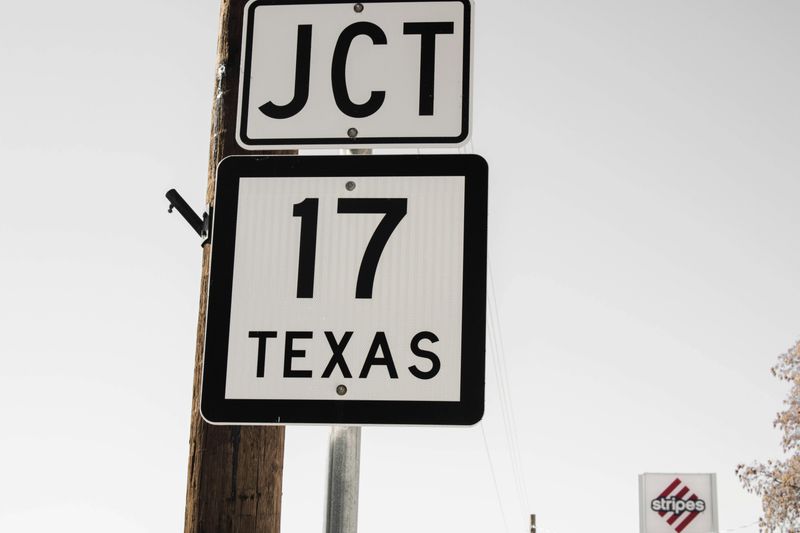
Highway signs across Texas draw attention because they compress distance, identity, and humor into a few oversized letters sitting alone beneath an enormous sky.
Visitors pull over instinctively, eager to anchor a moment to proof, while traffic hums past at a pace that reminds locals why designated turnouts exist.
Many of these signs mark towns proud enough to repaint history after storms, budget cuts, and decades of road realignment, preserving orientation as well as narrative.
The affection Texans hold for these markers is tied to motion, not stopping places but signals you register while passing through.
Using marked pull-offs keeps both drivers and sign painters appreciated rather than endangered.
Two or three quick shots usually capture more truth than a prolonged session battling wind and speed.
Looking up afterward often matters more than the photo itself, because the scale of the landscape completes the meaning the sign was meant to suggest.
4. Photographing Every Plate Of Food
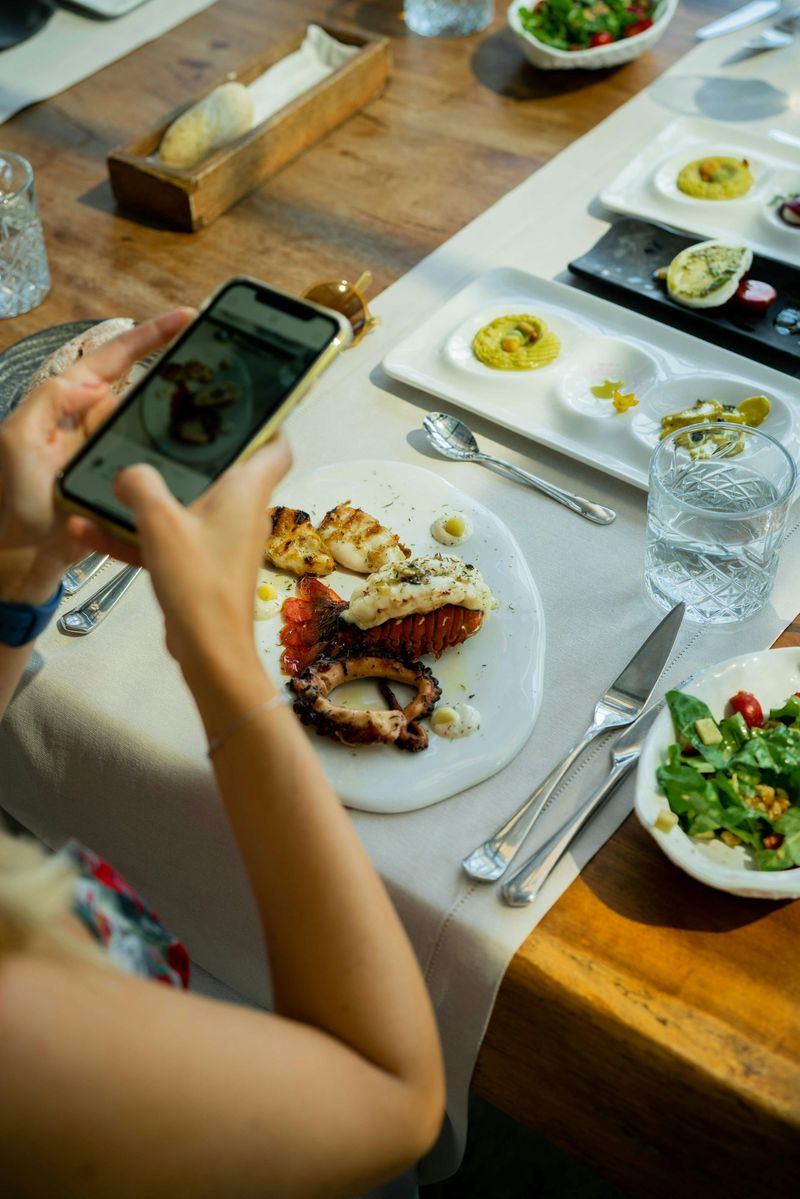
When a barbecue tray or breakfast plate lands on the table, phones often rise before forks, hovering as steam escapes and fat begins cooling in real time.
Texas food culture is rooted in timing, especially with smoked meat and griddle work, where heat retention and texture change minute by minute.
Those brief delays meant to improve memory sometimes flatten flavor instead, turning crisp edges soft and bright aromas dull.
Lines at places like barbecue joints evolved as social rituals, not staging areas for prolonged documentation, and the kitchen’s rhythm assumes eating follows serving closely.
A fast snapshot respects both the effort behind the plate and the moment it was meant to deliver.
Letting the first bite happen immediately anchors taste more reliably than any filter or angle adjustment.
Long after the photo disappears into a camera roll, the remembered chew, smoke, and salt usually remain sharper anyway.
5. Carrying Paper Maps And Brochures
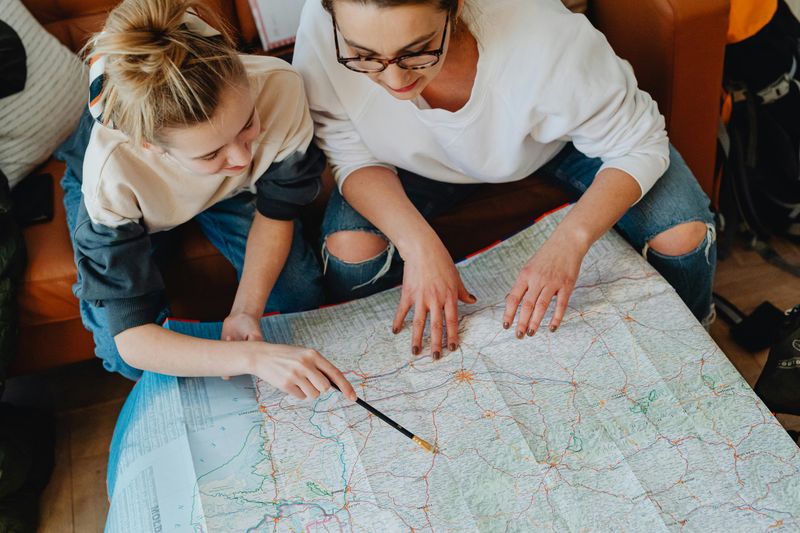
Folded maps rustle conspicuously in otherwise fluid spaces, catching wind along river walks, plazas, and shaded paths where movement is part of the design.
Texas cities and landmarks typically embed wayfinding directly into the environment through signage, sightlines, and landmarks that assume forward motion rather than constant stopping.
Paper materials reflect care and preparation, yet they also invite mid-walk reading that disrupts both balance and traffic flow.
Many historic districts were preserved precisely so people could orient themselves intuitively, without treating every intersection as a decision point.
Pausing at alcoves, benches, or railings allows orientation without turning movement into interruption.
Digital pins or folded-down maps offer just enough guidance while keeping attention outward rather than downward.
Navigation works best here when it supports wandering instead of replacing it.
6. Asking For Directions At Gas Stations
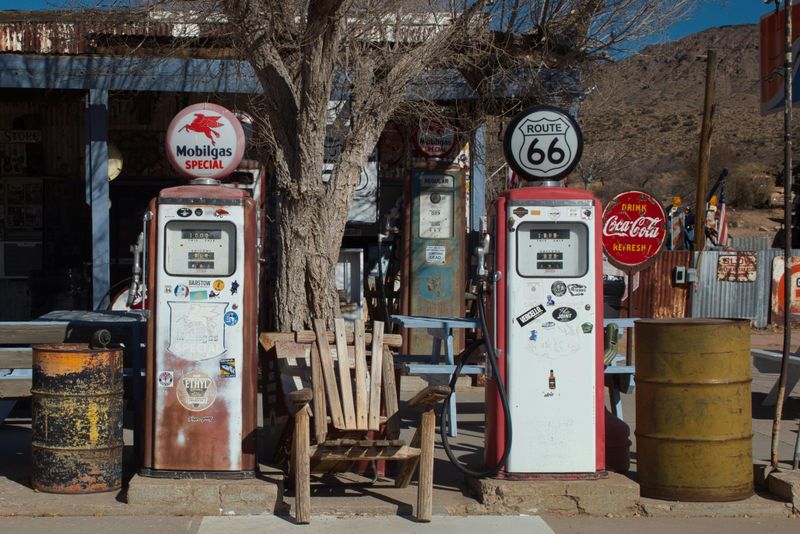
Bright fluorescent lights frame counters where directions are exchanged casually, often accompanied by local phrasing that compresses geography into memory rather than signage.
In rural and small-town Texas, directional knowledge lives orally, shaped by ranch gates, water towers, and roadside landmarks more dependable than signal bars.
These conversations carry patience, because clarity matters when distances stretch and wrong turns multiply quickly.
Locals expect questions to be brief and attentive, especially when the answer includes both miles and minutes.
Writing directions down signals respect for the time being shared, not uncertainty.
A small purchase afterward closes the exchange with reciprocity rather than transaction.
Driving away with verbal instructions often feels unexpectedly anchoring, as though you borrowed a local’s internal map for a while.
7. Standing In The Middle Of The Sidewalk
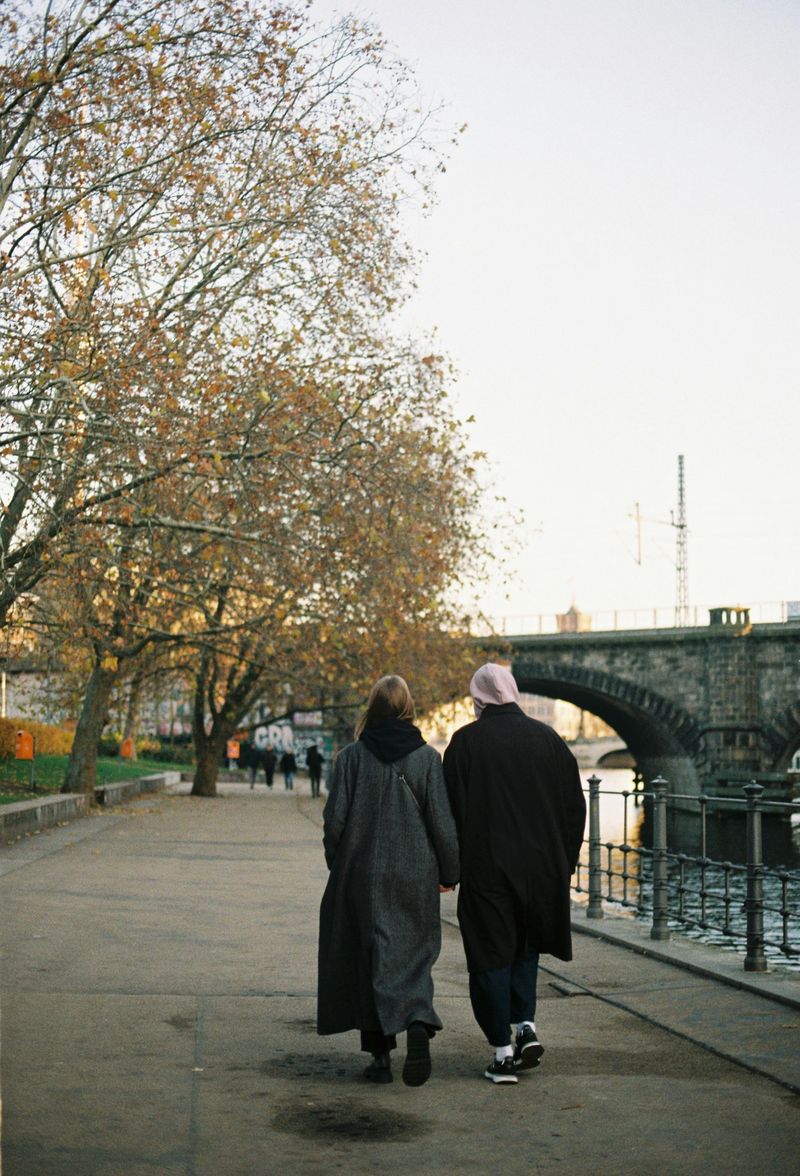
Music, conversation, and doorways compete for attention along busy streets, and a sudden stop in the center creates a quiet chain reaction that locals recognize instantly.
Texas sidewalks, especially in entertainment districts, are designed around steady flow rather than crowding, shaped by patios, street trees, and constant cross movement.
Pausing midstream forces others to brake politely, slide aside, or reroute without comment, which is where the familiar smile comes from.
Over time, residents learn to read these shared spaces like currents, drifting to edges before checking phones or scanning plans.
Sidewalk culture here values spatial awareness as much as friendliness, because both keep things moving smoothly.
Stepping toward a wall, railing, or curb preserves momentum without sacrificing curiosity.
The city keeps its rhythm when attention shifts briefly outward before settling back into place.
8. Wearing City Outfits In Rural Areas

Gravel crunches differently under delicate soles, announcing mismatched expectations long before conversation starts.
Outside urban centers, Texas landscapes assume contact with dust, uneven ground, heat, and sudden weather shifts that turn clothing into equipment rather than display.
Ranches, wineries, roadside stops, and small-town squares evolved around work rhythms where practical choices mattered more than visual statements.
Boots, hats, and sturdy layers became defaults not as costume, but as solutions refined over generations.
Visitors dressed for sidewalks often discover how quickly terrain rewrites priorities.
Choosing clothes that anticipate sun, wind, and distance allows attention to drift toward conversation and view instead of self-management.
Comfort tends to signal respect more clearly than polish once the pavement ends.
9. Pointing At Buildings And Landmarks
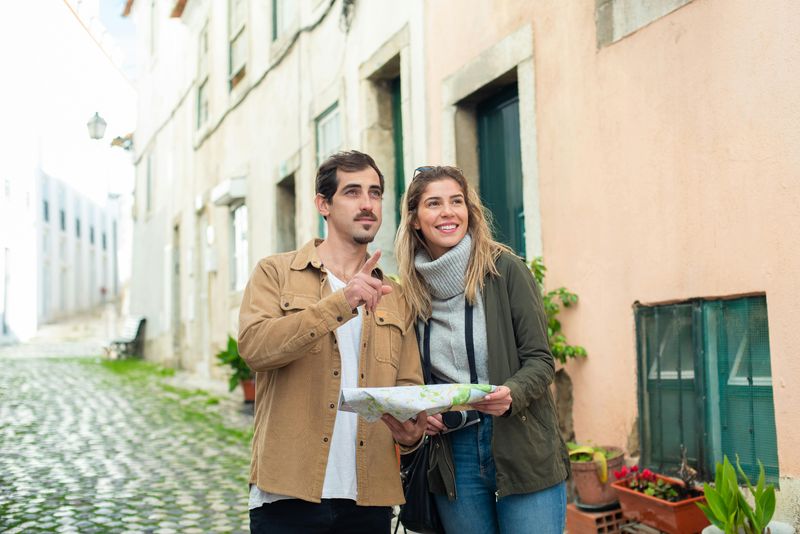
An extended arm toward a historic structure often feels instinctive, as though gesture might steady significance long enough to understand it.
Texas landmarks, especially older ones, sit inside layered narratives shaped by preservation, debate, and careful interpretation.
Guides and locals recognize pointing as curiosity, yet also know the story usually unfolds better through listening than indication.
Many sites underwent restoration precisely to slow engagement, encouraging observation instead of quick confirmation.
Hands at rest leave room for voices, details, and unexpected context to emerge.
Allowing the explanation to arrive before framing meaning often reveals things no gesture could identify alone.
Landmarks tend to reward patience more generously than direction.
10. Holding Guidebooks While Walking

Pages flutter under live oak canopies as footsteps drift instead of land, creating a slow, drifting choreography where attention splits between inked recommendations and curbs that still demand respect.
Texas cities often reward arrival more than transit, with museums, parks, and neighborhoods designed for pause and presence once you reach them rather than narration while you move.
Locals smile because they recognize the intention immediately, curiosity layered with careful planning, yet also know how quickly a moment opens once the book closes.
Preservation culture here quietly assumes that reading happens before or after movement, not during, allowing streets to stay alert and social rather than instructional.
Slipping the guide into a bag turns walking into listening, where overheard conversations and shifting light replace bullet points and ratings.
Benches, shaded steps, and railings exist like commas along the route, offering places to regroup without interrupting the flow around you.
The city tends to speak more clearly when eyes lift from the page and hands return to balance.