
12 Illinois Civil War Sites Most Road Trips Skip Right Past
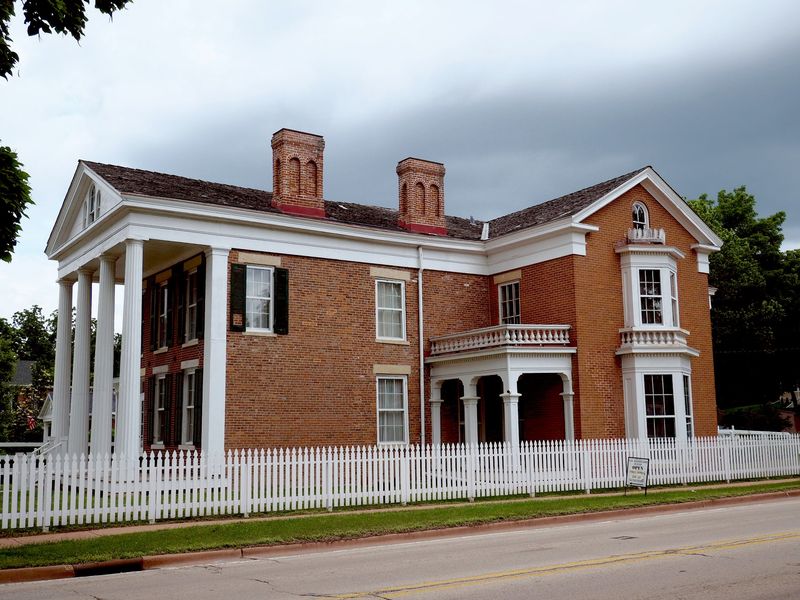
Memorial Day started with a general from southern Illinois, yet most families zooming down the interstate never learn that. Illinois saw no big battles during the Civil War, but it trained soldiers, guarded prisoners, and raised the leaders who shaped the Union.
Many of those places are still standing, often free to visit, and sitting just off roads you already drive. Grab the kids, pack a lunch, and get ready for history that fits a small budget and sticks around for years.
1. General John A Logan Museum, Murphysboro, IL
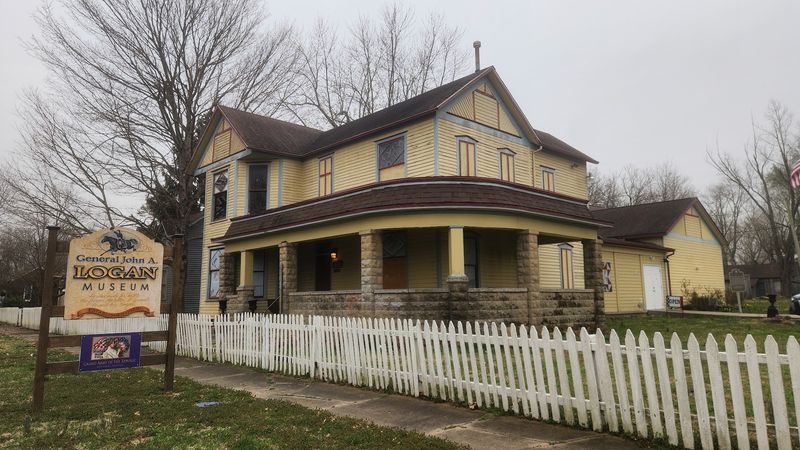
Every family cookout on the last Monday in May traces back to a man who grew up right here in Jackson County. Major General John A.
Logan, a Union commander who later championed the national day of remembrance we now call Memorial Day, called Murphysboro home, and the town has never forgotten him.
The General John A Logan Museum covers a good chunk of the original Logan estate on Edith Street. Inside, you will find antique pieces, old photographs, and exhibits that explain not only John’s career but also the life of his wife, Mary, who was a force of her own.
Auxiliary sites round out the visit, so plan to wander a bit.
Best of all, admission is free. That makes it an easy yes for families watching the budget, and the displays are set up clearly enough that a curious 12-year-old can follow the story from start to finish.
Guided tours are offered, and restrooms are on site.
The museum is open Tuesday through Saturday from 10 AM to 4 PM, closed Sunday and Monday. Add a loop through downtown Murphysboro and a packed lunch, and you have a southern Illinois day trip that costs little more than gas money.
2. Fort Defiance State Park, Cairo, IL
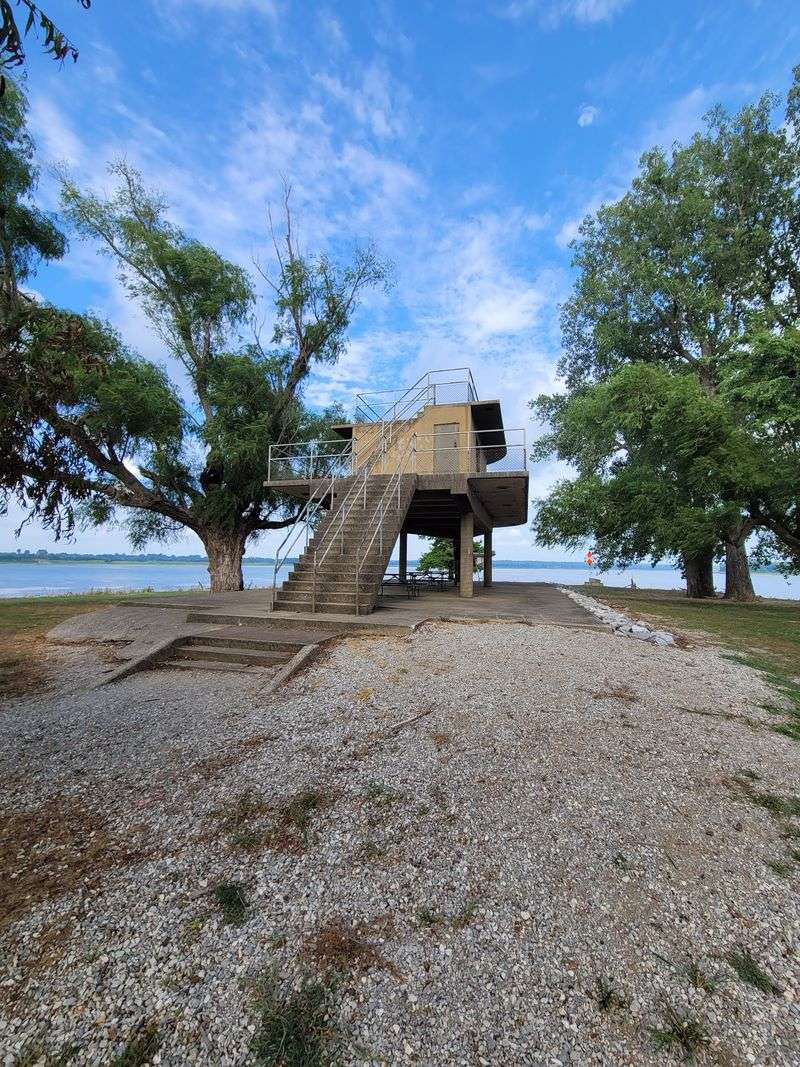
Stand at the very tip of Fort Defiance State Park and you can watch the Ohio River and the Mississippi River blend into one. It is the southernmost point in Illinois, and in 1861 it was one of the most valuable pieces of ground the Union controlled.
General Ulysses S. Grant made Cairo his base early in the war, and the spot then called Camp Defiance became a training ground, supply hub, and launching pad.
From here, Union forces pushed south toward major victories at Fort Henry and Fort Donelson in Tennessee. Cairo also became a place of refuge, as a camp for people escaping slavery offered housing, a hospital, and a school around 1862.
Today the park is simple and quiet. A concrete observation structure shaped a bit like a steamboat’s bridge looks weathered, but it still delivers wide views of barges gliding past.
Picnic tables, public restrooms, short kid-friendly paths, and a memorial to the Lewis and Clark expedition fill out the grounds.
Parking is free, dogs are welcome, and the park is open daily from 9 AM to 8 PM. Tuesday mornings and Fridays tend to be the calmest, perfect for a peaceful lunch by the water.
3. Mound City National Cemetery, Mound City, IL
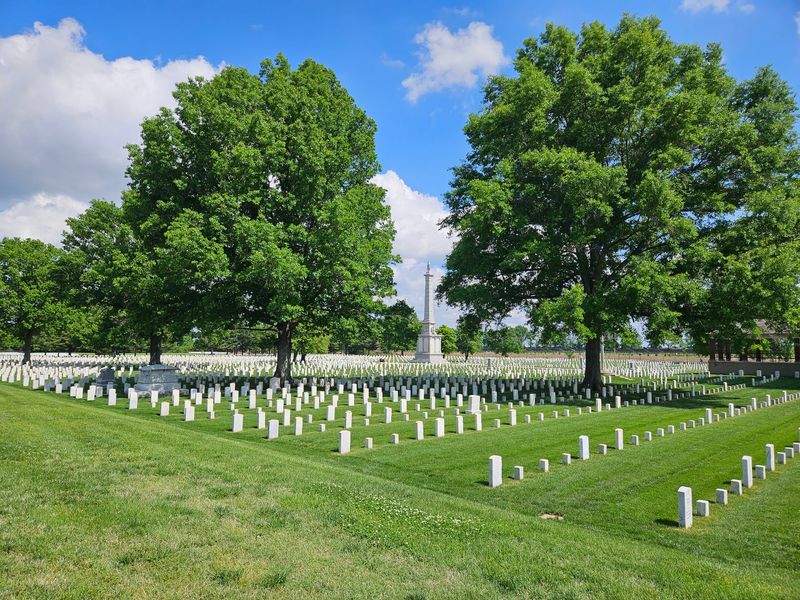
Ask most travelers where the Union Navy kept an important base in the Midwest, and few would guess a small Ohio River town in Pulaski County. Mound City, just a short drive from Cairo, was home to a naval station and a busy military hospital during the Civil War.
Mound City National Cemetery was established in 1864 as the resting place for Union soldiers and sailors cared for at that hospital. Confederate prisoners of war were laid to rest here as well, which gives the grounds a quiet sense of shared history.
The stillness across this flat river country is hard to describe until you are standing in it.
Because it sits along IL-37 rather than a major interstate, fast traffic hurries right past without a second look. That is a shame, since the setting feels peaceful and deeply rural, a true slice of far southern Illinois that has changed little over the decades.
Visiting costs nothing, and the grounds follow official U.S. Department of Veterans Affairs cemetery hours.
Pair a stop here with Fort Defiance for an easy half-day history loop. Older kids especially tend to connect the dots quickly, seeing the rivers, the fort, and this cemetery as chapters in one story.
4. Alton Military Prison, National Register of Historic Places
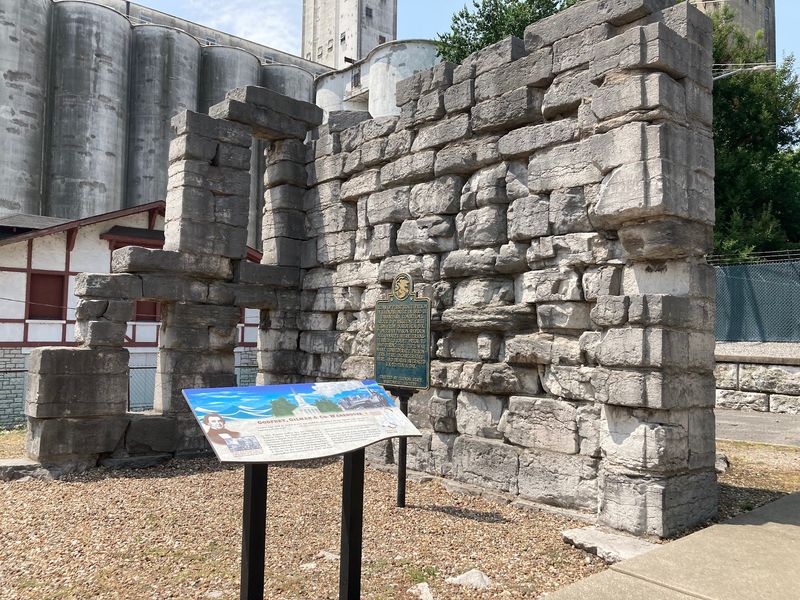
A single stretch of old stone wall does not look like much from the car window. Yet that weathered chunk of masonry in Alton is all that remains of one of the most talked-about prisons in Civil War Illinois.
The building first opened in 1833 as the very first state penitentiary in Illinois, then closed in 1857. When the war filled Union camps with captured Confederates, officials reopened it in 1862, and more than 11,000 prisoners passed through its gates, including Confederate officers and civilians accused of disloyalty.
Crowding and smallpox outbreaks made life inside extremely hard, and the prison earned a grim reputation.
Today the site is an open-air, self-guided stop set in a residential neighborhood just off the Great River Road. Interpretive markers explain what once stood here, so you can read, look around, and imagine the massive structure that once surrounded you.
It does not take long, which makes it a painless addition to any Alton outing.
There is no admission fee, no ticket booth, and no closing time, since the site is open around the clock. Bring the kids after a stroll along the riverfront, then head to the Confederate Cemetery in North Alton to finish the story.
5. Confederate Cemetery, Alton, IL
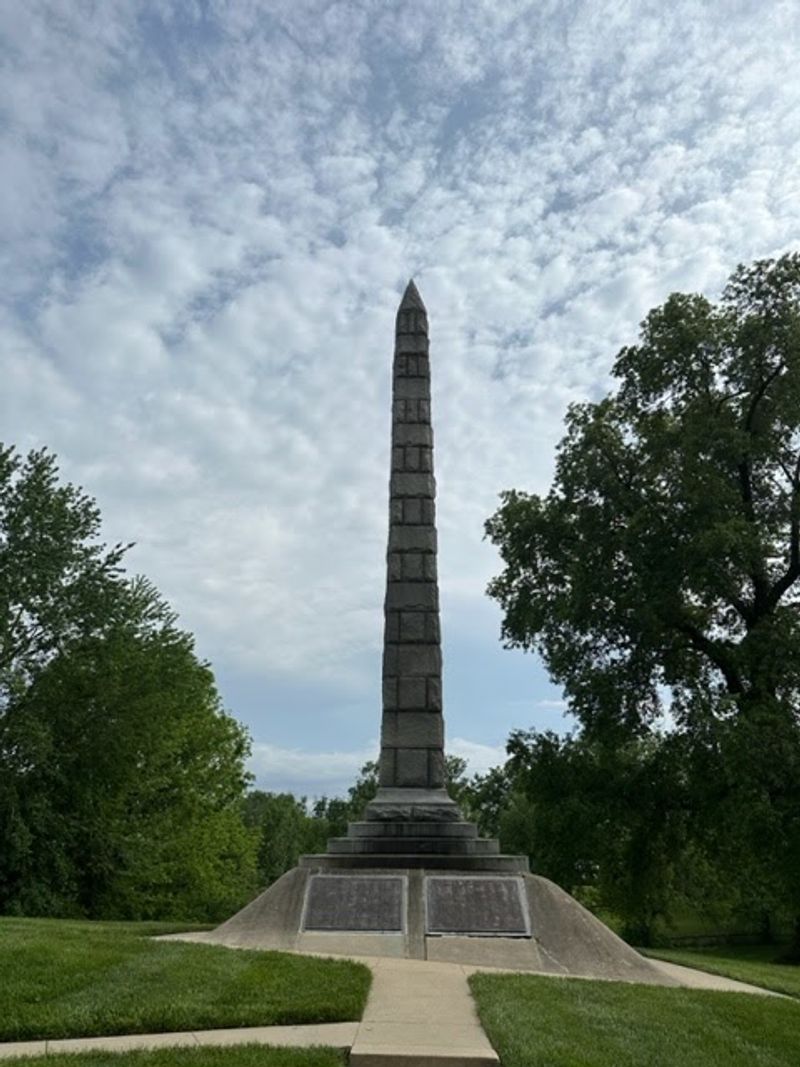
North Alton keeps a quiet chapter that most drivers on the river corridor never notice. Up on Rozier Street, a tall monument rises above a small, peaceful plot of ground that holds a big piece of the Alton story.
Resting here are the Confederate prisoners who never made it home from the Alton Military Prison. Records put the number at more than 1,500 soldiers, many lost to smallpox and other illnesses that spread through the crowded cells.
Rather than long rows of headstones, a single towering memorial honors them together.
Visiting feels different from touring a museum. There are no exhibits or guides, just open grass, the monument, and a chance to talk with kids about how the war touched ordinary families on both sides.
Moments of reflection like this tend to stick with young visitors longer than you might expect.
The grounds are open Monday through Friday from 8 AM to 4:30 PM and closed on weekends, so save it for a weekday outing or a summer break morning. Combine it with the prison wall across town for a free, meaningful few hours in one of the oldest river cities in Illinois.
6. Camp Butler National Cemetery, Springfield, IL
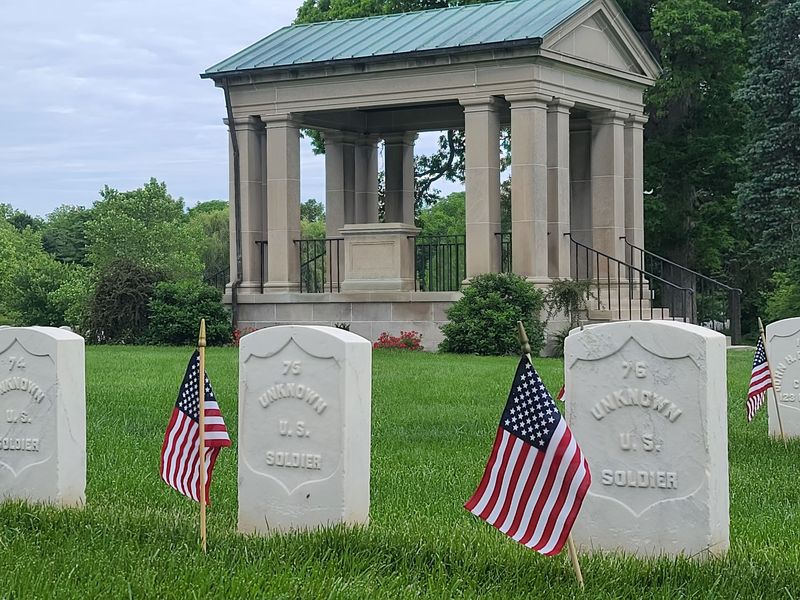
Two hundred thousand soldiers. That is roughly how many men trained or mustered out at Camp Butler between 1861 and 1866, making it the second-largest Civil War camp in Illinois after Chicago’s Camp Douglas.
Most Springfield visitors race downtown to Lincoln’s Home and never drive out to the rural edge northeast of the city. Their loss is your quiet afternoon.
After the Union captured Fort Donelson in February 1862, the camp also held Confederate prisoners, and the grounds still contain separate Union and Confederate sections.
Camp Butler National Cemetery carries a special distinction too. It is one of the original fourteen national cemeteries authorized by President Abraham Lincoln in 1862, and today it is the resting place for more than 19,000 veterans and family members from the Civil War through later conflicts.
The rolling lawns and tidy rows feel calm rather than somber, especially in early morning light.
Gates are open daily from 6 AM to 8 PM, and the free parking lot makes stopping easy. It is a fitting outing over Memorial Day weekend, when Illinois families pause to remember the generations who served.
7. Rock Island Confederate Cemetary, Rock Island, IL
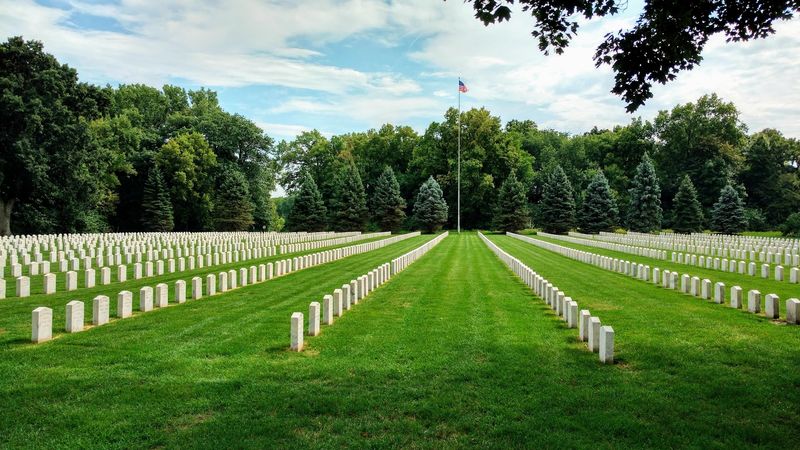
Getting to this cemetery takes a little more effort than most, and that is part of the adventure. Arsenal Island sits in the Mississippi River between Rock Island and Davenport, Iowa, and it is still an active military installation, so visitors pass through a security checkpoint on the way in.
From December 1863 through 1865, the island held the Rock Island Prison Barracks, a sprawling camp of 84 barracks built for roughly 120 men each. More than 12,400 Confederate prisoners were confined here, the first group captured near Chattanooga, Tennessee.
Smallpox and dysentery swept through the camp, and 1,964 of those men now rest on Rodman Avenue.
The setting surprises first-timers with its orderly calm, and a stone monument elsewhere on the island marks where the prison camp once stood. Kids who love the idea of a secret place will be thrilled by the checkpoint alone.
It turns an ordinary history stop into a small expedition.
Hours run Monday through Friday from 7:30 AM to 4 PM, with weekends closed. Expect to show identification for adults in your group, and check current access rules before heading out, since military security requirements can change.
8. Douglas Tomb State Historic Site, Chicago, IL
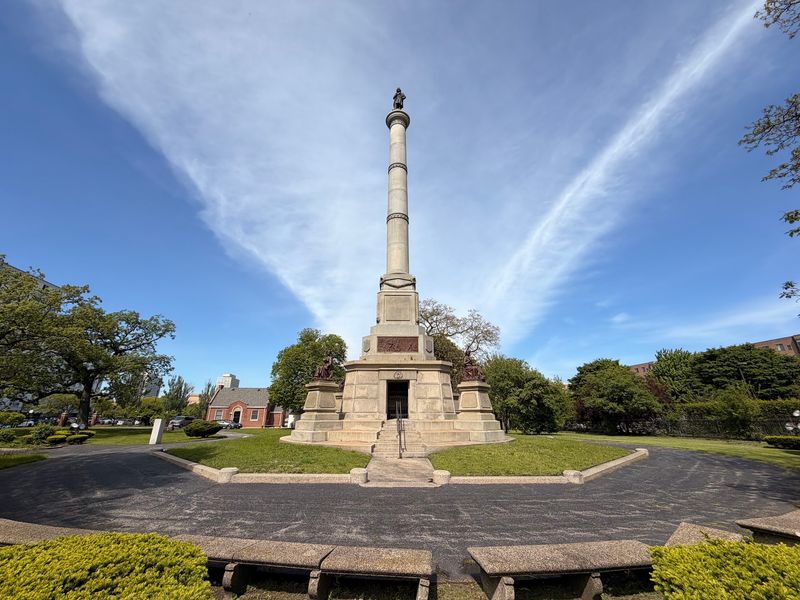
Stephen A. Douglas lost the 1860 presidential race to Abraham Lincoln, yet his monument still wins the height contest in Bronzeville.
A tall column rises above his tomb near 35th Street, and you can spot it from a good distance away.
Here is the twist most Chicagoans never hear. After the senator’s passing in 1861, land from his former lakeside estate became Camp Douglas, a huge Union training ground that later turned into one of the largest prisoner-of-war camps in the North.
More than 26,000 Confederate prisoners passed through between 1863 and 1865, all practically next door to where Douglas now rests.
The Douglas Tomb State Historic Site is small and peaceful, with plaques to read and well-kept grounds overlooking the water. It remains one of the least visited monuments in the city, which means you often get the place nearly to yourself.
Admission is free, and the site is open Friday through Sunday from 10 AM to 4 PM. Kids can circle the monument and read the plaques while grown-ups soak up the quiet, and the whole visit slips easily into a weekend in Chicago without costing a dime.
9. Oak Woods Cemetery, Chicago, IL
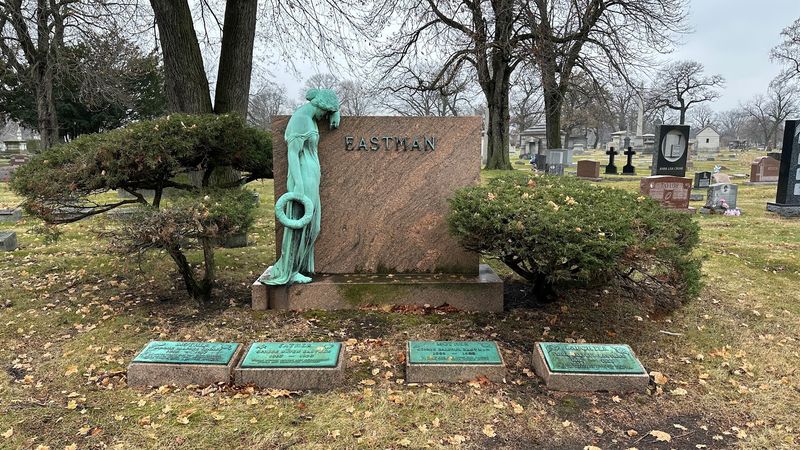
Lakes, curving lanes, and leafy old trees are not what most people expect on Chicago’s South Side, yet Oak Woods Cemetery has offered exactly that since the 1800s. It feels more like a quiet park than a city block.
Along those lanes sits the Confederate Mound, one of the most surprising Civil War sites in the entire state. After Camp Douglas closed, the remains of roughly 4,275 Confederate prisoners were moved here and placed together beneath one monument.
It ranks among the largest shared burial sites in the country, and plenty of lifelong Chicagoans have never heard of it.
Visiting brings a mix of feelings. The setting is lovely and calm, while the history is sobering, making it a thoughtful stop for older kids learning how the war reached all the way to Lake Michigan.
Pairing it with the Douglas Tomb a few miles north ties the whole Camp Douglas story together in one afternoon.
Oak Woods sits at 1035 E 67th Street in the Greater Grand Crossing neighborhood. Grounds are open Monday through Saturday from 8 AM to 4:30 PM and Sunday from 9 AM to 4 PM.
Since it is an active cemetery, a respectful, low-key visit is the way to go.
10. Grand Army of the Republic Military Museum, Aurora, IL

Back in 1878, Union veterans in the Fox Valley wanted a place to gather, swap stories, and honor the friends they had marched beside. The result was a handsome hall in downtown Aurora, and it still stands proudly near the Fox River today.
The Grand Army of the Republic Military Museum began as a meeting hall and monument for regional Civil War veterans. The Grand Army of the Republic was the massive veterans’ organization formed after the war, and halls like this one once appeared in towns across the North.
Few survive in such lovely shape, and the architecture alone is worth pulling over for.
Inside, the exhibits are small but thoughtfully curated, packed with details that reward slow looking. Tours are offered, and a gift shop has little souvenirs for young history fans.
Families will appreciate the restrooms, free Wi-Fi, and on-site parking, plus discounts for active military members.
Hours are short, so plan ahead. The museum is open Wednesday through Friday from noon to 4 PM and Saturday from 10 AM to 3 PM.
Follow it with a riverside stroll through downtown Aurora for a cozy, low-cost Saturday that feels a world away from the busy suburbs.
11. Washburne House State Historic Site, Galena, IL
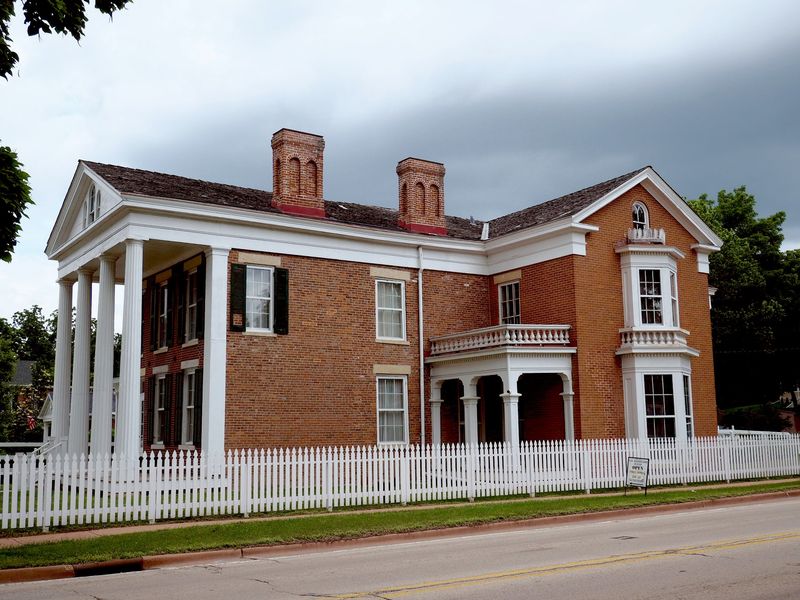
On election night in 1868, Ulysses S. Grant was not waiting for results at his own house.
He was at his friend Elihu B. Washburne’s home in Galena, and that is where the news arrived that he would be the next president.
Washburne was one of the most important people in Grant’s life. As a congressman, he was a trusted ally of Abraham Lincoln and the man who championed Grant’s rise during the Civil War, later serving as secretary of state.
The Washburne House State Historic Site tells that story through a beautifully restored home filled with period furniture, family pictures, and everyday housewares.
Most Galena visitors head straight to the Grant Home down the hill and walk right past this one. That is their loss, because the free tours are led by knowledgeable guides who weave together the Washburne family story, local politics, and connections to both Grant and Lincoln.
Timing matters here. Tours run only Friday from 1 PM to 4 PM and Saturday from 10 AM to 1 PM, so build your weekend around those windows.
Fall is a gorgeous time to go, when the hills around this old northwestern Illinois mining town glow with color.
12. Illinois State Military Museum, Springfield, IL
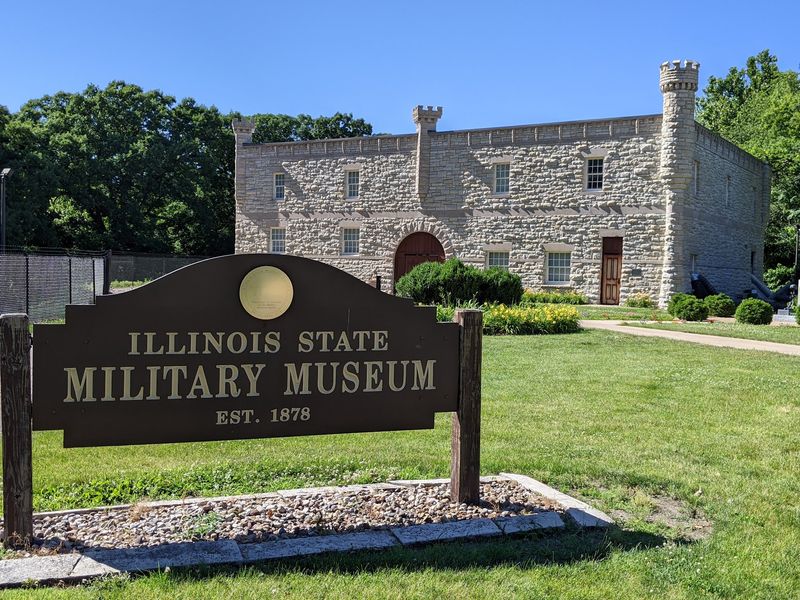
Where else in Illinois can you see a Mexican general’s wooden leg and a captured rebel flag in the same afternoon? The Illinois State Military Museum, on the grounds of historic Camp Lincoln in Springfield, packs a surprising collection into a small space.
Admission is free, which already makes it a win for families. The upper level holds a walkthrough timeline running from the Revolutionary War all the way to Afghanistan, with dioramas, wax figures, uniforms, maps, and gear showing how Illinois soldiers took part in each chapter.
Civil War treasures, including Illinois regimental battle flags and artillery, connect local regiments to the bigger national story.
What truly sets the place apart is the people. Retired military presenters often share living history memories and encourage kids to ask questions, turning a quick stop into a real conversation.
A small theater, guided tours, and restrooms round out the visit.
Because the museum sits away from downtown tourist hubs, it rarely feels crowded. Hours are Tuesday through Friday from 1 PM to 4:30 PM, plus Saturday from 9 AM to noon and 1 PM to 4:30 PM, and parking is free.
It makes a perfect indoor pick for a chilly Illinois winter day.