
12 Michigan Churches So Beautiful You’ll Swear You’ve Stepped Into Europe
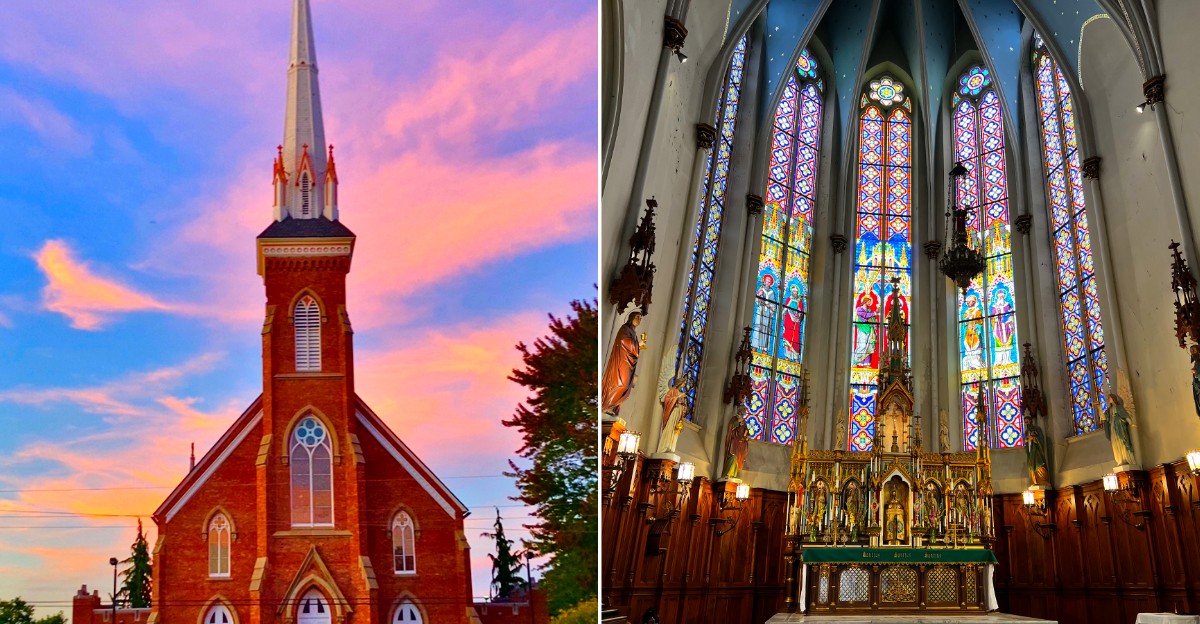
You do not need a passport to find soaring towers, glowing stained glass, and stonework that feels pulled from another continent. Across Michigan, churches shaped by French roots, German craftsmanship, Polish pride, and English Gothic design turn architecture into a kind of travel diary.
Some rise beside busy city streets, while others sit on islands or among northern pines, giving every stop its own atmosphere.
Step inside Michigan’s most beautiful churches and you will find European-inspired architecture, historic craftsmanship, and sacred spaces that reward far more than a quick photograph.
What I love most is the way each building carries both local and immigrant history. A carved doorway, painted ceiling, or wash of colored light can reveal as much as a plaque.
Wear comfortable shoes, move quietly, and remember that these are active places of worship. The best visits come from looking slowly and letting the details tell the story.
12. Basilica Of Ste. Anne De Detroit: French Roots And Starry Heights
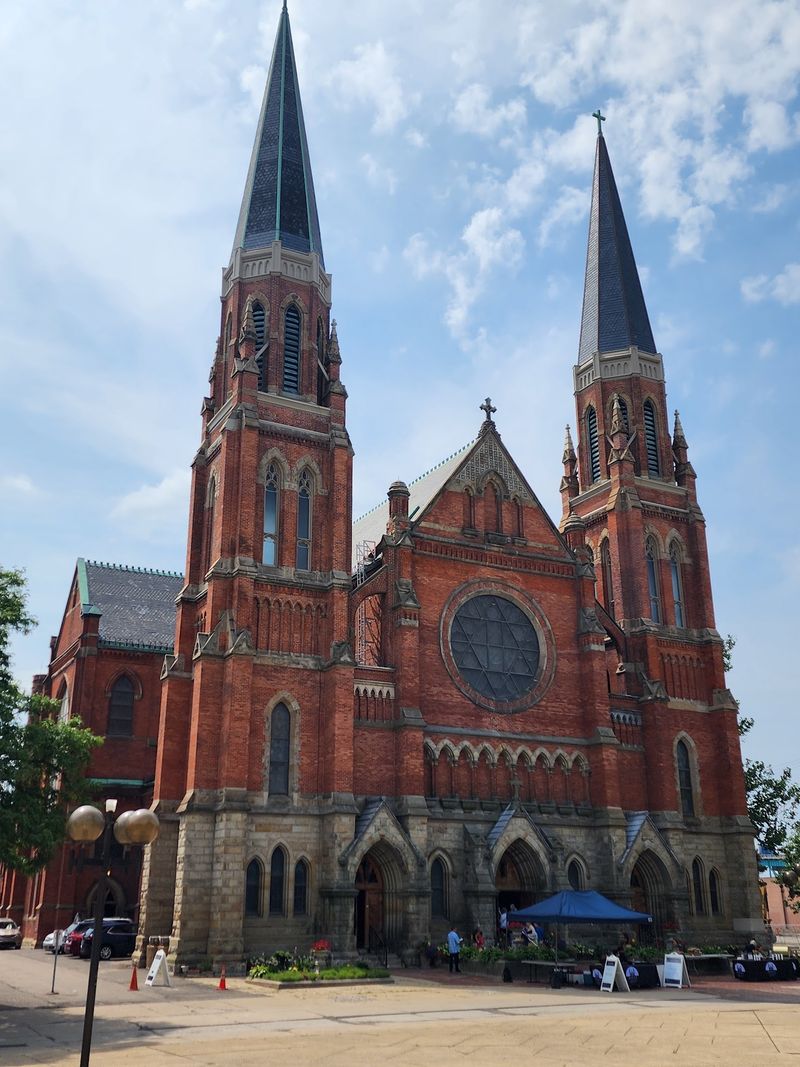
A ceiling scattered with stars gives this Detroit landmark a lovely surprise beyond its twin spires. Outside, pointed arches, flying buttresses, and gargoyles bring a distinctly French Gothic feeling to an otherwise very Michigan stop.
The parish began in 1701, while the present church dates to the 1880s. Inside are stained glass windows carried over from an earlier church, along with the resting place of Father Gabriel Richard, an important figure in Michigan history.
Head to 1000 St Anne Street, but arrange your visit before arriving because the basilica does not generally accept casual walk-ins. Attending Mass is another option, provided you treat the service as worship rather than a sightseeing break.
Leave time for small details instead of chasing only the tallest view. The carved rail and surviving pieces from earlier buildings make the long history feel close enough to touch.
11. Cathedral Of The Most Blessed Sacrament: Read The Doorway
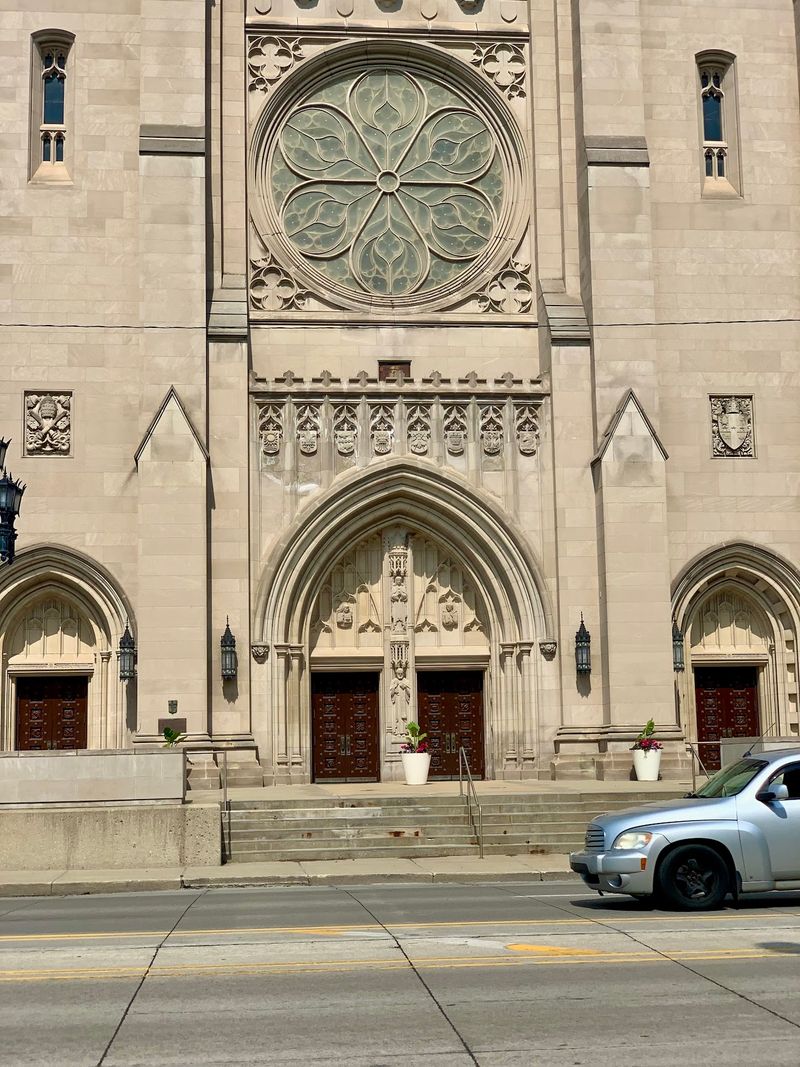
Before looking up, look at the doors. Their forty carved symbols turn the entrance into a small lesson in Catholic faith and the many communities that helped shape Detroit.
The cathedral at 9844 Woodward Avenue grew from a parish founded in 1905, whose early services took place in a former shoe factory. Its grand sandstone walls and twin towers make that beginning especially striking.
Inside, medieval-style stained glass and a high ceiling give the building the weight of an old European cathedral. Two pipe organs add another layer of interest, though hearing them depends on the service or event schedule.
Arrange a docent tour if you want help sorting out the symbols and sculpture. For a quieter outdoor pause, ask about access to the Lourdes grotto and surrounding gardens, and confirm visiting arrangements before making a special trip across the city.
10. Cathedral Church Of St. Paul: England With A Detroit Accent
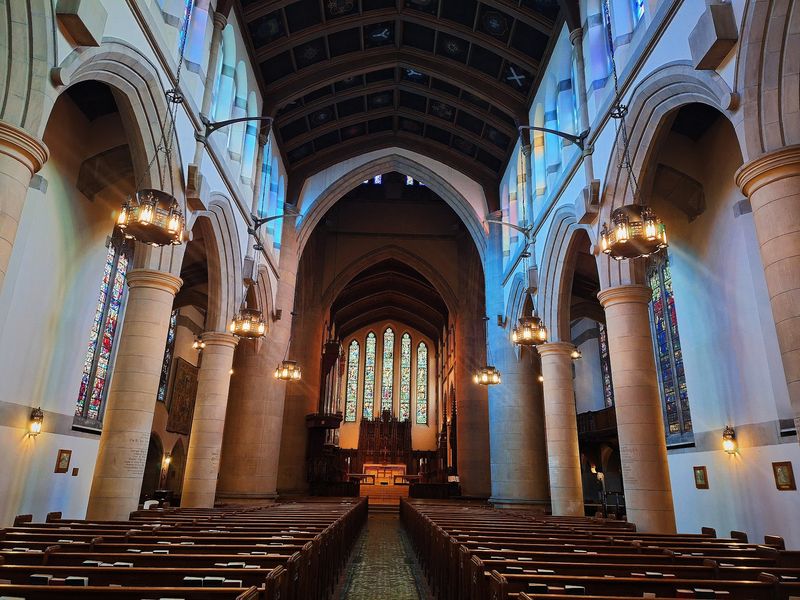
Dim light is part of the design here, not a reason to hurry through. The heavy pillars and pointed arches create a calm, sheltered feeling that recalls an English medieval church.
Architect Ralph Adams Cram designed the cathedral, dedicated in 1911, using construction methods without a steel superstructure. Its planned central tower was never built, an unfinished chapter that makes the roofline worth a second look.
Detroit leaves its own signature underfoot through colorful Pewabic tiles. German woodcarver Joseph Kirchmayer supplied the dark oak furnishings, so the interior brings local craft and European skill into the same room.
Find the Episcopal cathedral at 4800 Woodward Avenue, near the city’s cultural institutions. Ask for a self-tour brochure or arrange a guided visit, then spend a few quiet minutes studying the carving rather than expecting every detail to reveal itself at first glance immediately.
9. St. Joseph Shrine: A German Hall Church In Detroit
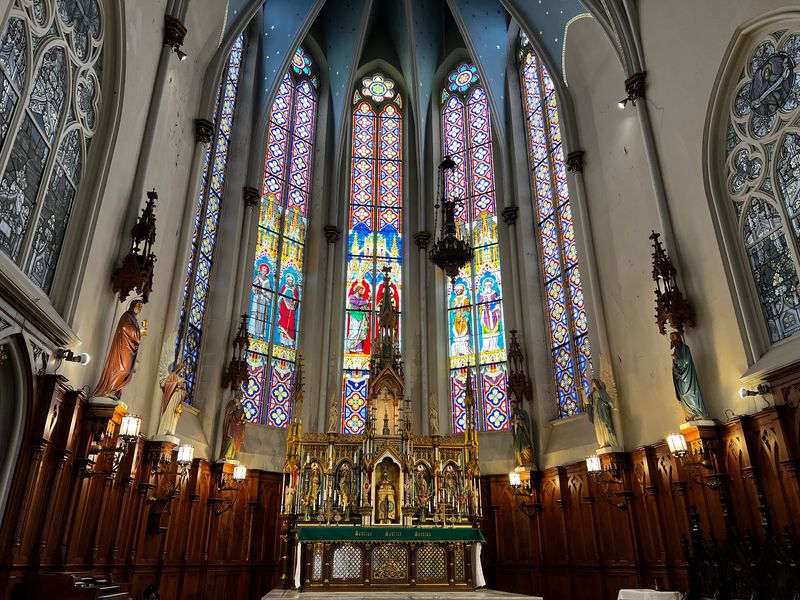
Wood does some remarkable pretending at this shrine. The richly carved high altar has the scale and detail you might expect from stone, yet its craftsmanship belongs to a proud tradition of working with timber.
German immigrants founded the parish in 1855, and the present church was dedicated in 1873. Its hall church interior, with tall spaces and slender clustered pillars, carries that heritage into the building’s very shape.
Stained glass adds another reason to slow down, including early North American work by Mayer of Munich. Rather than viewing the windows as background color, compare their figures and patterns with the carvings below.
The shrine stands at 1828 Jay Street and offers public tours and traditional Latin Masses. Check the current schedule, keep sightseeing separate from worship, and consider pairing your visit with nearby Eastern Market for a change of pace afterward.
8. Sweetest Heart Of Mary Church: Polish Pride In Red Brick
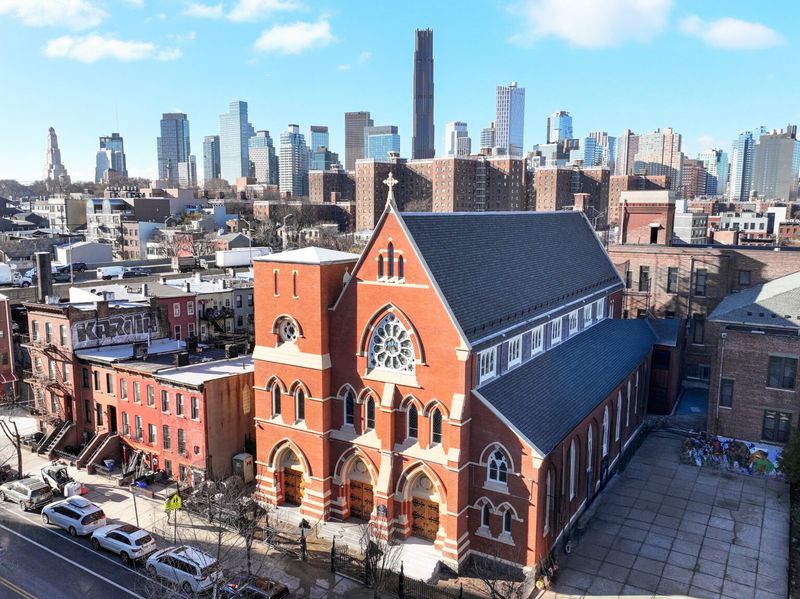
Red brick rarely looks this ambitious. Two towering spires rise above Russell Street, announcing a church built by Polish immigrants who wanted their faith and community to have a lasting home.
Dedicated in 1893, Sweetest Heart of Mary combines Gothic drama with details that reward closer inspection. Gold leaf capitals crown the columns, while the original pews carry carved curves and small Gothic arches.
The stained glass deserves its own stretch of attention, especially the large windows filled with religious scenes. Music lovers can also look for the historic Austin organ, whose story reaches back to 1894.
Visit 4440 Russell Street during confirmed visiting hours or a service, and ask ahead about tours. If your trip lines up with the parish’s pierogi festival, the cultural connection becomes deliciously clear, though festival crowds call for a different plan than a quiet architectural visit.
7. St. Florian Catholic Church: Look Up In Hamtramck
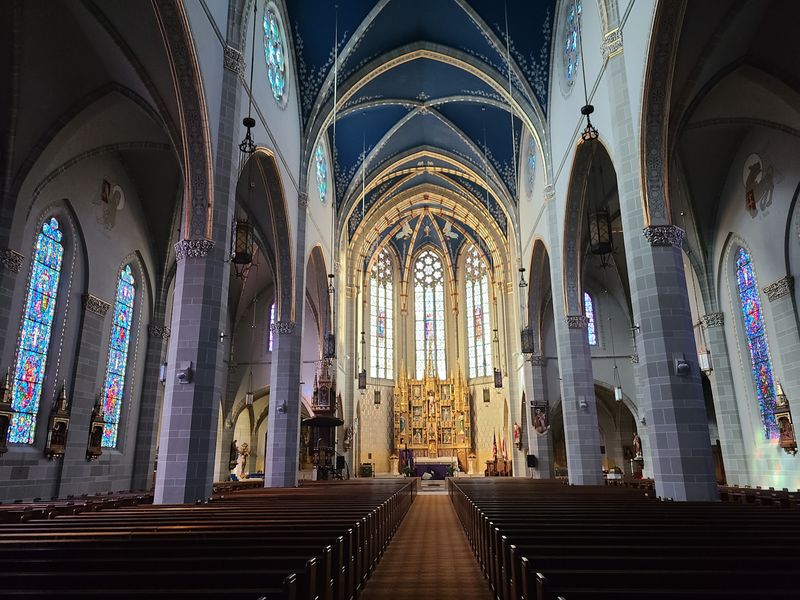
A blue vault decorated with vines changes the usual stone-and-shadow Gothic mood. Above the nave, that painted ceiling gives St. Florian a surprising softness despite the building’s commanding size.
Ralph Adams Cram designed the church, dedicated in 1928, for Hamtramck’s growing Polish Catholic community. Workers drawn to the automobile industry helped build a landmark whose silhouette remains part of the city’s identity.
Inside, the tall carved reredos and gold leaf altar details invite a slower look. The stained glass includes Polish saints and even Nicolaus Copernicus, a pleasing reminder that church windows can hold more than the expected scenes.
Use 2626 Poland Street for your visit and check parish information for access and Mass times. Services are offered in Polish and English, so choose thoughtfully if attending, and save your photographs for moments when they will not interrupt anyone’s prayer or concentration.
6. Basilica Of St. Adalbert: Grand Rapids Goes Grand
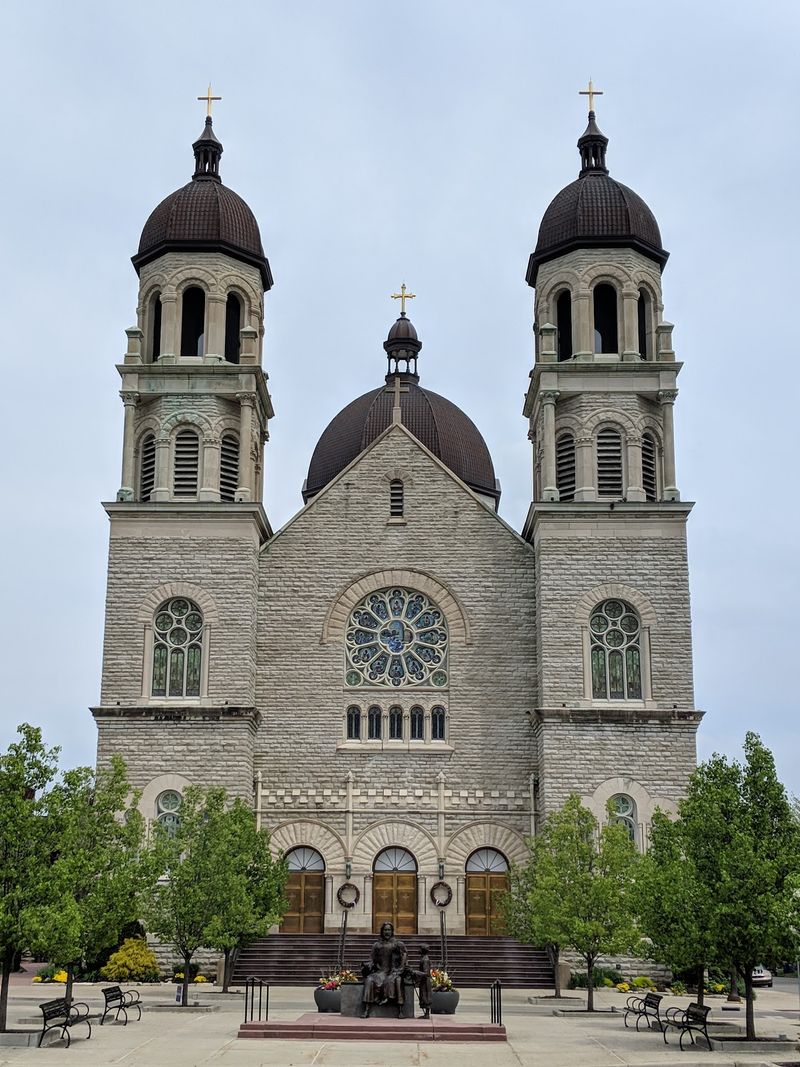
Three copper domes give this Grand Rapids basilica a skyline all its own. Rounded forms and solid limestone walls offer a welcome change after Michigan’s many pointed Gothic towers.
The present church was completed in 1913, following roots in a Polish immigrant aid society formed in 1872. Pope John Paul II granted it minor basilica status in 1979, the first parish in Michigan to receive that honor.
Marble paneling, carved angel heads, and a lofty canopy over the altar bring the grandeur indoors. Even the pews have a local story: they were made by Grand Rapids’ American Seating Company, linking sacred space with the city’s furniture industry.
Find the basilica at 654 Davis Avenue NW and ask about tour arrangements before traveling. A weekday visit may offer more breathing room, and looking at both the dome and the seating reveals two different kinds of craftsmanship.
5. Cathedral Of Saint Andrew: A Little Rome At The Entrance
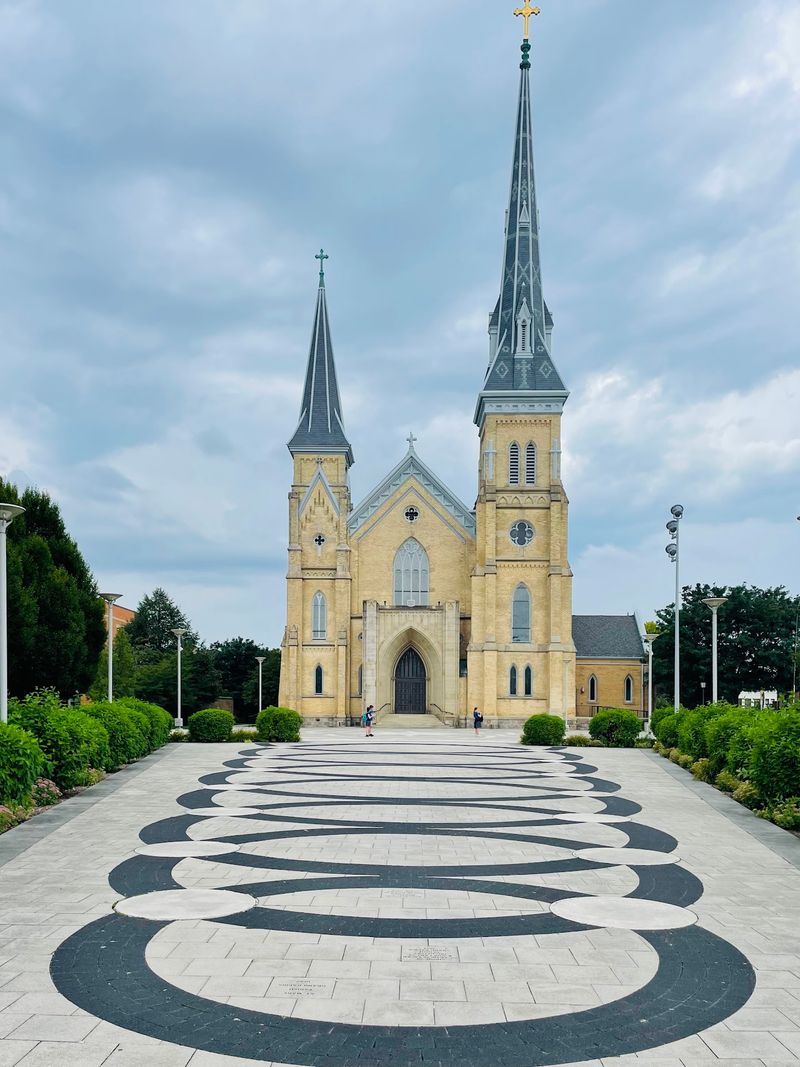
The European connection starts before you reach the door. Piazza Secchia takes inspiration from Michelangelo’s piazza on Rome’s Capitoline Hill, giving the approach a sense of occasion without needing a plane ticket.
Beyond it stands a Gothic Revival cathedral with pale brick walls and towers of unequal height. The current building dates to the 1870s and survived a lightning-caused fire in 1901 before being rebuilt and expanded.
Munich-made stained glass tells the life of Christ through vivid scenes, including the Nativity and Ascension. Recessed Stations of the Cross offer another reason to move slowly along the walls rather than staying near the entrance.
At 301 Sheldon Boulevard SE, the cathedral makes an easy downtown stop. Ask for a self-tour brochure, check service times, and give the outdoor plaza a few minutes of its own before stepping inside for prayer or quiet observation.
4. St. Lorenz Lutheran Church: Beyond Frankenmuth’s Shopfronts
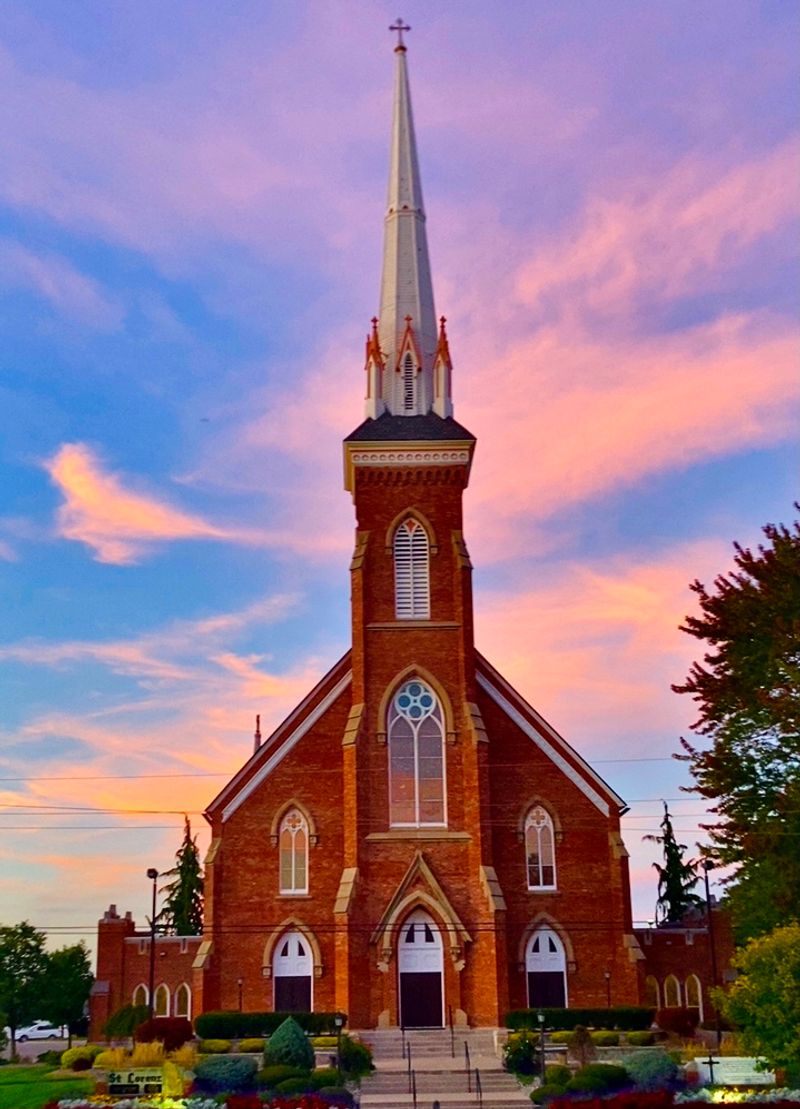
Frankenmuth’s Bavarian story runs deeper than its shops and chicken dinners. At St. Lorenz, that heritage belongs to a working congregation founded by German settlers in 1845.
The current brick church was dedicated in 1880, and its tall steeple anchors the surrounding area. Inside, pink walls behind the altar introduce an unexpectedly warm note, while the elevated pulpit survives from an earlier church.
A locally made altar by John Herzog and large stained glass windows keep the details personal rather than merely impressive. The congregation also continues its German connection through a monthly German-language service.
Travel to 1030 West Tuscola Street and confirm visitor access before planning your day around it. Consider this a thoughtful counterpoint to downtown’s lively attractions: a chance to understand the community that shaped Frankenmuth, not simply another backdrop for a souvenir photograph on a busy afternoon outing.
3. St. Anne Catholic Church: Island Light And Voyageur History
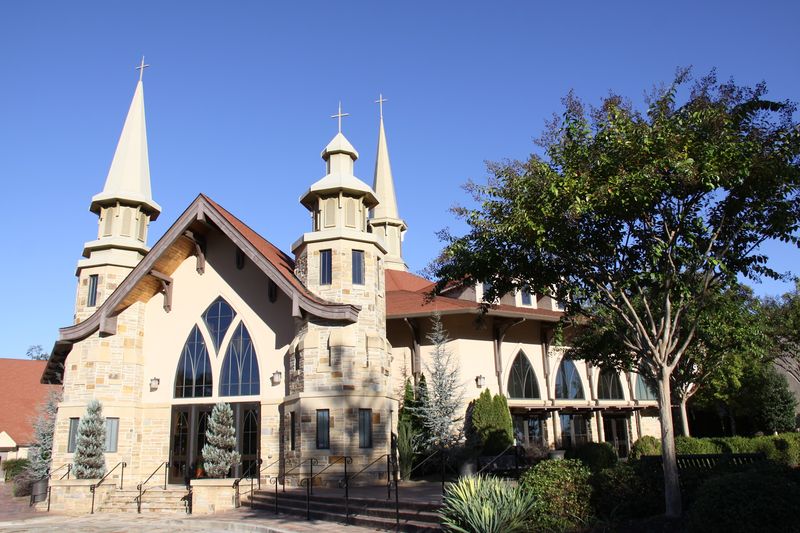
Bicycle wheels and carriage traffic set a different rhythm outside this white wooden church. Mackinac Island’s car-free setting makes the approach feel removed from the rush of a mainland road trip.
The parish traces its roots to seventeenth-century mission history, and St. Anne is the patron saint of voyageurs. That connection ties the church to the island’s early Indigenous communities, missionaries, and fur traders.
Its graceful steeple, woodwork, and colorful stained glass offer beauty on a more intimate scale than Detroit’s great stone churches. A church museum adds historical context when open, so ask about its availability rather than assuming regular access.
You will find the church at 6836 Main Street, reachable on foot or by bicycle. Build your visit around ferry plans and current parish hours, and remember that weddings or services may limit sightseeing even during the busy summer season.
2. St. Mary Cathedral: Lansing’s Limestone Retreat
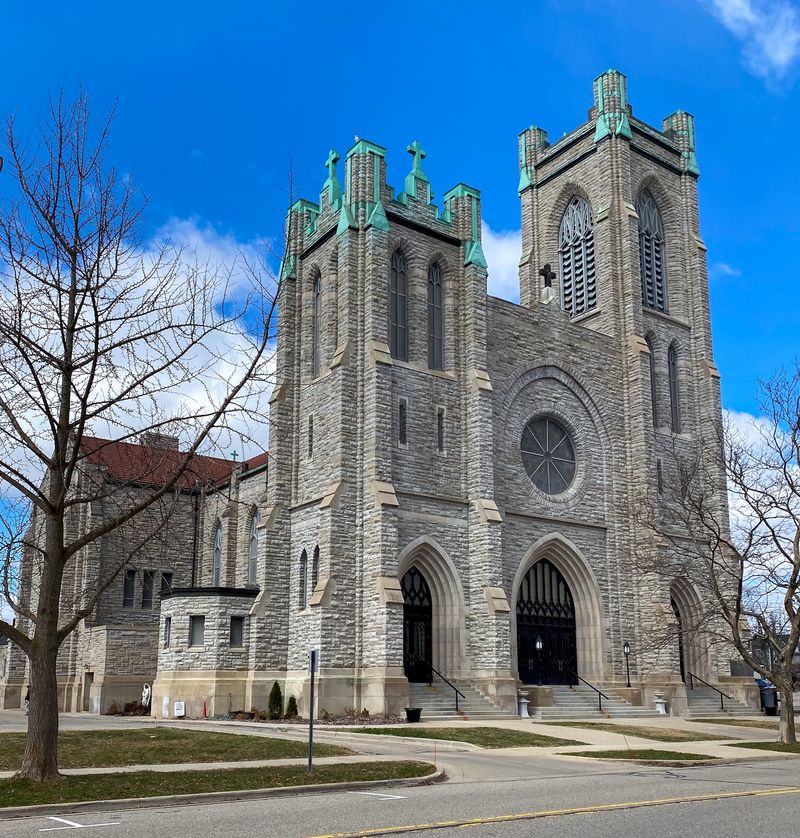
Government buildings are not the only reason to look up in Lansing. Near the State Capitol, limestone towers mark a cathedral that offers a quieter kind of civic landmark.
The present church was dedicated in 1913 and became the cathedral of the Diocese of Lansing in 1937. Its pointed entrances and rose window establish the Gothic mood before you step onto the terrazzo floor.
Inside, thirty-nine pictorial stained glass windows bring color to the high, vaulted space. Made in Munich and installed in the 1920s, they provide a direct European link rather than just a passing resemblance.
Visit 219 Seymour Avenue and check the day’s worship schedule before entering. Look for the marble Last Supper carving preserved from the original high altar, then settle into a pew for a moment; the building makes more sense when you allow it some silence too.
1. National Shrine Of The Cross In The Woods: Grandeur Among Pines
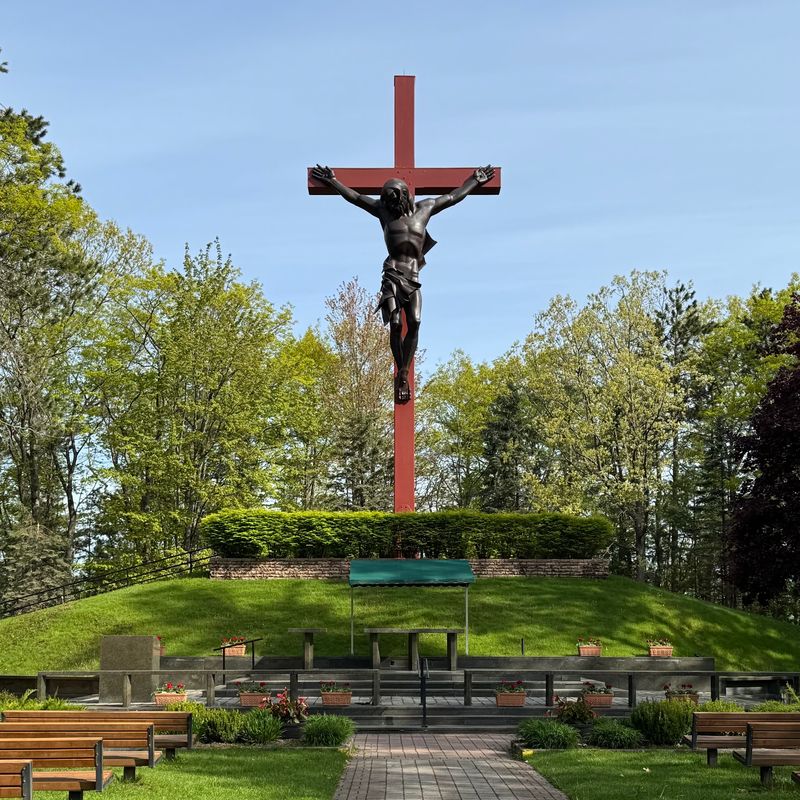
No Gothic spire is needed for the final stop to feel monumental. A fifty-five-foot redwood cross rises among the trees, carrying a bronze figure of Christ by Michigan sculptor Marshall Fredericks. The towering structure creates a powerful impression against the surrounding forest, especially when sunlight filters through the branches and illuminates the sculpture from different angles throughout the day.
This Indian River shrine differs from the European-style churches elsewhere on the route. Its beauty comes from the meeting of sculpture, woodland, and open sky, with the large indoor church offering views toward the cross. The peaceful setting encourages visitors to linger, whether they come for spiritual reflection, architecture, or artistic appreciation.
The original church was designed by Alden B. Dow and now houses the gift shop and religious doll museum. That unexpected collection adds a smaller, more curious chapter to a site known for enormous scale.
Head to 7078 M68 and allow about an hour to explore without rushing. Confirm seasonal museum hours and weather conditions, especially if hoping to attend outdoor worship, and wear shoes suited to walking the grounds rather than only visiting an interior.