
8 Forgotten Ghost Towns In Illinois That Are Quietly Fascinating
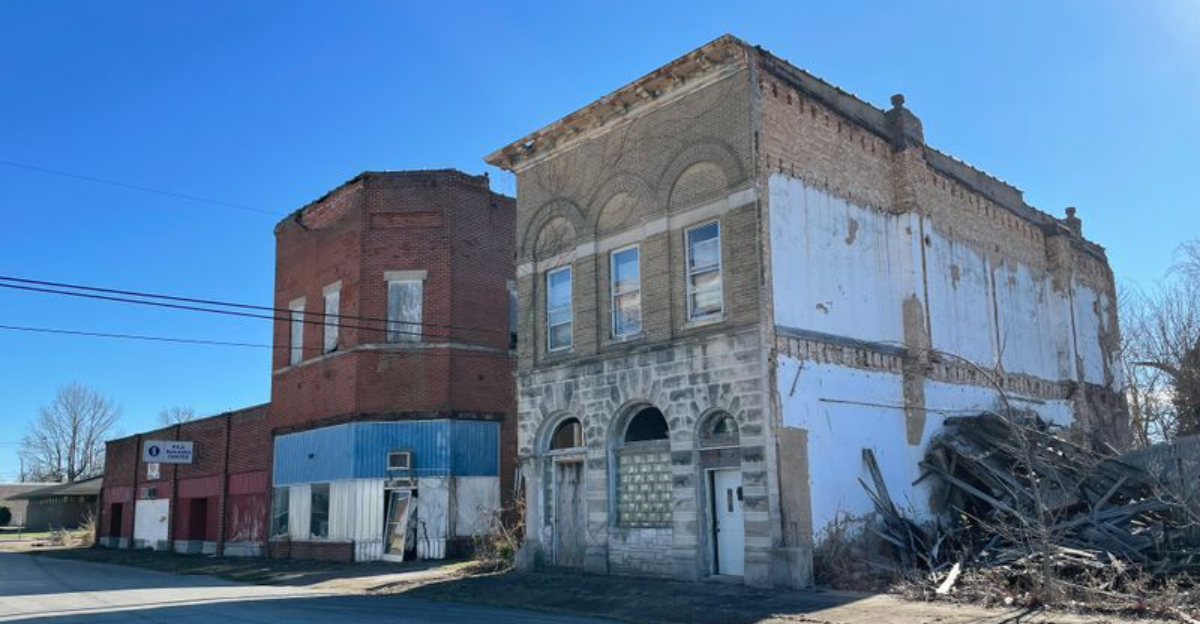
Illinois is famous for Chicago’s skyline and Abraham Lincoln’s legacy, but hidden across the Prairie State are dozens of abandoned towns frozen in time.
These forgotten communities once buzzed with life—riverboat captains, coal miners, and frontier families building their dreams.
Now they sit quietly, their empty streets and crumbling buildings whispering stories of boom, bust, and everything in between.
1. Cairo, Illinois
Perched at the southern tip of Illinois where the Mississippi and Ohio Rivers meet, Cairo once thrived as a bustling river port. Steamboats docked here constantly during the 1800s, carrying cargo and passengers between North and South. I visited Cairo on a humid summer afternoon, and the silence was eerie—grand Victorian buildings stood empty, their windows shattered and paint peeling.
The town’s decline started when railroads replaced river transport, and racial tensions in the 1960s drove many families away. Today, fewer than 2,000 people remain in a city that once housed over 15,000. Walking down the abandoned commercial district feels like stepping into a time capsule, with faded advertisements still visible on brick walls and rusted iron balconies hanging overhead.
2. Old Shawneetown, Illinois
Old Shawneetown earned its nickname as the Gateway to Illinois because pioneers crossed the Ohio River here to settle westward. Founded in 1810, it became one of the state’s first banking centers and even turned down a loan request from a little settlement called Chicago, thinking it had no future. Talk about a miscalculation!
Devastating floods from the Ohio River repeatedly hammered the town throughout the 1800s and early 1900s. After the catastrophic 1937 flood submerged everything, residents finally gave up and moved three miles inland to New Shawneetown. The original town now sits mostly deserted, with just a handful of historic buildings like the old bank still standing. Nature has reclaimed much of the area, turning former streets into overgrown paths.
3. Brownsville, Illinois
Tucked away in Jackson County, Brownsville flourished briefly during the mid-1800s as a coal mining hub. Miners and their families settled here, creating a tight-knit community with schools, churches, and general stores. Coal fueled everything back then, and towns like Brownsville popped up wherever black gold was discovered underground.
When the coal veins ran dry, so did the town’s lifeblood. Families packed up and moved to places with better opportunities, leaving behind empty homes and memories. My great-grandfather worked in mines not far from here, and hearing his stories made exploring Brownsville feel personal.
Now only scattered foundations and overgrown cemeteries mark where hundreds once lived. The cemetery is particularly haunting, with weathered headstones telling tales of young children and miners who never made it home.
4. Tuscumbia, Illinois
Nestled in Fulton County, Tuscumbia sprang to life in the 1830s as a stagecoach stop and river town. The Illinois River brought commerce and travelers, and for decades Tuscumbia hummed with activity. Farmers shipped grain, merchants sold supplies, and the town grew steadily as settlers pushed westward across the prairie.
But progress can be cruel. When the railroad chose a different route and bypassed Tuscumbia entirely, businesses dried up almost overnight. Without train access, merchants couldn’t compete, and families drifted toward towns with better connections.
Today, Tuscumbia exists only in name, with a few scattered residents and crumbling structures. The old cemetery remains the most visited spot, where history buffs come to photograph ancient tombstones. Standing there, you can almost hear the stagecoach wheels rattling down dirt roads.
5. Griggsville Landing, Illinois
Situated along the Illinois River in Pike County, Griggsville Landing once served as a vital shipping point for agricultural goods. Riverboats stopped regularly during the mid-1800s, loading grain and livestock bound for distant markets. The landing bustled with dock workers, merchants, and farmers eager to sell their harvests.
Everything changed when railroads became dominant and river traffic declined dramatically. Griggsville Landing couldn’t adapt quickly enough, and businesses relocated to nearby towns with rail access. The final blow came when flooding repeatedly damaged the docks and warehouses, making repairs too expensive.
Currently, almost nothing remains except overgrown ruins near the riverbank. Local historians occasionally visit to document what’s left, but nature is winning the battle. I wandered through the area last fall, finding only rusted metal and rotted wood half-buried in mud.
6. Hitesville, Illinois
Don’t let the upbeat name fool you—Hitesville in Coles County had nothing to do with Motown music. This tiny settlement appeared in the late 1800s as a railroad stop, providing a convenient place for trains to take on water and coal. A few families settled nearby, opening a general store and blacksmith shop to serve railroad workers and passing travelers.
When steam locomotives gave way to diesel engines, water stops became unnecessary. Hitesville lost its primary purpose almost overnight, and the railroad eventually abandoned the stop completely. Without the trains, there was simply no reason for anyone to stay.
Today, Hitesville exists only in county records and faded maps. The exact location is hard to pinpoint, with farmland covering where buildings once stood. It’s a reminder that some towns were never meant to last forever.
7. Kaskaskia, Illinois
Kaskaskia holds a unique place in Illinois history—it was actually the state’s first capital! Founded by French settlers in the early 1700s, Kaskaskia flourished as a major Mississippi River port. Politicians, traders, and wealthy merchants built impressive homes, and the town seemed destined for greatness.
Then the mighty Mississippi changed course during an 1881 flood, literally cutting Kaskaskia off from the rest of Illinois. The river now flows where the town center once stood, and what remains sits on the Missouri side of the water. Fewer than 20 people live there now, making it Illinois’s smallest incorporated town.
Visiting Kaskaskia requires crossing a bridge from Missouri—it’s the only part of Illinois accessible solely from another state. The old church bell, gifted by King Louis XV of France, still hangs in a shrine, one of the few reminders of Kaskaskia’s glorious past.
8. Eldred, Illinois
Eldred in Greene County began as a coal mining settlement in the late 1800s, attracting immigrant workers seeking better lives. Italian and Polish families arrived with little more than determination, digging coal from deep underground to power America’s industrial growth. Company houses lined dirt streets, and the mine whistle regulated everyone’s daily schedule.
When coal prices dropped and the mine closed in the 1950s, Eldred’s economy collapsed. Miners had few other skills and limited options, so most families reluctantly moved away. The company houses were abandoned, and businesses boarded up their windows one final time.
Eldred still exists but barely—maybe 100 people remain in a town built for thousands. Empty houses outnumber occupied ones, and the main street looks post-apocalyptic. I drove through on a gray afternoon, and the loneliness was palpable, like the town itself was mourning its lost vitality.