
9 South Carolina Lakes So Clear And Quiet They Feel Like A Secret Worth Protecting
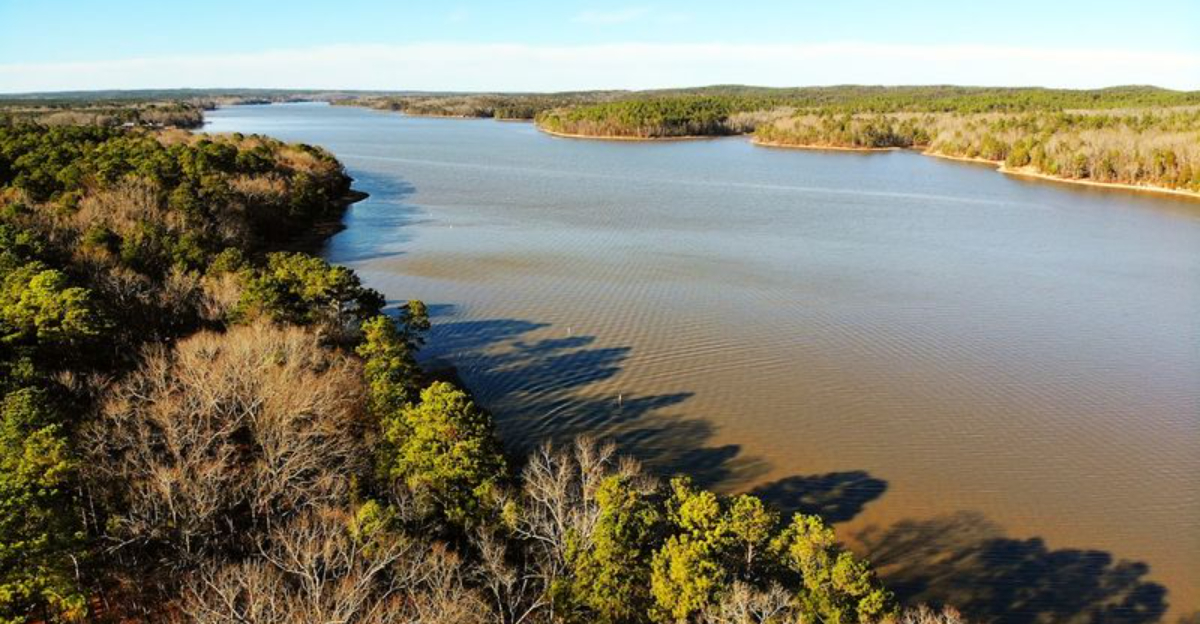
The South Carolina most people know is loud.
These lakes tell a completely different story.
Think of the places that usually come to mind. Busy beaches.
Popular boardwalks. Historic downtowns filled with visitors.
They deserve the attention they receive, but they are only one side of the state.
The other side is much quieter.
It is hidden among rolling hills, dense forests, and winding back roads where crystal-clear lakes reflect the sky like glass and the loudest sound is often a paddle dipping into the water.
That is the contrast.
South Carolina is home to lakes that feel wonderfully untouched, even though many are only a short drive from busy highways and growing towns. Here, the crowds fade away, the scenery takes over, and time seems to move at an entirely different pace.
You notice it almost immediately.
The air feels cooler.
The water looks clearer.
Everything slows down.
Some South Carolina destinations are made for checking off an itinerary.
These are made for forgetting the itinerary altogether. Whether you come to kayak, fish, swim, or simply sit along the shoreline, these lakes remind you that some of the state’s greatest treasures are the ones most people never think to look for.
1. Lake Jocassee
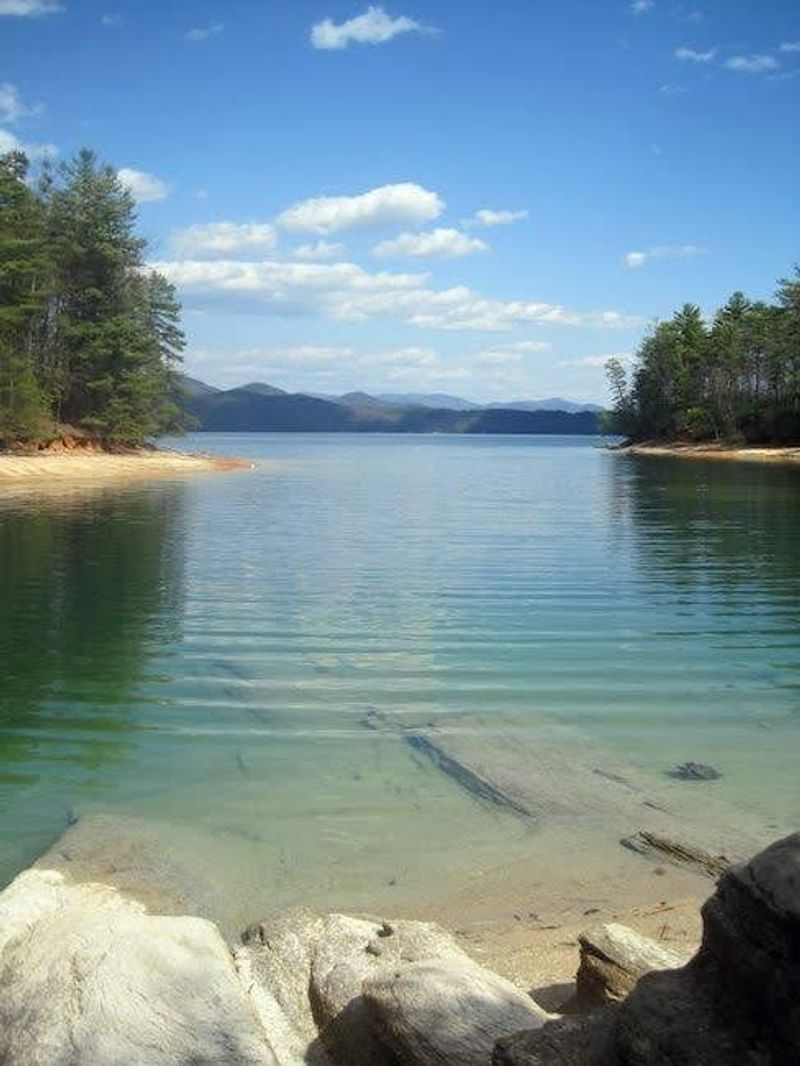
Pulling up to Lake Jocassee for the first time, I felt like I’d accidentally wandered into the Rockies instead of South Carolina.
This 7,500-acre reservoir sits cradled in the Blue Ridge Mountains near Salem, South Carolina, where the water glows an impossible shade of turquoise that seems borrowed from a postcard. The lake formed in 1973 when Duke Energy dammed the Jocassee River, flooding a valley and creating depths that plunge past 300 feet in some spots.
Because the water comes from mountain streams, it stays cold and exceptionally clear year-round, letting you peer down 20 feet or more on a calm day. I’ve kayaked here dozens of times, always marveling at how the submerged trees and rock formations remain visible beneath my boat.
Waterfalls like Laurel Fork and Wright Creek tumble directly into the lake, accessible only by paddling or pontoon, which keeps the shoreline blissfully undeveloped. The state park on the eastern shore offers a boat ramp and a few quiet trails, but most of the 75-mile shoreline belongs to the Jocassee Gorges wilderness.
Every visit reminds me why some places deserve their reputation as carefully guarded secrets.
2. Lake Keowee
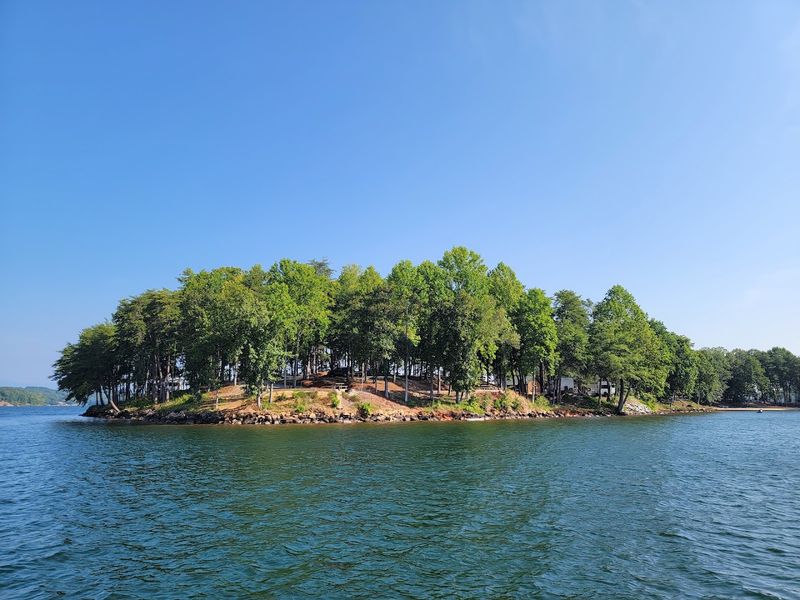
Lake Keowee spreads across 18,500 acres just south of its famous neighbor, Jocassee, but it carries a completely different personality.
Created in 1971 by Duke Energy’s Keowee Dam near Seneca, South Carolina, this reservoir serves as a cooling source for the nearby nuclear station, which means the water stays warmer than most mountain lakes. I’ve found that warmth makes swimming here far more inviting in early spring and late fall when other lakes still feel like ice baths.
The clarity rivals Jocassee in many coves, especially along the undeveloped western shore where the forest meets the water without interruption. I remember anchoring in a quiet inlet one October afternoon, watching leaves drift down and settle on water so transparent I could count the pebbles 15 feet below.
The lake stretches across parts of Oconee and Pickens counties, offering over 300 miles of shoreline that weaves around dozens of small peninsulas and hidden bays. Public access points are limited compared to other lakes, which keeps boat traffic manageable even on summer weekends.
Keowee has become my go-to when I want the mountain lake experience without the crowds that sometimes gather at Jocassee.
3. Lake Richard B. Russell
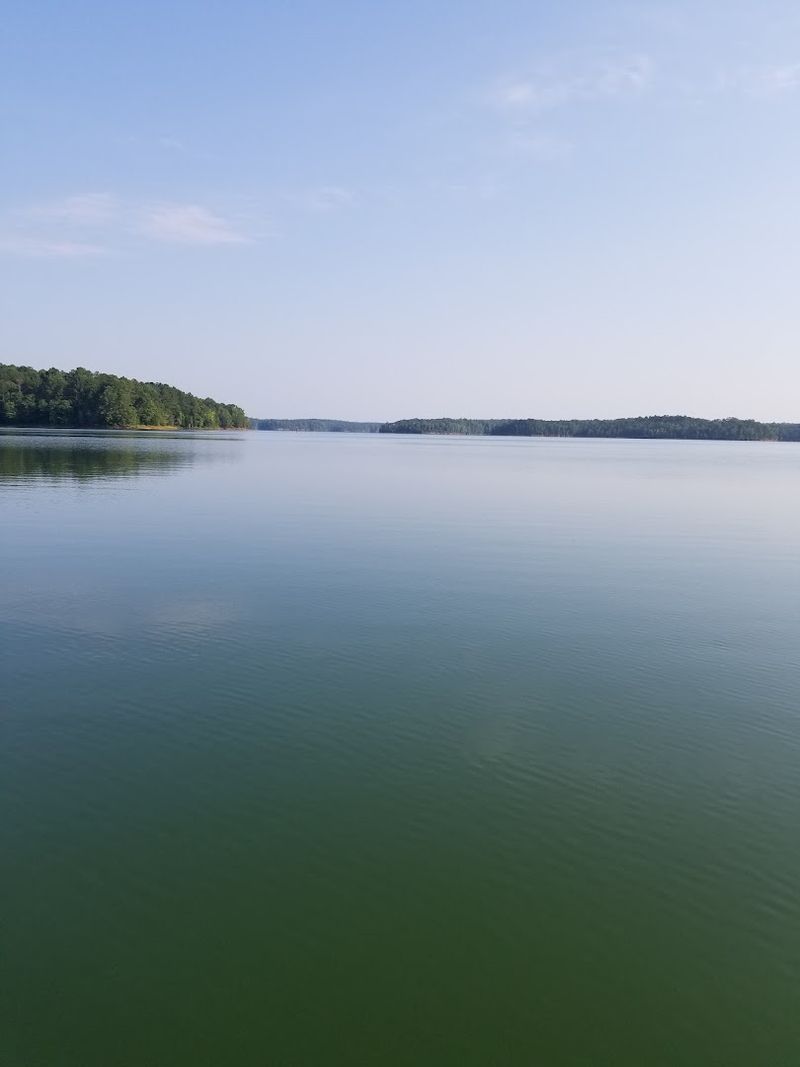
Straddling the South Carolina-Georgia border near Calhoun Falls, Lake Richard B. Russell often gets overlooked despite its 26,650 acres of remarkably clean water.
The U.S. Army Corps of Engineers completed this reservoir in 1985 by damming the Savannah River, creating a lake that stretches 35 miles upstream and holds some of the clearest water in the entire Savannah River basin.
What struck me most during my first visit was how undeveloped the shoreline remains compared to older Corps lakes.
Much of the surrounding land is protected forest, which means fewer docks, fewer houses, and fewer runoff sources that cloud the water. I’ve spent entire afternoons exploring the upper reaches near Elberton, Georgia, where the lake narrows into creek-like channels that feel more like wilderness than reservoir.
The South Carolina side offers several quiet parks, including Sadlers Creek State Park near Anderson, where I’ve launched my kayak into coves so still they mirror the sky perfectly. Fishing guides tell me the clear water makes bass and stripers more cautious, but it also makes spotting them from above almost too easy.
Russell remains my favorite answer when someone asks where to find peace without driving all the way to the mountains.
4. Lake Hartwell
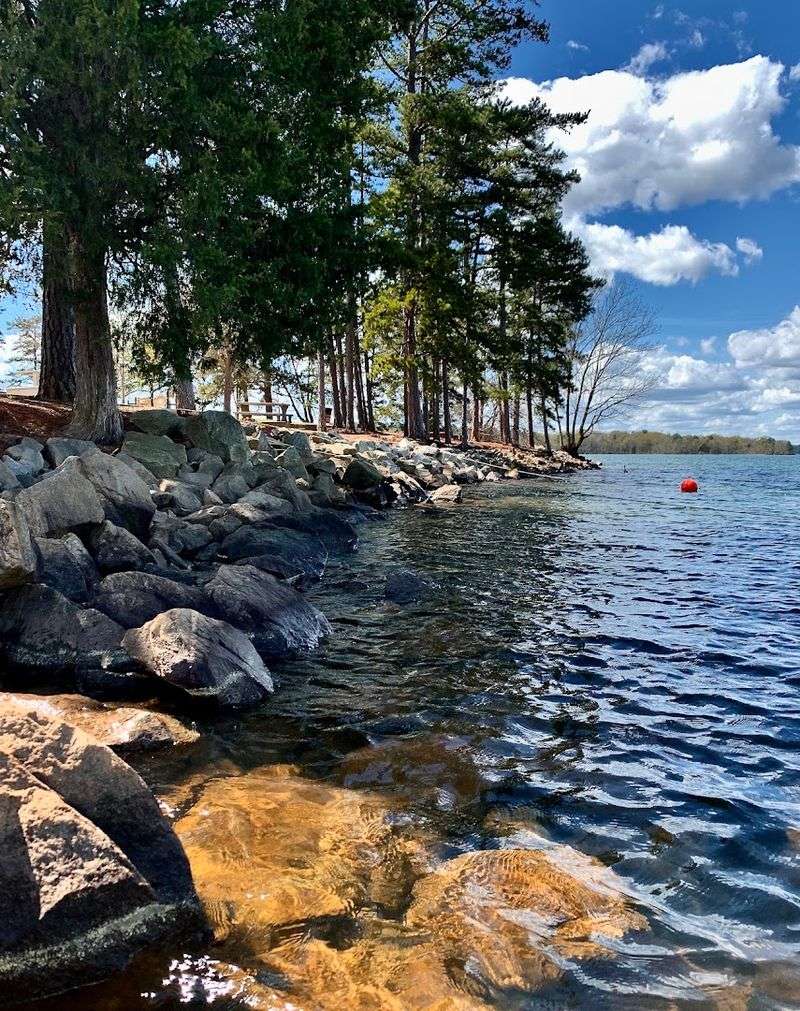
I’ll admit Lake Hartwell surprised me with how clear it can be, especially considering its size and popularity.
This 56,000-acre reservoir spans the South Carolina-Georgia border near Anderson and Clemson, making it one of the Southeast’s largest and busiest lakes. The Corps of Engineers dammed the Savannah, Tugaloo, and Seneca rivers back in 1962, creating 962 miles of shoreline that wind through both states.
Despite hosting thousands of boaters and anglers each summer, Hartwell maintains surprisingly good water clarity in many of its 50-plus major coves and creek arms. I’ve found the northeastern reaches near Clemson particularly clear, where Eighteen Mile Creek and Coneross Creek feed in cool, clean water from the foothills.
The lake drops to 185 feet deep near the dam, and on calm mornings I’ve watched the sun penetrate 10 to 12 feet down in the main channel. Hartwell State Park on the South Carolina side offers a sandy swim beach where kids can actually see their toes in waist-deep water.
What keeps me coming back is the sheer variety of quiet spots tucked between the busier marinas and campgrounds, places where you can anchor and forget the lake sees millions of visitors each year.
5. Lake Wateree
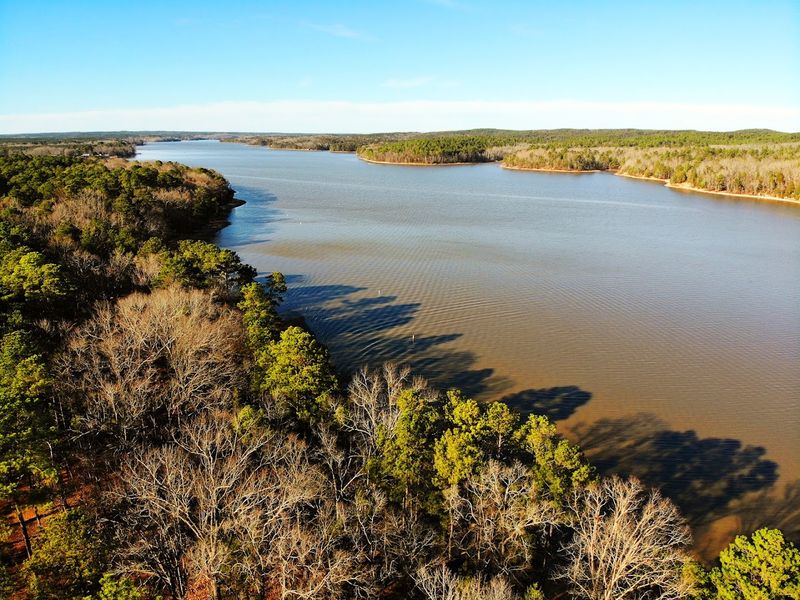
Driving east from Columbia toward Camden, Lake Wateree appears as a long, narrow ribbon of water that feels more intimate than the sprawling upstate reservoirs.
Duke Energy created this 13,700-acre lake in 1919 by damming the Wateree River, making it one of South Carolina’s oldest reservoirs and a surprising pocket of clarity in the Midlands. The lake stretches 21 miles through Fairfield, Kershaw, and Lancaster counties, with a maximum depth around 64 feet near the dam.
What I love most is how the water takes on a dark, tea-stained clarity from the surrounding hardwood swamps and cypress stands, letting you see down several feet despite the tannin color. I’ve paddled the upper reaches near Liberty Hill where the lake narrows and the cypress knees create a maze that feels prehistoric.
Lake Wateree State Park on the western shore provides the easiest public access, with a boat ramp and a short nature trail that loops through the bottomland forest. The fishing here is legendary, with striped bass and catfish thriving in the clear, oxygen-rich water.
Every time I visit, I’m reminded that you don’t need mountain elevations to find a lake worth protecting.
6. Lake Greenwood
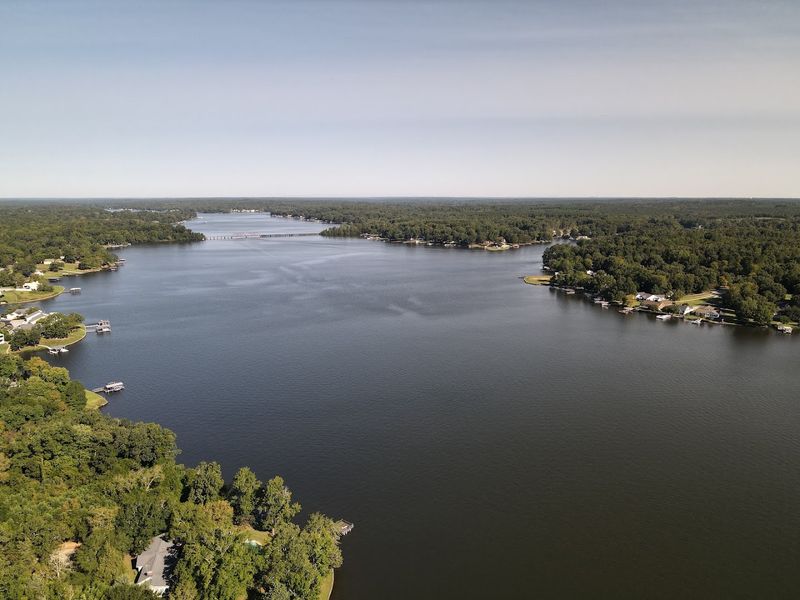
Nestled between Greenwood and Ninety Six, Lake Greenwood has quietly served as the Midlands’ answer to mountain clarity since 1940.
Duke Energy built this 11,400-acre reservoir on the Saluda River, creating a lake that stretches across Greenwood, Laurens, and Newberry counties with 212 miles of mostly undeveloped shoreline. I first discovered Greenwood on a spring camping trip to Lake Greenwood State Park, where I waded into water so clear I could watch minnows dart around my ankles in three feet of depth.
The lake averages around 40 feet deep, with some holes near the dam reaching 70 feet, and the combination of steady flow from the Saluda and limited development keeps the water remarkably clean year-round. I’ve kayaked the upper lake near Chappells, where the river channel narrows and the forest crowds close enough to create a shaded tunnel over the water.
What makes Greenwood special is how few people seem to know about it, even among South Carolina locals who flock to the upstate lakes. The state park on the southern shore offers camping, a swim beach, and a nature trail, but most weekdays you’ll have entire coves to yourself.
Greenwood has become my quiet escape when I need a lake fix without the drive to the mountains.
7. Lake Secession
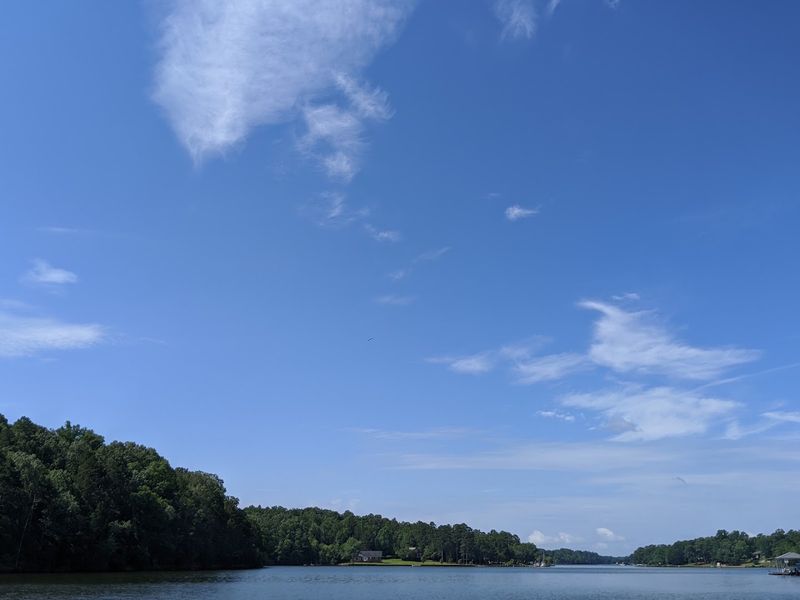
Tucked away near the town of Cross Hill in Laurens County, Lake Secession barely registers on most lake maps despite being one of the clearest small lakes I’ve ever explored.
This modest 240-acre reservoir was created decades ago and remains surrounded almost entirely by private land and protected forest, which explains both its pristine condition and its relative anonymity. The first time I launched a kayak here, I felt like I’d stumbled onto someone’s private pond, except the water was far too clear and the setting too perfect to be anything but natural.
Visibility often reaches 8 to 10 feet on calm days, revealing a bottom of sand and clay that looks almost manicured. The lake sits in a quiet pocket of the Piedmont where development has crept slowly, leaving the shoreline largely wooded with pines and hardwoods that drop acorns and leaves but little pollution.
Public access is limited to a single boat ramp, which keeps traffic light even on weekends when other lakes fill with jet skis and pontoons. I’ve spent entire mornings here without seeing another boat, just me and the occasional heron stalking the shallows.
Secession reminds me that sometimes the best secrets are the ones that don’t even try to advertise themselves.
8. Lake George Warren
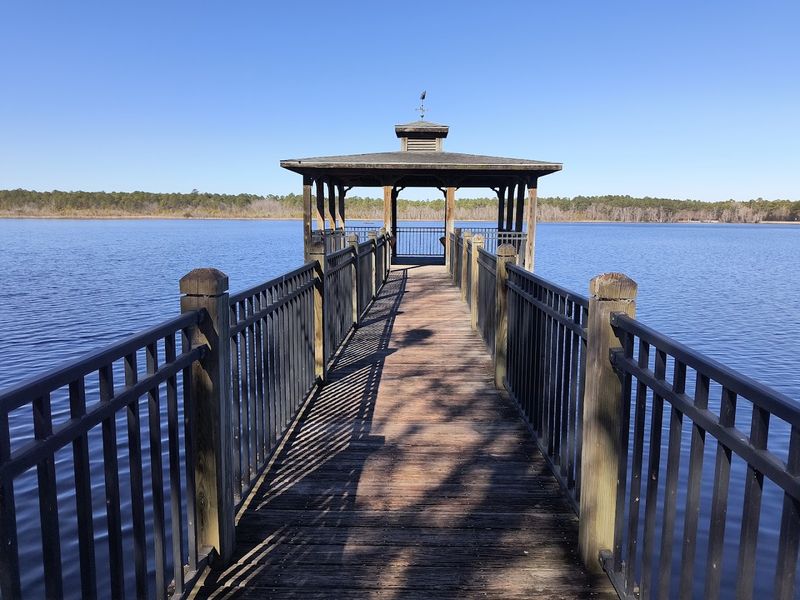
Finding Lake George Warren near Hampton in the Lowcountry feels like discovering a lake that time forgot.
This small reservoir covers roughly 350 acres and was created for cooling purposes, but it has evolved into a quiet refuge where the water clarity rivals lakes three times its elevation. I first heard about Warren from a local angler who described it as the clearest lake in the Lowcountry, a claim I initially doubted until I saw the bottom in six feet of water near the boat ramp.
The lake sits in a relatively undeveloped area of Hampton County, surrounded by pine plantations and scattered wetlands that filter runoff before it reaches the water. What surprised me most was how the lake maintains its clarity despite the sandy Coastal Plain soils that typically cloud Lowcountry waters.
The shoreline is mostly natural, with cypress knees and aquatic grasses creating habitat for bass, bream, and the occasional otter I’ve spotted diving for fish. Public access is limited, and the lake sees mostly local fishermen who appreciate the quiet and the visibility that makes sight-fishing almost too easy.
Warren has become my proof that you don’t need mountains or massive size to create a lake worth protecting, just clean water and people who care enough to leave it alone.
9. Lake Cherokee
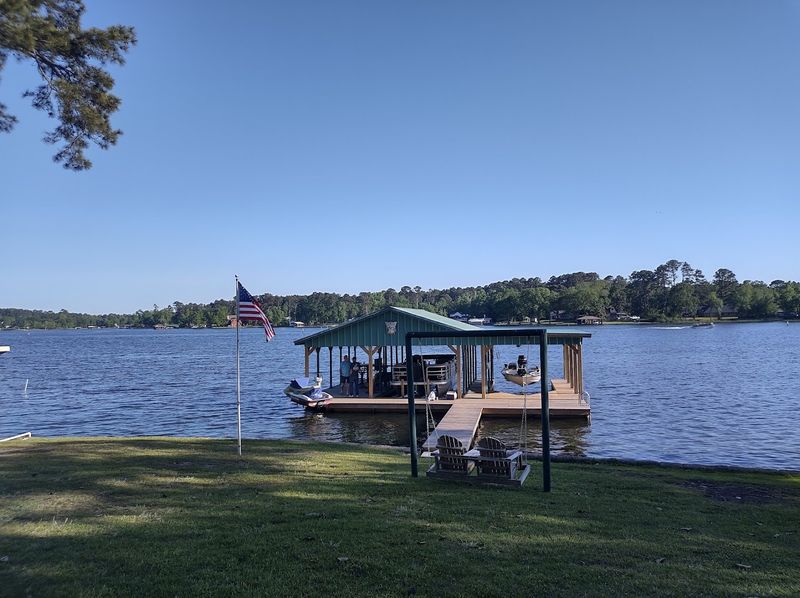
Lake Cherokee sits within a gated community near Gaffney in Cherokee County, and while it’s technically private, it deserves mention as one of South Carolina’s clearest small lakes.
This 225-acre lake was created as the centerpiece of a residential development, but strict community rules about shoreline development and water quality have kept it remarkably pristine since the 1970s. I’ve visited friends who live on the lake, and each time I’m struck by how the water looks more like a natural mountain lake than a man-made community amenity.
The clarity comes from a combination of limited boat traffic, strict rules against fertilizers and pesticides near the shore, and a natural spring-fed source that keeps the water fresh. I’ve stood on docks here and watched bass cruise past in 10 feet of water, their shadows sharp against the sandy bottom.
The lake is ringed by homes, but the community requires natural buffers and limits docks to maintain the shoreline’s wooded character. While public access is restricted to residents and their guests, Cherokee represents what’s possible when a community decides water clarity matters more than convenience or intensive development.
It’s a reminder that protecting a lake often starts with people who live there deciding it’s worth the effort.