
9 South Carolina Upstate Rockhounding Spots Where Crystals And Hidden Gems Wait
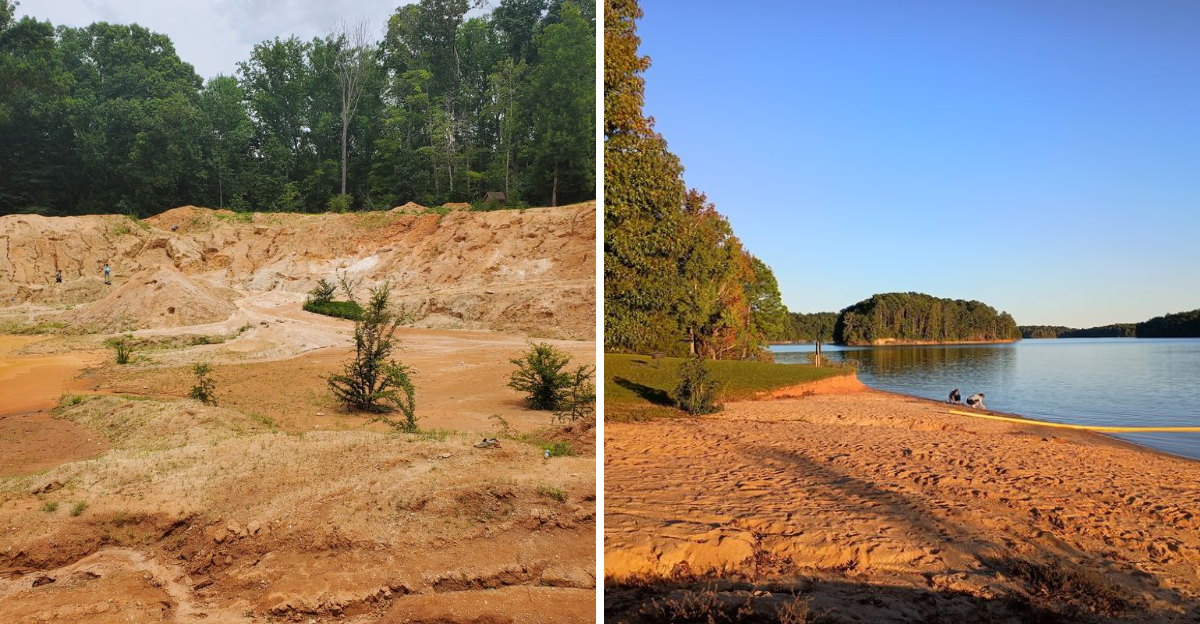
Most treasure hunts begin with a map and a warning.
In South Carolina, you may need sturdy shoes, patience, and permission to look down.
Beneath red clay, creek beds, and weathered granite, the Upstate hides quartz, garnets, kyanite, fossils, and flashes that make every stone seem suspicious.
That is how the obsession begins.
One minute you are enjoying a walk.
The next, you are crouching beside a stream, holding a crystal toward the sunlight like you have discovered a mineral.
South Carolina’s geology turns outdoor exploration into a treasure hunt where muddy hands are part of the reward.
Some finds sparkle immediately.
Others reveal their beauty only after cleaning.
Every trip offers a different possibility.
Bring the right tools.
Respect collection rules.
Prepare to inspect far more rocks than you ever expected.
Across South Carolina, these twelve Upstate spots prove that the most souvenirs sometimes come directly from the ground.
1. Diamond Hill Mine, Abbeville
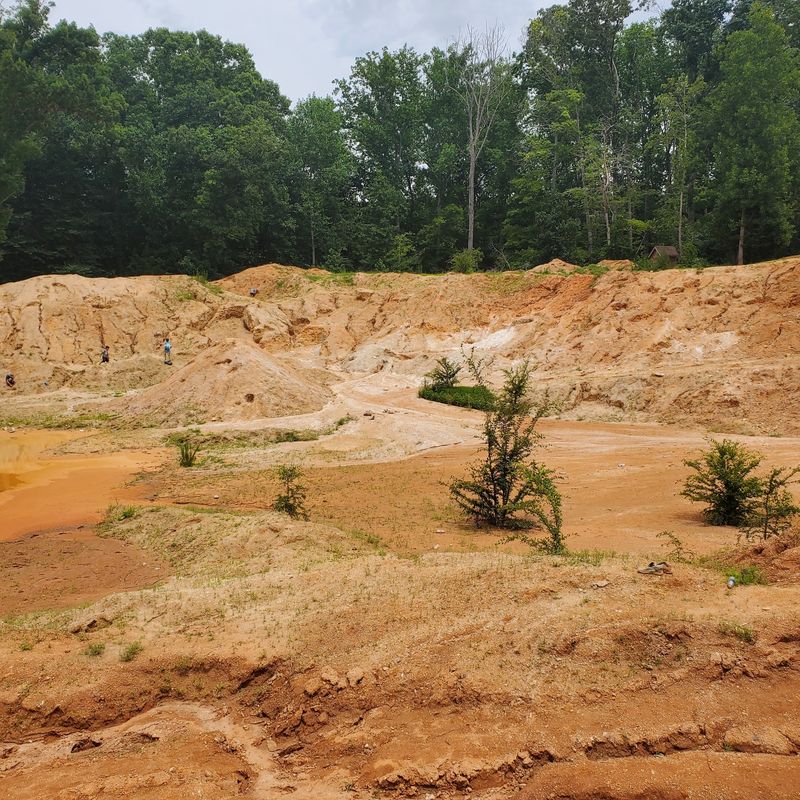
Walking onto the grounds of Diamond Hill Mine at 100 Diamond Mine Rd, Abbeville, SC 29620, I felt like I had stepped onto the set of a treasure hunt movie.
This is one of the most famous fee-dig quartz crystal sites in the entire Southeast, and it earns that reputation every single time.
The mine sits in Abbeville County, where a rich vein of milky and clear quartz runs through the earth, producing some of the most dramatic crystal clusters I have ever pulled out of the ground with my own hands.
Visitors pay a modest daily fee, receive a digging area, and are free to keep whatever they find, which makes the value absolutely extraordinary compared to buying crystals in a shop.
The clay soil can get slippery after rain, so waterproof boots are a smart call.
I once unearthed a six-inch double-terminated point here that now sits on my desk as a reminder that the best souvenirs come with dirt under your fingernails.
2. Paris Mountain State Park, Greenville
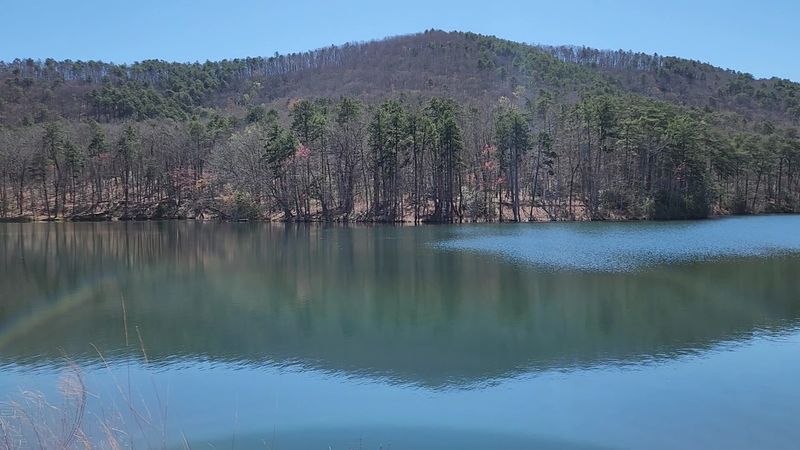
Few people think of a state park when they think of rockhounding, but Paris Mountain State Park at 2401 State Park Rd, Greenville, SC 29609, quietly rewards those who pay attention to the ground beneath their feet.
The park sits on a massive granite pluton, and the exposed outcrops along the hiking trails reveal feldspar, mica, and occasional quartz veins that glitter in the afternoon light.
I spent a morning here walking the Sulphur Springs Trail, pausing every few minutes to examine the speckled gray rock faces that tell a story hundreds of millions of years in the making.
Collecting inside state parks is technically restricted, so I treat this spot as a study site, photographing minerals and sharpening my identification skills before heading to nearby areas where collecting is permitted.
The park also offers swimming, fishing, and camping, so it works perfectly as a weekend base camp for a broader Upstate rockhounding trip.
The forest canopy here keeps things cool even in July, which is a bonus I never take for granted.
3. Anderson Rockhounding Area, Anderson, SC
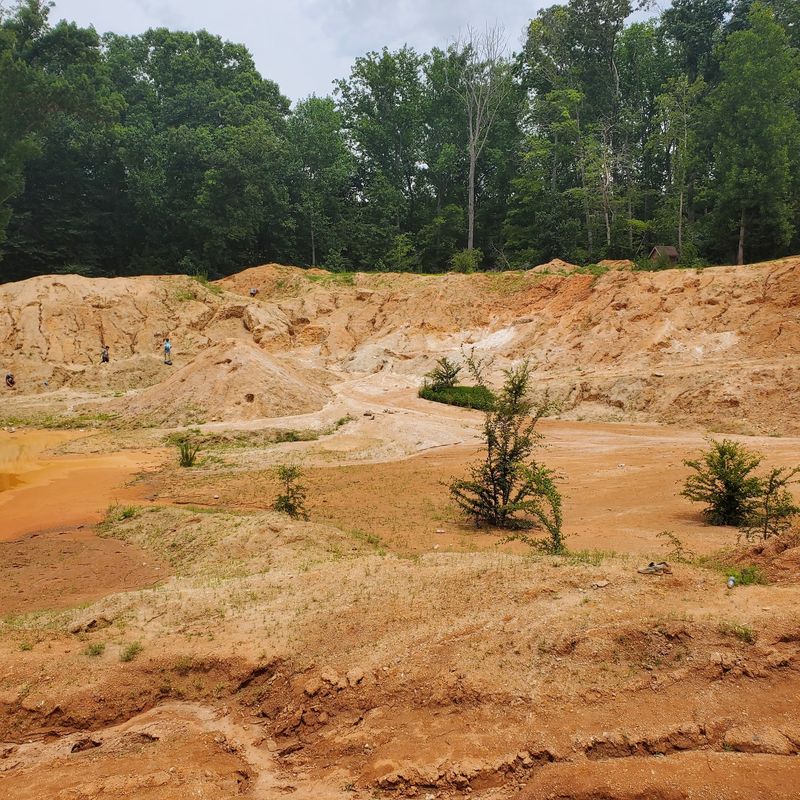
Anderson, SC 29621 sits in the heart of the Piedmont, and the surrounding creeks and road cuts offer surprisingly productive rockhounding for anyone willing to explore a little off the beaten path.
The area around Anderson is known for yielding quartz, feldspar, and occasional kyanite blades, which are those striking blue crystals that look almost too pretty to be real.
I pulled on my waders one cool October morning and worked a shallow tributary near town, turning over cobbles and sifting gravel until a flash of blue stopped me cold.
Kyanite forms in metamorphic rock, and the Upstate’s geology is rich in exactly that type of formation, making Anderson an underrated stop on any serious rockhounding itinerary.
Local rock and mineral clubs in the Anderson area often organize group hunts, which is a great way to learn from experienced collectors who know the most productive creek bends and road cuts.
Bring a hand lens, a small pry bar, and a patience reserve you did not know you had.
4. Liberty Hill Area, Liberty Hill, SC
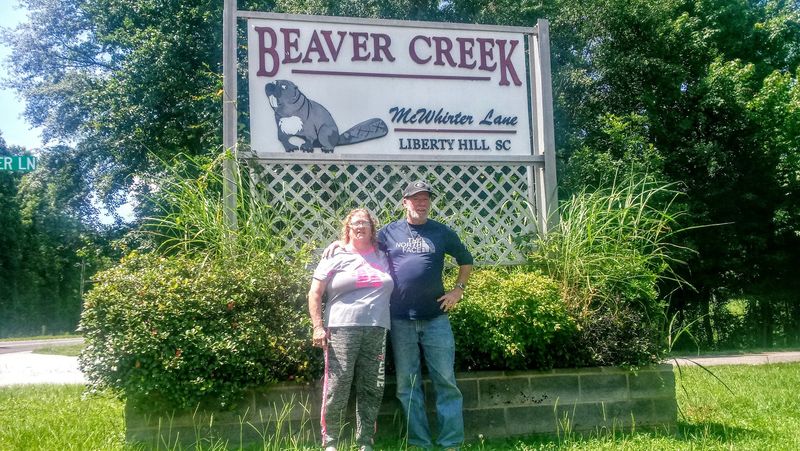
Liberty Hill, SC 29074 sits in Kershaw County near the boundary between the Upstate and the Midlands, and its geology reflects that transitional character in the most interesting ways.
The area is underlain by granitic and metamorphic rocks that have weathered into a landscape full of small outcrops, creek exposures, and old farm fields where surface collecting can turn up quartz, feldspar, and occasional tourmaline crystals.
Tourmaline is the find that gets collectors most excited around Liberty Hill, since the black schorl variety appears as needle-like crystals embedded in quartz or pegmatite rock, and it photographs beautifully against a white background.
I wandered through a fallow field here one spring afternoon and filled half my collecting bag with quartz float before spotting a pegmatite boulder near a fence line that held several clear tourmaline needles.
Asking landowners for permission is not just a legal formality in this rural community; it often leads to helpful conversations about where the best outcrops are located on their property.
Liberty Hill rewards the collector who treats the land and its people with genuine respect.
5. Lake Hartwell Area, Fair Play
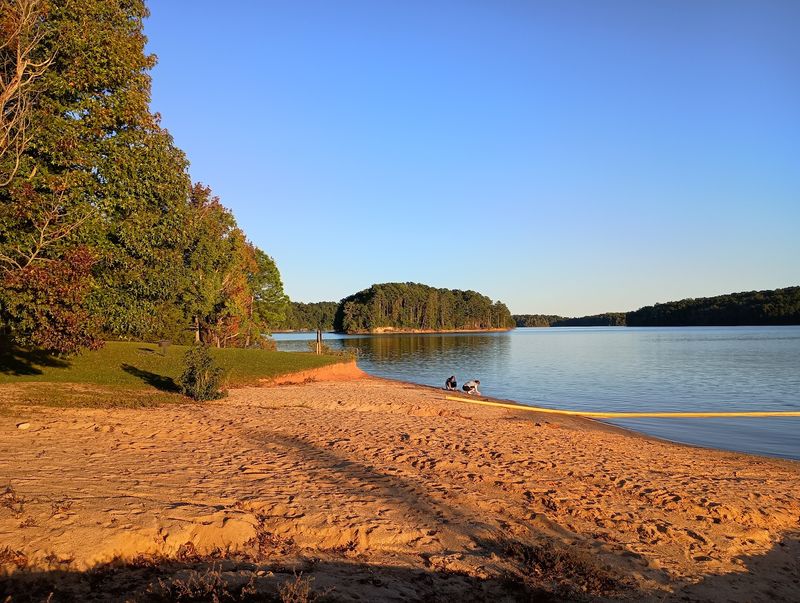
Lake Hartwell’s fluctuating water levels do rockhounds a quiet favor by exposing stretches of shoreline near Fair Play, SC 29643 that are normally hidden beneath the surface.
The lake, accessed in this area via 19138-A HWY 11 S, sits in the foothills of the Blue Ridge, and the surrounding geology includes granite, gneiss, and quartz-bearing formations that erode steadily into the reservoir.
I timed a visit here during a drought year when the lake level had dropped significantly, revealing rocky benches and gravel accumulations along the coves that are completely submerged in wetter seasons.
Quartz crystals, jasper, and the occasional piece of banded chert turned up during a few hours of careful searching along the exposed margins.
The HWY 11 corridor through this part of Oconee County is also one of the most scenic drives in the Upstate, running along the base of the mountains with views that make every mile feel worthwhile.
Combine a rockhounding session at the lake with a drive up the mountain highway and you have a nearly perfect Upstate day.
6. Long Creek Area, Long Creek
Tucked into the far northwestern corner of South Carolina, Long Creek, SC 29658 sits close enough to the Blue Ridge escarpment that the geology here starts to feel genuinely mountainous rather than simply hilly.
The creeks draining this landscape carry material from some of the oldest and most mineralogically interesting rocks in the state, and the gravel bars reward patient searchers with quartz varieties, occasional garnets, and interesting metamorphic rock specimens.
I arrived at Long Creek on a crisp November morning when the hardwood trees had dropped their leaves and the creek was running low and clear, making it easy to spot color in the gravel.
A small cluster of red almandine garnets caught my eye in a gravel bar, partially buried under a flat slab of schist, and prying them loose felt like cracking open a tiny vault.
The area around Long Creek also connects to trail systems in the Sumter National Forest, so combining a hike with a rockhounding session makes for a wonderfully full day.
The further you walk from the road, the better the collecting tends to get.
7. Mountain Rest Area, Mountain Rest, SC
Mountain Rest, SC 29664 has a name that sounds like a vacation promise, and for rockhounds it absolutely delivers on that promise in geological terms.
Sitting in the upper reaches of Oconee County, this small community is surrounded by some of the most rugged and mineralogically rich terrain in the entire state, where schist, gneiss, and pegmatite outcrops appear around almost every bend in the forest roads.
Pegmatite is the rock formation that collectors chase most eagerly, since its coarse-grained structure allows individual crystals to grow large, sometimes spectacularly so, producing feldspars, micas, and quartz in sizes you rarely find elsewhere.
I parked along a forest service road near Mountain Rest and spent an afternoon working a pegmatite outcrop that yielded books of muscovite mica the size of my palm and several chunks of rose quartz with a soft pink color that looked almost painted on.
The elevation here means temperatures run cooler than the rest of the Upstate, making summer visits surprisingly comfortable even during the hottest months.
Mountain Rest is the kind of place that makes you want to slow down and look at everything twice.
8. Lake Jocassee Area – Devils Fork State Park, Salem
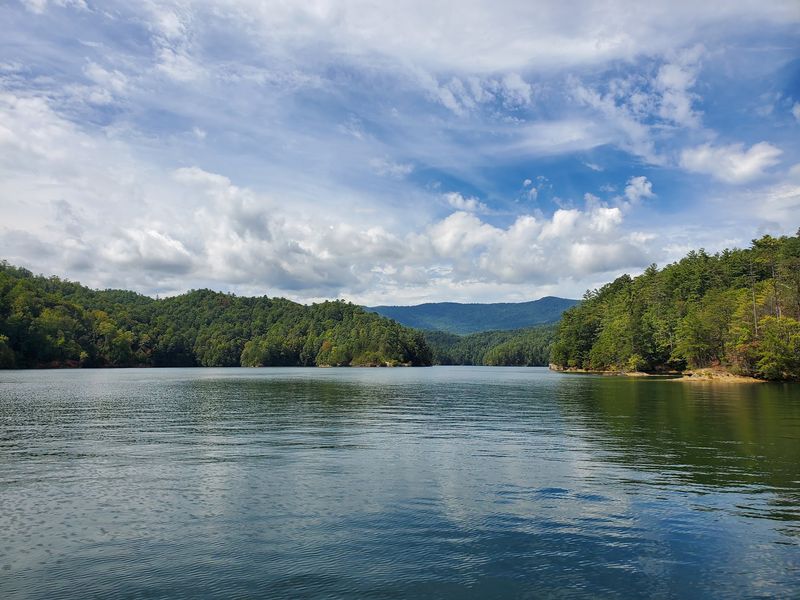
Lake Jocassee is widely regarded as one of the clearest and most beautiful lakes in the eastern United States, and Devils Fork State Park at 161 Holcombe Cir, Salem, South Carolina 29676 gives you the best access to its shores and surrounding geology.
The lake basin sits within a zone of diverse Appalachian rocks, and the shoreline and inlet streams carry minerals that have washed down from the surrounding mountains for thousands of years.
I kayaked along the eastern shore one morning, pulling into small coves to examine the rocky beaches where quartz pebbles, dark schist fragments, and occasional colorful jasper pieces had accumulated.
The underwater visibility at Jocassee is legendary, and snorkeling the shallower coves lets you spot mineral-rich cobbles on the lake floor that would be invisible from the surface.
Devils Fork is the only public access point to Lake Jocassee, so the park can get busy on summer weekends, making early arrivals on weekday mornings the smartest strategy for a peaceful collecting session.
The mountain scenery surrounding the lake turns every rockhounding trip here into something that feels more like a painting than a real place.
9. Oconee State Park Area, Mountain Rest
Oconee State Park at 624 State Park Rd, Mountain Rest, SC 29664 serves as both a gorgeous mountain retreat and a starting point for exploring some of the most geologically fascinating terrain in the Upstate.
The park itself sits on a foundation of ancient metamorphic rock, and the trails wind past outcrops where the foliation patterns in the schist and gneiss tell a slow-motion story of heat and pressure playing out over hundreds of millions of years.
As with Paris Mountain, active collecting inside the park boundaries is not permitted, but studying the exposed rock here sharpens your eye for the formations you can collect in the surrounding Sumter National Forest lands just outside the park.
I used the park as my base for two nights during one Upstate trip, waking early each morning to drive the nearby forest roads and work creek drainages before returning to the park for dinner and a campfire.
Oconee County in general is a rockhound’s playground, and the state park sits right in the middle of it all.
If you only pick one area to anchor a full rockhounding weekend in the South Carolina Upstate, making it Mountain Rest and Oconee State Park is a decision you will not regret.