
20 Weird Food Laws In Texas (And What They Really Mean)
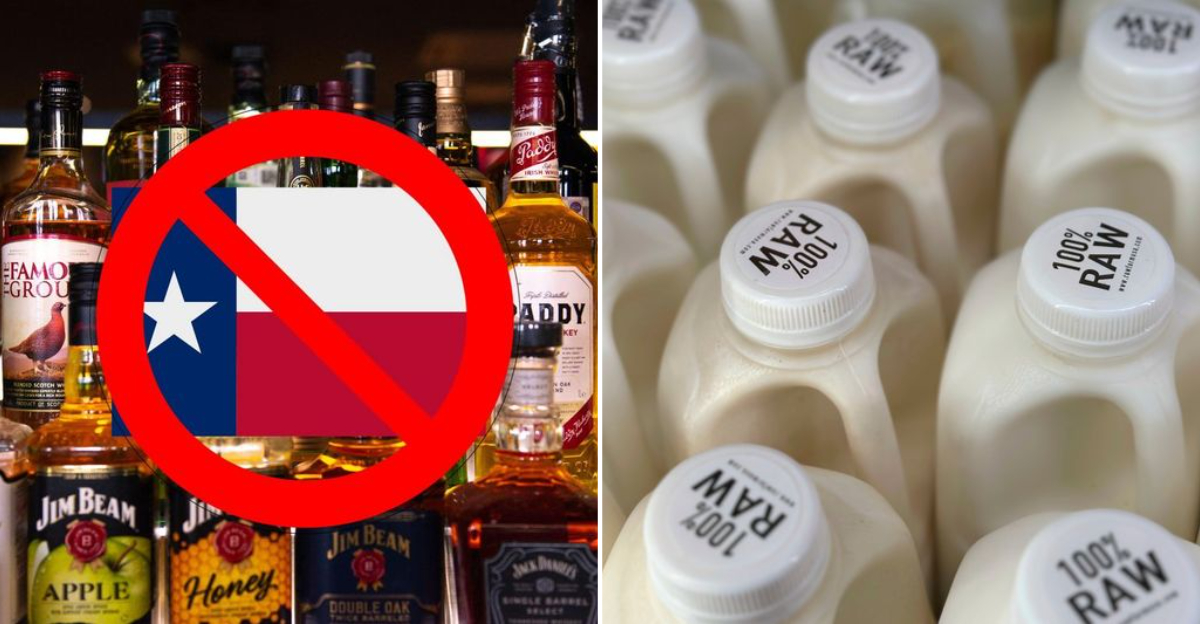
Texas has a reputation for doing things its own way, and that includes some pretty unusual food and drink regulations.
From liquor store closures to raw milk delivery rules, the Lone Star State has a fascinating array of laws that might surprise you.
Some of these regulations have deep historical roots while others reflect modern concerns about safety and commerce.
1. Sunday Liquor Store Ban
Looking to stock up on bourbon or vodka on a Sunday? You’re out of luck in Texas. Package stores must remain shuttered on Sundays, Thanksgiving, Christmas, and New Year’s Day.
This blue law dates back to religious traditions meant to preserve Sunday as a day of rest. If Christmas or New Year’s falls on a Sunday, stores must close the following Monday too.
2. The Sunday Morning Beer Rule
Planning a Sunday morning mimosa run? Hold that thought until 10 a.m. Texas law prohibits grocery and convenience stores from selling beer or wine before this magic hour on Sundays, though sales start at 7 a.m. every other day.
The restriction stems from Texas’ complex relationship with alcohol regulation following Prohibition. Restaurants can serve alcohol earlier on Sundays, but only alongside food.
3. Happy Hour Limitations
Texas takes a firm stance against unlimited drink specials. Bars cannot offer all-you-can-drink deals or sell more than two drinks to one person at once. Once the clock strikes 11 p.m., discounted drink prices must disappear.
I once watched a bartender politely refuse to sell a round of shots to a customer who already had two margaritas in hand. These statewide rules aim to reduce overconsumption and related problems.
4. Brewery Beer-To-Go Caps
Texas breweries fought hard for the right to sell their products directly to consumers. In 2019, they won that battle, but with strict limitations.
Customers can purchase up to 288 fluid ounces (equivalent to one case) per person daily. Before this law was passed, a strange situation existed where you could buy beer at wineries and distilleries, but not at the very places brewing it.
5. Cocktails-To-Go Permission
When the pandemic threatened to sink restaurants, Texas threw them a lifeline by temporarily allowing cocktails-to-go. The measure proved so popular that it became permanent in 2021 through House Bill 1024.
There’s a catch, though. You must purchase food with your margarita or old-fashioned. I grabbed tacos with my to-go mojitos last summer, which seemed like a fair trade for this convenient option.
6. BYOB Boundaries
Feel like bringing your own bottle to dinner? Texas allows this practice in many establishments, but not everywhere. Any venue with a Mixed Beverage permit or Private Club permit prohibits outside alcohol.
Wine and beer-only venues typically welcome your special bottle, though they might charge a corkage fee.
The restriction prevents establishments from losing valuable liquor sales while still allowing flexibility at more casual spots.
7. Truly Free Alcohol Rule
“Free wine tasting” signs might catch your eye in Texas, but these offerings must be genuinely free. Businesses without alcohol permits can provide complimentary drinks only if available to any adult who walks in.
No purchase requirements, expected donations, or mandatory tips allowed. Last year, I visited a boutique that offered champagne while shopping without pressure to buy anything – exactly how this law intends free alcohol to work.
8. School Zone Alcohol Buffers
Texas empowers local governments to create alcohol-free zones around schools, churches, and hospitals. These buffer zones typically extend 300 feet from these facilities, though school zones can stretch up to 1,000 feet.
How the distance is measured varies: for churches and public hospitals it’s front door to front door along the street fronts; for schools it’s from your business’s public entrance to the nearest school property line; and in some large cities a straight-line property-line measurement applies.
9. Public Drinking Curfews
Enjoying adult beverages outdoors in Texas comes with time restrictions. Public consumption must generally end at 12:15 a.m., extending to 2:15 a.m. in designated late-hours areas.
Even BYOB venues must enforce these hours. I once attended a backyard concert where the host politely collected all drinks at midnight, explaining the legal cutoff time had arrived.
These limits apply regardless of noise levels or behavior.
10. Wet-Dry Patchwork Regulations
Texas maintains a complex tapestry of wet and dry areas determined by local option elections. Some counties prohibit all alcohol sales, while others allow only certain types or in specific locations.
This creates strange situations where you might cross an invisible boundary and suddenly find beer available – or not.
The Texas Alcoholic Beverage Commission now maintains an interactive map to help navigate this confusing patchwork of regulations.
11. No Public Corporations at Liquor Stores
Wonder why major chains like Walmart don’t sell liquor in Texas? State law prohibits publicly traded corporations from holding package store permits, with few exceptions.
This restriction preserves the independent liquor store model throughout the state. The rule faces ongoing legal challenges but continues to shape the Texas liquor landscape, keeping ownership primarily in the hands of private individuals and families.
12. Beer vs. Ale Distinction Eliminated
Texas once maintained a bizarre legal distinction between beer (under 4% alcohol by weight) and ale (over 4%). This created confusion for brewers and consumers alike.
In 2021, the state finally modernized its code, merging these categories into the umbrella term “malt beverages.”
Back in my homebrewing days, I had to carefully label my creations based on alcohol content rather than style, a practice that thankfully became unnecessary after this sensible update.
13. Mandatory ABV Labeling
Texas now requires malt beverage labels registered on or after September 1, 2021, to display their alcohol by volume (ABV). Malt beverage products registered before September 1, 2021, had until September 1, 2023, to update their registration with the ABV.
This transparency rule helps consumers make informed choices about potency. Some craft brewers initially resisted the requirement because changing labels for different markets increases production costs, but ultimately, consumer safety concerns prevailed.
14. Raw Milk Farmers’ Market Loophole
Texas prohibits selling raw milk directly at farmers’ markets, creating a strange situation for dairy farmers. However, the law allows a clever workaround.
Licensed dairies can deliver pre-purchased raw milk to customers at farmers’ markets, effectively creating a pickup point rather than a sales location.
I’ve seen farmers with clipboards taking pre-orders one week for delivery the following weekend, navigating this regulatory oddity with entrepreneurial spirit.
15. Strict Raw Milk Dairy Oversight
Texas maintains tight control over raw milk production through its “Raw for Retail” licensing program. Licensed dairies undergo frequent testing for pathogens and antibiotics to ensure safety standards.
If unsafe products are detected, authorities immediately detain the milk. This rigorous oversight reflects the state’s attempt to balance consumer freedom with public health concerns about unpasteurized dairy products, which can carry bacteria eliminated during pasteurization.
16. Complex Cottage Food Permissions
Texas allows home cooks to sell certain foods directly to consumers without commercial kitchen requirements. Permitted items include baked goods, pickles (pH ≤ 4.6), plant-based acidified foods, and fermented vegetables.
Each product requires specific labeling. Some items need batch records and pH verification to ensure safety. My neighbor’s pickle business thrived under these rules, though she maintains detailed logs for each batch to stay compliant.
17. Wild Game Sales Prohibition
Bagged a deer during hunting season? Texas law prohibits selling wild game animals or birds for human consumption, with limited exceptions.
This means restaurants can’t serve wild-harvested venison, quail, or duck. The restriction aims to prevent commercial hunting pressure on wild populations and reduce food safety risks.
Only farm-raised game animals processed under inspection can legally appear on restaurant menus.
18. Horse Meat Ban
Texas takes a firm stance against horse meat consumption. Selling, possessing with the intent to sell, or transferring horse meat for human food constitutes a crime under state law. This prohibition reflects cultural values rather than safety concerns.
I once overheard a heated debate at a rural diner about this law, with most patrons strongly supporting the ban based on the special relationship many Texans have with horses as companion and working animals.
19. Oyster Harvest Regulations
Texas closely monitors wild oyster harvesting through a sophisticated system of bay openings and closures. Certain areas remain permanently closed to protect vulnerable reef ecosystems. The Department of State Health Services runs a Vibrio vulnificus risk-management program to prevent illness.
Growing up on the Gulf Coast, I watched seasonal oyster boats appear and disappear based on these regulations, which protect both consumer health and the sustainability of these valuable shellfish.
20. Personal Alcohol Import Limits
Texans returning from Mexico face strict limits on alcohol they can bring back. The personal import allowance caps at 24 twelve-ounce beers, 3 gallons of wine, and 1 gallon of spirits without using a licensed importer.
Exceed these limits and you’ll face taxes or confiscation. Border agents routinely check vehicles for excessive alcohol.
The restriction prevents undermining licensed distributors while allowing reasonable personal souvenirs from international trips.