
A Middle-Of-Nowhere Restaurant In Wisconsin That Serve The Most Incredible Steak Ever
Tucked away on a dusty country road in Bonduel, Wisconsin, sits a restaurant that locals treat like a treasured family secret. From the outside, Moe’s Shack doesn’t seem like much—just a weathered building with a flickering neon sign that feels frozen in time.
But step inside, and you’ll discover the kind of culinary magic that keeps people talking for years. The grill sizzles with steaks so perfectly prepared they’ve earned a cult following.
I first stumbled across Moe’s by accident, taking a wrong turn three years ago, and now I gladly make the two-hour drive each month for what I’m convinced are the best steaks in America.
A Hidden Gem in the Wisconsin Countryside
Blink and you’ll miss the unmarked turnoff leading to Moe’s Shack. The gravel driveway winds through a stand of pine trees before revealing a rustic building that’s been serving steaks since 1947.
What makes this place special isn’t fancy decor or tourist appeal – it’s authenticity. Farmers pull up in muddy trucks alongside occasional lost travelers who’ve struck culinary gold.
The isolation works in their favor. Without big-city overhead, they focus entirely on quality. The nearest stoplight is 17 miles away, and that deliberate distance from civilization seems to concentrate the flavor in every bite.
Locally-Raised Beef with Unmatched Flavor
Owner Jim Moeller (everyone calls him Moe) partners exclusively with three family farms within a 30-mile radius. These Black Angus cattle graze on sweet Wisconsin grass and corn, developing marbling that makes each bite melt like butter.
I’ve sampled steaks worldwide, from Kobe to Argentina, but nothing compares to this hyperlocal approach. The cattle never travel far, minimizing stress and preserving meat quality.
“Know your farmer, know your food” isn’t just a slogan here – it’s their business model. Moe can tell you the name of the family who raised the cow that became your dinner tonight.
Dry-Aging Techniques Passed Through Generations
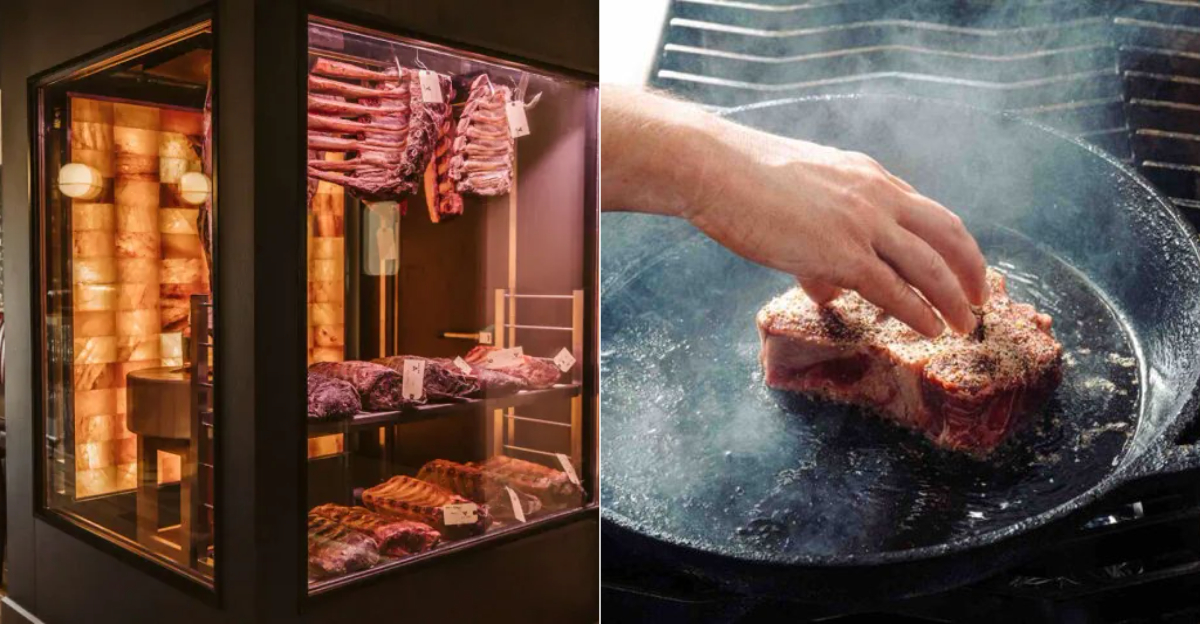
Walk past the host stand and you’ll spot the temperature-controlled aging room with glass windows. Inside, dozens of massive cuts hang in various stages of the 45-day dry-aging process that intensifies flavor and tenderizes the meat naturally.
Moe’s grandfather started this tradition in the 1940s, and they’ve never changed the formula. The current aging master, Frank, has worked here 37 years and can tell a steak’s readiness by smell alone.
Unlike commercial operations that rush the process, Moe’s patience creates a concentrated beef flavor with nutty, almost cheese-like undertones that you simply can’t find elsewhere.
The 1,500-Degree Cast Iron Technique
Forget fancy sous-vide gadgets and infrared broilers. Moe’s secret weapon is a collection of 80-year-old cast iron skillets that have never seen soap, just generations of seasoning.
Their open-flame grill gets those skillets screaming hot – around 1,500 degrees – creating an instant crust that locks in juices. Each steak sears for precisely 90 seconds per side before resting, then gets a final butter baste before serving.
The contrast between that caramelized exterior and the perfectly pink interior creates a textural experience that modern cooking methods simply can’t replicate. No wonder truckers detour hundreds of miles for this meal!
Supper Club Tradition, Wisconsin Style
First-timers are often shocked when their server brings a relish tray before the meal – a Wisconsin supper club tradition featuring pickled vegetables, cheese spreads, and crackers. This isn’t just a starter; it’s a cultural initiation.
The dining room embraces its mid-century origins with wood-paneled walls, red leather booths, and soft lighting that makes everyone look their best. Frank Sinatra croons softly from hidden speakers.
Regulars know to come hungry and unhurried. Your meal is an event, not a transaction. The pacing, the ritual of it all – it transforms dinner into an experience that reminds us why breaking bread together matters.
The Secret Seasoning Nobody Can Crack
Moe’s grandfather created their signature seasoning blend in 1947, and its recipe remains locked in a safe deposit box at the local bank. Only three people know the full formula.
I’ve watched food bloggers beg for hints about the mysterious rub that creates that distinctive bark on each steak. The staff just smiles knowingly. Some suspect coffee grounds and brown sugar alongside the salt and pepper base, but nobody’s cracked the code.
Whatever magic they sprinkle on those cuts, it creates a flavor profile that’s simultaneously bold and balanced – enhancing the beef without overwhelming it. I’ve tried to recreate it at home for years without success.
The Community Table Experience
Saturday nights at Moe’s feature something rare in today’s dining world – a community table. This 12-seat oak behemoth sits center stage, where solo diners and couples are seated together family-style.
I’ve shared meals with farmers, professors, truckers, and once a retired NFL player. The conversations flow as freely as the gravy for those famous mashed potatoes. Lifelong friendships have formed over ribeyes at this table.
In our isolated digital age, there’s something revolutionary about breaking bread with strangers. The community table represents what makes Moe’s special beyond the food – it’s about connection, story-sharing, and remembering we’re all just hungry humans seeking nourishment of multiple kinds.