
10 Deserted Ghost Towns In Texas That Are Full Of History And Mystery
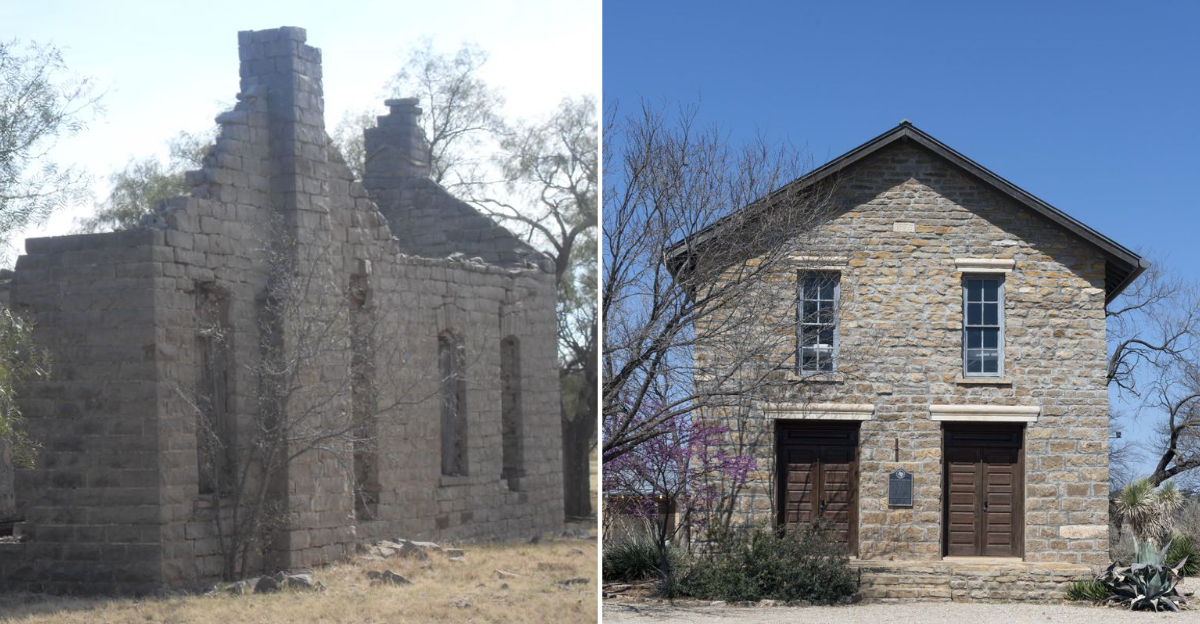
Across the wide stretches of Texas, entire towns sit silent – echoes of once-thriving communities that have long since faded. These ghost towns carry the weight of old dreams, shaped by daring pioneers, sudden riches, and harsh twists of fate.
Some were left behind after raging storms, others forgotten when railroads carved new paths, and many crumbled during unforgiving economic turns.
Today, their weathered remains offer a hauntingly beautiful window into the history of the Lone Star State.
1. Indianola: The Gulf Port Swallowed by Storms
Waves now lap where merchants once hawked wares in this former bustling seaport. Indianola rivaled Galveston until Mother Nature intervened with devastating hurricanes in 1875 and 1886. The second storm delivered the final blow, convincing survivors to abandon what remained.
Today, only historical markers and a statue of explorer La Salle stand sentinel along Matagorda Bay, silent witnesses to a coastal empire that vanished beneath wind and water.
2. Glenrio: Where Route 66 Memories Fade
Straddling the Texas-New Mexico border, Glenrio once welcomed weary travelers with neon signs and hot coffee. The town lived by the highway and disappeared by it too when Interstate 40 diverted traffic elsewhere.
An eerie row of abandoned buildings stands frozen in the 1950s. The old Little Juarez Diner sits empty, its counters collecting dust instead of tips.
Walking through Glenrio feels like stepping into a time capsule where the American road trip dream slowly rusted away.
3. Lobo: The Desert Oasis That Dried Up
Hidden in the Chihuahuan Desert, Lobo’s weathered buildings bake under the relentless West Texas sun. Water shortages and economic decline gradually emptied this tiny farming community until 1991, when the last residents packed up for good.
I stumbled upon Lobo during a road trip years ago, finding myself alone among boarded storefronts and an empty motel. The town briefly gained fame when it went up for sale in the early 2000s.
Occasional private events bring temporary life, but most days Lobo sleeps in dusty silence.
4. Stiles: Where A Courthouse Stands Guard Over Nothing
Limestone ruins rise from the mesquite like ancient monuments. The skeletal courthouse, gutted by fire after Stiles lost its county seat status, watches over a town that no longer exists.
Founded in the 1890s as Reagan County’s hub of government, Stiles couldn’t compete when the railroad bypassed it and oil was discovered near Big Lake.
Families and businesses migrated south, leaving behind the impressive courthouse and a pioneer cemetery filled with stories of early Texas settlers.
5. Clairemont: The Town That Lost Its Purpose
Sandstone walls of the former Kent County jail stand defiant against time and abandonment. Clairemont’s decline began when nearby Jayton stole the county seat in a hotly contested election that split the community.
Without its governmental purpose, the town withered as ranching operations consolidated and families sought opportunities elsewhere.
Visiting these ruins on a quiet morning, I couldn’t help imagining the sounds of courthouse proceedings and jail cell doors that once echoed through this now-silent place.
6. Belle Plain: The College Town That Class Forgot
Education and ambition once flourished here where Belle Plain College welcomed students eager for knowledge on the Texas frontier. This 1870s settlement became Callahan County’s seat in 1877 (replacing Callahan City) before railroads changed everything.
The tracks favored nearby Baird, sealing Belle Plain’s fate. Brutal drought delivered the knockout punch to struggling farmers.
Now only scattered stones mark building foundations, and a cemetery preserves the names of those who believed this settlement would prosper forever.
7. New Birmingham: The Iron Queen’s Fallen Crown
Fortune hunters flocked to this ambitious industrial venture in the 1880s, drawn by promises of mineral wealth. The “Iron Queen of the Southwest” boasted furnaces, hotels, and even a street railway during its brief heyday.
Financial collapse came swiftly when iron markets crashed and investors fled. Political battles and legal troubles finished what economic hardship began.
Fires later consumed wooden structures, leaving only scattered brick foundations buried in Cherokee County underbrush where grand Victorian buildings once stood.
8. Medicine Mound: Sacred Hills and Empty Storefronts
Four dome-shaped hills, sacred to Comanche people, watch over empty buildings where farmers once traded cotton and supplies. Medicine Mound thrived until the Great Depression and a devastating arson fire in the 1930s dealt twin blows.
My grandfather remembered visiting as a boy when the general store still sold penny candy. Today, a volunteer-run museum preserves memories in a community where the population dwindled to single digits.
The hills remain, silent witnesses to both Native American ceremonies and the rise and fall of a farming town.
9. The Flat: Where Cowboys and Outlaws Roamed
Beneath Fort Griffin’s military protection grew one of Texas’ wildest settlements. The Flat attracted buffalo hunters, trail drivers, gamblers, and gunslingers seeking fortune and adventure along the Western frontier.
Legendary figures like Doc Holliday and Wyatt Earp walked these streets. When the railroad bypassed the area for nearby Albany, businesses followed, leaving The Flat to fade into prairie grass.
Only a solitary Masonic Lodge and faint street outlines remain where saloons and brothels once hosted the untamed West.
10. Juno: The Town That Isolation Claimed
Remoteness defines Juno, tucked away in rugged Val Verde County, where ranchers once gathered for supplies and social connection. The tiny community served as a lifeline for isolated cattle operations until modern transportation made its services obsolete.
The post office closed first, then the school consolidated elsewhere. When the general store shuttered in 1984, Juno officially joined the ranks of ghost towns.
Few travelers venture to this forgotten corner where crumbling adobe and weathered wood structures slowly return to the harsh landscape that ultimately defeated human settlement.