
10 Forgotten Ghost Towns In Oregon That Are Surprisingly Beautiful
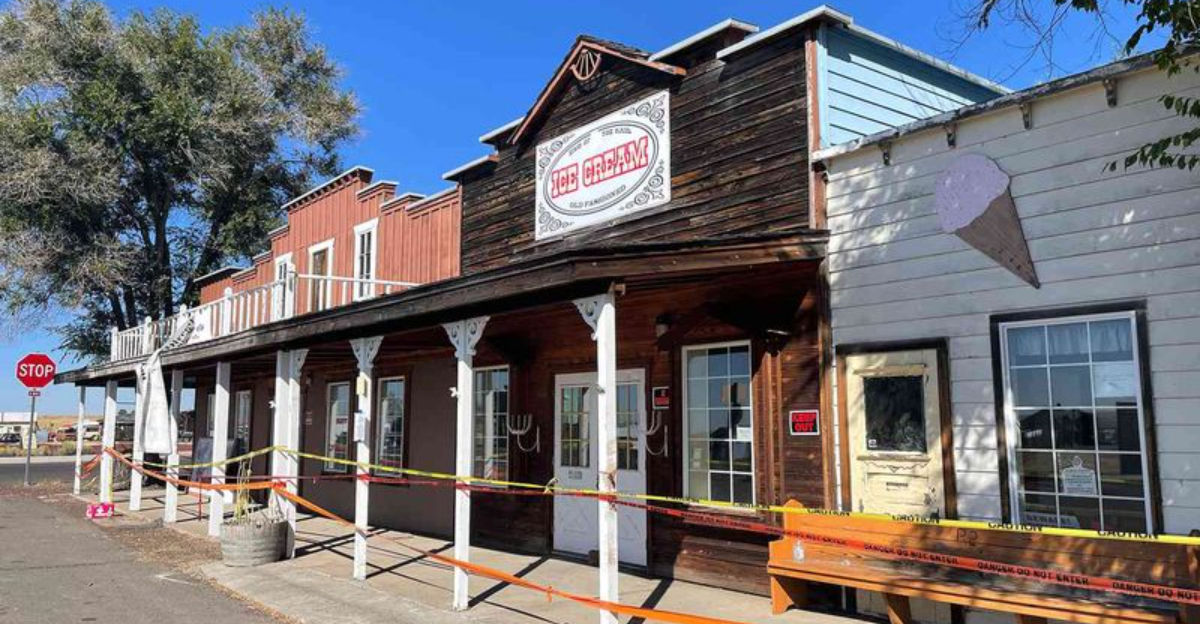
Oregon’s wild terrain holds echoes of a forgotten past. Scattered across the state are ghost towns that once thrived with miners, loggers, and fortune-seekers chasing big dreams, only to be left behind when the industries faded.
Today, these places are both eerie and mesmerizing – timeworn buildings still standing proud against breathtaking views of mountains, dense forests, and sweeping high desert plains.
Each one feels like a window into the grit and hope of Oregon’s pioneering days.
1. Golden: A Preserved Creek-side Mining Settlement
Nestled alongside a babbling creek, Golden’s weathered wooden buildings whisper tales of 1890s mining ambitions.
Time stands still at the white clapboard church, its simple bell tower reaching skyward like a final prayer from the abandoned community.
Listed on the National Register of Historic Places in 2002, this quiet collection of structures includes a former general store and several outbuildings.
The peaceful setting belies the frantic gold fever that once gripped this place, now managed by Oregon State Parks as a serene historical monument.
2. Shaniko: The Wool Capital’s Silent Streets
Brick facades catch golden sunlight as tumbleweeds drift through what was once the bustling “Wool Capital of the World.” Built around railroad prosperity in the early 1900s, Shaniko’s fortune unraveled when new routes bypassed the town.
Today, the imposing Shaniko Hotel anchors a photogenic town square, its weathered boardwalks creaking with stories.
The old schoolhouse and jail stand as sentinels to a bygone era, offering visitors a glimpse into frontier commerce against the backdrop of Oregon’s vast high desert.
3. Cornucopia: Alpine Gold Camp Among the Peaks
Perched at about 4,740 feet in the Wallowa Mountains, Cornucopia’s weathered mine buildings stand defiantly against some of Oregon’s most dramatic alpine scenery.
I still remember my grandfather’s stories of this place – how miners would trudge through snow drifts taller than houses to reach the gold veins hidden within these peaks.
Abandoned after the government’s 1942 wartime mining shutdown, the scattered cabins and ore processing facilities create a photographer’s paradise.
The nearby seasonal lodge offers a comfortable base for exploring this remote mountain treasure.
4. Greenhorn: Oregon’s Highest Ghost Town
Mist often shrouds this remote settlement, creating an otherworldly atmosphere around Oregon’s highest incorporated city.
At 6,300 feet elevation, Greenhorn’s scattered cabins cling to forested ridges where gold miners once sought fortune in the 1860s. Winter snows isolate these remnants for months at a time, preserving a time capsule of frontier mining life.
The few remaining structures emerge each spring from their white cocoons, their weathered timbers telling tales of boom-and-bust cycles that defined so many western towns before World War II forced mine closures.
5. Bourne: Hidden in a Pine-Lined Canyon
Water still rushes down Cracker Creek just as it did when fortune-seekers first panned for gold here in the 1870s.
My first visit to Bourne felt like stepping through a time portal – the narrow canyon walls seemed to echo with phantom whispers of miners’ dreams. Foundations peek through pine needles where saloons and boarding houses once stood.
The few remaining structures blend seamlessly with the forest that’s slowly reclaiming this once-thriving community, creating a haunting beauty that draws history buffs and photographers.
6. Whitney: Railway Stop in a Mountain Meadow
Sunlight dapples through ponderosa pines onto Whitney’s remaining structures, scattered across a picturesque meadow. Once a vital stop on the Sumpter Valley Railway, this logging town’s heartbeat stopped after a devastating sawmill fire in 1918.
Time has softened Whitney’s abandonment, transforming industrial ruins into artistic compositions against Eastern Oregon’s brilliant blue skies.
The easy roadside access makes it perfect for travelers along Highway 7, though visitors should respect the private status of the remaining buildings while capturing the quintessential ghost town atmosphere.
7. Hardman: Wheat Country Time Capsule
Wind whispers through Hardman’s boarded storefronts, carrying tales of a once-prosperous farming hub. The impressive IOOF Lodge building stands as the crown jewel among the remaining structures, its architectural details hinting at the town’s former importance.
I once spent an entire afternoon here watching how the light changed across the weathered wood, each hour revealing new textures and shadows.
Photographers flock to this remote spot in Morrow County, where rolling wheat fields create a golden sea around the abandoned buildings, especially beautiful during sunrise and sunset when warm light bathes the historic remnants.
8. Friend: A Friendly Ghost on the Plateau
Named with hopeful optimism, Friend now stands in solitary contemplation on Oregon’s open plateau. The abandoned schoolhouse’s empty windows stare across golden fields where wheat ripples in endless waves beneath vast skies.
A forgotten testament to railroad dreams, this tiny settlement thrived briefly as the terminus of the Great Southern Railroad.
The old store and post office building remains as the town’s most recognizable landmark, its weathered facade creating a stark silhouette against dramatic cloud formations that photographers find irresistible in this remote corner of Wasco County.
9. Buncom: Applegate Valley’s Preserved Trio
Shaded by ancient trees along a peaceful creek, Buncom’s three preserved buildings create a perfect tableau of 1850s gold rush life.
Unlike many ghost towns left to decay, local historical societies have lovingly maintained the post office, bunkhouse, and cookhouse for curious visitors.
The buildings’ weathered wood contrasts beautifully with the lush Applegate Valley surroundings. When I visited last spring, wildflowers carpeted the grounds between structures, creating a surprisingly serene atmosphere for a place born from gold fever.
Its accessibility from Medford makes it an ideal introduction to Oregon’s ghost town heritage.
10. Bayocean: The Vanished Resort on the Spit
Nothing remains of the ambitious resort once marketed as the “Atlantic City of the West” – except the haunting beauty of nature reclaiming its domain.
Unlike other ghost towns with tangible remains, Bayocean has completely disappeared, swallowed by the sea after ill-conceived jetty construction altered coastal dynamics.
Today, hikers traverse the windswept sandspit where streets and buildings once stood. The pristine beaches and bay views create a stunning natural monument to human hubris.
Walking this peninsula always reminds me that even our grandest designs are temporary against nature’s patient power.