
11 Louisiana Small-Town Foods That Never Make It Past State Lines
Louisiana’s small towns are hiding flavors most folks will never get the chance to try. While New Orleans gets all the glory with its gumbos and jambalayas, the rural parishes quietly protect dishes that have been handed down like family heirlooms.
These specialties almost never leave their hometowns, which makes them some of the most authentic and best-kept culinary secrets in America.
1. Natchitoches Meat Pies
Golden half-moons of flaky pastry conceal a savory filling of seasoned beef and pork that locals grab on the go. The Trinity (onion, bell pepper, celery) adds Louisiana’s signature flavor base.
Folks in Natchitoches are so proud of these hand-held treats that they celebrate them each September with a festival along the picturesque Cane River.
The Louisiana Legislature even declared them the official state meat pie in 2003.
2. Zwolle Hot Tamales
Corn husks wrapped around spiced pork create a tamale unlike any found in Mexico or Texas. The recipe emerged from the unique cultural blend of Spanish and Indigenous influences in Sabine Parish.
Smaller and spicier than their Tex-Mex cousins, these tamales inspire fierce loyalty among locals.
My grandmother would drive 40 miles every month just to buy them fresh from a particular family’s roadside stand near Toledo Bend Lake.
3. LaPlace Andouille
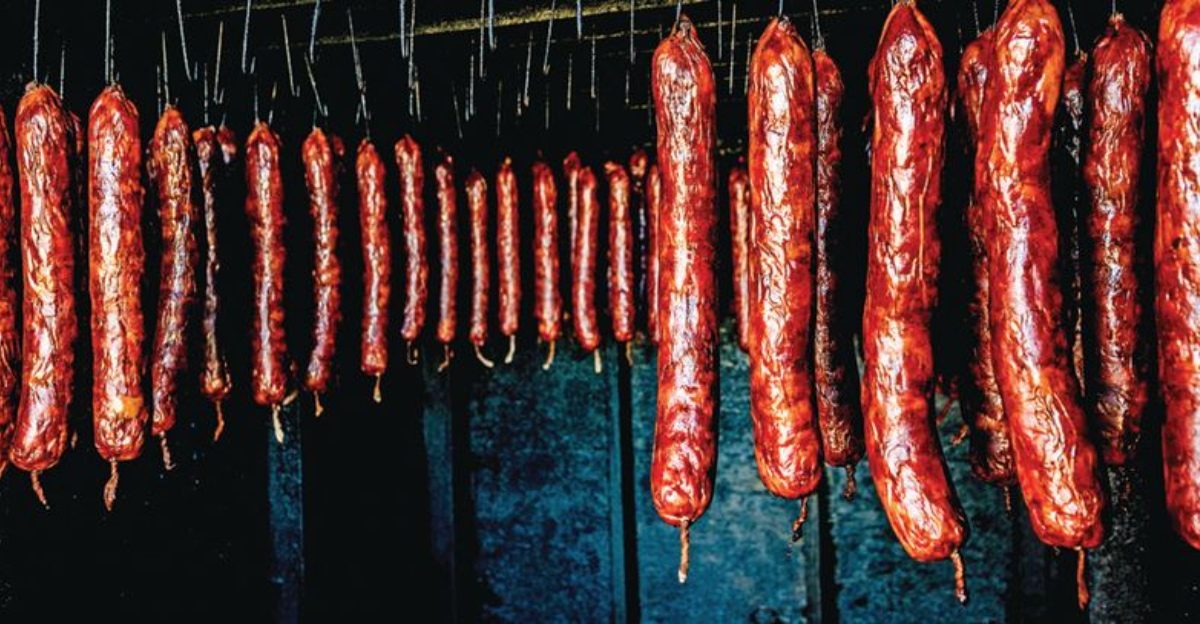
Serious smoke and chunky texture distinguish this pork sausage from its milder cousins. LaPlace butchers stuff coarsely ground shoulder meat and spices into natural casings before smoking them over pecan wood for hours.
The result is a dense, deeply flavored sausage that forms the backbone of authentic gumbo and jambalaya.
October brings the annual Andouille Festival, where locals debate which family makes the best version while dancing to zydeco bands.
4. Scott’s Famous Boudin
Rice-stuffed pork sausage might sound odd to outsiders, but in Scott, Louisiana, it’s breakfast, lunch, and midnight snack.
Meat markets stuff casings with a mixture of cooked pork, rice, green onions, and secret spice blends that vary from shop to shop.
I still remember my first boudin experience at a gas station outside Lafayette. The clerk handed me a steaming link wrapped in butcher paper and said, “Squeeze it straight into your mouth, cher.”
That’s still how locals eat it – no plates required.
5. Port Barre Cracklins
Double-fried cubes of pork skin and fat create the ultimate Louisiana road trip snack. Unlike mass-produced pork rinds, authentic cracklins (or gratons) maintain a layer of meat beneath the crunchy skin.
Port Barre’s annual Cracklin Festival centers around a fierce cooking competition where masters tend bubbling cast-iron pots.
The perfect cracklin shatters between your teeth before melting into savory richness – a textural experience that keeps locals coming back for more.
6. Cajun Prairie Pistolettes
Small French bread rolls transform into edible bowls when hollowed out and stuffed with creamy seafood filling. Bakers across the Cajun Prairie create variations ranging from crawfish-stuffed to boudin-filled versions.
Some restaurants deep-fry the entire roll after stuffing, creating a crispy exterior that seals in the rich filling.
The contrast between crunchy bread and velvety seafood sauce makes these humble rolls a standout at family gatherings across Acadiana’s small towns.
7. Mansura’s Cochon de Lait
Whole suckling pigs slowly rotate over hardwood coals in this Avoyelles Parish tradition. Families gather before dawn to begin the day-long roasting process that results in meat so tender it practically falls apart.
The ultimate way to enjoy this delicacy is piled high on French bread with gravy and coleslaw at Mansura’s annual Cochon de Lait Festival.
The combination of smoky pork, cool slaw, and bread soaked with drippings creates a sandwich experience that’s worth the drive to central Louisiana.
8. Acadiana Catfish Courtbouillon
Ruby-red tomato gravy cradles chunks of locally caught catfish in this rustic Cajun stew. Unlike its French namesake, Louisiana’s courtbouillon (pronounced coo-bee-yon) builds flavor from a dark roux and the Holy Trinity of vegetables.
Every family claims their recipe reigns supreme. Some add file powder while others insist on a splash of white wine.
Regardless of variation, this hearty fish stew always comes served over a mound of long-grain rice – the perfect vehicle for soaking up every drop of the spicy sauce.
9. Lafayette Rice & Gravy
Slow-simmered meat creates a mahogany gravy that transforms plain white rice into something magical.
Plate lunch joints across Acadiana serve this humble dish daily, with variations featuring everything from smothered pork chops to beef tongue.
The secret lies in patience – meat must be browned properly before liquid is added, creating layers of flavor.
I’ve watched my friend’s grandmother stand over her cast-iron pot for hours, refusing to rush what she called “proper Cajun soul food” – a dish that feeds both body and spirit.
10. Abbeville’s Gâteau de Sirop
Dark, molasses-like cane syrup infuses this old-fashioned spice cake with deep complexity. Steen’s syrup, produced in Abbeville since 1910, gives the dessert its distinctive flavor and moist texture that improves over several days.
Cinnamon, ginger, and cloves complement the syrup’s rich notes. Bayou grandmothers still use cast-iron skillets to bake these cakes, creating a slightly crisp edge that contrasts with the tender interior.
The recipe appears in nearly every church cookbook across Vermilion Parish, often with handwritten notes in the margins.
11. St. Martin Parish Tarte à la Bouillie
Silky vanilla custard fills a rustic pastry shell in this beloved Cajun dessert. The name translates roughly to “boiled milk tart,” referencing the careful stovetop cooking required to thicken the filling.
Some bakers add a sprinkle of cinnamon or nutmeg on top, while others insist on serving it completely unadorned.
You won’t find this simple treat in fancy bakeries – it’s primarily a home-kitchen specialty that appears at family gatherings and church socials throughout St. Martin and St. Landry Parishes.