
Nebraska Roadside Spot Still Serving Chicken-Fried Steak Like It’s The 1950s
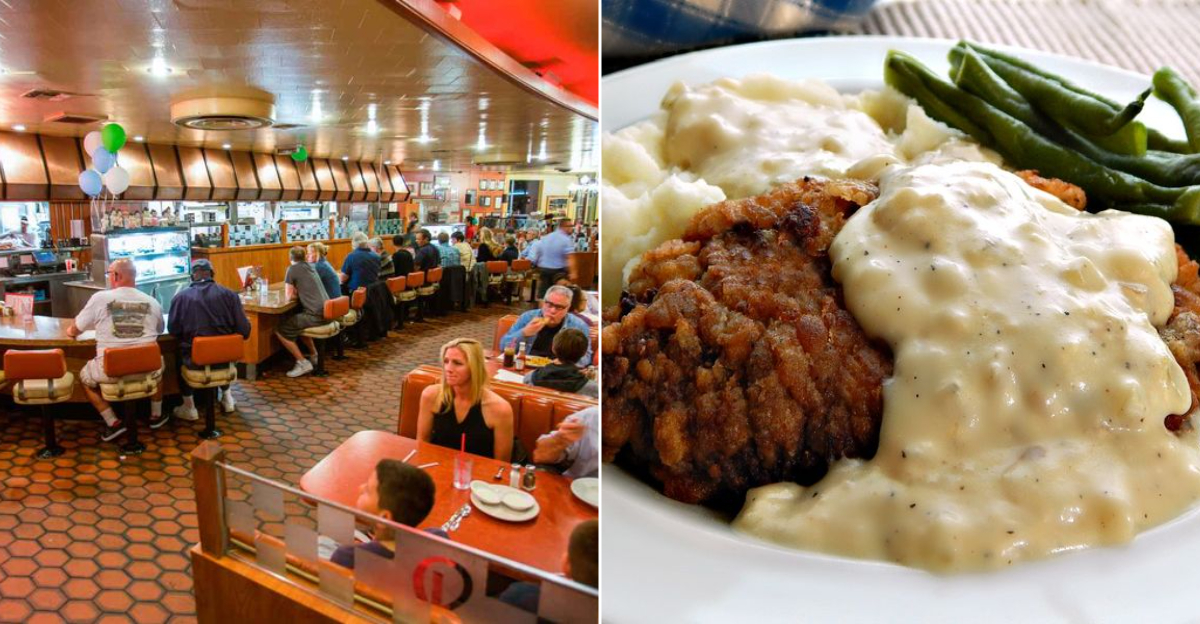
When I first stumbled into Shirley’s Diner in Omaha, it felt less like entering a restaurant and more like stepping through a time portal.
The jukebox softly playing Buddy Holly, the checkered floor worn by decades of footsteps, and the vinyl booths polished smooth by generations of hungry travelers created an atmosphere that was pure nostalgia.
Then came the aroma—sizzling beef, fresh coffee, and fried comfort food mingling in the air. Shirley’s is one of those rare places where time truly stands still. From the chicken-fried steak to the towering pies, every bite carries the warmth and flavor of the 1950s.
1. Grandma’s Recipe, Unchanged Since Opening Day
The current owner showed me a yellowed recipe card framed behind the counter, handwritten by Shirley herself in 1953. “We don’t mess with perfection,” he told me with a wink.
That sacred recipe calls for hand-tenderized beef cutlets, a secret blend of seasonings (rumored to include a pinch of nutmeg), and a double-dredging technique that creates that signature craggy crust. The gravy still simmers for hours, reducing to a peppery velvet that clings lovingly to every bite.
When a food critic once suggested “modernizing” the recipe, locals nearly staged a revolt!
2. Cast Iron Skillets With Half A Century Of Seasoning
“These babies are older than most of our customers,” laughed Betty, the head cook who’s been flipping steaks for 32 years. She lovingly patted a blackened skillet that looked heavy enough to double as exercise equipment.
The kitchen still uses the original cast iron cookware, some pieces dating back to the diner’s opening. Food scientists claim this accumulated seasoning—layers of polymerized oils built up over decades—creates flavor compounds impossible to replicate in new cookware.
I watched as Betty expertly managed six sizzling steaks at once, knowing exactly when to flip each one without using a timer.
3. Sourcing Beef From The Same Family Farm For Generations
My fork cut through the steak with barely any pressure, revealing meat so tender it practically melted. “That’s the Hendersons’ beef,” my waitress explained proudly. “Third generation raising cattle just for us.”
Unlike chain restaurants that source from massive industrial operations, Shirley’s maintains a handshake agreement with a family farm just 30 miles away. The cattle are grass-fed most of their lives and finished on local corn, creating a distinctive Nebraska flavor profile that locals can identify blindfolded.
When flooding nearly wiped out the Henderson farm in 1993, Shirley’s customers raised funds to help them rebuild.
4. Waitresses Who Know Your Order Before You Sit Down
“The usual, hon?” Marge asked before my bottom even hit the vinyl seat. At 73, she’s been serving at Shirley’s since the Johnson administration and remembers not just orders but life stories.
This institutional memory creates an atmosphere impossible to franchise. Regulars don’t need menus, and newcomers get treated to stories about local history while their steaks fry. When I mentioned my grandmother once lived nearby, Marge immediately asked, “Was that Margaret on Elm Street? She loved our apple pie!”
The waitstaff doesn’t rotate sections—they’ve claimed their territories for decades, building relationships that span generations of diners.
5. The Gravy: A Sacred Art Form
“What makes our gravy special? Well, I could tell ya, but then I’d have to kill ya!” The cook’s booming laugh echoed through the kitchen as I tried to peek at his technique during my behind-the-scenes tour.
Unlike the powdered or premade shortcuts used elsewhere, Shirley’s gravy begins with pan drippings, develops with a careful roux, and finishes with cream from a local dairy. The pepper grinder requires two hands to operate, producing the coarse black specks that define authentic country gravy.
During the blizzard of 1978, the diner stayed open by candlelight, serving nothing but gravy and biscuits to stranded travelers.
6. A No-Phones-Allowed Counter Section
The red counter stools at Shirley’s aren’t just seats—they’re time machines. A hand-painted sign above them reads: “No phones at the counter. Talk to humans instead. Like we did in 1955.”
This radical policy creates something increasingly rare: genuine conversation between strangers. I witnessed a farmer, a college professor, and a truck driver debating the Cornhuskers’ chances this season while sharing the communal hot sauce. When my phone buzzed in my pocket, three heads swiveled my way with good-natured disapproval.
The owner claims this policy has resulted in two marriages, twelve business partnerships, and countless friendships.
7. The Secret Dining Room Where Time Truly Stands Still
“Psst… ask for the Blue Room next time,” whispered an elderly gentleman as I paid my check. Following his advice on my next visit revealed Shirley’s best-kept secret: a hidden dining area unchanged since 1957.
The Blue Room features original blue Formica tables, a functional tabletop jukebox at each booth (still just a nickel per song), and waitresses who take orders with pencil on paper pads. No digital cash registers, no modern lighting—just the pure, unfiltered dining experience of mid-century America.
This room isn’t advertised anywhere. You have to be invited by a regular or stumble upon it by luck.