
7 Pennsylvania Small-Town Food Traditions That Outsiders Just Don’t Get
Growing up in rural Pennsylvania, I learned that our local foods aren’t just meals – they’re part of our identity.
Whenever friends visit from out of state, their puzzled expressions at our dinner tables tell the whole story.
These seven Pennsylvania food traditions might seem strange to outsiders, but for those of us who call the Keystone State home, they’re treasured comfort foods that connect us to generations past.
1. Scrapple: The Breakfast Mystery Meat That Divides Families
My grandfather used to say, “You’ll love scrapple as long as nobody tells you what’s in it!” This breakfast staple looks like a gray brick until it’s sliced and fried to crispy-outside, soft-inside perfection.
Made from pork scraps, cornmeal, and spices, scrapple originated with Pennsylvania Dutch settlers who believed in using every part of the animal. Some families serve it with maple syrup, while others swear by ketchup or apple butter.
The first time my college roommate saw me eating it, she thought I was consuming some kind of weird tofu. I still laugh remembering her horror when I explained what it actually was – but that didn’t stop her from becoming a convert after one taste!
2. Shoofly Pie: The Dessert That’s Sweeter Than Its Name
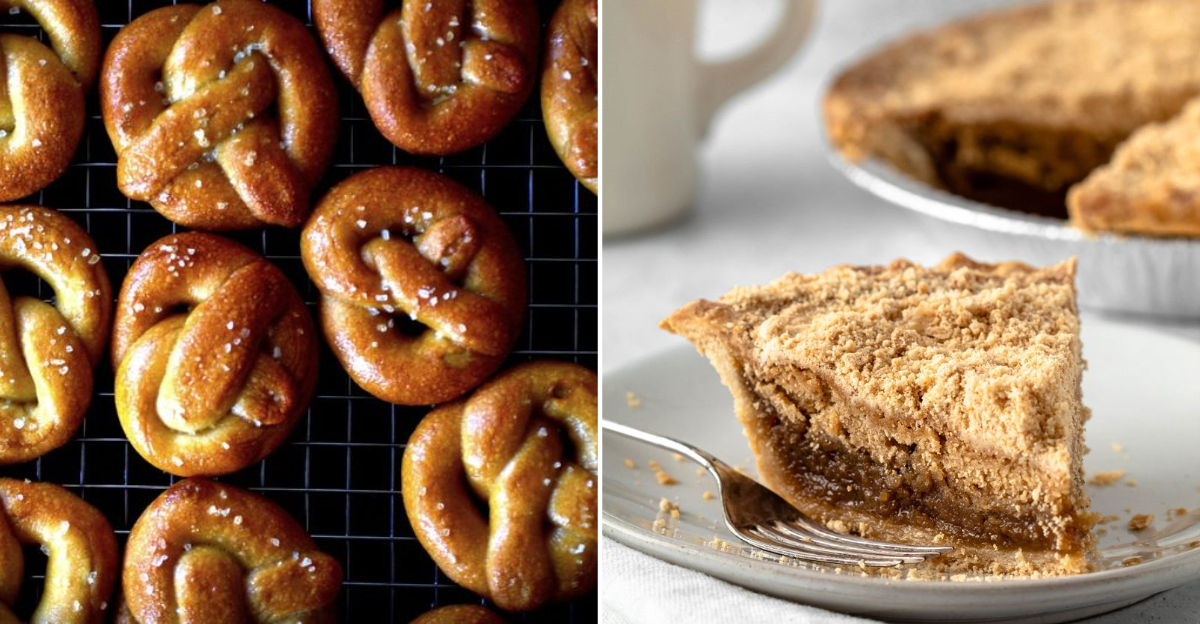
“Why would anyone name something so delicious after flies?” visitors always ask. The sticky-sweet molasses filling topped with crumbly streusel creates a dessert that’s impossible to resist – even for the insects it’s named after!
Every summer at my aunt’s farm, we’d gather for pie-making day. The kitchen would fill with the rich aroma of molasses as we prepared enough shoofly pies to last through fall harvest. Some families make ‘wet bottom’ versions with gooey centers, while others prefer ‘dry bottom’ with cake-like consistency throughout.
Pennsylvania Dutch bakers originally created this treat as a molasses cake baked in pie crust, perfect with morning coffee. No proper Pennsylvania pantry is complete without molasses ready for emergency shoofly pie cravings!
3. Lebanon Bologna: Not Your Average Sandwich Meat
The first time I packed Lebanon bologna for lunch at my new school outside Pennsylvania, my classmates thought something had gone bad in my lunchbox! This tangy, smoked, fermented sausage packs a flavor punch that catches newcomers off guard.
Created by Pennsylvania Dutch butchers in Lebanon County, this cured meat gets its distinctive taste from a slow smoking process over hardwood. The deep maroon color and tangy flavor come from aging the beef with a special spice blend.
My family’s favorite midnight snack was always Lebanon bologna sliced thick with a smear of cream cheese and a dab of horseradish. Sweet versions exist too, but purists like my grandfather insisted the original tangy variety was the only legitimate option worth eating!
4. Hog Maw: The Stuffed Pig Stomach Nobody Asked For
“You eat WHAT?” That’s the universal reaction when I describe hog maw to non-Pennsylvanians. This Pennsylvania Dutch masterpiece involves stuffing a cleaned pig’s stomach with potatoes, sausage, and cabbage, then slow-roasting it until everything melds into savory perfection.
My grandmother would prepare hog maw for New Year’s Day, claiming it brought good luck. The outer stomach becomes crispy while the filling inside turns into a delicious casserole-like mixture. Watching visitors’ faces when we’d announce dinner was ready was always entertaining!
Despite its intimidating appearance, the taste is surprisingly mild and comforting – like the best parts of a holiday dinner stuffed into nature’s own cooking vessel. Many families add carrots or celery, but my grandmother insisted that was just fancy city-folk nonsense.
5. Soft Pretzels: The Twisted Obsession
Philadelphia might claim cheesesteaks as their signature food, but true Pennsylvanians know our soft pretzels are the real treasure! The Reading Pretzel Belt produces more pretzels than anywhere else in America, and we take this twisted dough very seriously.
Saturday mornings in my hometown meant fresh pretzels from Amish vendors at the farmers market. Unlike those dry mall pretzels, authentic Pennsylvania versions have a mahogany exterior with just the right amount of salt and a distinctive knotted shape that creates the perfect chewy center.
My father taught me to eat them the traditional way – torn into pieces and dipped in spicy brown mustard, never yellow! Some locals prefer theirs with cheese sauce, which sparked more than one heated debate at our dinner table over proper pretzel etiquette.
6. Pagash: The Polish Pizza You Never Knew Existed
“Polish pizza” might sound like a bad joke, but pagash is dead serious comfort food in northeastern Pennsylvania’s coal country. My coal-miner great-grandfather would devour this potato and cheese mixture baked between two layers of dough after long shifts underground.
During Lent, when meat was forbidden, Slavic families created this hearty dish to keep bellies full during religious fasting periods. The simple combination of mashed potatoes, onions, and sharp cheddar creates a filling that puts fancy pizzerias to shame.
Our family recipe includes a secret ingredient – a dash of garlic powder that my great-grandmother supposedly added by accident one day. Now we can’t imagine pagash without it! Some families serve it with sour cream on top, but purists in my hometown consider that an unnecessary flourish.
7. Schnitz Un Knepp: The Three-Word Tongue Twister
“Schnitz un knepp” sounds like something you’d say after sneezing, but this Pennsylvania Dutch classic translates simply to “dried apples and dumplings.” Watching my out-of-state cousins attempt to pronounce it at family reunions provided endless entertainment!
Ham simmered with dried apple slices creates a sweet-savory broth where fluffy dumplings cook to perfection. My grandmother would start preparing the apples in early fall, slicing and drying them on screens in the attic for winter meals.
The magic happens when the ham’s saltiness mingles with the apples’ tartness and the dumplings soak up all that flavor. Modern families might use pre-dried apples, but nothing compares to the intensity of home-dried fruit. This humble one-pot meal sustained generations of farmers through harsh Pennsylvania winters long before fancy fusion cuisine existed.