
This Pennsylvania Pretzel Bakery Has Been Twisting Dough The Same Way For 100 Years
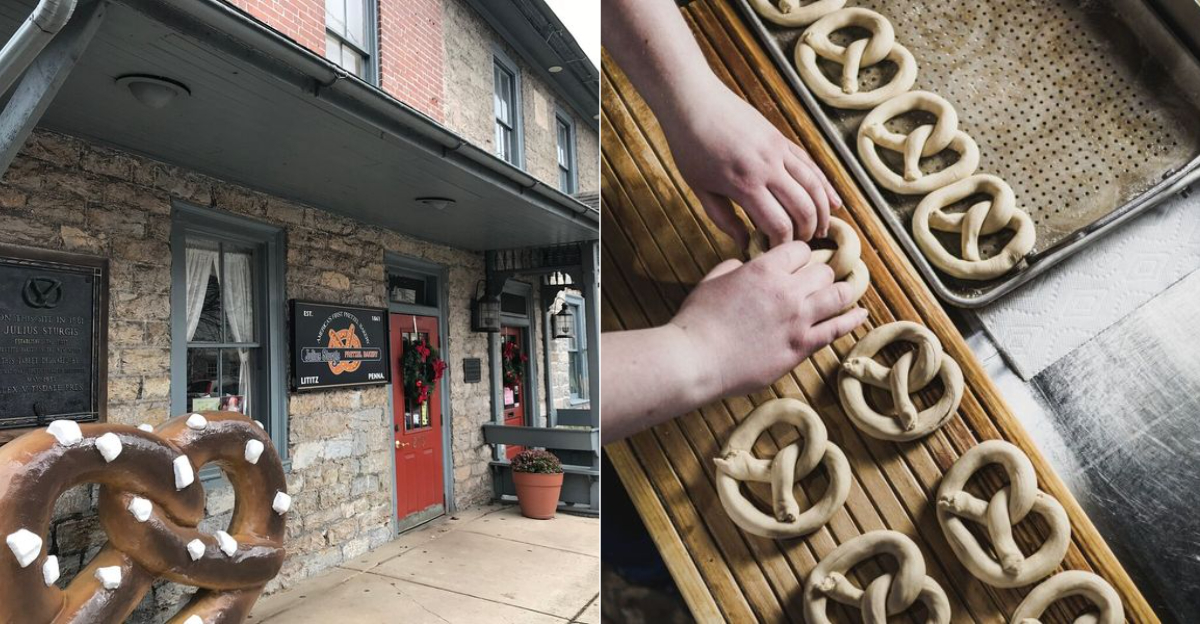
Nestled in the charming town of Lititz, Pennsylvania, stands a small stone building with a big claim to fame: America’s oldest commercial pretzel bakery.
Since 1861, the Julius Sturgis Pretzel Bakery has been hand-twisting dough into the iconic knots that have become a symbol of both comfort and tradition. Step through the weathered wooden doors, and it feels as though time slows down.
The scent of fresh-baked pretzels fills the air, and the creak of the old floorboards reminds visitors they’re standing in history. Here, tradition isn’t just preserved—it’s baked into every golden-brown twist, one pretzel at a time.
A Recipe That Survived Five Generations
The story begins with a hungry traveler sharing a secret pretzel recipe with bread baker Julius Sturgis. That chance encounter in 1861 changed everything! Julius immediately fell in love with the distinctive taste and decided pretzels would be his future.
Five generations later, the Sturgis family still uses that same recipe. No fancy additives or modern shortcuts – just flour, water, yeast, and salt combined in the exact proportions Julius used.
What amazes me most is how they’ve resisted the temptation to ‘improve’ the recipe. In a world obsessed with innovation, there’s something wonderfully stubborn about saying, ‘We got it right the first time.’
Hand-Twisted Excellence You Can Taste
Machine-made pretzels just don’t compare to the ones twisted by experienced hands! Each soft pretzel at Sturgis gets individually shaped by bakers who’ve mastered the three-flip technique that creates that classic pretzel shape.
When I visited last summer, I watched in awe as the baker’s fingers moved with hypnotic speed. ‘Muscle memory,’ she laughed when I complimented her skill. ‘After your first thousand, you stop thinking about it.’
The result? Every pretzel has its own personality – slight variations that prove it’s handcrafted. Those tiny imperfections actually create perfect spots where salt collects or where the crust gets extra crispy.
Original Stone Ovens That Impart Unique Flavor
You can’t replicate the magic that happens inside those ancient stone ovens! Built into the walls of the original bakery, these historic ovens create a distinctive baking environment that modern equipment simply cannot match.
The stone absorbs and radiates heat differently than metal, creating the perfect balance of crispy exterior and soft interior. My taste buds did a little happy dance when I bit into a pretzel fresh from these ovens!
Even more fascinating is how the bakers judge doneness not by timers but by smell and color. ‘The pretzel tells you when it’s ready,’ one baker told me with a wink. That’s craftsmanship no computer could program.
A Living Museum Where Visitors Become Bakers
Forget passive museum experiences – at Sturgis, you roll up your sleeves and join the tradition! My hands trembled slightly as the tour guide handed me a rope of dough and challenged me to create the signature pretzel twist.
Children giggled around me as we all attempted the seemingly simple three-step process. My first effort looked more like a misshapen blob than a pretzel, but the patient staff offered encouragement.
‘No one gets it right the first time,’ the guide reassured us. ‘Julius himself probably made some funny-looking ones when he started.’ This hands-on connection to history creates memories far more powerful than just watching from behind a velvet rope.
Pennsylvania Dutch Heritage Preserved in Every Bite
The humble pretzel carries the soul of Pennsylvania Dutch culture! These German immigrants brought pretzel-making traditions when they settled in Lancaster County centuries ago, and Sturgis preserves this cultural heritage in its purest form.
Legend says monks invented pretzels to resemble arms crossed in prayer, giving them as rewards to children who learned their Bible verses. The three holes represent the Holy Trinity.
I love how something as simple as twisted dough connects us to centuries of tradition. When you bite into a Sturgis pretzel, you’re not just enjoying a snack – you’re participating in a cultural ritual that arrived on American shores with hopeful immigrants seeking a better life.
Sustainable Business Practices Before They Were Trendy
Long before ‘sustainability’ became marketing buzzword, Sturgis operated with natural efficiency! Their approach wasn’t driven by environmental consultants but by good old-fashioned frugality and common sense.
The bakery has always used minimal packaging, sourced ingredients locally (out of necessity), and operated with remarkable energy efficiency. Those thick stone walls provide natural insulation, while the ovens’ residual heat warms the building in winter.
‘We never wasted anything because we couldn’t afford to,’ chuckled Tom Sturgis, the fourth-generation owner, when I asked about their green practices. Sometimes the most environmentally friendly approaches aren’t the newest innovations but the oldest traditions, followed faithfully for generations.
The Taste of Authenticity in a Mass-Produced World
In our world of identical factory foods, Sturgis offers something increasingly rare – true authenticity! Each pretzel represents an unbroken chain of tradition stretching back to before the Civil War.
When I asked a regular customer why she drives 30 miles weekly for these pretzels, she smiled knowingly. ‘Because they taste like pretzels are supposed to taste.’ That simple answer captures everything.
The slightly irregular shapes, the distinctive chew that comes only from proper fermentation, the perfect salt balance – these qualities can’t be mass-produced. In a food landscape where ‘artisanal’ often means nothing more than fancy packaging, Sturgis offers the real thing – a genuine taste of American culinary heritage worth preserving for another century.