
11 Unusual Foods That Actually Got Their Start In Pennsylvania
Pennsylvania has a knack for creating foods that surprise and delight. Some started as local curiosities and slowly became cult favorites, proving that unusual can also be unforgettable.
From quirky snacks to inventive comfort foods, these dishes tell stories of creativity, tradition, and flavor that locals have long cherished.
Sampling them gives outsiders a taste of the state’s culinary personality and shows why Pennsylvania continues to influence the way people eat across the country.
1. Banana Split: The Sweet Triple Threat
In 1904, a young pharmacy apprentice named David Strickler sliced a banana lengthwise and created history in Latrobe, Pennsylvania.
Bored with standard ice cream offerings, he piled three scoops atop the split fruit, added toppings, and charged a whopping 10 cents.
The decadent dessert caught on like wildfire. While other cities have tried claiming banana split fame, Latrobe officially secured its birthplace status with a historical marker and annual festival celebrating their sweet invention.
2. Big Mac: McDonald’s Two-Story Sandwich
Before becoming a global fast-food icon, the Big Mac was just an experiment by franchisee Jim Delligatti in Uniontown, Pennsylvania.
Frustrated by limited menu options, Delligatti whipped up the double-decker burger in 1967 to satisfy hungry steel workers.
McDonald’s corporate initially resisted the idea. However, after stellar local sales, they couldn’t ignore its popularity.
The signature sandwich, complete with that special sauce, went nationwide in 1968 and now sells over 550 million annually in America alone.
3. Stromboli: The Rolled-Up Revolution
Romano’s Italian Restaurant & Pizzeria in Essington rolled out this savory sensation in the 1950s.
Unlike its cousin the calzone, stromboli features a jelly-roll style wrap stuffed with Italian cold cuts, cheeses, and sometimes vegetables.
Owner Nazzareno Romano named his creation after the Italian movie “Stromboli,” starring Ingrid Bergman.
The portable, pizza-adjacent invention became a hit throughout the Philadelphia region before spreading nationwide. Today it’s a staple on Italian-American menus across the country.
4. Texas Tommy: The Philly Frank With A Twist
Despite its Lone Star name, this loaded hot dog creation is pure Pennsylvania.
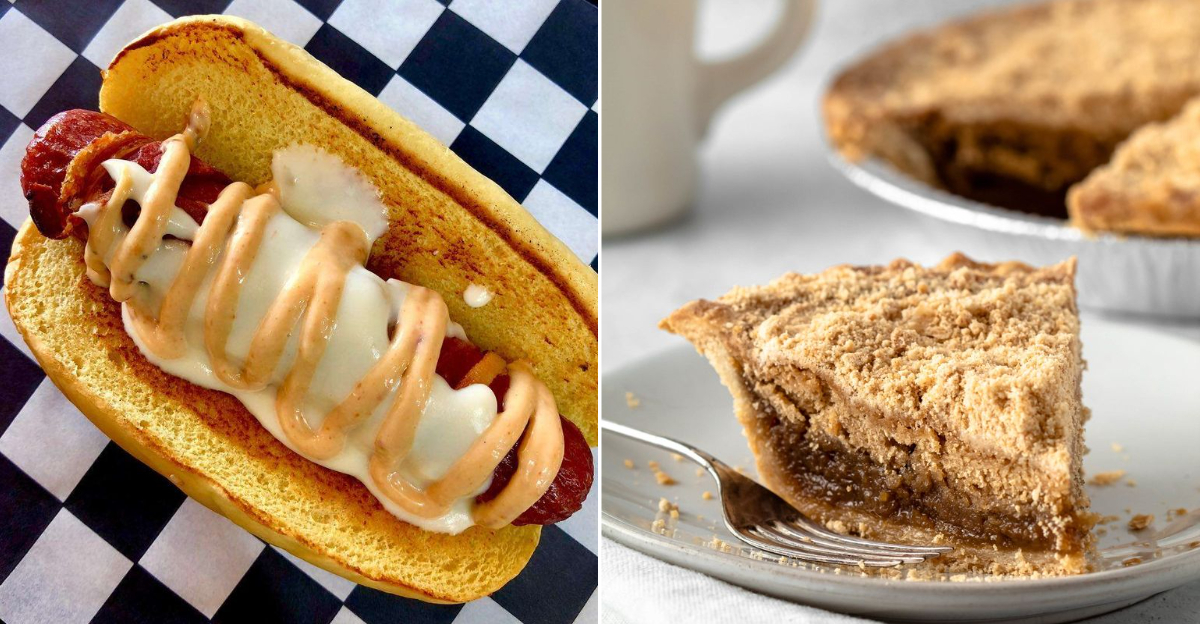
Born in Pottstown during the 1950s, the Texas Tommy features a split frankfurter stuffed with cheese, wrapped in bacon, then grilled to melty perfection.
Local diners popularized this indulgent treat long before bacon-wrapped everything became trendy.
Some versions add chili or other toppings, but purists stick with the cheese-stuffed, bacon-hugged original formula that made this hot dog a regional cult favorite.
5. Old Forge Pizza: The Coal Region’s Rectangular Wonder
The tiny borough of Old Forge boldly declares itself “The Pizza Capital of the World” based on its unique rectangular pies.
Unlike traditional round pizzas, these trays feature a thick, airy crust, sweet onion-laced sauce, and an unusual cheese blend.
Locals don’t order by the slice. They ask for “cuts” instead. And don’t call it mozzarella!
The signature topping is a mysterious mix of cheeses that might include American, cheddar, and brick varieties. This regional specialty remains largely unknown outside northeastern Pennsylvania.
6. Altoona-Style Pizza: The Hotel Hack That Went Viral
Food critics gasped in horror when this bizarre pizza creation gained internet infamy.
Created at the Altoona Hotel in the 1960s, this unconventional pie features a Sicilian crust topped with sweet tomato sauce, deli salami, green bell peppers, and, brace yourself, yellow American cheese slices.
After baking, it’s cut into squares rather than triangles. While pizza purists consider it an abomination, locals defend their quirky creation.
The original hotel burned down in 2013, but other area restaurants still serve this conversation-starting specialty.
7. Philadelphia Tomato Pie: The Sauce-Forward Square
Not to be confused with regular pizza, Philly tomato pie is a room-temperature bakery treat featuring thick, focaccia-like dough smothered in tangy tomato sauce. The kicker?
It traditionally comes with zero cheese, just a sprinkle of Romano or oregano on top. Bakeries in South and Northeast Philly have been slinging these saucy squares since Italian immigrants brought the recipe in the early 1900s.
Served in white bakery boxes tied with string, these pies remain a beloved snack despite being overshadowed by their cheesier pizza cousins.
8. Pittsburgh Salad: French Fries As A Topping
Only in Pittsburgh would someone look at a perfectly good salad and think, “This needs potatoes…fried ones…on top!”
This Steel City creation starts with ordinary mixed greens and veggies, then adds grilled chicken or steak, a handful of shredded cheese, and a crown of hot french fries.
The origin remains murky, but locals credit Jerry’s Curb Service restaurant with popularizing it in the 1960s.
Outsiders might raise eyebrows, but Pittsburghers defend their fry-topped greens as the perfect balance of hot and cold, crispy and fresh.
9. Pennsylvania Dutch Pot Pie: The Soup That’s Not A Pie
Forget everything you know about pot pie! The Pennsylvania Dutch version contains no actual pie crust.
Instead, this hearty dish features square egg noodle dumplings swimming in thick chicken broth with chunks of meat and vegetables.
German settlers (mistakenly called “Dutch” from “Deutsch”) brought this comfort food to Pennsylvania in the 18th century.
Farm families appreciated its simplicity and filling nature. Modern versions might include saffron for a distinctive yellow color, but the hand-rolled dough squares remain the star attraction.
10. Fastnachts: The Pre-Lenten Donut Tradition
Fat Tuesday has a different name in Pennsylvania Dutch country: Fastnacht Day. These dense, potato-based donuts were created to use up fat, sugar, and lard before Lenten fasting began.
Traditional fastnachts contain no holes or fillings and are often square or diamond-shaped.
Pennsylvania German families have been making them for generations, typically serving them plain or with simple toppings like powdered sugar or molasses.
While commercial versions exist, many families still gather annually for fastnacht-making parties.
11. Shoofly Pie: The Molasses Marvel
Sweet-toothed Pennsylvania Dutch settlers created this sticky treat when fresh fruit wasn’t available.
The simple pie features a gooey molasses filling topped with crumbly streusel, resembling something so sweet it would attract flies (hence the need to “shoo” them away).
Two varieties exist: “wet bottom” with a layer of custard-like filling beneath the crumbs, and “dry bottom” with a cake-like consistency throughout.
Either way, this intensely sweet dessert remains a staple at Pennsylvania Dutch markets and family gatherings, especially during fall harvest season.