
10 Forgotten Ghost Towns In Nevada That Are As Eerie As They Are Scenic
Nevada’s landscape hides more than just desert vistas and mountain ranges. Scattered across the Silver State are remnants of once-thriving communities, now abandoned to time and the elements.
These ghost towns tell stories of mining booms, devastating busts, and the resilient spirit of frontier life. Join me as we explore ten forgotten Nevada settlements where echoes of the past create both haunting and beautiful experiences.
1. Berlin: Frozen in Time
Unlike many ghost towns left to vanish completely, Berlin exists in carefully maintained ‘arrested decay’ within its own state park.
The 30-stamp mill stands as a testament to industrial ambition, while miners’ homes line streets where families once lived, worked, and dreamed. The assay office where precious metals were evaluated still contains original equipment.
Trails wind through the townsite, allowing visitors to step back into Nevada’s mining heyday while enjoying the stark beauty of the surrounding high desert.
2. Rhyolite: Banking on Dreams
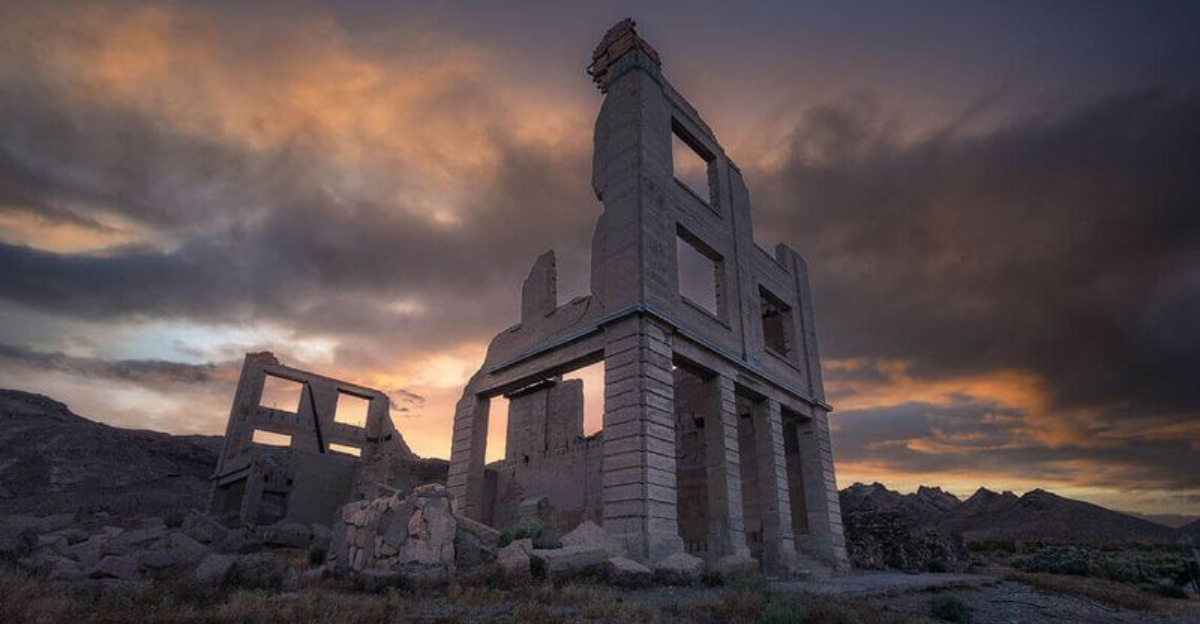
Standing tall against the desert backdrop, the crumbling facade of the John S. Cook Bank silently watches over Rhyolite’s empty streets.
The restored Bottle House nearby showcases ingenious frontier resourcefulness – built entirely from medicine and liquor bottles when lumber was scarce.
Visitors can wander among these architectural ghosts just west of Beatty. My grandfather once told me he felt the presence of prospectors still searching for that elusive strike while walking through the cemetery at sunset.
3. St. Thomas: The Drowned Town
Swallowed by rising waters when Hoover Dam created Lake Mead in 1938, St. Thomas has dramatically reemerged as drought lowered the lake’s level. The town’s concrete foundations form a ghostly grid across the cracked lakebed.
Visitors can now walk streets that spent decades underwater. School foundations and home outlines create an otherworldly landscape beneath towering desert mountains.
I remember hiking there in 2016 when the town had fully resurfaced, feeling like I’d stepped onto another planet where time had bent in on itself.
4. Metropolis: Dreams of Grandeur
The grand arch of Lincoln School stands defiantly against time, a monument to outsized ambition in the sagebrush sea. Metropolis was planned as a farming utopia, but water rights disputes and harsh desert realities crushed those dreams.
Today, crumbling hotel foundations and the lonely cemetery tell tales of what might have been. Wind whistles through the school’s empty windows, carrying whispers of lessons long finished and children’s laughter faded to memory.
5. Belmont: High Desert Courthouse
Perched at 7,000 feet, Belmont’s stone courthouse watches over a town that refuses to completely disappear. Morning light transforms brick and stone ruins into glowing sentinels of the past against sweeping high-desert panoramas.
The partially restored courthouse still holds court over empty streets where silver miners once celebrated their fortunes. Brick walls of the former bank and saloon create perfect frames for photographers seeking to capture Nevada’s mining legacy.
When I visited last fall, an old-timer told me the courthouse bell still rings on windless nights—a bit of Belmont lore.
6. Delamar: The Widowmaker
Clinging to a remote ridgetop, Delamar earned its grim nickname from the dangerous silicosis that claimed countless miners. Stone walls rise from rocky soil where men once extracted gold from dangerous quartzite dust.
Two cemeteries – the Delamar Catholic Cemetery and the Delamar-Helene (Miners) Cemetery – tell the stark story of hardship. From the mill foundations, visitors can gaze across Delamar Valley, contemplating the high price paid for golden dreams.
7. Gold Point: Living Among Ghosts
False-front buildings line dusty streets where modern-day caretakers maintain Gold Point as a living museum. Vintage artifacts fill cabins and storefronts, creating the uncanny feeling that residents just stepped away momentarily.
Unlike many abandoned towns, Gold Point maintains a heartbeat. The on-site bed and breakfast welcomes visitors who want to spend the night surrounded by history.
I stayed there during a meteor shower last summer, and sitting on the porch of an 1800s cabin watching shooting stars streak above buildings that had witnessed a century of night skies was truly magical.
8. Hamilton: Sky-High Silver Dreams
Nestled at a breathtaking 8,000 feet elevation, Hamilton’s scattered stone foundations tell tales of boom-to-bust drama played out against alpine vistas.
Once home to 10,000 hopeful souls, it briefly served as White Pine County’s seat before silver veins ran dry. Winter snows and summer thunderstorms have weathered the remaining stone walls into sculptural forms.
The town’s remote location along Nevada’s Loneliest Road corridor ensures visitors can experience the profound silence that follows abandoned dreams.
9. Nelson: Canyon Treasures
Tucked into dramatic Eldorado Canyon, Nelson’s weathered wooden structures stand against a backdrop of jagged hills streaked with mineral colors.
The Techatticup Mine, once infamous for its lawlessness, now welcomes visitors for guided tours into one of Southern Nevada’s oldest, richest, and most famous gold mines.
Vintage vehicles and mining equipment create a photographer’s paradise. Hollywood discovered Nelson’s cinematic qualities years ago, using it as a backdrop for numerous films.
During my tour last spring, our guide shared stories of the camp’s violent past, a reputation that still echoes through Eldorado Canyon.
10. Aurora: Mark Twain’s Silver City
Before Samuel Clemens became Mark Twain, he tried his hand at mining in Aurora, documenting his failures with characteristic wit. Today, only scattered brick rubble and stone foundations hint at the city that once rivaled Virginia City in importance.
The cemetery on the hillside holds stories of frontier life and passing, with headstones weathered by harsh Nevada seasons.
From the townsite grid, visitors can gaze across the same vast valley views that inspired Twain’s early writings, connecting with both literary and mining history.