
These Historic Covered Bridges In Maine Look Straight Out Of A Postcard
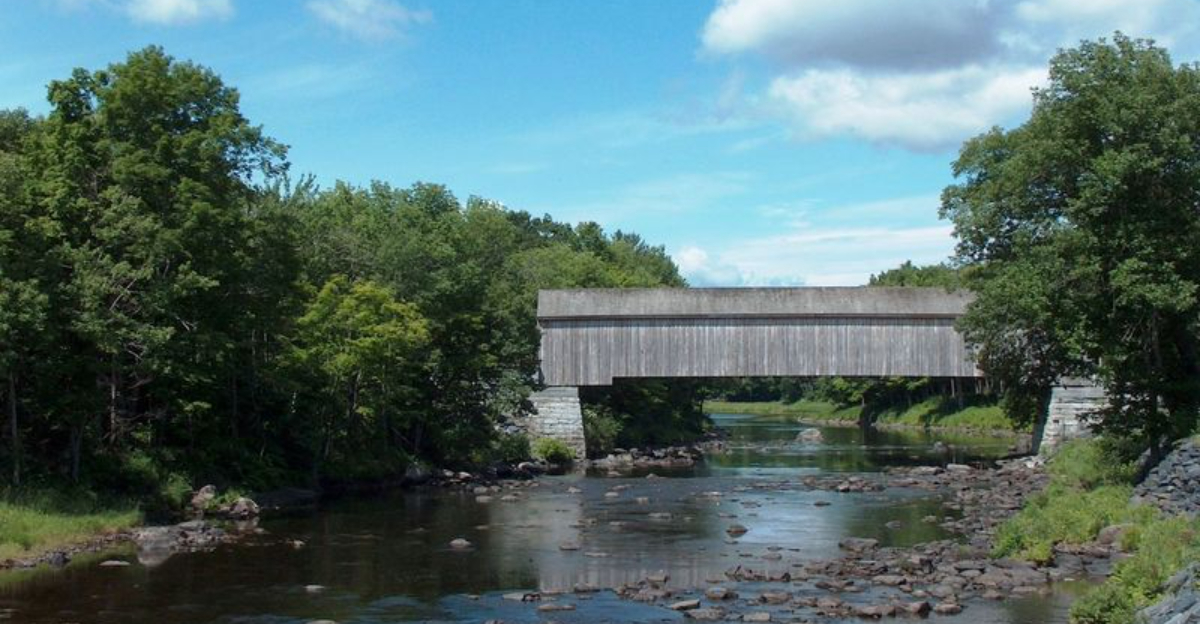
There’s a certain magic to a road less traveled, especially when it leads you back in time.
Tucked away along the winding backroads of Maine, amidst the dense pine forests and rolling hills, you’ll find enchanting relics of a bygone era: historic covered bridges. More than just a means to cross a river, these wooden treasures are portals to a simpler time.
With their rustic timbers and timeless charm, they stand as silent, beautiful sentinels, each one whispering tales of horse-drawn carriages, community craftsmanship, and the quiet beauty of rural New England. Prepare to be transported.
1. Hemlock Bridge
Tucked away in Fryeburg, this charming 109-foot bridge has spanned the Old Saco River since 1857. The distinctive red roof creates a stunning contrast against Maine’s lush greenery in summer and brilliant foliage in autumn.
Local legend claims that during the Civil War, a Union soldier carved his initials inside before heading to battle. Eagle-eyed visitors still search for these mysterious markings today.
Built in the Paddleford truss design with added laminated arches, Hemlock Bridge underwent extensive restoration in 1988 to preserve its historic integrity. All while ensuring it remains sturdy for generations of visitors.
2. Sunday River Bridge
Better known as “Artist’s Bridge” due to its popularity among painters, this 1872 gem in Newry might be Maine’s most photographed covered bridge. Its picturesque setting against the backdrop of the Sunday River makes it impossible to resist capturing on canvas or camera.
Measuring just 87 feet, what this bridge lacks in size it makes up for in character. The weathered gray boards and classic Paddleford truss construction create a timeless silhouette.
Autumn brings spectacular views as the surrounding maples burst into fiery colors, reflecting in the gentle waters below. It’s drawing photographers from across New England seeking that perfect seasonal shot.
3. Babbs Bridge
Rising from the ashes of arson not once but twice, Babbs Bridge demonstrates Maine’s dedication to preserving its architectural heritage. The current structure, rebuilt in 1976 after the devastating 1973 fire, faithfully replicates the 1840 original that once carried horses and buggies across the Presumpscot River.
At just 79 feet, it’s one of Maine’s shortest covered bridges, but what it lacks in length it makes up for in resilience. The bridge’s location in South Windham makes it easily accessible for day-trippers from Portland.
Graffiti artists have unfortunately left their mark inside. But preservationists continue fighting to maintain this historic treasure for future generations.
4. Bennett Bridge
Far from the beaten path in Lincoln Plantation stands Bennett Bridge, a rustic treasure that rewards those willing to venture into Maine’s western mountains. Built in 1901, this 93-foot span across the magically named Magalloway River feels like stepping into a fairy tale.
The bridge’s remote location has helped preserve its authenticity, with fewer visitors than its more accessible cousins. Wooden pegs rather than nails hold much of the structure together – a testament to traditional craftsmanship.
Fishermen particularly treasure this spot. The waters beneath Bennett Bridge offer excellent opportunities to catch brook trout in the cool, clear river while surrounded by pristine wilderness.
5. Lovejoy Bridge
Don’t let its size fool you! At just 70 feet long, Lovejoy Bridge in South Andover holds the distinction of being Maine’s shortest covered bridge. Built in 1868, this pint-sized crossing over the Ellis River proves that good things come in small packages.
The bridge features a unique queenpost truss design, distinguishing it architecturally from many of its counterparts. Its compact frame has weathered countless Maine winters, standing as a testament to 19th-century engineering ingenuity.
Families love to picnic nearby, especially in summer when the cool river waters provide relief from the heat. The surrounding area offers excellent opportunities for spotting wildlife like deer coming to drink from the Ellis River.
6. Watson Settlement Bridge
Standing proud as Maine’s northernmost and youngest covered bridge, this 1911 structure in Littleton represents the twilight of covered bridge construction. The automobile age was dawning when local builder Amasa Bellefontaine erected this 170-foot span across the Meduxnekeag Stream.
What makes Watson Settlement Bridge architecturally special is its Howe truss design, featuring a combination of wooden diagonals and vertical iron rods. The bridge underwent major restoration in 2015, ensuring this Aroostook County landmark will stand for generations to come.
During potato harvest season, the surrounding farmland buzzes with activity. This creates a quintessentially Maine tableau of agriculture and history existing side by side.
7. Robyville Bridge
Unlike its red-painted cousins, Robyville Bridge in Corinth stands out with its unusual whitewashed exterior reminiscent of a New England church. Built in 1876 to span the Kenduskeag Stream, it’s the only completely shingled covered bridge in the state.
Railroad engineer Moses Corliss designed this 73-foot bridge using a unique modified multiple kingpost truss system. The bridge’s pristine white appearance against green foliage creates a stunning visual that has graced countless photographs and paintings.
The surrounding area remains delightfully rural, offering visitors a glimpse of Maine country life that has changed little since the bridge was constructed. In winter, the white bridge against snow-covered landscapes creates a monochromatic masterpiece.
8. Parsonsfield-Porter Bridge
Straddling two towns since 1876, this magnificent 152-foot span across the Ossipee River connects Parsonsfield and Porter with rustic elegance. The bridge’s impressive length makes it one of Maine’s most substantial covered crossings still standing.
Known locally as the “Porter-Parsonsfield Bridge,” this structure features a Paddleford truss design modified with additional arches for extra strength. The bridge survived devastating floods in 1936 that destroyed many other historic bridges in the region.
Canoeists particularly appreciate this landmark, as it provides a perfect reference point during paddling excursions on the Ossipee. The sound of water rushing over rocks beneath the bridge creates a soothing soundtrack for visitors who stop to admire its craftsmanship.
9. Low’s Bridge
The original Low’s Bridge, built in 1857 across the Piscataquis River between Guilford and Sangerville, served faithfully for over a century before tragically washing away during the devastating flood of 1987. Locals, unwilling to lose this beloved landmark, rallied to construct a historically accurate replacement.
Today’s bridge, completed in 1990, meticulously recreates the 120-foot Long truss design of its predecessor. Though technically not historic itself, it honors Maine’s covered bridge tradition and demonstrates the community’s dedication to preserving architectural heritage.
The swimming hole beneath the bridge remains a popular summer gathering spot for local teenagers. It’s continuing recreational traditions that have existed here for generations.
10. Lowe Bridge
Often confused with the similarly named Low’s Bridge, this hidden gem in Guilford represents one of Maine’s least-known covered bridges. Built in 1872 using a queenpost truss design, the 100-foot structure spans a quiet section of the Piscataquis River away from major roads.
What makes Lowe Bridge architecturally distinctive is its unusually steep roof pitch, designed to shed Maine’s heavy winter snows. The interior reveals impressive hand-hewn timbers joined with wooden pegs – craftsmanship rarely seen in modern construction.
Bird watchers frequent this spot in spring and summer, as the quiet surroundings attract numerous species. The bridge’s relative obscurity means visitors can often enjoy this historic treasure in peaceful solitude, especially on weekday mornings.
11. Morse Bridge
Though technically a reconstruction, Morse Bridge in Bangor faithfully captures the essence of Maine’s covered bridge heritage. The original 1873 structure spanned the Kenduskeag Stream until 1962, when progress claimed it during urban development.
History enthusiasts successfully advocated for this scaled-down replica, completed in 1983. Though smaller than the original, the bridge maintains authentic Howe truss construction techniques. Its accessible location in the Bangor City Forest makes it one of the easiest covered bridges for visitors to experience.
Particularly stunning after fresh snowfall, Morse Bridge has become a favorite backdrop for winter wedding photos. The contrast of red painted wood against white snow creates magical images that capture Maine’s romantic charm.