
10 Florida Foods Folks Enjoy, And 10 They Can’t Stop Craving
Florida food tells a story through contrast. Beaches serve fried baskets while bakeries in Miami fill glass cases with guava pastries. Seafood lands on paper plates beside hush puppies, while grocery store counters hand out sandwiches as beloved as any restaurant meal.
Each dish reflects migration, climate, and habit, from Cuban neighborhoods to Gulf Coast towns. Some plates feel casual and fleeting, others are tied to season or ritual. Together they form a menu locals defend fiercely and visitors learn quickly.
These twenty foods capture Florida’s rhythm: bright, briny, sweet, and bold enough to keep people coming back.
1. Cuban Sandwich
A pressed sandwich layered with roast pork, ham, Swiss, mustard, and pickles. The bread crackles when toasted, holding everything tightly together.
Born in Tampa’s Ybor City, it became the lunch break of cigar workers and immigrants. Today, Miami adds its own variations, sparking constant debates.
Locals order it hot, never cold, and often ask for extra pickles. It remains Florida’s most iconic handheld meal.
2. Grouper Sandwich
Thick grouper fillets hold their shape when grilled, fried, or blackened. A squeeze of lemon brightens the flavor without overpowering.
Restaurants along Clearwater Beach and the Gulf Coast built reputations on this fish. Grouper is prized for its mild, sweet taste and firm texture.
Beach shacks usually serve it with fries, wrapped loosely in paper. It’s messy, satisfying, and worth the wait in long lines.
3. Mahi Mahi Tacos
Mahi mahi cooks quickly, staying tender under high heat. The fish slides neatly into tortillas topped with slaw, crema, and lime.
Although mahi mahi is caught worldwide, Florida waters supply much of it locally. Coastal towns turned it into a reliable taco filling.
Tacos show up in surfside cafés where diners eat outdoors. They remain light, bright, and easy to finish in just a few bites.
4. Conch Fritters
Golden fritters hide chewy bits of conch inside seasoned batter. Crisp outside, they reveal a soft, savory interior when broken apart.
The dish traveled from the Bahamas and Caribbean to the Florida Keys. Conch became a regional staple, celebrated at festivals and fish shacks.
Hot sauce is the common dip, adding heat to each bite. They taste like the ocean carried into a fry basket.
5. Smoked Fish Dip
Creamy dip made with smoked mullet or other white fish, blended with mayo, seasoning, and sometimes celery. Served with crackers or vegetables.
Florida’s Gulf Coast towns popularized it, using mullet caught locally and smoked in backyards or roadside stands.
The dip vanishes fast at tables. It pairs salt and smoke in a way that keeps hands reaching back for more.
6. Blackened Shrimp
Shrimp sear in a hot skillet coated with paprika, cayenne, and garlic. The result is charred, spicy, and deeply aromatic.
The blackening method originated in Louisiana but spread quickly to Florida seafood restaurants. Shrimp became the ideal protein for this technique.
Plates arrive sizzling. Diners work quickly, fingers stained with spice, satisfied long before the platter cools.
7. Hush Puppies
Cornmeal batter fried into small, round bites. The exterior crunch gives way to soft, slightly sweet centers.
Said to have originated from fishermen tossing fried dough to quiet dogs, hush puppies became a Southern seafood staple.
In Florida, they often accompany fried shrimp or catfish. Butter or honey drizzled on top makes them even harder to resist.
8. Fried Gator Bites
Bite-sized pieces of alligator tail meat coated in batter and fried. The texture is firm, slightly chewy, and lean.
Alligator farming and controlled harvests supply restaurants with meat. It is served mostly in tourist-friendly spots and game-oriented eateries.
Usually paired with dipping sauces, gator bites remain a novelty turned tradition. They embody Florida’s swamp-to-table reputation.
9. Black Beans And Rice
A simple combination, slow-simmered beans meet seasoned rice in a filling and balanced plate.
Brought by Cuban and Puerto Rican communities, it became a staple in homes and restaurants across Florida.
The dish is eaten daily by many families. Affordable, hearty, and comforting, it anchors meals without pretense.
10. Yellow Rice And Chicken
Bright yellow rice cooked with saffron or turmeric carries tender chicken pieces. Peas, peppers, and onions often round out the dish.
Spanish roots spread through the Caribbean before settling into Florida kitchens. Every family and restaurant tweaks the recipe slightly.
Served family-style, it fills tables on weekends. The aroma is enough to gather people together.
11. Key Lime Pie
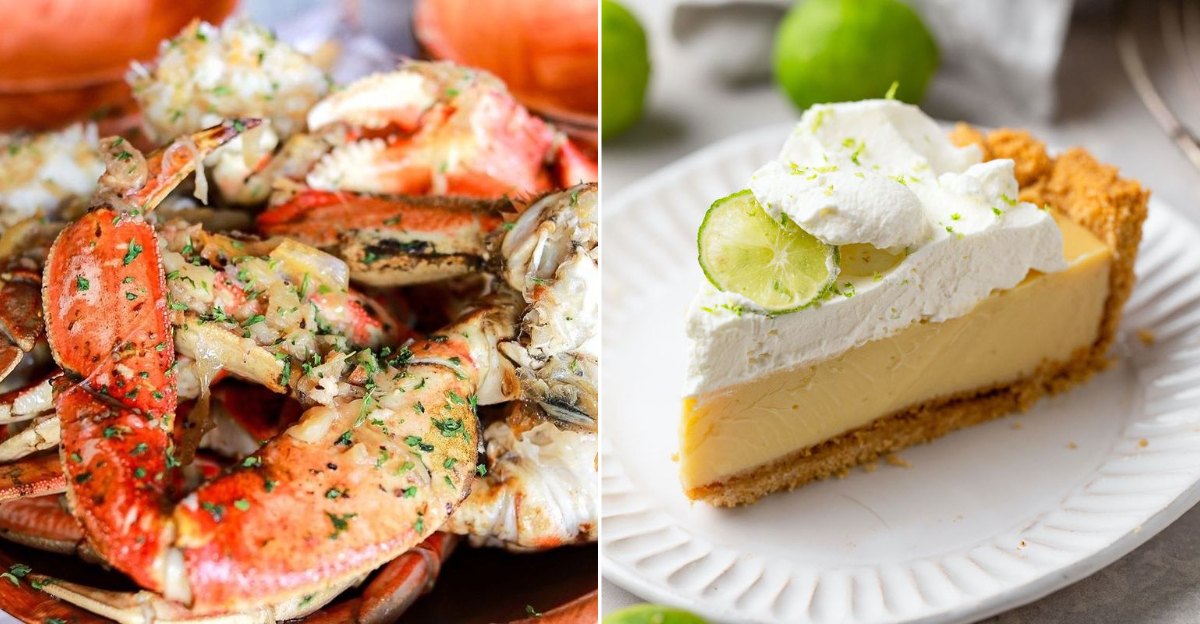
A pale yellow pie made from Key lime juice, condensed milk, and egg yolks, set in a graham cracker crust.
Originating in the Florida Keys, the dessert became the state’s most famous sweet. Authentic versions never appear bright green.
Each slice is tart yet creamy, usually topped with whipped cream or meringue. It’s the dessert most associated with Florida.
12. Stone Crab Claws
Stone crabs are harvested for one claw, then returned to the sea to regenerate. The claws are served cracked, chilled, with mustard sauce.
The season runs October through May, making the dish a seasonal event. Miami institutions built reputations on this delicacy.
Eating them is slow, deliberate, and expensive. Still, they remain one of Florida’s culinary treasures.
13. Publix Chicken Tender Sub
A sandwich made from fried chicken tenders stuffed into fresh Publix bread, sauced and wrapped for quick eating.
Introduced by the Publix supermarket chain, it developed a cult following among Floridians and college students.
Affordable and filling, it is often eaten in cars right after purchase. The sub carries loyal fans across the state.
14. Café Con Leche
Strong espresso poured into steamed milk, lightly sweetened. Smooth and balanced, it pairs with bread or pastries.
Cuban immigrants made it a daily habit, especially in Miami. It remains central to Florida’s café culture.
Mornings across South Florida often begin with café con leche, served in small counters and family cafés alike.
15. Pastelito De Guayaba
Flaky pastry filled with guava paste, sometimes paired with cream cheese. Glazed tops give them a sweet finish.
Cuban bakeries stock trays of pastelitos, offering them fresh from ovens. They are breakfast and snack in equal measure.
Portable, sweet, and affordable, pastelitos are eaten quickly. Guava flavor defines the experience.
16. Vaca Frita
Beef marinated in citrus and garlic, shredded and pan-fried until crispy. Onions sizzle alongside for extra flavor.
The dish came from Cuba and became popular in Florida Cuban restaurants. Its crisp edges and citrus punch define it.
Often served with rice and plantains, vaca frita remains a hearty and dependable meal.
17. Arepa Con Queso
Cornmeal cakes grilled and split to hold melted cheese inside. Golden, chewy, and versatile, they adapt to fillings.
Venezuelan and Colombian communities introduced them widely, and Miami markets now feature them daily.
Street stalls and trucks sell arepas hot. Cheese stretches with every bite, making them irresistible.
18. Florida Spiny Lobster Tail
Unlike Maine lobsters, Florida’s spiny lobsters lack claws. Their tails are grilled or broiled, brushed with butter and lemon.
Harvest season inspires festivals and recreational dives known as “mini-season.” Locals celebrate with dockside feasts.
The meat is firm, sweet, and celebrated as Florida’s seafood jewel.
19. Garlic Crab
Whole crabs steamed and drenched in garlic butter sauce. Eating requires hands, effort, and patience.
Seafood houses across Florida turned garlic crab into a signature offering, piling trays high for groups.
Messy, communal, and rich, garlic crab remains a dish to linger over.
20. Medianoche Sandwich
Similar to a Cuban sandwich but built on sweet egg bread. Pork, ham, cheese, and pickles taste distinct when pressed into the softer loaf.
The name means “midnight,” tied to Havana nightlife. Miami cafés carried the tradition into late-night dining.
Still popular today, it offers a sweeter, softer alternative to the classic Cuban sandwich.