
9 Abandoned Railways In Colorado That Nature Is Slowly Taking Back
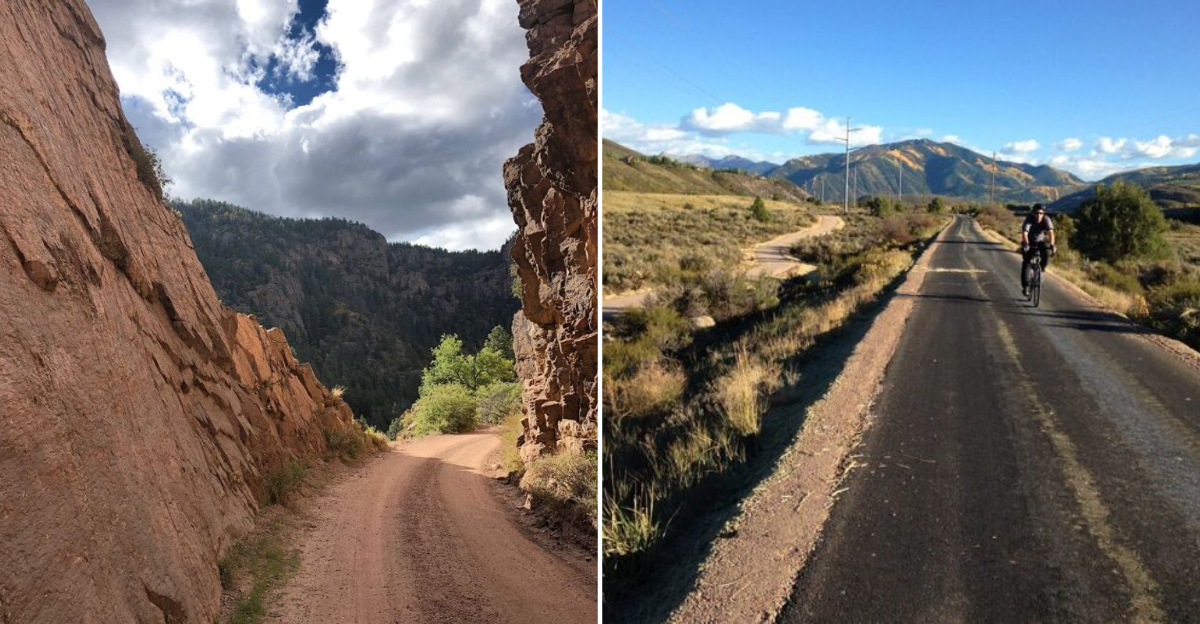
Colorado once pulsed with the rhythm of steam engines and clattering wheels, its railways carrying miners, settlers, and dreamers deep into the Rockies.
But when the gold and silver rushes faded, many of those ambitious lines were abandoned, left to the mercy of wind, snow, and time.
Today, these ghostly tracks have become outdoor museums where wildflowers bloom between the ties, aspens grow through forgotten trestles, and tunnels echo only with the sound of water and wildlife.
Exploring them feels like stepping into a living history lesson—one where nature writes the final chapter.
1. Rollins Pass: The Sky Road’s Second Life
Standing at 11,676 feet with the wind whipping through my hair, I couldn’t help but laugh at how different Rollins Pass looks today compared to its heyday. The railroad that once connected Rollinsville to Winter Park now serves as nature’s personal garden.
Mountain wildflowers burst through rotting railroad ties while pines and aspens crowd the edges. Marmots scurry across what was once the highest standard-gauge railroad in North America! The old water tower foundations now host colonies of colorful lichens that paint the stones in oranges and greens.
What fascinates me most is how quickly the alpine environment reclaims disturbed ground. In just over a century, sections of this engineering marvel have nearly vanished beneath meadows so pristine you’d never guess trains once huffed and puffed their way through here.
2. Alpine Tunnel: Nature’s Secret Doorway
Oh boy, you should see what Mother Nature has done with the Alpine Tunnel! This engineering marvel of the Denver, South Park & Pacific Railroad has become her personal art project. Last summer, I hiked the old grade and nearly walked right past the eastern portal—it’s that well-camouflaged by vegetation now!
The tunnel itself collapsed decades ago, but the approach tracks have transformed into meadows bursting with columbines and Indian paintbrush. Chipmunks dart in and out of what remains of the stone entrances. The telegraph poles that once lined the route have become woodpecker condominiums, riddled with perfectly round holes.
At 11,523 feet, this was once the highest railroad tunnel in North America. Now it’s one of the most beautiful examples of how the high alpine environment reclaims human constructions with startling efficiency.
3. Hagerman Tunnel: The Forgotten Passage
Wowza! The first time I snowshoed to Hagerman Tunnel, I nearly missed it—a testament to nature’s stealthy reclamation project! The Colorado Midland Railroad’s ambitious mountain crossing now looks more like a mysterious cave than a human-made passage.
Ice formations drip from the ceiling year-round, creating crystalline sculptures that would make any artist jealous. The approach track bed has become a lovely hiking trail, with only occasional spikes and timbers poking through the dirt to hint at its former purpose. Aspens quake where steam locomotives once thundered, their roots slowly dismantling the stone foundations.
Pikas have established colonies in the rockfall near the tunnel entrance, their tiny “eep!” calls echoing where train whistles once blew. The tunnel’s interior remains a cool 42 degrees even in summer—nature’s refrigerator preserving this slice of railroad history.
4. San Luis Southern Railway Trestle: The Wooden Sky Bridge
Holy moly, you haven’t seen anything until you’ve watched sunrise hit the San Luis Southern Railway Trestle near Blanca! I camped nearby last autumn just to catch this spectacle. The morning light illuminated the weathered timbers like they were dipped in gold, while sagebrush and chamisa flowers created a yellow carpet beneath.
This wooden marvel once carried trains across the San Luis Valley but now stands as a skeletal monument to railroad ambitions. Ravens nest in the crossbeams, their glossy black feathers contrasting against the silvery wood. The ties have weathered to a gorgeous patina that photographers dream about—I burned through two memory cards trying to capture it!
What makes this trestle special is how the desert environment preserves rather than destroys. The dry climate means decomposition happens slowly, creating this incredible time capsule where nature adds beauty without completely erasing human history.
5. Florence & Cripple Creek Railroad: Gold Fever’s Forgotten Path
Talk about a wild ride! Scrambling down into Phantom Canyon to trace the old Florence & Cripple Creek Railroad grade had me grinning ear to ear. This narrow-gauge line once hauled gold ore but now carries nothing heavier than deer and the occasional hiker like myself.
The famous “hanging bridges” that clung to canyon walls have mostly collapsed, with only ghostly abutments remaining. Nature has transformed these engineering marvels into vertical gardens of cliff-dwelling plants. Cottonwoods and willows crowd the creek where trestles once stood, their roots gradually shifting stone foundations.
My favorite spot features an old water tank foundation that’s become a perfect circle of wildflowers—like nature decided to plant her own commemorative garden! Throughout the canyon, the distinction between railroad grade and natural feature blurs more each year, creating a fascinating timeline of reclamation you can walk through.
6. Midland Terminal Railway: The Gold Camp Connection
Stumbling upon a rusty spike poking through pine needles was my first clue I’d found the old Midland Terminal Railway between Divide and Cripple Creek! I’d been hunting this ghost railroad for hours before realizing I was standing right on it—that’s how thoroughly the forest has reclaimed this historic line.
Ponderosa pines now stand tall where steam locomotives once hauled gold ore from the mining district. Their roots have lifted and twisted the few remaining rails into surreal sculptures. Deer trails crisscross the grade, showing how wildlife has repurposed this human corridor for their own highways.
The coolest part? Several cuts through hillsides have created perfect microclimates for wildflowers that don’t grow elsewhere nearby. It’s as if nature is using the railroad’s earth-moving efforts to showcase her botanical diversity, turning industrial scars into wildflower galleries that change with each season.
7. Rio Grande’s Ridgway To Ouray Line: The Rainbow Route Returns To Wild
Whoa Nelly! The first time I saw the remains of the Rio Grande’s Ridgway to Ouray line, I nearly drove off the road! The famous “Rainbow Route” now displays a different kind of rainbow—wildflowers in every color imaginable reclaiming the old railroad grade.
This narrow-gauge wonder once navigated the impossibly steep Uncompahgre Gorge but surrendered to Mother Nature’s persistence decades ago. Stone retaining walls that once held back mountainsides now serve as perfect lizard habitat, their sun-warmed surfaces hosting dozens of basking reptiles. The few remaining telegraph poles have become woodpecker condominiums and hawk perches.
My favorite discovery was finding old rail spikes that have rusted into the exact same red-orange shade as the surrounding soil—like the railroad is literally dissolving back into the earth. Each spring, avalanches rearrange more of the remaining infrastructure, accelerating nature’s reclamation project in dramatic fashion.
8. Aspen Branch: The Silver Miners’ Forgotten Highway
I nearly fell off my mountain bike laughing when I realized the smooth trail I was riding between Woody Creek and Aspen was actually the old Rio Grande railroad grade! The famous Aspen Branch that once hauled silver ore now hauls nothing heavier than hikers, cyclists, and the occasional moose.
The transformation is mind-boggling. Stands of—you guessed it—aspen trees now line both sides of the grade, their leaves creating a shimmering tunnel in autumn. The noise of steam whistles has been replaced by the rustle of leaves and the gurgle of the Roaring Fork River running alongside.
What tickles me most is how the old railroad bridges have become unofficial wildlife crossings. I’ve spotted deer, foxes, and even a bear using these human-made structures as convenient ways to cross the river. Nature hasn’t just reclaimed this railroad—she’s repurposed it into her own transportation network!
9. Uintah Railway: The Dinosaur’s Backbone
Holy switchbacks, Batman! My jaw dropped when I first saw aerial photos of the Uintah Railway near the Colorado/Utah border. This narrow-gauge miracle once featured the steepest adhesion railroad grades in the country, twisting like a roller coaster through the badlands to haul gilsonite ore.
Today, those impossible curves are visible only as faint scars on the landscape, with sagebrush and rabbitbrush slowly erasing even those remnants. Flash floods have rearranged much of the grade, creating bizarre erosion patterns where tracks once ran. The few remaining wooden trestles have weathered to the exact same gray-brown as the surrounding cliffs—nature’s perfect camouflage job.
What fascinates me most is how quickly this harsh desert environment can both preserve and destroy. Metal artifacts remain nearly pristine in the dry air, while wooden structures crumble into dust. It’s like watching time-lapse photography of nature’s reclamation played out across the badlands.