
This Pennsylvania Coal Town Still Wears Its History On Every Street Corner
Nestled in Pennsylvania’s Lehigh River valley, Jim Thorpe stands as a living museum where every brick building and cobblestone street tells the story of America’s coal mining era.
Originally named Mauch Chunk, this charming town transformed from a bustling industrial hub into one of the state’s most perfectly preserved Victorian gems.
Walking through its historic districts feels like stepping back in time, where 19th-century architecture and coal-era landmarks create an authentic glimpse into Pennsylvania’s industrial past.
Coal, canals, and a name that changed: from Mauch Chunk to Jim Thorpe
Back in 1818, the Lehigh Coal & Navigation Company founded this riverside settlement as Mauch Chunk, creating a company town designed specifically for coal transportation.
The location proved perfect for shipping anthracite coal via canal systems and the revolutionary gravity railroad that carried tons of black gold down the mountains.
Everything changed in 1954 when the town merged with neighboring East Mauch Chunk and adopted a completely new identity.
They renamed themselves Jim Thorpe to honor the legendary Olympic athlete, creating one of Pennsylvania’s most unique municipal name changes in history.
A walkable Victorian stage set: Old Mauch Chunk Historic District
Broadway Street serves as the town’s crown jewel, showcasing an incredible collection of Italianate commercial buildings that look like movie set pieces.
The 1894 courthouse dominates the skyline alongside the former opera house, Stone Row, and the restored Central Railroad of New Jersey station.
This remarkable 101-acre historic district earned National Register of Historic Places status in 1977, preserving one of Pennsylvania’s most complete Victorian streetscapes.
Every building tells part of the coal boom story, when wealthy mine owners and railroad barons invested heavily in architectural grandeur that still impresses visitors today.
Asa Packer’s hilltop mansion still sets the tone
Perched majestically above town, the Asa Packer Mansion represents the pinnacle of coal-era wealth and sophistication.
Built in 1861 by renowned architect Samuel Sloan, this Italianate villa showcases original furnishings that transport visitors directly into the lifestyle of Pennsylvania’s railroad and mining elite.
During my visit last spring, the guided tour revealed incredible details about Packer’s influence on the region’s development.
The mansion operates seasonally as a museum, offering breathtaking overlook views of the entire Lehigh Valley while maintaining its prestigious National Historic Landmark designation.
Inside the old county jail: Molly Maguires and a lingering handprint
Few places capture the darker side of coal country history like Jim Thorpe’s Old Jail Museum, housed in the original 1871 Carbon County Jail building.
The museum interprets the violent labor disputes involving the mysterious Molly Maguires, a secret society of Irish coal miners who fought against dangerous working conditions.
Visitors can explore the gallows and witness the famous “handprint” that supposedly appeared on a cell wall.
This eerie mark has become legendary among locals, representing the complex tensions between mine workers and company bosses that defined the region’s tumultuous industrial era.
Ride the gorge: scenic trains through coal country
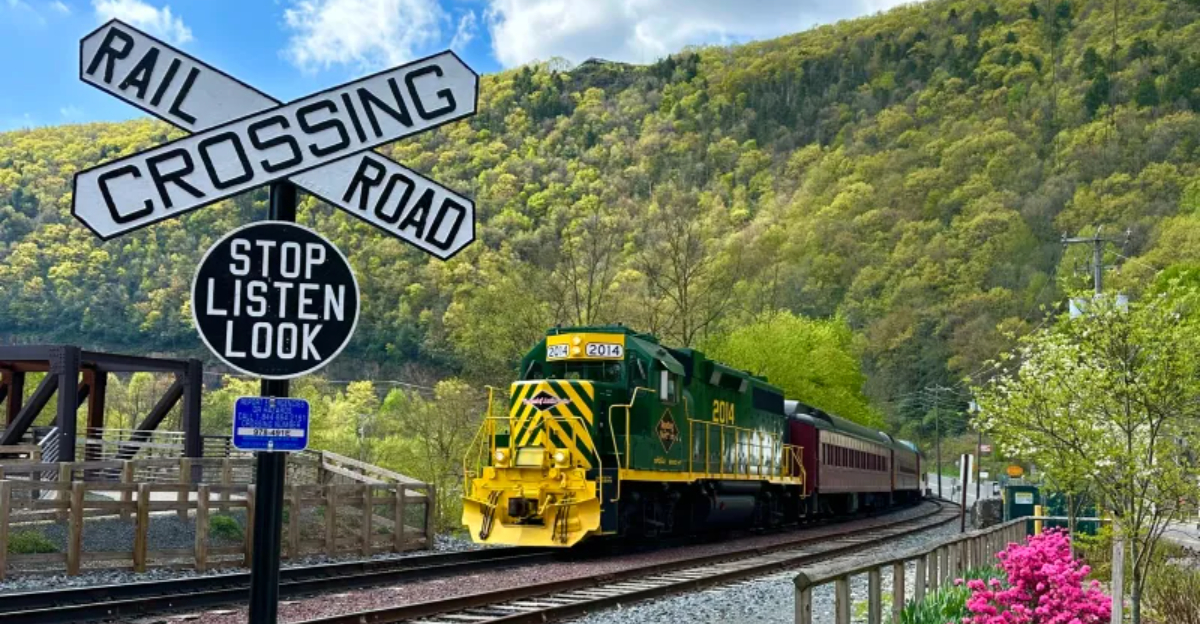
All aboard for a journey through time on the Lehigh Gorge Scenic Railway, departing from Jim Thorpe’s beautifully restored vintage train station.
Seasonal departures (often daily during peak fall foliage periods) carry passengers along the same routes once used to transport coal, offering comfortable windows into the region’s industrial heritage.
Fall brings expanded Autumn Leaf schedules when the surrounding mountains explode in brilliant colors, creating picture-perfect views of river bluffs, old canal berms, and abandoned coal grades.
These family-friendly excursions provide the easiest way to experience the dramatic landscape that shaped Pennsylvania’s mining history without breaking a sweat.
Trace the Switchback: America’s early gravity railroad, now a trail
Adventure seekers can follow the path of American transportation history on the Switchback Rail-Trail, built along the route of the pioneering Mauch Chunk Switchback Railway.
This engineering marvel once used gravity to send loaded coal cars racing downhill toward waiting canal boats at incredible speeds.
Today’s hikers and cyclists enjoy a much more leisurely descent from Summit Hill back into town, following the original grade through forests and past stone foundations.
The trail offers a hands-on way to understand how 19th-century engineers solved the challenge of moving massive amounts of coal from mountain mines to riverside transportation hubs.
Streets that remember: churches, rowhouses, and company landmarks
Wandering Jim Thorpe’s residential neighborhoods reveals layer upon layer of coal-era social history carved in stone and brick.
Stone Row’s impressive townhouses once housed company executives, while nearby worker cottages tell stories of immigrant families who powered the region’s industrial growth.
St. Mark’s Episcopal Church and the imposing LC&N Building anchor different corners of the community, representing the religious and corporate powers that shaped daily life.
Each block offers new discoveries about how wealth, engineering expertise, and everyday survival created the unique character that makes Jim Thorpe feel like a perfectly preserved time capsule.
Plan your visit: what’s open now and when to go
Smart travelers check seasonal schedules before arriving, since mansion and jail museum tours operate on varying timetables throughout the year.
The scenic railway runs most months with special fall foliage schedules that book up quickly during peak autumn weeks.
The local visitors bureau provides current event listings and fascinating background about the town’s original Lenape name, which translates to “Bear Place.”
Spring through fall offers the best weather for walking tours and outdoor activities, while winter brings a cozy small-town charm perfect for indoor museum exploration and hot chocolate by the riverside.