
9 Mississippi Dishes That Outsiders Struggle To Say (But Locals Never Forget)
Mississippi food isn’t just delicious—it can be a real challenge to pronounce! Growing up in the Magnolia State, I loved watching visitors scan menus, their eyes lighting up with curiosity before they stumbled over the names of our most beloved dishes.
More often than not, they’d point and smile, letting the flavors do the talking. These tongue-twisting culinary treasures reflect the state’s rich cultural tapestry, blending French, Cajun, and deep Southern traditions into something uniquely our own.
From savory classics to sweet indulgences, each dish tells a story that may trip up your tongue but will never disappoint your taste buds.
1. Étouffée (ay-too-FAY)
The first time I watched my grandmother make étouffée, I was mesmerized by how she transformed simple ingredients into liquid gold. This rich Cajun treasure combines succulent seafood smothered in a velvety sauce that hugs every grain of rice beneath it.
Outsiders often say “eh-too-fat” or give up entirely, pointing sheepishly at the menu. Meanwhile, locals know this seafood celebration demands respect with its proper French pronunciation.
At Patio 44 in Biloxi, their crawfish étouffée delivers that authentic copper-colored richness that marks a properly prepared dish. One spoonful transports you straight to bayou country without leaving Mississippi.
2. Andouille (ahn-DOO-ee)
My uncle’s smokehouse produced andouille that would make angels weep. This isn’t your average breakfast sausage – it’s a smoky, spicy Cajun masterpiece that forms the backbone of countless Mississippi dishes.
Visitors often butcher it as “an-doo-ill” while scanning restaurant menus. The proper French pronunciation rolls off local tongues without a second thought.
Sully’s in Gulfport crafts a magnificent “Spicy Chicken & Andouille” dish where this robust sausage steals the show. The coarse-ground meat, heavy smoke flavor, and peppery kick create a flavor symphony that’s distinctly Mississippi, despite its Louisiana roots.
3. Maque Choux (mock-SHOO)
“What in tarnation is mock-shoe?” asked my northern cousin during her first Mississippi visit. I laughed before serving her a heaping spoonful of this creamy corn sauté that’s neither a moccasin nor a cabbage (choux in French).
This humble Cajun corn dish elevates sweet kernels with bell peppers, onions, and sometimes cream. At City Grocery in Oxford, Chef Currence’s seasonal version appears like clockwork when summer corn reaches peak sweetness.
Tourists stumble through various creative pronunciations while locals simply enjoy this comforting side dish. The satisfying blend of sweet corn and savory vegetables creates a perfect companion for grilled seafood or smothered pork chops.
4. Beignets (ben-YAY)
Square pillows of fried perfection showered in powdered sugar – that’s the magic of beignets! Though New Orleans claims them, Mississippi’s Gulf Coast embraces these French doughnuts with equal passion.
Tourists often attempt “ben-gets” or “beeg-nets” while locals celebrate with an enthusiastic “ben-YAY!” – which perfectly captures the joy these treats bring. My grandmother would make these on Sunday mornings, filling our home with the intoxicating scent of fried dough.
Beignet Café inside Gulfport’s Island View Casino serves them hot and fresh daily. The proper way to eat them? Inhale carefully (avoid the sugar cloud!), take a bite, and wash it down with strong coffee – preferably chicory-infused.
5. Pralines (PRAH-leens)
“Pray-leens or prah-leens?” The debate rages on, but Mississippi locals firmly stand in the “PRAH-leen” camp. These sweet pecan-studded delights melt in your mouth faster than summer asphalt melts your flip-flops.
My first attempt at making pralines turned into pecan-flavored concrete. Creating the perfect balance between creamy caramel and crunchy pecans requires patience and humidity awareness – a lesson many Mississippi home cooks learn the hard way.
The Pecan House in Gulfport crafts these Southern confections with generations of know-how. Their pralines achieve that magical texture – firm enough to hold shape but dissolving into buttery sweetness the moment they touch your tongue. One bite explains why we’re so particular about pronouncing them correctly!
6. Boudin (boo-DAN)
“What exactly am I eating?” asked my skeptical brother-in-law from Minnesota before becoming a boudin devotee. This Cajun pork-and-rice sausage defies simple explanation but captures Mississippi’s waste-nothing cooking philosophy.
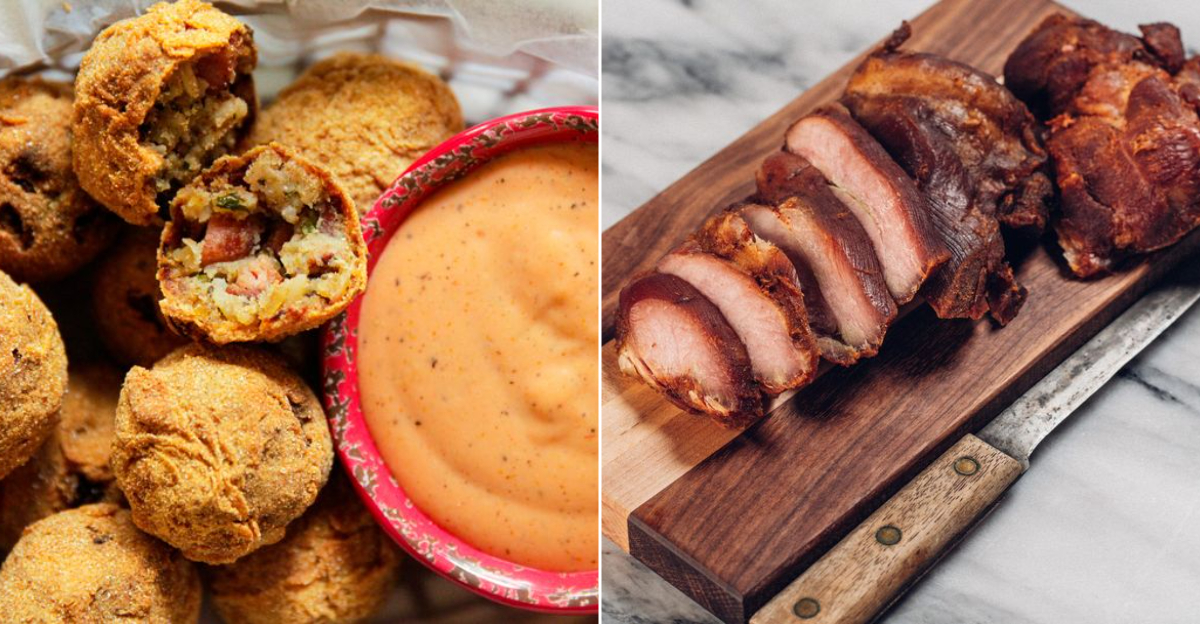
Bradley’s Cajun Quick Stop in Long Beach serves boudin balls – the mixture rolled, breaded and fried into crunchy orbs of delight. Outsiders might say “boo-dine” or “bow-din,” but locals know the French pronunciation carries that final nasal tone.
The magical combination of seasoned pork, liver, rice, and Cajun spices stuffed into casings represents our region’s French influence. Whether sliced from a link or enjoyed as crispy boudin balls, this humble sausage delivers complex flavors that tell Mississippi’s multicultural culinary story.
7. Tasso (TAH-soh)
“That ain’t just ham!” I remember my grandfather correcting a visitor who underestimated tasso’s complexity. This heavily spiced, cured pork shoulder transforms ordinary dishes into extraordinary ones with just a small amount.
Unlike regular ham, tasso wears a fiery jacket of cayenne, garlic, and spices that penetrates deep into the meat during curing. Patio 44 incorporates this flavor powerhouse into their red beans and rice, delivering authentic Mississippi-Cajun flavor with each bite.
Visitors often miss tasso’s significance, but locals know it’s the secret weapon in countless regional recipes. The intense smoky-spicy punch means a little goes a long way – the hallmark of Mississippi’s economical yet flavor-packed culinary heritage.
8. Roux (ROO)
The soul of Mississippi’s finest gumbos begins with patience and a wooden spoon. Roux isn’t just an ingredient – it’s a meditation that transforms flour and fat into liquid magic through constant stirring.
My grandmother would judge a cook’s dedication by their roux color. “Blond for cream sauces, peanut butter for étouffée, and chocolate for gumbo,” she’d say. Half Shell Oyster House in Biloxi builds their seafood gumbo on a properly dark roux that delivers that authentic Mississippi Gulf flavor.
While visitors might dismiss it as “gravy,” locals understand that roux represents time and tradition. The nutty aroma that fills a kitchen during those 45 minutes of stirring announces that something truly special is coming to the table.
9. Débris (day-BREE)
“Just give me that messy roast beef sandwich,” is how tourists often order what we proudly call débris. These aren’t just sandwich scraps – they’re the flavor-packed bits of roast beef that have simmered in their own juices until they surrender into tender submission.
My first débris po’boy at Bacchus on the Beach in Pass Christian was a revelation. The rich, shredded beef had soaked up every drop of gravy, creating a sandwich that required both hands and multiple napkins.
The French pronunciation confuses visitors, but locals know this humble sandwich filling represents Mississippi thrift and flavor. Nothing goes to waste, and the previously overlooked beef bits become the star attraction – a delicious metaphor for Mississippi’s resourceful cooking traditions.