
12 Abandoned Train Stations In Pennsylvania That Still Tell Stories Of The Past
Pennsylvania’s railroad legacy runs deep across the Keystone State, its iron ribbons once stitching together coal towns, steel cities, and pastoral valleys. Many trains are gone, but their stations endure—grand, echoing halls that remember timetables, trunks, and telegraphed news.
I’ve spent years exploring these monuments: vaulted ceilings stained by coal soot, benches worn smooth, ticket windows clouded with stories. On weathered platforms, you can almost hear the conductor’s call and feel a locomotive’s breath.
Some depots are museums or cafés; others sit quiet, ivy-laced and resolute. Each doorway frames a vanished journey, inviting wanderers to linger, listen, and imagine departures.
1. Reading Terminal Market – Philadelphia’s Tasty Transformation
My first visit to Reading Terminal left me awestruck. The soaring arched ceiling that once sheltered steam locomotives now covers America’s greatest food hall. Built in 1893, this magnificent terminal survived demolition when clever Philadelphians reimagined it as a marketplace.
Merchants hawk everything from Pennsylvania Dutch pretzels to gourmet chocolates beneath the original ironwork. You can still spot railroad artifacts throughout if you look carefully.
The bustling energy reminds me of train stations in their heyday – people hurrying about with purpose, the hum of conversations, the promise of something exciting just ahead.
2. Grand Concourse Restaurant – Pittsburgh’s Gilded Age Masterpiece
Stepping into the Grand Concourse feels like time travel. The 1898 Pittsburgh & Lake Erie Railroad Station has transformed into the city’s most spectacular restaurant while preserving its Edwardian splendor.
Stained glass windows filter sunlight onto marble floors where passengers once rushed to catch trains. The original wooden ticket booths now serve as host stations.
During my last visit, I couldn’t help running my fingers along the brass railings that countless travelers touched over a century ago. The ornate ceiling alone deserves an hour of neck-craning admiration – a cathedral to transportation’s golden age.
3. Radisson Lackawanna Station Hotel – Scranton’s Sleeping Beauty
Who wouldn’t want to spend the night in a train station? The 1908 Delaware, Lackawanna & Western terminal in Scranton offers exactly that opportunity. My room key unlocked not just a comfortable bed but a portal to Pennsylvania’s industrial past.
The marble walls and Tiffany stained glass in the lobby (once the main concourse) stopped me cold. Six magnificent murals depicting the region’s railroad history still watch over guests.
Ghostly whispers of departures announced seem to echo through hallways where hotel rooms have replaced ticket windows. I swear I heard a phantom train whistle while drifting off to sleep.
4. The Brewerie at Union Station – Erie’s Hoppy Rebirth
The 1927 terminal’s rebirth as a brewery saved this architectural gem from the wrecking ball.
Copper brewing tanks gleam beneath the station’s rotunda where I savored a flight of craft drinks. Ghost stories abound here – staff swear the spirit of a station worker named Clara haunts the women’s restroom.
Railroad memorabilia decorates walls that witnessed thousands of tearful goodbyes and joyful reunions. The trackside patio offers the unique experience of dining while watching modern trains rumble past, a perfect blend of past and present for this history buff.
5. Tamaqua Station Restaurant – Coal Country’s Culinary Depot
Hidden in Pennsylvania’s coal country, Tamaqua Station surprised me with its lovingly preserved 1874 Philadelphia & Reading depot. The ticket window now passes plates instead of train stubs.
Original wooden benches line walls where miners and merchants once waited. The station clock still keeps perfect time, though no trains arrive to match its schedule.
Over a delicious meal of comfort food, I watched freight trains rumble past just feet from my table – the building still stands alongside active tracks. The owner shared stories of the station’s heyday when anthracite coal powered the region’s economy and this little depot connected it to the world.
6. Jim Thorpe Station – The Queen of Coal Country
The brick Queen Anne masterpiece in Jim Thorpe stole my heart at first sight. Built in 1888 when coal was king, the Central Railroad of New Jersey station anchors this charming mountain town.
Red brick walls and a slate roof create a fairytale silhouette against the backdrop of the Lehigh River. Inside, the visitor center staff shared tales of when 45 passenger trains arrived daily.
I traced my fingers over the worn marble ticket counter where thousands purchased passage to New York City. The station’s rebirth symbolizes Jim Thorpe’s transformation from industrial hub to tourist destination, with excursion trains still departing from adjacent tracks to carry visitors through gorgeous gorges.
7. Lake Shore Railway Museum – North East’s Living Timeline
Thunder shook the ground as I explored the 1899 New York Central depot in North East. A modern freight train roared past on mainline tracks just feet away – the perfect soundtrack for this working museum.
The station’s brick walls have witnessed 125 years of railroading history. Inside, pristine ticket counters and waiting rooms transport visitors to the early 20th century.
Volunteer caretakers shared stories of the Lake Shore Limited, which once whisked passengers between Chicago and New York. The collection of rolling stock outside includes vintage cabooses where I climbed aboard to imagine life on the rails. Few places preserve the everyday experience of rail travel so authentically.
8. Bethlehem Union Station – Steel City’s Medical Miracle
Stethoscopes have replaced ticket punchers at Bethlehem’s magnificent 1924 Union Station. My doctor’s appointment here offered a surprising glimpse into adaptive reuse at its finest.
The waiting room where passengers once anticipated journeys now sees patients awaiting healing. Original terrazzo floors have been lovingly restored, and the ticket windows cleverly repurposed as reception desks.
Built when Bethlehem Steel powered America’s industrial might, this joint Reading Railroad and Lehigh Valley Railroad terminal exemplifies architectural salvation. While waiting for my appointment, I admired how seamlessly medical necessity had been woven into historical preservation – even the examination rooms maintain period details beneath modern medical equipment.
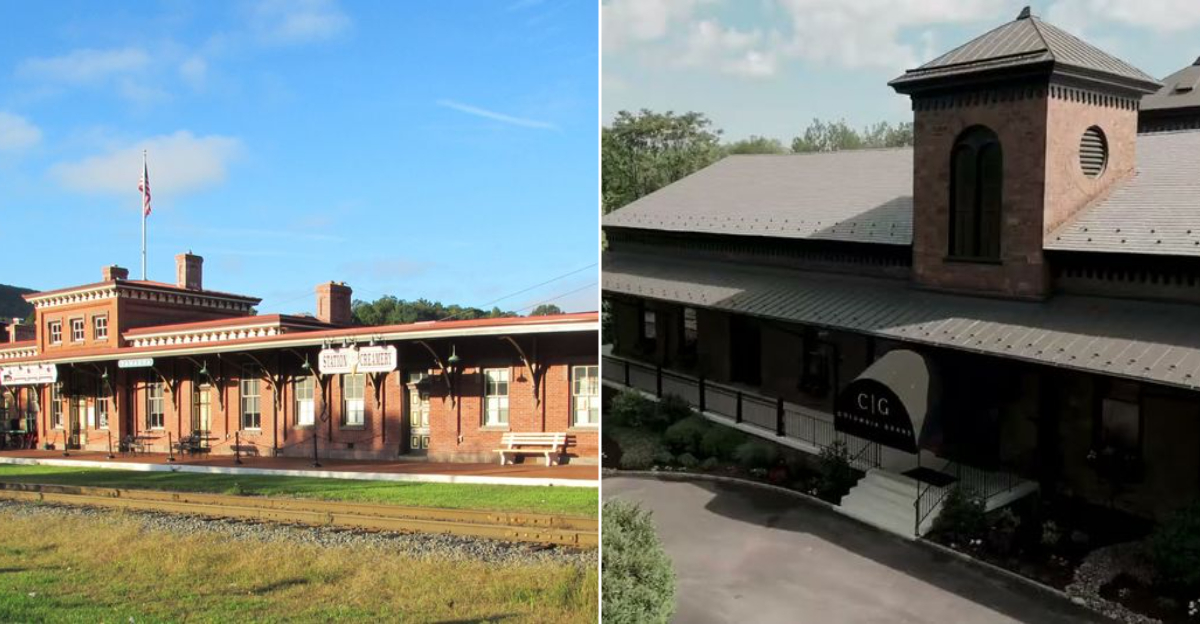
9. Columbia Grand – Phoenixville’s Elegant Event Space
Toasts have replaced conductor calls at the 1858 Reading Railroad station in Phoenixville. My friend’s wedding reception here revealed how perfectly these spaces transform for celebrations.
Ornate woodwork and Victorian details provided a stunning backdrop for modern festivities. The bride posed for photos beside the original ticket window, a charming nod to journeys beginning.
Freight doors now welcome guests to a ballroom where cargo once loaded. The station master would hardly recognize his domain, yet the building’s soul remains intact. As twilight fell and string lights illuminated the former platform, I marveled at how this transportation hub now connects people through life’s milestone moments rather than distant destinations.
10. Gettysburg Lincoln Railroad Station – Presidential Pathways
Abraham Lincoln’s footsteps echoed through this humble station before delivering his immortal address. Standing where the Great Emancipator once stood sent chills down my spine.
The modest 1858 brick building belies its monumental historical significance. Exhibits chronicle Lincoln’s arrival and the station’s role in evacuating wounded soldiers after the battle.
Original wooden benches invite visitors to sit where anxious families once waited for news of loved ones fighting in the pivotal Civil War battle. Unlike grander terminals, this station’s importance stems not from architectural splendor but from the weight of history that passed through its doors – a reminder that greatness often touches ordinary places.
11. New Freedom Train Station – Border Town Time Capsule
Perched near the Mason-Dixon Line, New Freedom’s restored depot took me back to the 1930s. The butter-yellow station once served as a crucial stop on the Northern Central Railway between Baltimore and York.
Abraham Lincoln traveled through here en route to deliver the Gettysburg Address. Today, excursion trains still depart from the platform, allowing visitors to experience rail travel as it once was.
The station museum houses artifacts that tell stories of the town’s railroad importance. During my visit, a volunteer stationmaster rang the original bell, its clear tone carrying across decades. Few places capture the everyday experience of small-town rail travel so authentically – a perfect portal to Pennsylvania’s transportation past.
12. Hanover Junction Station – Lincoln’s Whistle Stop
Tucked alongside the Heritage Rail Trail, this unassuming two-story brick depot witnessed presidential history twice. Abraham Lincoln changed trains here en route to Gettysburg in 1863, pausing briefly where I now stood.
Bullet holes from Civil War skirmishes still pockmark the weathered walls. The telegraph office that once clacked with news of distant battles now houses exhibits on the station’s role in American history.
Unlike grandiose city terminals, this rural junction represents the backbone of America’s rail network – the countless small stations that connected communities. Walking through rooms where wounded soldiers once awaited transport and where Lincoln contemplated his famous address connects visitors to pivotal moments in our national story far more intimately than any textbook.