
9 Hidden Lakes In Oregon That Locals Try To Keep Quiet
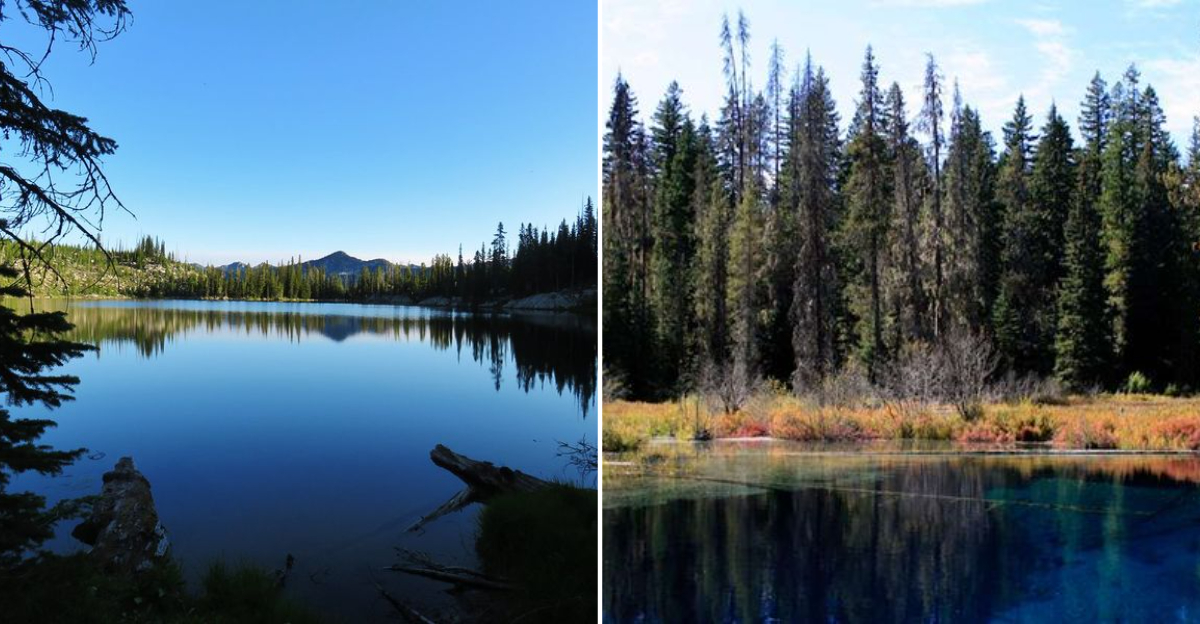
Oregon’s landscape hides aquatic treasures most tourists never find. Beyond postcard-perfect Crater Lake lie dozens of pristine alpine waters tucked into rugged wilderness.
As a lifelong Oregonian who has hiked nearly every corner of this beautiful state, I’ve curated a hush-hush list of secret swimming holes locals share only softly. Imagine emerald basins beneath basalt cliffs, sun-warmed granite slabs, and snowmelt pools so clear you can count the pebbles.
Pack a daypack, lace your boots, stash a towel, and leave only footprints. We’re heading where cell service fades, bull pines whisper, waterfalls hush, and nature’s quiet magic absolutely takes over.
1. Tenas Lakes: Sapphire Jewels of the Cascades
The first time I stumbled upon Tenas Lakes, I gasped audibly. Scattered like blue marbles across the alpine meadows of Mt. Washington Wilderness, these pristine pools reflect the sky with astonishing clarity.
Most hikers head to the overcrowded spots near Bend, leaving these sapphire gems relatively untouched. The trail from Scott Lake climbs steadily through old-growth forest before opening to reveal these high-mountain treasures.
Remember to snag your Central Cascades Wilderness Permit during peak season (June-October). The extra planning keeps these lakes peaceful – exactly how locals prefer them.
2. Indigo Lake: A Cerulean Sanctuary
Tucked beneath the jagged profile of Sawtooth Mountain lies a body of water so intensely blue it seems artificially colored. My family has picnicked on Indigo Lake’s peaceful shores for generations, watching osprey dive for rainbow trout.
The short but challenging trail keeps casual visitors at bay. Pine-scented breezes ripple across water that shifts between navy and turquoise depending on the clouds above.
Locals from Oakridge have maintained the secret of this glacial bowl for decades. When Bend’s popular lakes overflow with paddleboards and floating coolers, we quietly slip away to this tranquil haven.
3. Vulcan Lake: The Desert Coast’s Hidden Oasis
“You drove THAT road?” exclaimed my forest ranger friend when I mentioned visiting Vulcan Lake. The bone-jarring access route serves as nature’s bouncer, keeping this crystalline pool in the Kalmiopsis Wilderness gloriously uncrowded.
Birthed from ancient volcanic activity, Vulcan’s waters possess an otherworldly clarity. Serpentine soils create a Mars-like landscape that contrasts dramatically with the pure water.
After the 2002 Biscuit Fire, many assumed this area was destroyed. Nature rebounded spectacularly, though few make the journey to witness it. Bring reliable transportation and leave no trace – locals consider this place sacred.
4. Yoran Lake: Diamond Peak’s Forgotten Gem
My grandfather first showed me Yoran Lake on a fishing trip when I was eight. “Don’t tell your school friends,” he whispered as we cast lines into waters teeming with brook trout. The massive silhouette of Mt. Yoran reflected perfectly on the surface.
While hikers flock to nearby Diamond Lake, this smaller alpine pool remains delightfully under-visited. Wildflowers carpet the surrounding meadows in July, creating a painter’s palette of color.
Unlike many Cascade lakes, Yoran doesn’t require the competitive Central Cascades quota permit. Simply fill out a self-issue wilderness permit at the trailhead and enjoy this classic alpine setting without the crowds.
5. Island Lake: The Sky Lakes’ Secret Heart
“Want to see something special?” asked my hiking buddy before leading me off-trail to Island Lake. Nestled within the Sky Lakes Wilderness, this hidden basin feels like stepping into a fantasy novel.
True to its name, a small forested island punctuates the crystal waters. Granite peaks create a natural amphitheater that amplifies the sounds of nature – croaking frogs, rustling pines, and the occasional splash of jumping trout.
While tourists crowd the Pacific Crest Trail nearby, locals know to branch off to find this secluded spot. The extra effort required to reach Island Lake means you’ll likely have this wilderness swimming pool all to yourself.
6. Linton Lake: Lava-Framed Paradise
Lava fields aren’t where you’d expect to find a pristine lake, yet Linton Lake exists as nature’s contradiction. During a summer drought, my partner and I stumbled upon this oasis while seeking relief from the heat.
Ancient black lava flows frame emerald waters so clear you can count pebbles fifteen feet below the surface. Unlike nearby waterfalls that draw tourist buses, Linton receives just a trickle of visitors.
The seasonal closure of Highway 242 adds another layer of protection to this Three Sisters Wilderness gem. Locals time their visits for late June when wildflowers bloom along the shore but before summer crowds discover this accessible paradise.
7. Twin Lakes: Mount Hood’s Dual Treasures
“Take the path less traveled,” advised my mountaineering aunt when I mentioned visiting Mount Hood. Her cryptic directions led me to Twin Lakes, where Upper Twin offered solitude while Lower Twin entertained day-trippers.
Snow lingers on these shores until July, creating a refreshing summer retreat. The mirrored waters perfectly capture Mount Hood’s iconic silhouette on calm mornings.
Pacific Crest Trail thru-hikers occasionally stumble upon these lakes, but few tourists venture beyond the popular Trillium Lake. For photographers seeking that perfect reflection shot without battling crowds, Upper Twin Lake provides the same majestic views with blissful tranquility.
8. Veda Lake: The Road Less Drivable
My truck’s suspension groaned in protest as we navigated the notorious Road 2613. “Is any lake worth this?” my friend complained – until Veda Lake appeared before us like a mirage.
Perched high on Mount Hood’s eastern flank, this compact alpine pool sees perhaps a dozen visitors on busy weekends. The brutal access road serves as nature’s velvet rope, admitting only the most determined seekers.
Winter gates close this area entirely from December through April, creating an even shorter visitation window. Those who make the jarring journey find crystalline waters surrounded by huckleberry bushes that turn flame-red in September – a secret harvest spot for locals in the know.
9. Strawberry Lakes: Eastern Oregon’s Alpine Sanctuary
“You drove all the way to Eastern Oregon for a lake?” friends asked skeptically. Their doubt vanished when I showed photos of Strawberry Lakes – twin pools of perfection cradled in the state’s least-visited wilderness.
Little Strawberry Lake sits above its larger sibling, connected by a tumbling waterfall that sings over granite. Wildflowers carpet these high basins in explosions of color that would draw Instagram crowds if located closer to Portland.
The five-hour drive from the Willamette Valley keeps these pristine waters the exclusive domain of locals from tiny Prairie City. Summer thunderstorms create dramatic afternoon light shows over waters that rarely see more than a handful of backpackers at once.