
7 Remote Mountain Towns In Montana That Feel Frozen In Time
Montana’s rugged mountains hide more than breathtaking views—they shelter small towns that feel as if time simply stopped.
Driving along the Treasure State’s winding backroads, you’ll stumble upon weathered saloons, creaking wooden porches, and communities that still carry the spirit of the Old West.
These remote mountain towns aren’t just dots on a map; they’re living museums, preserving the grit, charm, and history of Montana’s pioneer days.
Join me as we explore seven places where the past lingers in every storefront and mountain breeze.
1. Garnet: The Best-Preserved Ghost Town
Perched at nearly 6,000 feet, Garnet whispers stories of Montana’s gold rush era through its weathered wooden buildings. My boots kicked up dust on the same streets where prospectors once dreamed of striking it rich in the 1890s. The volunteer caretaker told me that in winter, you can only reach this abandoned mining town by snowmobile or cross-country skis.
The old Kelly saloon still stands alongside the J.K. Wells Hotel, both eerily intact. Wandering through these structures, I half-expected to see miners walk through the doorways. Unlike many ghost towns that were stripped bare, Garnet’s remoteness preserved it from looters.
Fun fact: During its heyday, Garnet housed over 1,000 residents, four hotels, and thirteen saloons!
2. Neihart: The Silver Camp That Refuses To Fade
Tucked between soaring peaks in the Little Belt Mountains, Neihart greets visitors with a charming main street that hasn’t changed much since the 1880s. I stumbled upon this silver mining camp while seeking shelter from a sudden mountain thunderstorm. The locals at the historic Neihart Bar welcomed me with stories of the town’s boom-and-bust cycles.
Victorian-era buildings stand proudly alongside rustic cabins, creating a delightful architectural mismatch. The population has dwindled to fewer than 100 year-round residents, yet the community spirit remains unbreakable. Many structures still display their original tin ceilings and hardwood floors.
Surrounded by pristine wilderness and excellent fishing spots, Neihart offers outdoor adventures with a hefty side of history.
3. Zortman: The Tiny Treasure In The Little Rockies
“You’ve found the middle of nowhere!” laughed the gas station attendant when I pulled into Zortman, population 69. This speck on the map, nestled in Montana’s Little Rocky Mountains, once boomed with gold miners but now charms with its peaceful isolation. The winding mountain road leading here had my knuckles white, but the panoramic views made every hairpin turn worthwhile.
Zortman’s weathered buildings tell tales of boom times when the nearby mines yielded millions in gold. I spent a magical evening on the porch of the century-old Zortman Motel, watching deer wander through town as if they owned the place.
The town sits adjacent to the Fort Belknap Indian Reservation, creating a unique cultural crossroads where ranchers, tribal members, and the occasional lost tourist (like me) intersect.
4. Bearcreek: The Town That Survived Disaster
Bearcreek’s weathered porches and coal-stained facades speak of a resilience I’ve rarely encountered elsewhere. This tiny hamlet near Red Lodge carries the weight of Montana’s worst mining disaster – the 1943 Smith Mine explosion that claimed 74 lives. “My grandfather was one of the few who made it out,” a local told me as we shared coffee at the town’s only café.
Despite tragedy, Bearcreek refused to become another Montana ghost town. Vintage miners’ cottages line streets named after railroad companies, while the Bear Creek Saloon hosts famous pig races that draw visitors from miles around. I lost five dollars betting on a pig named “Hammy Sosa.”
The surrounding mountains cradle this community of roughly 80 souls, where neighbors still leave their doors unlocked and check on each other during harsh winter storms.
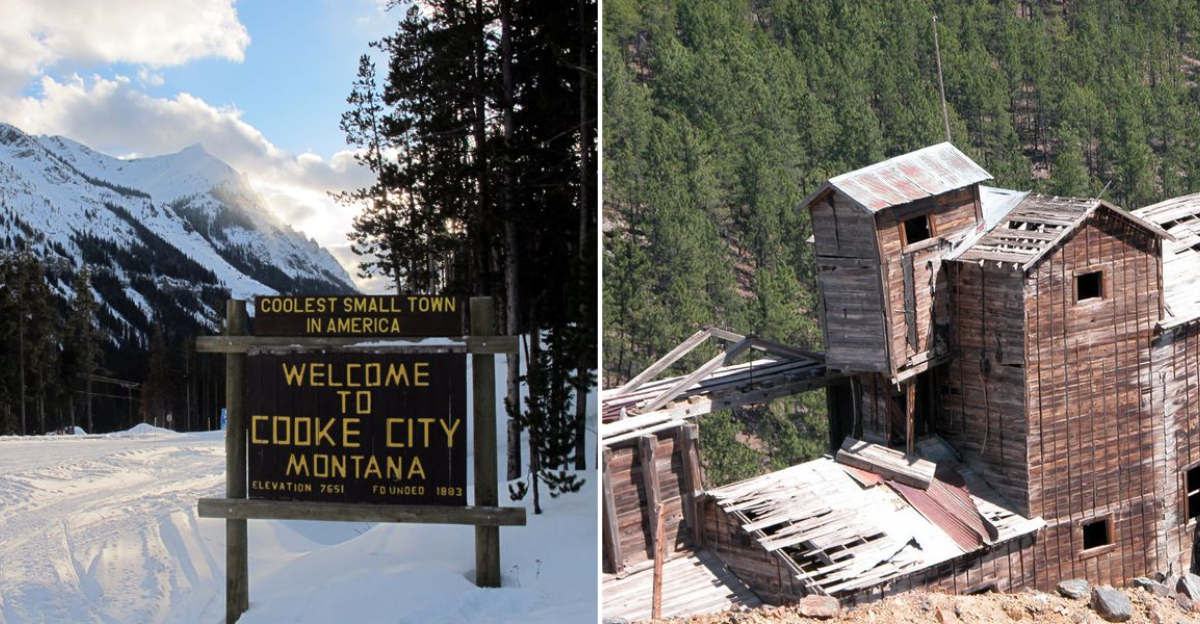
5. Cooke City: The Gateway To Wilderness
Snow blankets Cooke City eight months of the year, creating a winter wonderland that would make Santa jealous. Wedged between Yellowstone National Park and the Absaroka-Beartooth Wilderness, this former mining settlement feels like the edge of civilization. During my visit, a moose casually strolled down the main street while locals barely glanced up from their coffee.
Rustic log cabins and historic storefronts line the single road through town. The Cooke City General Store – established in 1886 – still sells everything from fishing tackle to emergency supplies. I asked the shopkeeper if the isolation bothered her.
“That’s precisely why we live here,” she winked. The town’s year-round population hovers around 100, though summer tourism briefly swells its numbers. When winter snowdrifts close the eastern road, residents must drive through Wyoming to reach the rest of Montana!
6. Rocky Point: The Forgotten Fishing Haven
Blink and you’ll miss Rocky Point, a collection of weathered buildings perched on Fort Peck Reservoir’s shore. My fishing rod brought me here, but the stories kept me longer than planned. “This was supposed to be the next big resort town,” chuckled Harold, a 70-something local who offered to show me the best fishing spots.
Founded during the Great Depression when the massive Fort Peck Dam was constructed, Rocky Point never quite boomed as expected. The one-room post office doubles as the town’s social hub, where residents gather to exchange news and tall fishing tales. I spotted a faded sign advertising “Rocky Point Resort” – a grand title for the humble marina and bait shop.
Despite its diminutive size, Rocky Point offers some of Montana’s best walleye fishing and spectacular stargazing, far from any light pollution.
7. Kolin: The Railroad Stop Time Forgot
“You’re the first tourist I’ve seen in three years!” The elderly woman’s declaration made me laugh as I photographed Kolin’s abandoned train depot. This whistle-stop along Montana’s Hi-Line railway corridor consists of little more than scattered farmhouses and grain elevators silhouetted against endless prairie sky. The aging depot, with its faded “KOLIN” sign, stands as a sentinel to the Great Northern Railway’s glory days.
Homesteaders settled this area in the early 1900s, hoping the railroad would bring prosperity. Their descendants still farm the surrounding wheat fields, though the passenger trains no longer stop. I shared homemade pie with a third-generation farmer who showed me his grandfather’s original homestead shack.
What Kolin lacks in amenities it makes up for in authenticity – no gift shops, no tourist traps, just genuine Montana prairie life continuing as it has for a century.