
12 Times Square, New York, Restaurant Habits From The 1970s That Tourists Would Never Believe
When I first wandered into Times Square back in the day, the restaurant scene felt like stepping into another universe. Long before the neon glow and polished chain eateries, the neighborhood had a grittier, rawer energy that spilled into its dining rooms.
Smoke curled through dimly lit diners, menus were hand-written, and regulars claimed their spots like family.
The 1970s brought an eclectic mix of flavors and rituals to Midtown Manhattan’s food landscape—old-school steakhouses, red-sauce joints, and bustling luncheonettes—each with its own loyal following. Most of those traditions have vanished now, living on only in the memories of New Yorkers.
1. Cigarettes and Dinner: A Smoky Symphony
The ashtrays on every table weren’t decorative—they were essential dining equipment! I remember watching my uncle light up between courses at Mama Leone’s, sending plumes of smoke spiraling toward the ceiling while the waiter didn’t bat an eye.
Nobody thought twice about puffing away through appetizers, entrees, and desserts. The dining rooms had this permanent blue haze hanging in the air, mixing with the aromas of food in a way that’s completely forbidden now.
Comprehensive smoking bans didn’t arrive until decades later, making today’s crystal-clear restaurant air something 1970s diners wouldn’t recognize.
2. Pre-Theater Dining Rush: The 5:30 Scramble
Broadway showtime meant clockwork precision for Times Square restaurants. My first job waiting tables taught me the pre-theater drill—turn tables lightning fast between 5 and 7 PM!
Fixed-price “make curtain” menus weren’t marketing gimmicks but survival tools. We’d hustle diners through three courses in under an hour, timing dessert to arrive exactly when patrons needed to leave for their 8 PM show.
The neighborhood still pulses with this unique rhythm today, but 1970s servers had it down to a science, practically setting stopwatches when theater-goers sat down.
3. Restaurant Row: One Block Food Safari
Foodies today might hunt across neighborhoods for culinary gems, but in 1973, the city officially packed dining heaven onto a single block! West 46th Street’s official christening as “Restaurant Row” concentrated incredible flavors in one tiny stretch.
Walking down that street after a matinee with my theater-loving grandmother, we’d peek into windows showcasing everything from French cuisine to classic American steakhouses. The restaurants knew exactly who their customers were—theater patrons seeking quick, quality meals.
This concentrated dining experience still thrives today, though many tourists stumble upon it accidentally rather than seeking it out.
4. Automat Magic: Dining Behind Glass Windows
The first time my father showed me how to use an Automat, I thought I’d stepped into the future! Horn & Hardart’s coin-operated food dispensers lined the walls like magical vending machines filled with real, fresh food.
You’d drop your nickels in the slot, turn the knob, and—presto!—the little glass door would unlock. Behind it waited your sandwich, pie, or side dish, displayed like a museum exhibit you could eat.
These mechanical marvels survived in Times Square into the late 1970s before finally disappearing in 1991, taking with them a uniquely New York dining experience that combined cafeteria convenience with mechanical wonder.
5. Salad Bar Bonanzas: The DIY Appetizer Revolution
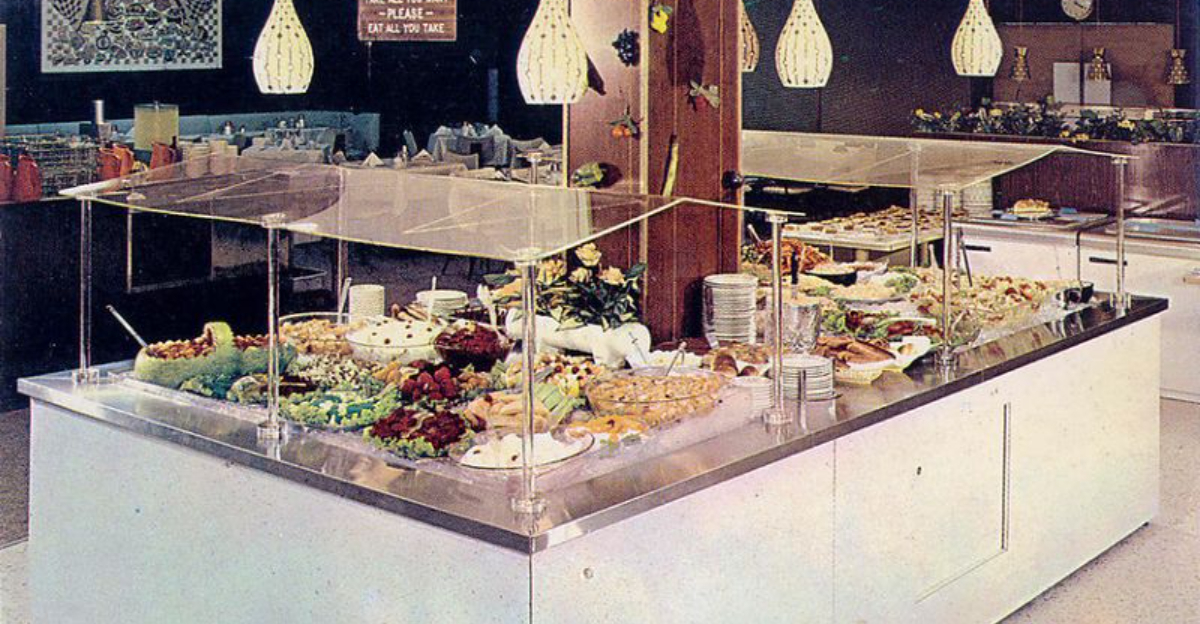
Nothing screamed 1970s restaurant abundance like approaching a massive salad bar for the first time! My jaw dropped seeing the endless array of vegetables, toppings, and dressings waiting for hungry diners to pile onto flimsy plates.
These self-serve stations popped up everywhere around Times Square, even in steakhouses and Italian spots. We’d load up our plates with mountains of iceberg lettuce, bacon bits, and that oddly sweet house dressing before our main courses arrived.
Few modern Times Square establishments maintain these labor-intensive features, but back then, restaurants competed for who could offer the most impressive spread.
6. Tableside Showmanship: Food as Theater
The waiter approaching with a rolling cart meant dinner was about to become a show! I’ll never forget my sixteenth birthday when the tuxedoed server at Mamma Leone’s prepared Cherries Jubilee tableside, creating towering flames that lit up our corner of the restaurant.
Upscale Times Square establishments made dining theatrical—Caesar salads mixed before your eyes, steaks carved from silver carts, and desserts dramatically set ablaze. The performance aspect was as important as the food itself.
A few old-guard Midtown spots still honor this tradition, but the widespread tableside spectacle has largely vanished from modern dining.
7. Three-Martini Lunch Culture: Midday Cocktail Ritual
My advertising executive uncle would disappear for three-hour lunches, returning with signed contracts and a slight wobble in his step.
The liquid lunch wasn’t just tolerated—it was practically mandatory. Restaurant bars filled by noon with suited professionals nursing drinks while discussing business, theater productions, or newspaper headlines.
Today’s efficiency-focused lunch breaks would horrify 1970s diners who considered midday drinks essential for proper business. The tradition has faded into Manhattan mythology, though some old-timers still reminisce about those boozy afternoons.
8. Sardi’s Star Power: Where Broadway Royalty Dined
The walls told stories at Sardi’s—literally! Covered with hundreds of celebrity caricatures, this Theater District institution wasn’t just a restaurant but Broadway’s unofficial headquarters.
My first visit left me starstruck as I spotted actual Broadway stars celebrating at corner tables. Opening night parties, anxious producers awaiting reviews, and actors unwinding after shows created an electric atmosphere unlike anywhere else in Times Square.
Modern tourists often mistake Sardi’s for a themed restaurant rather than the authentic Broadway landmark it is. The tradition continues today, though with less of the spontaneous star power that defined its 1970s heyday.
9. Celebrating Failure: Joe Allen’s Flop Wall Fame
Broadway’s most unusual dining tradition began with a wink and a poster! Joe Allen, whose Restaurant Row establishment opened in 1965, turned theatrical disaster into decor by displaying posters from failed Broadway shows on his walls.
The collection grew throughout the 1970s into a wry gallery of theatrical misfires. Broadway insiders would point out particularly spectacular flops while enjoying comfort food in this industry hangout.
The tradition continues today—producers nervously joke about avoiding “the wall” when opening new shows. This distinctly New York tradition captures the theatrical community’s ability to laugh at itself even while celebrating success.
10. Steakhouse Meat Lockers: Dinner on Display
Gallagher’s Steakhouse turned butchery into showbiz! Walking past their street-facing meat locker as a kid, I pressed my nose against the glass to stare at hanging sides of beef aging in full view of Times Square pedestrians.
This theatrical approach to steak preparation—showing the dry-aging process rather than hiding it in back rooms—became signature steakhouse style. The restaurant celebrated the craft behind their cuisine instead of just the final product.
The meat locker still exists today, but in the 1970s, this kind of food transparency was revolutionary. Steakhouses around Times Square competed with increasingly dramatic displays of their aging chambers.
11. Old-World Formality: Barbetta’s Timeless Elegance
While much of Times Square embraced modern 1970s trends, stepping into Barbetta felt like traveling back a century! Founded in 1906 and still operating on Restaurant Row, this grande dame maintained white-glove service even as the neighborhood around it transformed.
My parents saved for months to celebrate their anniversary there. I remember being instructed on proper fork usage by an ancient waiter who had likely been serving since the restaurant opened.
Pre-theater meals at Barbetta weren’t rushed affairs but lingering ceremonies of multiple courses, sommelier consultations, and dessert carts. This old-world formality persists today as a living museum of dining history.
12. Refined Dining Amid Urban Decay: The Times Square Contrast
The jarring contrast hit you immediately: stepping from seedy 42nd Street into refined dining rooms just blocks away. By the mid-1970s, Times Square’s transformation into a red-light district was complete, with XXX theaters and peep shows dominating the landscape.
Yet amazingly, fine dining persisted in this urban jungle! I remember my aunt clutching her pearls as we hurried past questionable establishments to reach our elegant pre-show dinner reservation.
This strange juxtaposition—gritty streets outside, white tablecloths inside—created a uniquely 1970s New York experience. Today’s sanitized Times Square makes it hard to imagine how these parallel worlds once coexisted.