
The Forgotten Dishes Florida Hotels Once Served To Tourists In The 1960s
When Florida’s grand hotels welcomed waves of tourists in the 1960s, the dining rooms became dazzling stages for Sunshine State glamour.
Chefs crafted menus that celebrated local abundance—fresh citrus, Florida lobster, and Gulf seafood—while presenting each dish with a theatrical flourish that matched the opulence of the era. This was the height of America’s post-war vacation boom, when travelers flocked south in search of luxury and leisure.
Legendary hotels like the Fontainebleau, The Breakers, and Eden Roc showcased not only architecture and nightlife but also cuisine that reflected sophistication. Today, those menus stand as a vanished chapter of hospitality history.
Citrus Spectaculars That Dazzled Every Morning
My grandmother still reminisces about her honeymoon breakfast at The Breakers – broiled ruby red grapefruit topped with maraschino cherries and caramelized brown sugar. The ritual of that first Florida bite marked every tourist’s morning.
Hotels transformed ordinary citrus into edible sunshine through elaborate garnishing and flamboyant presentation. Servers would wheel carts laden with orange supreme segments, grapefruit halves, and key lime delicacies between tables.
These vitamin-packed starters weren’t just healthy – they celebrated Florida’s agricultural bounty while giving visitors their first taste of tropical luxury. The presentation was pure theater, with fruit carved into flowers and birds!
Pompano En Papillote – The Parchment-Wrapped Delicacy
Nothing says “I’m on vacation” quite like watching a server ceremoniously slice open a parchment packet tableside! Pompano en papillote was the showstopper of 1960s Florida hotel dining.
This local fish, wrapped with butter, mushrooms and shellfish in parchment paper, steamed to perfection while sealing in extraordinary flavors. The dramatic unveiling released aromatic steam clouds that transported diners straight to culinary heaven.
Chefs at the Eden Roc elevated this technique to an art form, adapting the French method specifically for Florida’s prized pompano catch. Guests would literally applaud when the paper was cut open – a reaction no modern dish quite achieves!
Seafood Towers That Reached New Heights
You haven’t lived until you’ve seen the three-foot seafood towers that dominated Fontainebleau’s dining room! I once found an old menu in my uncle’s attic showcasing these magnificent creations.
Stone crabs, jumbo shrimp, and Florida lobster tails were arranged on elaborate ice sculptures that literally stopped conversations when they entered the room. These towers weren’t just meals – they were maritime monuments designed to impress and delight.
Chefs sourced seafood from local waters daily, creating a true “ocean-to-table” experience long before the term existed. The freshness was unparalleled, with boats delivering their catch directly to hotel kitchens each morning.
Coconut Grove Chicken – A Tropical Twist
Forget boring chicken dishes! The Coconut Grove Chicken served at Palm Beach resorts was a tropical revelation that transformed ordinary poultry into an island fantasy.
Juicy chicken breasts were marinated, stuffed with a mixture of crushed pineapple and macadamia nuts, then baked in freshly grated coconut crust. The presentation included hollowed-out pineapple serving vessels and orchid garnishes.
This dish captured Florida’s connection to Caribbean flavors while satisfying America’s mid-century fascination with tropical escape. Hotel chefs competed to create the most elaborate version, with some adding flaming sauce poured tableside for extra drama!
Baked Alaska Parades That Lit Up The Room
The lights would dim dramatically at 9 PM sharp. Suddenly, a procession of waiters appeared bearing flaming Baked Alaskas while the house band played a triumphant march!
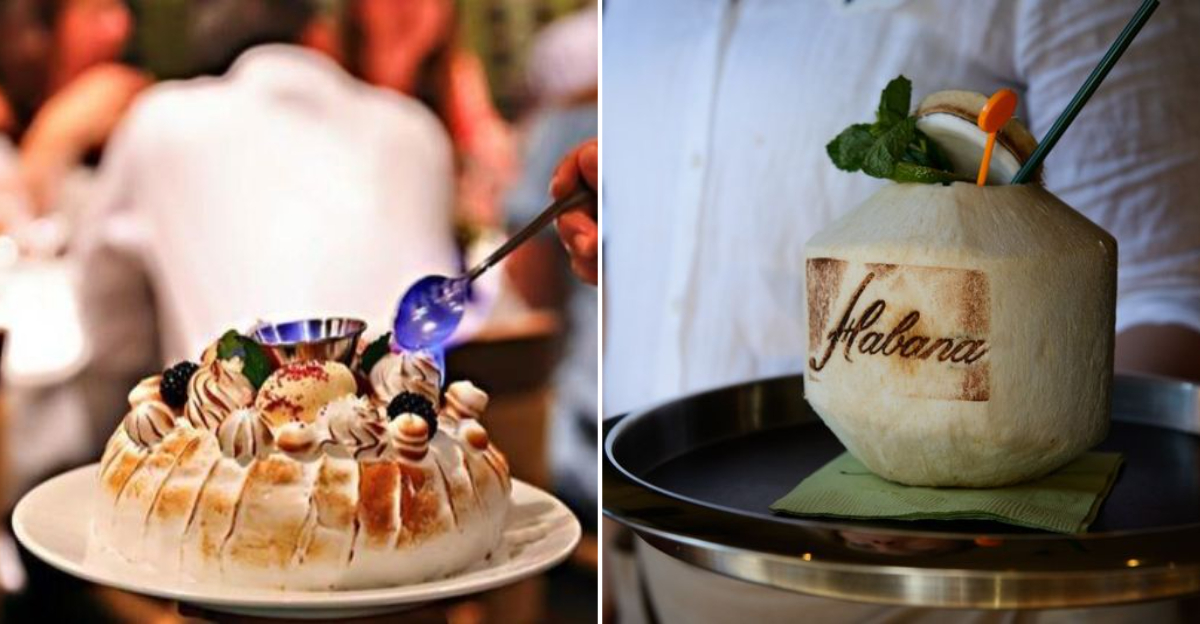
These dessert parades were the highlight of dinner service at places like The Breakers and Eden Roc. Mountains of meringue covered ice cream and cake, then were dramatically set ablaze for a showstopping finale to dinner service.
Florida hotels customized their versions with local key lime or orange ice cream centers. The dessert perfectly symbolized Florida itself – warm and tropical on the outside, cool and refreshing inside. Guests would actually time their reservations to witness this nightly spectacle!
Cuban-Influenced Continental Cuisine
Miami’s hotel kitchens secretly broke all the rules of classic continental cuisine with their Cuban-influenced dishes. I stumbled across an old Fontainebleau menu from 1963 that revealed this fascinating fusion.
French techniques met Caribbean ingredients as chefs incorporated mojo marinades into continental classics. Guests might order what appeared to be traditional Steak Diane, only to discover subtle hints of sour orange, garlic, and cumin beneath the sauce.
This culinary cross-pollination happened years before fusion cuisine became fashionable. Hotel chefs learned from their Cuban kitchen staff, creating a unique Miami flavor profile that tourists experienced nowhere else in America.
The Midnight Poolside Buffet Extravaganza
“The stars above, the pool lights below, and endless food in between!” That’s how my grandmother described the legendary midnight buffets that defined Florida hotel nightlife in the 1960s.
After evening entertainment concluded, hotels like the Fontainebleau transformed their poolsides into spectacular buffet settings. Ice sculptures glowed with colored lights while chafing dishes offered everything from stone crab claws to prime rib.
These late-night feasts served a practical purpose – keeping guests on property after shows ended. But they evolved into social events where celebrities mingled with tourists over coconut shrimp. The tradition faded as dining habits changed, but nothing has replaced the magic of those moonlit feasts.