
Why California Drive-In Restaurants Of The 1950s Were A Tourist’s Dream
Picture yourself cruising along the sun-drenched California coastline in a gleaming Chevy Bel Air, the ocean breeze rushing through the open windows while the radio hums with the latest chart-topper.
Just as the sun dips low, neon lights flicker to life, beckoning hungry travelers to pull in. The 1950s drive-in restaurant scene in California wasn’t simply about burgers, fries, or milkshakes—it was a cultural moment that defined the golden age of American road travel.
These automotive eateries became landmarks of style and nostalgia, blending food with freedom, and offering visitors a uniquely Californian taste of cool that endures to this day.
The Golden Age of Car Culture Meets Dining
I’ll never forget my first California road trip with my parents back in ’58. We pulled our station wagon into a drive-in near San Diego, and suddenly eating dinner became an adventure! The attendant handed us menus through the window while we stayed comfortably seated in our vehicle.
Tourists like us marveled at this innovation – no need to change out of travel clothes or even step outside. The seamless blend of America’s love affair with automobiles and our need for convenient food created something magical.
For out-of-towners, these restaurants embodied California’s forward-thinking spirit. Where else could you enjoy a meal while admiring your reflection in your car’s polished dashboard?
Neon Signs and Googie Architecture
Those signs! Towering above the highways, they beckoned with electric promises of good food and fun times. My camera roll always filled up with shots of these glowing beacons during our California vacations.
Googie architecture – with its atomic age shapes, starbursts, and sweeping cantilevered roofs – made these establishments look like they’d been plucked from a science fiction movie. For Midwest tourists like myself, these buildings represented California’s cutting-edge style.
The bold designs weren’t just practical landmarks for hungry travelers; they were glimpses into the future. Each restaurant competed to create the most eye-catching roadside attraction, turning simple eateries into architectural wonders worth the trip alone.
Carhops and Roller Skates
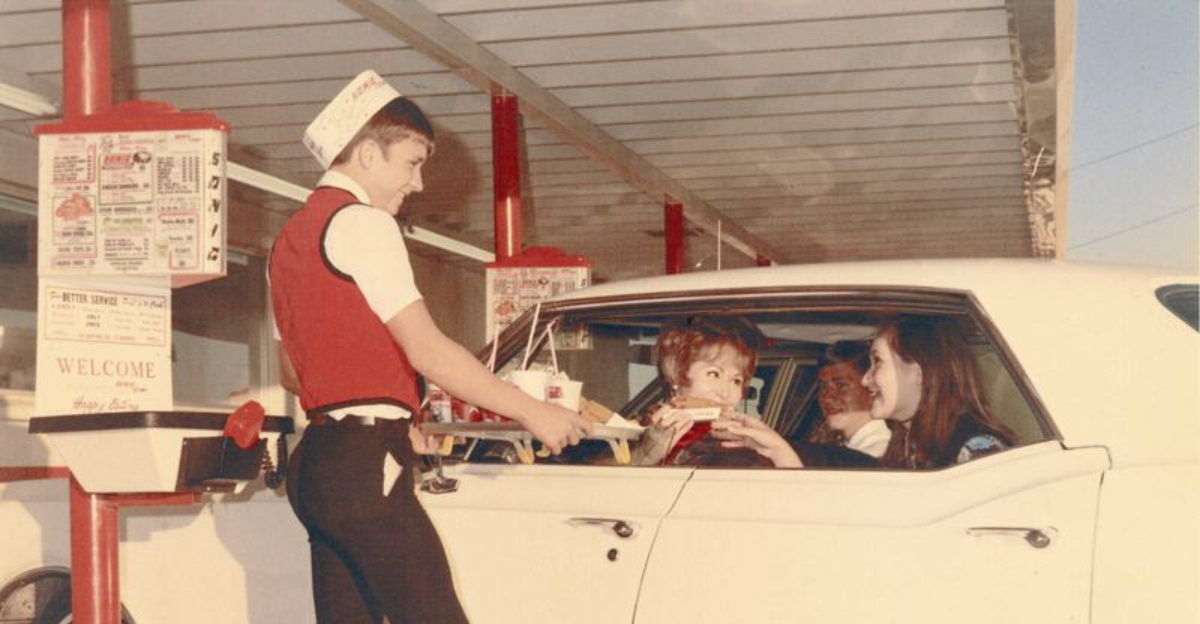
“Order up!” The first time I saw a carhop gliding between vehicles on roller skates, balancing a tray of burgers and malts, I nearly dropped my camera. These servers – often young women in crisp uniforms – performed a daily ballet on wheels that tourists couldn’t stop watching.
The theatrical service added showmanship to the simple act of delivering food. Visitors from states where such flair was uncommon would leave generous tips just to see another graceful approach to their window.
What really impressed me was their efficiency – never a spilled milkshake despite the constant movement! This uniquely Californian service style became something visitors bragged about seeing when they returned home.
A Menu Built for the Road
Burgers wrapped in checkered paper became my ultimate road trip treasure. California drive-ins perfected food that could be eaten without making a mess of your car’s interior – genius!
The menus offered comfort with a California twist. Traditional hamburgers came topped with avocado long before it was trendy elsewhere. French fries were served in cardboard containers that fit perfectly in your car’s window tray.
For families traveling on a budget, these places were a godsend. Kids’ meals often came with paper crowns or small toys that kept the little ones entertained during long drives. As someone who crossed the country multiple times, I can confirm: no state did roadside dining quite like California.
The Social Hub of the Roadside
“Hey, check out those California kids!” My brother would nudge me as local teenagers pulled up in their custom hot rods, creating an impromptu car show right before our eyes.
For tourists, these drive-ins offered a front-row seat to authentic California youth culture. Local high schoolers gathering after football games, young couples on dates, and car enthusiasts showing off their latest modifications – the atmosphere buzzed with energy that no restaurant back home could match.
Jukeboxes pumped out the latest hits while we visitors soaked it all in. The drive-in wasn’t just a place to eat; it was where California’s legendary cool factor came to life, making us feel like extras in a Hollywood movie about American teenage life.
Hollywood’s Influence and Popularity
“Isn’t this just like that scene from…” became our family’s running joke at every California drive-in we visited. The silver screen had made these places famous worldwide, and finding ourselves actually sitting in one felt surreal.
Movies portrayed California drive-ins as the epicenter of American youth culture. Tourists flocked to experience places they’d seen in films, hoping to capture some Hollywood magic during their vacation.
Famous actors were known to frequent certain establishments, adding to the excitement. My aunt still tells the story of spotting James Dean at a Los Angeles drive-in in 1955! This connection to celebrity culture gave these restaurants an allure that ordinary diners could never achieve, making them must-visit attractions on any California itinerary.
Why Tourists Still Remember Them Fondly
Sixty years later, I still have the souvenir menu from Bob’s Big Boy tucked away in my memory box. These weren’t just places to eat – they were time capsules of American optimism and innovation.
For tourists experiencing California’s car culture firsthand, drive-ins represented freedom on four wheels. The combination of delicious food, theatrical service, and the ability to arrive as you were created lasting memories that many travelers cherish decades later.
Today’s surviving establishments have become pilgrimage sites for nostalgic travelers. My grandchildren rolled their eyes when I insisted we visit the restored Mel’s Drive-In last summer – until they experienced the magic themselves and understood why these places hold such a special place in America’s cultural heart.