
8 Strange Roadside Attractions In Oklahoma That You Have To See To Believe
Oklahoma’s highways aren’t just about getting from point A to point B—they’re a gallery of the weird, the wonderful, and the downright unforgettable.
Drive a few miles in any direction and you might stumble across a massive blue whale lounging by the roadside, a soda bottle that lights up the night sky, or a golden giant paying tribute to the state’s oil roots.
These unexpected stops tell stories of local pride, artistic imagination, and a touch of pure quirkiness that you won’t find anywhere else.
If you’re the kind of traveler who loves surprises, buckle up—these eight strange roadside attractions will make you slow down, pull over, and see Oklahoma in a whole new way.
1. Blue Whale Of Catoosa
Nothing prepared me for my first encounter with this 80-foot-long smiling cetacean lounging beside Route 66. Built in the 1970s as an anniversary gift (talk about relationship goals!), this concrete whale quickly became a beloved swimming hole for locals. The quirky landmark has weathered decades of Oklahoma storms and still sports its cheerful blue paint job.
Kids once slid down its tail into the pond while parents relaxed in its shaded mouth. Though swimming is no longer permitted, visitors can picnic alongside this gentle giant or explore its interior. The Blue Whale represents roadside Americana at its finest – unexpected, homemade, and utterly charming. I spent an hour just sitting on its tail, imagining the countless travelers who’ve done exactly the same since 1972.
2. Pops 66 Soda Ranch In Arcadia
My taste buds went wild when I stumbled upon this fizzy paradise along Route 66. The moment you approach, a towering 66-foot soda bottle sculpture greets you, glowing with LED lights after sunset – a beacon for thirsty travelers seeking liquid adventure. Inside waits a wonderland of carbonated delights with over 700 varieties of soda lining the walls in rainbow formation.
From bacon-flavored cola to butterscotch root drink the selection boggles the mind. Last summer, I challenged myself to try the weirdest flavors I could find. Buffalo wing soda? Surprisingly not terrible! The attached restaurant serves up classic American fare, making Pops the perfect place to refuel both your car and yourself. Their burger paired with a unique soda creates the ultimate Route 66 dining experience.
3. Totem Pole Park In Foyil
The first time I rounded the corner and spotted the 90-foot totem pole rising from the Oklahoma countryside, I nearly drove off the road! Created by folk artist Ed Galloway between 1937 and 1948, this massive concrete masterpiece stands as the world’s largest concrete totem pole. Wandering through the park feels like stepping into someone’s artistic fever dream.
Colorful carvings of birds, animals, and Native American figures spiral upward in a dizzying display of folk art dedication. What makes this place special isn’t just the main attraction – smaller totems and an eleven-sided Fiddle House containing Galloway’s handmade instruments dot the grounds. During my visit, an elderly local shared stories about Galloway, who built everything as a retirement project after teaching at a nearby children’s home. His patient craftsmanship still inspires visitors today.
4. The Golden Driller In Tulsa
Standing 76 feet tall with his hand resting confidently on an actual oil derrick, the Golden Driller made me feel positively tiny during my first Tulsa visit. This massive mustached man isn’t just impressive – he’s officially Oklahoma’s state monument and one of America’s tallest freestanding statues. Created for a 1953 international petroleum exposition, this golden giant has become Tulsa’s most recognizable landmark.
His weathered face tells the story of Oklahoma’s oil boom days when black gold transformed the state’s fortunes. I love how the statue occasionally gets dressed up for special occasions – I’ve seen photos of him sporting everything from massive sports jerseys to superhero capes! The inscription at his base reads “The Golden Driller, a symbol of the International Petroleum Exposition. Dedicated to the men of the petroleum industry who by their vision and daring have created from God’s abundance a better life for mankind.”
5. Praying Hands in Tulsa
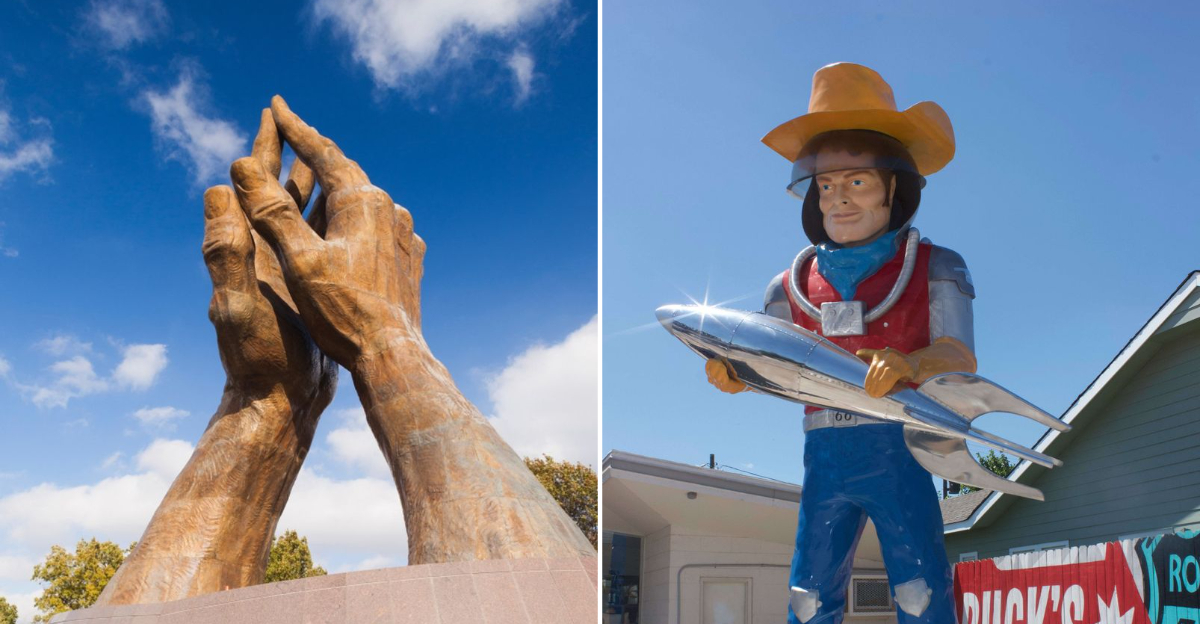
My jaw dropped when I first saw these massive bronze hands reaching toward the heavens on the Oral Roberts University campus. Standing 60 feet tall and weighing 30 tons, they’re reportedly the largest praying hands sculpture in the world! Originally created for a Tulsa medical center, these detailed hands found their permanent home at ORU in 1991. The sculptor, Leonard McMurray, crafted them with remarkable anatomical precision – you can see every vein, wrinkle, and tendon in stunning detail.
What fascinated me most was learning how they were made. The hands were first sculpted in clay, then cast in fiberglass before the final bronze version was created. During sunset, the golden Oklahoma light transforms them into a truly spiritual sight. Even if you’re not religious, the sheer craftsmanship and scale make these hands a must-see when passing through Tulsa.
6. Giant Muffler Man Cowboy In Oklahoma City
I nearly caused a fender bender when I spotted this 20-foot fiberglass cowpoke towering above the South Robinson Avenue cityscape. Part of America’s beloved “Muffler Men” family – those giant roadside figures from the 1960s – this particular cowboy has been welcoming folks to Twin’s Muffler Service since 1983. What makes this fella special isn’t just his impressive height or his snazzy western attire.
He’s one of the last remaining examples of these marketing giants that once dotted highways across America before interstate bypasses changed road trip culture forever. During my visit, the shop owner told me how locals use the cowboy as a navigation landmark. “Turn left at the giant cowboy” is apparently common direction-giving in this part of OKC.
I couldn’t resist posing for a photo with him, though I looked comically small next to those massive boots. His weathered face tells the story of decades watching over the changing Oklahoma City landscape.
7. World’s Largest Concrete Buffalo Near Pawnee Bill Ranch
The massive concrete bison stopped me in my tracks as I approached Pawnee Bill Ranch. Created in 1986, this enormous buffalo stands a proud 18 feet tall and stretches nearly 30 feet long – a fitting tribute to the animal that once dominated these plains.
Unlike many roadside attractions that seem randomly placed, this concrete colossus has real historical significance. Pawnee Bill (Gordon Lillie) was a Wild West showman who helped save the American bison from extinction through conservation efforts on this very ranch. During my visit last fall, I watched a family climb up on the buffalo’s base for photos, giving perfect scale to just how enormous this sculpture truly is. The ranch itself offers fascinating tours of Pawnee Bill’s mansion and grounds.
After seeing the buffalo, I spent hours exploring the historic buildings and learning about Oklahoma’s Wild West heritage. The combination of quirky roadside art and genuine history makes this stop particularly special.
8. El Reno’s Onion Fried Burger Statue
My stomach growled the moment I spotted this delicious monument – a giant hamburger statue celebrating El Reno’s claim to culinary fame. Standing proudly in downtown El Reno, this oversized snack commemorates the town’s unique contribution to American food culture: the onion-fried burger. Born during the Depression when onions were used to stretch beef supplies, these burgers feature thinly sliced onions smashed directly into the patty while cooking.
The result? Caramelized oniony perfection that attracts foodies from across the country. After snapping photos with the statue, I followed the locals’ advice and headed to Sid’s or Johnnie’s to taste the real thing. The burger lived up to the hype – juicy, savory, and unlike any other burger I’ve tried.
El Reno even hosts an annual Fried Onion Burger Day Festival each May where they cook a burger that would make even this statue look small. This quirky monument celebrates small-town pride and proves Oklahoma takes its unique food traditions seriously.