
This Oregon Donut Shop Opens At 4 A.M. And Sells Out By 9
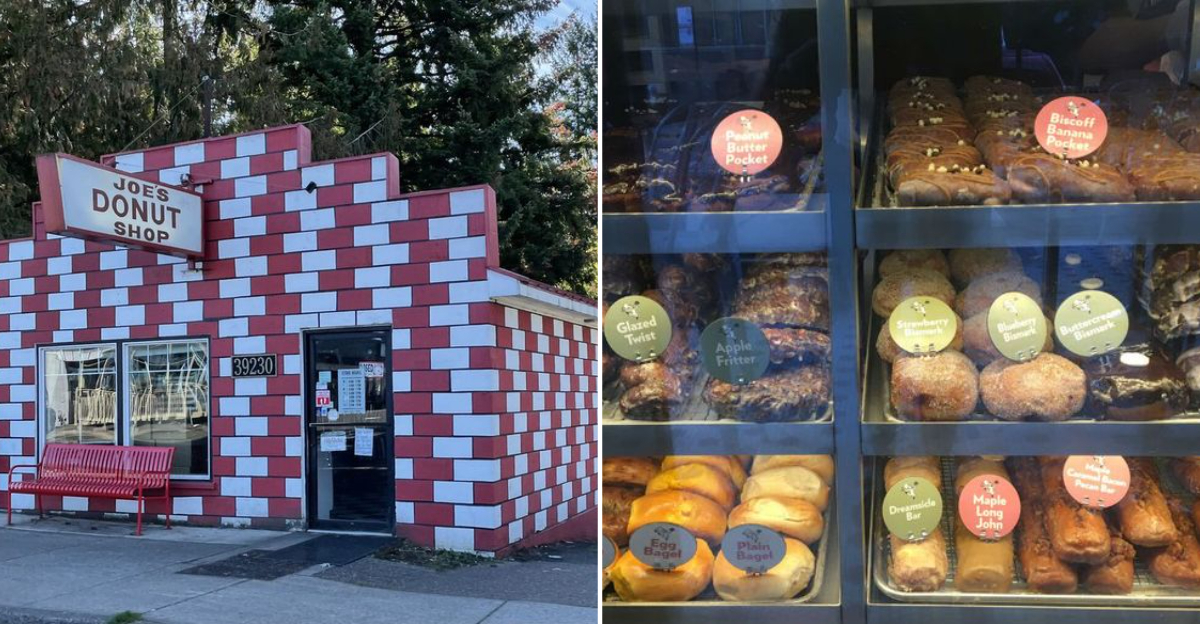
There’s something almost magical unfolding in Sandy, Oregon, while most of us are still lost in sleep. At 4 a.m. sharp, Joe’s Donut Shop flicks on its lights, filling the air with the warm, sugary aroma of dough being transformed into golden, glazed treasures.
The little red-and-white checkered building, perched along the road to Mount Hood, has become a beloved beacon for early risers, night shift workers, and adventurers fueling up before a day in the mountains.
By the time the sun climbs high, the shelves are often bare—a daily reminder of the timeless appeal of doing one thing perfectly.
Fresh Batches Beat The Sunrise
The science of perfect donuts demands early hours. At Joe’s, bakers arrive around 2 a.m. to prepare dough that requires precise proofing time before frying begins. This isn’t just tradition—it’s chemistry.
Those signature apple fritters need time to develop their crispy-yet-soft texture that locals rave about. The maple bars need cooling time to accept their sweet glaze without becoming soggy.
By opening at 4 a.m., Joe’s ensures every customer gets donuts at their absolute peak freshness. Nothing sits around for hours under display lights, growing stale. When you bite into that warm glazed donut at 5 a.m., you’re experiencing perfection that late risers will never know.
Mountain-Bound Customers Can’t Wait
Location explains everything about Joe’s early rush. Positioned perfectly on the main route to Mount Hood, the shop serves as the first fuel stop for skiers, hikers, and outdoor enthusiasts racing to maximize their day on the mountain.
These adventure-seekers need substantial calories before hitting slopes or trails. Nothing satisfies like a hearty apple fritter or maple bar when you’re facing a day of physical exertion in the crisp mountain air.
The shop’s strategic placement creates a perfect storm of demand. Outdoor recreation in Oregon starts early, especially during prime ski season when the first chairlifts open at 8:30 a.m. By selling out so quickly, Joe’s confirms what locals already know—they’re the unofficial first stop on the road to adventure.
Small-Batch Quality Over Mass Production
Joe’s refuses to compromise on their decades-old recipes. Unlike chain operations, they make everything in limited quantities using traditional methods that simply can’t be scaled up without sacrificing quality.
Their fritters contain real apple chunks folded by hand into dough that’s allowed proper time to rise. No shortcuts, no preservatives, no mass production techniques that would extend shelf life but diminish taste.
This commitment means they can only produce so many donuts each day. Once the morning batches are gone, that’s it—no emergency shipments from a central commissary, no frozen backups to thaw. The limitation creates both their reputation for excellence and their predictable early sell-out times.
Night Shift Workers Found Their Breakfast Spot
Forgotten in discussions of food service hours are those who live life on reverse schedules. Healthcare workers ending 12-hour overnight shifts, long-haul truckers who’ve driven through darkness, and manufacturing employees clocking out at dawn all need somewhere to eat when most restaurants are closed.
Joe’s 4 a.m. opening creates a haven for these night owls. I once chatted with a nurse who stops at Joe’s after her hospital shift ends at 3:30 a.m., grateful to find somewhere serving fresh food when her workday concludes.
The early hours build loyalty among this underserved customer base. These night workers spread the word through their professional networks, creating a reliable customer stream most businesses never tap into.
Social Media Created Donut Tourism
Those picture-perfect apple fritters didn’t stay secret for long. Instagram and TikTok transformed Joe’s from local favorite to tourist destination when visitors began documenting their pre-dawn pilgrimages to this unassuming roadside shop.
Food bloggers spread the word about the maple bars with their perfect sweet-to-bread ratio. Travel influencers added Joe’s to their Mount Hood itineraries, showcasing boxes of donuts against mountain backdrops.
The hashtag #JoesDonuts now appears in thousands of posts, creating a self-perpetuating cycle of popularity. Each shared photo convinces more visitors to set early alarms during their Oregon trips. By selling out early, Joe’s inadvertently created the ultimate social media brag: scoring donuts others couldn’t get because they slept too late.
Limited Supply Creates Irresistible Demand
Scarcity drives desire—a principle Joe’s embodies without even trying. Their early sell-out time transforms ordinary donuts into coveted treasures that must be pursued with dedication.
Economists call this the scarcity principle. When something excellent is also limited, its perceived value skyrockets. Joe’s never advertised their limited daily quantity as a marketing tactic; it simply emerged from their commitment to quality over quantity.
The psychology works brilliantly: customers who score the last maple bar feel like lottery winners. Those who arrive to empty cases vow to come earlier next time. The pattern creates an urgency that perpetuates their success without a single dollar spent on advertising.
Old-School Business Model That Actually Works
While most food businesses chase extended hours and maximum output, Joe’s embraces limitations that actually strengthen their operation. Their focused schedule creates predictable labor needs, reduces food waste, and simplifies inventory management.
The early closing time allows thorough cleaning and prep for the next day. Staff enjoy reasonable schedules instead of the split shifts that plague food service. No late-night cleaning crews or 24-hour operation means lower utility costs.
Most importantly, their model prioritizes work-life balance. By concentrating business into morning hours, they’ve built sustainable success without the burnout affecting so many food establishments. Their approach proves sometimes less is more—fewer hours but fuller cash registers, smaller menus but bigger reputations.