
A Virginia Island Getaway Where Streets Belong To Carts
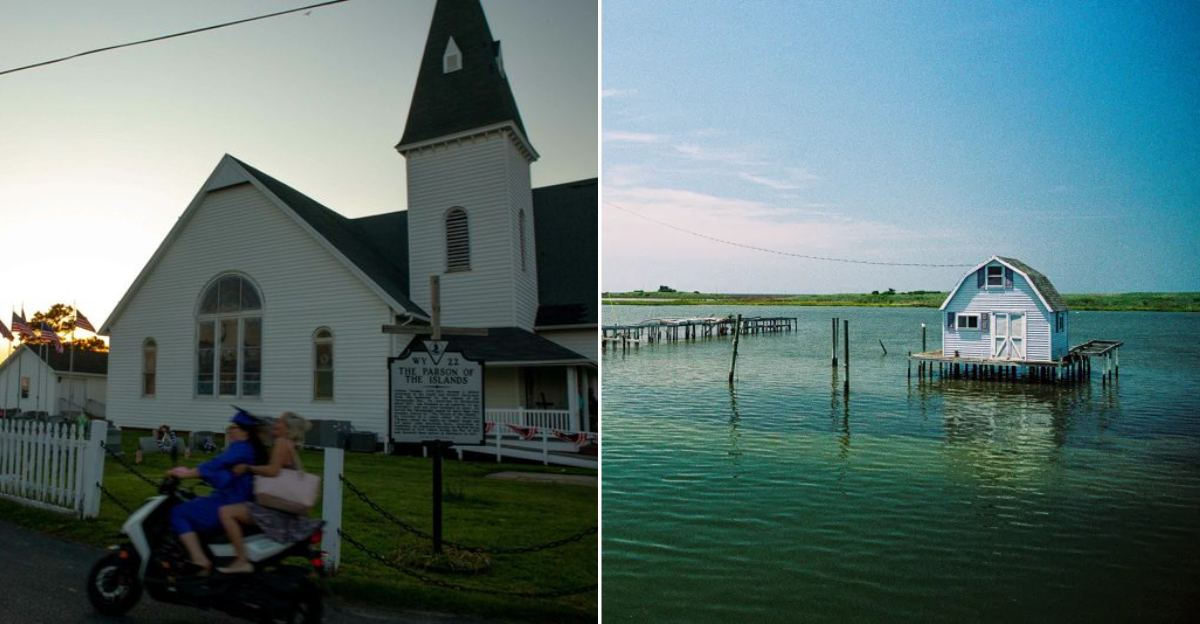
Tangier Island rests in the middle of the Chesapeake Bay, a slip of land where cars never took hold. Instead, golf carts and bicycles hum down narrow lanes, past crab shanties and white picket fences.
Ferries bring visitors daily, carrying them into a community shaped by watermen, marshes, and a rhythm set by tides. It feels removed yet grounded, a place where soft-shell crab sandwiches rival sunsets for attention.
This list sketches the moments that define Tangier, each one part of its quiet, enduring charm.
Main Street Golf Carts Lined Up
The day begins with a buzz, not from engines but from golf carts lined in neat rows along Main Street. Painted reds, blues, and greens stand out against the muted tones of clapboard houses.
Carts aren’t novelty here; they are primary transport, as cars are barred on the island. Residents commute to docks, stores, or church this way, visitors renting their own.
I liked how each cart reflected its owner, stickers, cushions, even fishing gear tucked in. It felt like rolling biography more than vehicle.
Bikes Parked At The History Museum
Outside the Tangier History Museum, bicycles lean against fences, some rusted, others sleek. Their stillness contrasts with the island’s gentle movement.
The museum itself preserves the story of watermen and isolation, displaying artifacts, photographs, and oral history that root the community firmly in Chesapeake life.
Travelers often park bikes there before walking in, a pause between motion and memory. Emerging later, they ride through the same streets they’ve just seen in century-old photographs.
Crab Shanties Along The Canal
Weathered wooden shanties line the canals, perched on pilings and draped with nets. The air smells of salt and bait, seagulls circling overhead.
These sheds have long housed watermen’s gear, standing as physical testimony to the island’s reliance on crabbing and oystering. Many families trace their livelihoods back generations.
In the late afternoon light, shanties glow golden, their reflections doubling on the water. The sight made me stop walking. I realized then how the island’s work is also its beauty.
Soft Shell Crab Sandwich On A Paper Plate
On Tangier, soft shell crab sandwiches arrive simply: crab fried crisp, slipped onto bread with lettuce, maybe tomato, always served on paper plates.
This seasonal delicacy is a Chesapeake hallmark, harvested during molting cycles when the shell is still tender. Restaurants on the island treat it as centerpiece fare.
Locals sit at picnic tables, tourists alongside them. I ordered one and bit through shell and meat together, briny, sweet, crackling. It tasted like the island distilled into a meal.
Ferry Pulling Into Tangier Dock
The ferry from Crisfield glides in, its hull gleaming, flags snapping in the breeze. Passengers gather bags and glance eagerly toward the dock.
Daily ferries are the island’s artery, carrying not just visitors but groceries, packages, and essentials. Without them, Tangier would be cut off entirely.
Stepping off feels like a shift in tempo. I remember that first dockside breath, the air heavy with salt and diesel. It felt both welcoming and humbling.
Narrow Lanes Between White Fences
Lanes wind tight through town, bordered by picket fences bright against weathered lawns. Flowers spill from gardens, and shade trees lean overhead.
The layout reflects centuries of adaptation to limited land, paths narrowed as houses clustered. Carts and bikes navigate with ease, weaving past porches and mailboxes.
Walking those lanes slows you naturally. I found myself drifting, stopping to greet locals on stoops. It wasn’t sightseeing; it was joining the rhythm for a while.
Methodist Church With A White Steeple
The white steeple rises above rooftops, clean against the Chesapeake sky. Bells toll softly, their notes folding into gull cries and wind.
Tangier is deeply Methodist, with faith woven into daily life. The church doubles as both sanctuary and gathering point, marking generations of baptisms, weddings, and funerals.
I sat outside on the lawn, listening to bells strike noon. For a moment, the island’s divisions of work and worship blurred, and all that remained was stillness.
Watermen Working The Bay At Dawn
Before sunrise, boats cut across glassy water, their engines low hums in the half-light. Silhouettes of men coil ropes, stack pots, and watch the horizon.
Watermen are Tangier’s backbone, continuing a trade that has lasted centuries. Crabbing and oystering sustain the community, though climate change and erosion press hard.
I watched them once, coffee in hand, as orange bled into the sky. That diligence, unchanged for generations, felt like both defiance and devotion. It’s the island’s quiet declaration of survival.
Kayaks Skimming Glassy Marsh Water
Paddles dip, lift, and drip, sending kayaks across still marsh channels. The grasses wave in unison, mirrored perfectly on the water’s surface.
Marshland surrounds Tangier, buffering it against tides while shaping its ecology. Wildlife thrives here: herons stalk shallows, crabs dart, osprey cry overhead.
Kayakers often drift silently, choosing morning for calm. Paddling through those channels made me feel enclosed in a hushed cathedral with green walls, blue ceiling, water aisle leading forward.
Stilted Cottages Facing The Creek
Pastel cottages rise on stilts along the creek, porches cantilevered above water. Laundry flaps from lines, rocking chairs wait on decks.
These homes embody adaptation, built high to weather tides, repaired constantly to withstand storms. Families live here year-round, never far from their boats.
In the evening, reflections stretch across rippling water. Watching from shore, I thought how resilience itself had become architecture. Each cottage told that story plainly, without ornament.
Salt Marsh Sunset Over The Flats
The marsh spreads wide, grasses black against a sky streaked orange, pink, and violet. Water pools mirror the color, doubling the drama.
Sunset here is no accident: the flat horizon and tidal plain turn the bay into a canvas. Locals and visitors alike pause chores or strolls to watch.
Standing there, you will feel small but grateful. The day’s noises quiet, leaving only light and tide. Few endings feel so complete, or so naturally repeated.
Hand Painted “Welcome To Tangier” Sign
At the edge of the dock, a wooden sign greets arrivals in cheerful colors. The letters, uneven but proud, spell out Tangier’s welcome.
Handmade and surrounded by flowers, it reflects the island’s spirit: unpolished but sincere, leaning more toward community than commerce.
I snapped a photo, but the real memory was the feeling. After ferries, luggage, and salt air, that hand-painted message felt personal, like an open door. It set the tone for everything that followed.