
This Texas Steakhouse Is Famous For Giant Ribeyes
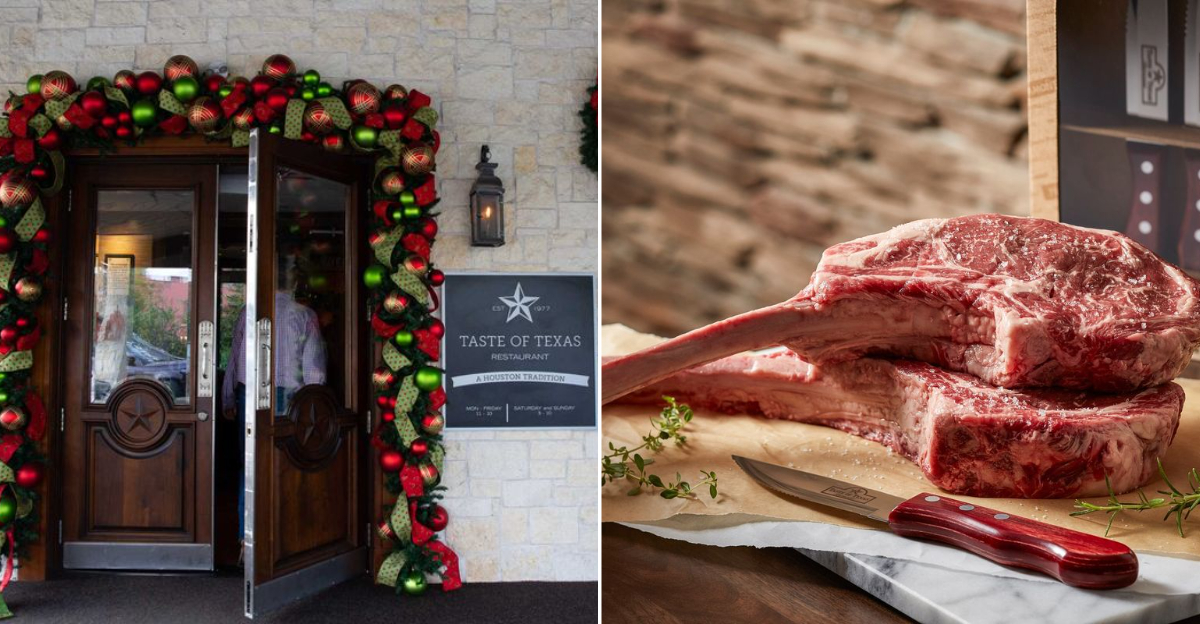
Cruising along the Katy Freeway, the neon for Taste of Texas cuts through the traffic like a promise. Step inside and the first thing that finds you isn’t a hostess but the scent, smoke, butter, aged beef curling together before you even reach your table.
The bone-in ribeyes arrive like centerpieces, thick and unapologetic, the kind of steak people still talk about days later.
But this house offers more than meat: butcher cases to browse, wine walls to marvel at, and servers who turn dinner into ceremony. Here’s what makes Taste of Texas unforgettable.
Tomahawk Ribeye Bone Over The Plate
A 38-ounce tomahawk arrives, bone arching gracefully past the edge of your plate, meat thick and glistening with juice. It dominates the table.
The tomahawk cut is among their flagship steaks, cut from the rib primal and left bone-in for maximal flavor.
Watching a server carry that to a table changes your anticipation. It’s not just dinner, it’s spectacle, and by the time it lands, everyone leans in.
Butcher Case Where You Pick Your Cut
Glass doors slide open on a butcher’s display: cuts laid side by side, marbling visible, bones exposed, waiting for your gaze.
At Taste of Texas, guests sometimes choose their own steaks from that case, picking weight, cut, even trim. It brings theatre into the ordering process.
If you’re indecisive, ask the butcher for a recommendation. Watching them select and point out marbling feels like you’re apprenticed, not patron.
Mesquite Grill Flames And Sear Marks
Flames flash overhead; steak surfaces snap into brown, crust forming in a heartbeat. That sear smell closes in.
They use mesquite wood in their grill to impart smoky notes, giving that quintessential Texas signature on every ribeye.
That char line across the meat? It’s part of the story. It tells you heat met fat, and that your steak is built from fire as much as from grain.
Cowboy Bone-In Ribeye Close Up
The camera pulls in close: juicy fat shimmering, steak edges crisping, bone rimmed with crust. It’s a portrait in beef.
This “Cowboy” ribeye typically runs 24 oz or more, served with minimal fuss so the richness of the cut shines.
When I’ve tasted it, the first bite felt like everything lined up perfectly, the sear, the marbling, the temperature. It’s what a steak should argue to you.
Classic Loaded Baked Potato
Cut open down the middle, steam rises from the flesh, loaded with butter, sour cream, bacon, cheese, chives. The sides fight for space.
This potato is a staple accompaniment, almost as richly dressed as the steak itself. Regulars expect it as part of the full plate.
Load it and dig in last. It doubles as your carb and your fallback if you ever need a break between steak bites.
Famous Salad Bar Piled High
Bowls stand at attention: greens, vegetables, dressings, side fixings stacked deep. The salad bar is a show in itself.
Even though this is a steakhouse, their salad bar gets praise, fresh produce, crisp veggies, and enough options to balance the heavy entree.
I always go for a few greens before the steak hits. It clears the palate and reminds me I’m here for balance, not overload.
Fresh Rolls And Whipped Butter
Rolls arrive warm, soft, with crisp edges; butter arrives whipped and cloudlike, ready to melt. It’s comfort before the main act.
These dinner rolls are part of their signature hospitality. You settle in, tasting that first bread bite, knowing your table is in caring hands.
I judge steakhouses by their rolls. Here, the roll is both promise and proof: simple, indulgent, and designed to be devoured.
Servers Carving Tableside Moments
Knives ring, boards creak, slices fall, servers wander table to table, carving ribeyes live for effect and precision.
Tableside carving makes the experience interactive. You see how fat is trimmed, how the meat falls apart. The presentation becomes part of the meal.
It demands attention. I’ve watched the paling act of carving and felt the anticipation ramp. When that cut lands, it’s not just dinner, it’s reveal.
Family-Owned Since 1977 Signage
A brass plaque proclaims “Family Owned Since 1977,” flanked by founder portraits and vintage snapshots. It anchors the story.
That lineage matters. The commitment to family means continuity, kitchens passed down, consistency maintained even as trends shift.
Knowing it’s family-run changes how you eat there. You lean in a little more, take each bite with gratitude, feeling you’re part of their ongoing story.
Busy Lobby With Pagers At Night
Even in late evening, the lobby buzzes with people holding pagers. The waitlist here is serious, part anticipation, part ritual.
The restaurant’s popularity often means waits. Guests check in, receive pagers, wander bars nearby until called, then return for their table.
I don’t mind the pause. Watching people gather in the lobby, murmuring about cuts, wine, platters, by the time I’m called, I’m ready.
Dessert Slice Of Texas Pecan Pie
A wedge of pecan pie arrives, nuts shiny, crust flaky, filling sweet but balanced. It looks like comfort wrapped in caramel.
It’s a classic finish. The pecan pie here leans generous on nuts, less syrupy than some, so the texture stays crisp instead of soggy.
Finish with coffee beside it. That pairing justifies the indulgence. That last bite becomes memory: warm, sweet, unmistakably Texan.