
This New York Port Town Keeps Its 19th-Century Soul
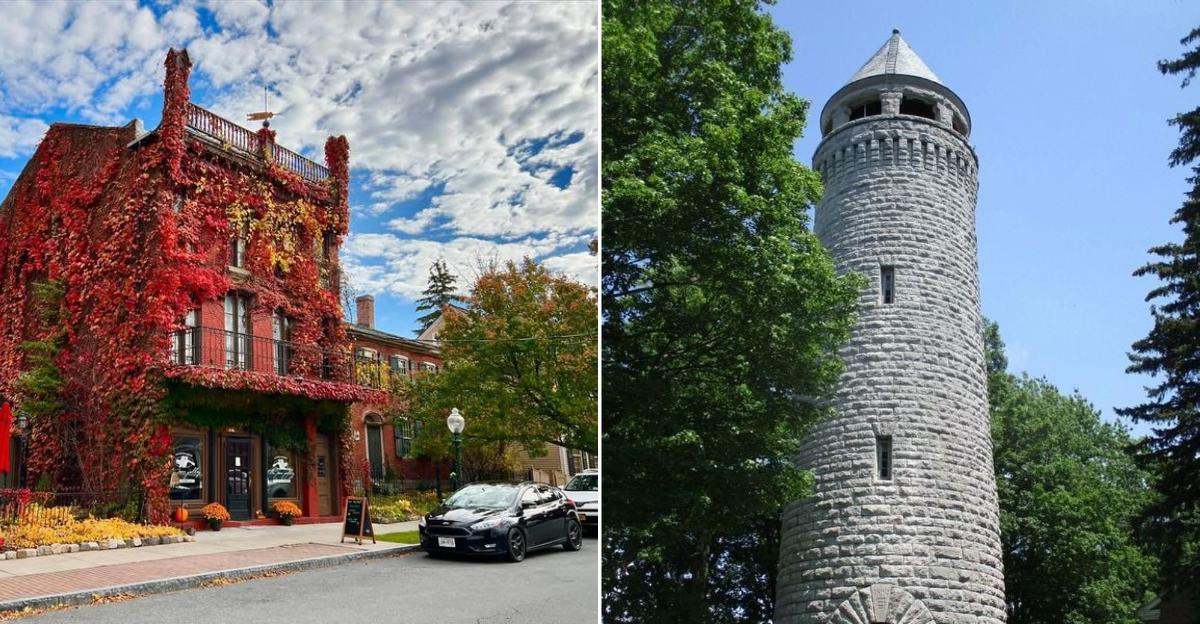
Sackets Harbor sits on Lake Ontario with a kind of charm that feels lived-in yet timeless, more storybook than stopover.
Brick storefronts frame the harbor, cannons still keep watch from the bluff, and weathered limestone barracks rest beneath towering maples. Once a naval stronghold and wartime training ground, the town now drifts at a gentler pace, greeting visitors with sailboats, cafés, and history around every turn.
Walking its streets feels like slipping between centuries, a rhythm of maritime calm woven with echoes of the past.
Harborfront Main Street With Brick Facades
The street hums with small-town rhythm: shop doors swinging open, locals chatting, and gulls calling overhead. Brick walls glow warm against the water’s edge.
This stretch was built in the early 1800s when Sackets Harbor grew as a naval hub. Restored storefronts now house cafés, boutiques, and galleries while keeping their 19th-century proportions.
Walk slowly, it’s easy to miss the carved dates above lintels. Those little details anchor you in the town’s past while you browse the present.
Sackets Harbor Battlefield Overlooking Lake Ontario
Grass ripples in the wind, broken only by cannons and markers explaining the battle that unfolded here in 1813. Beyond, the lake sparkles deceptively calm.
This battlefield commemorates the War of 1812 defense, where American forces held off a British attack on the harbor. Panels and reconstructed earthworks tell the story on site.
Best visited on clear days. The wide view of Ontario adds depth to the history lesson, making it easier to imagine the stakes that once defined this shoreline.
Restored 1850s Navy Yard And Commandant’s House
Painted shutters frame bright windows, and porches look out over the harbor with a neatness that feels timeless. The buildings stand proud, fully alive.
The U.S. Navy expanded here in the 1850s, constructing a commandant’s residence and supporting yards. Careful restoration means visitors can step close and picture life in uniform.
I loved the sense of continuity. Standing on the porch, I could almost hear boots on planks, the hum of orders in the yard, layered with today’s stillness.
Cannon On The Bluff Facing Black River Bay
Iron darkens with age, but the barrel still points defiantly across the bay. Grass grows thick around the base, softening what was once a weapon.
This bluff was fortified during the War of 1812, protecting the naval yard below. The surviving cannon is both artifact and lookout, its presence reminding visitors of contested waters.
Stand near the edge to take in the perspective. From here, you sense both the beauty of the bay and the seriousness of what once played out.
Madison Barracks Limestone Row Under Old Trees
Long shadows stretch across a line of limestone buildings, their cool walls framed by giant trees older than most of the town. The vibe is serene but commanding.
Constructed after the War of 1812, Madison Barracks housed soldiers for more than a century. The Army finally closed the post in the mid-20th century, and the property transitioned into residences and small businesses.
If you walk slowly, you’ll see engraved details in the stonework. They give clues to a life of routine and discipline once rooted here.
Stone Water Tower Beside Parade Grounds
The tower rises rough and round, stacked stone climbing skyward like a relic of another time. Its silhouette looms over the old parade field.
Built in the 1890s as part of Madison Barracks, it supplied gravity-fed water to the troops. Few towers of this kind remain intact across New York.
I found myself circling it, fascinated by its texture. Against the open grass, it looks both practical and artistic, a utilitarian object turned into a landmark.
Wooden Docks And Sailboats In Quiet Slips
The docks creak under gentle weight, ropes sway, and masts tap lightly in the breeze. Everything feels unhurried here.
Sackets Harbor’s protected bay has long made it a safe stop for boaters. Today, slips are filled each summer with sailboats and weekend cruisers, their reflections stretching in the water.
Visitors can wander freely along the planks. Even without a boat, the rhythm of the marina offers a way to feel part of harbor life.
Cape Horn Overlook Above The Village
From this perch, the rooftops of Sackets Harbor shrink to dots, while Lake Ontario opens wide into blue horizon. The curve of the shoreline reads like a map.
Cape Horn has been a local lookout since the 19th century, providing one of the best elevated perspectives of both the bay and surrounding farmland.
Plan your visit for late afternoon. The light slants across the water then, making the village glow faintly while the lake deepens into darker tones.
Seaway Trail Discovery Center Entrance
A carved sign invites you inside, and the doorway smells faintly of polished wood. The center is friendly, more like a welcome hall than a museum.
Housed in the restored Union Hotel, it highlights the maritime and cultural history of the Seaway Trail, with maps, artifacts, and stories tied directly to Sackets Harbor.
I ducked in first thing and was glad I did. The staff’s tips reshaped my wanderings, pointing me toward corners I might have otherwise missed.
Union Hotel And Historic Plaque
Tall windows frame the facade, stonework sturdy against time. The plaque out front explains the building’s role as a hub for soldiers and townsfolk.
Constructed in 1817, the Union Hotel once served as lodging and gathering place. It later housed civic functions before being restored for heritage use, tying the structure directly to the town’s growth.
Pause to read the plaque carefully. It’s easy to pass by, but the details ground you in the moment when Sackets Harbor was bustling with troops.
Navy Point Marina With Masts At Sunset
The evening hush is broken only by lines tapping against masts, their shadows stretching across the bay. Orange light lingers on the water.
Navy Point Marina is one of the most active in town, drawing boaters from across Lake Ontario. Seasonal slips and fuel docks make it a regional hub.
I sat on a bench until the last glow faded. Watching the forest of masts sway together was hypnotic, the day’s perfect closing note.
Church Steeple Rising Over Side Streets
White spire points above rooftops, visible from nearly every corner of the village. Bells occasionally drift across the harbor air.
Many of these churches date back to the mid-19th century, built when Sackets Harbor expanded as a naval and trade port. Their steeples still dominate the small-town skyline.
If you’re wandering side streets, look up often. The steeples guide you like landmarks, tying together narrow lanes and harbor views.
Evening Glow On Lakeside Cottages
Shutters catch the last light, porches glow, and ripples sparkle just feet from wooden steps. The whole shoreline looks dipped in amber.
These cottages, many dating to the early 20th century, remain summer fixtures for families who return each year. Their character holds steady even as modern touches sneak in.
I stayed long past sunset, unwilling to let the moment go. Watching cottages slip into silhouette convinced me Sackets Harbor knows how to hold onto its soul.