
12 Forgotten ’80s California Burgers That Defined An Era
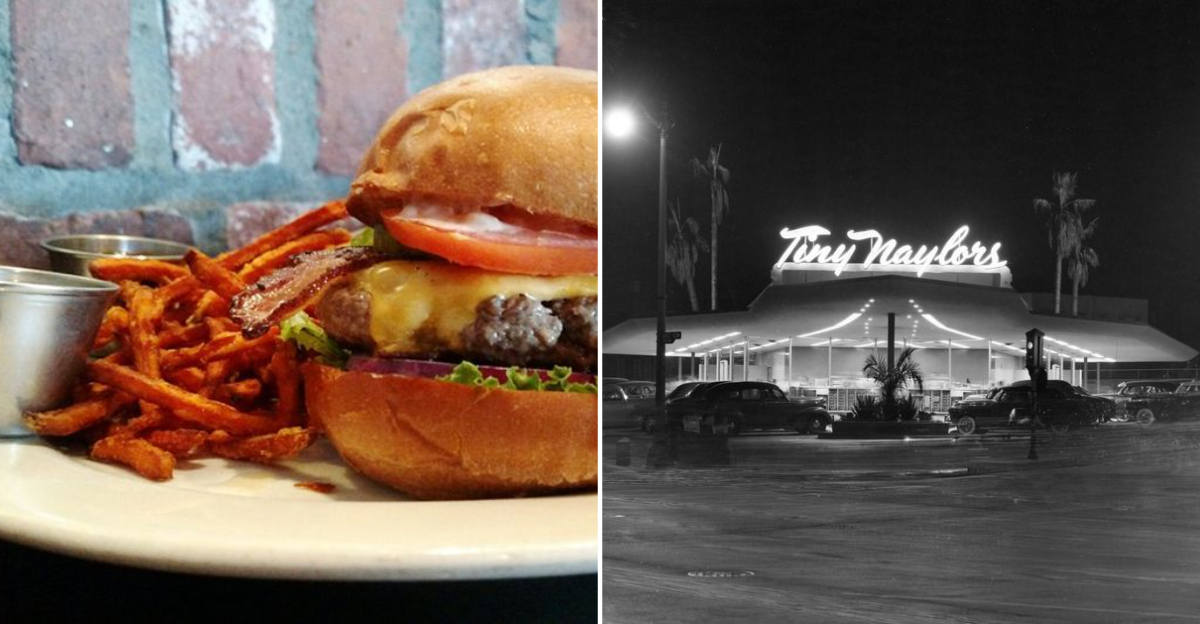
California’s burger scene in the 1980s was one of a kind. The state was packed with burger joints that had as much personality as they did flavor.
Some were celebrity hangouts flipping gourmet patties late into the night, while others were offbeat drive-ins with neon signs and mascots that talked or danced.
Bright colors, bold menus, and unforgettable atmosphere made each stop feel like an event. While many of these spots are long gone, their stories and flavors still live on in the memories of those who tasted the era.
1. All-American Burger
Hollywood magic happened at this Los Angeles chain before it closed in the early 1980s. Sean Penn’s iconic Spicoli character made this place famous in “Fast Times at Ridgemont High.”
The restaurant served classic American fare with California flair. Their burgers featured fresh ingredients and that laid-back West Coast attitude.
Unfortunately, the chain couldn’t survive the competitive fast-food market despite its movie fame.
2. Pup ‘N’ Taco
Picture this: a restaurant that couldn’t decide between Mexican food and American burgers, so it served both. Pup ‘N’ Taco became a Southern California phenomenon with its unusual menu combination.
Customers could order a hamburger and tacos at the same counter. The quirky concept worked surprisingly well for decades.
Taco Bell purchased the chain in 1984, ending this unique dining experiment forever.
3. Doggie Diner
Giant dachshund heads rotating on restaurant rooftops became San Francisco Bay Area landmarks. Doggie Diner served hamburgers and hot dogs with a side of pure whimsy.
The oversized dog mascots were impossible to miss from the freeway. Kids begged parents to stop whenever they spotted those spinning heads.
The chain closed in 1986, but one preserved dog head remains a beloved city monument.
4. Tiny Naylor’s
Space-age architecture met comfort food at this Los Angeles drive-in chain. Tiny Naylor’s featured that distinctive Googie design with swooping rooflines and neon signs.
Many food historians credit them with inventing the patty melt sandwich. Their combination of hamburger patty, grilled onions, and cheese on rye bread became legendary.
The last location closed in 1984, ending an era of futuristic dining.
5. Woody’s Smorgasburger
Build-your-own burger bars were revolutionary in 1970s and 1980s California. Woody’s Smorgasburger let customers create custom combinations from extensive topping stations.
The concept felt like Subway for burgers decades before customization became mainstream. Families loved the interactive dining experience and endless possibilities.
Competition from faster chains eventually made their model obsolete, and locations gradually disappeared throughout the decade.
6. Flakey Jake’s
Dress-it-yourself dining reached its peak at Flakey Jake’s locations across California. The chain promoted customer creativity with extensive condiment bars and topping stations.
Their marketing emphasized personal expression through food choices. Commercials showed families laughing while building elaborate burger creations together.
The concept burned bright but brief, appearing and disappearing within the same decade as trends shifted toward speed over customization.
7. Hamburger Hamlet
Hollywood celebrities couldn’t resist these gourmet burgers served in an upscale atmosphere. Hamburger Hamlet elevated fast food into fine dining throughout the 1980s.
The restaurant featured cloth napkins, real plates, and burgers made with premium ingredients. Stars like Elizabeth Taylor and Frank Sinatra were regular customers.
This concept pioneered the premium burger trend decades before it became commonplace in American restaurants.
8. Ships Coffee Shop
Googie architecture sailed into Los Angeles dining with Ships Coffee Shop’s nautical-themed locations. Their “Ship Shape Burger” became a menu standout among traditional coffee shop fare.
The chain’s distinctive boat-like buildings dotted the city landscape. Inside, maritime decorations created an oceanic dining experience miles from any beach.
Most locations closed by the mid-1990s, leaving only memories of these landlocked vessels and their signature sandwiches.
9. Sambo’s Restaurant
Santa Barbara birthed this pancake house chain that served diner classics including decent burgers. Sambo’s grew into a nationwide phenomenon before controversy and competition destroyed it.
The restaurants featured family-friendly menus and 24-hour service. Their breakfast focus didn’t prevent them from grilling solid hamburgers for lunch and dinner crowds.
The entire chain collapsed in the early 1980s, leaving empty buildings and faded memories across California.
10. Bob’s Big Boy Broiler
Downey’s beloved drive-in represents the bridge between classic car culture and modern burger appreciation. Bob’s Big Boy Broiler survived when many contemporaries failed.
The restaurant maintained its mid-century charm while adapting to changing tastes. Classic car enthusiasts still gather here, recreating 1980s cruising culture.
Today’s revival proves that authentic experiences can triumph over corporate uniformity when communities support their local treasures.
11. Bill’s Burgers
Van Nuys locals discovered burger perfection at this tiny stand that’s been flipping patties since the 1960s. Bill’s survived the 1980s restaurant wars through consistency and community loyalty.
The modest operation focuses entirely on classic California burgers without gimmicks. Simple ingredients prepared well beat flashy marketing every time.
This nostalgic remnant continues serving the same recipes that made it a neighborhood institution four decades ago.
12. Marty’s Hamburger Stand
Gas station dining reached its peak at Marty’s, where customers could fuel their cars and stomachs simultaneously. The Los Angeles stand became famous for hot dog-topped burgers and quirky charm.
Regular customers appreciated the convenient location and unusual menu combinations. The casual atmosphere encouraged lingering conversations between strangers.
This unique dining concept represented California’s car culture and informal dining traditions perfectly during the 1980s era.