
11 Retro Georgia Sandwiches From The ’80s Worth A Comeback
In Georgia, the ’80s tasted like hot cheese fogging up car windows and fries saltier than the pop songs buzzing through the tape deck. Fast-food sandwiches then weren’t chasing elegance, they swaggered. Buns towered, sauces dripped, patties doubled for no reason except bravado.
Some creations were bizarre, others unforgettable, and all of them made the drive-thru feel like a stage. A few disappeared without ceremony, while others became myths whispered about years later.
I’m pulling them back into focus, one by one, because their messy brilliance deserves another bite of attention.
1. McDonald’s McDLT
The split box made the sandwich feel like theater, one side chilled and crisp, the other steaming with burger heat.
Created in 1984, the McDLT kept lettuce and tomato apart from patty and cheese until you folded them together. The Styrofoam container, clever at the time, became its undoing.
People who remember it often talk about that odd moment of assembly. It wasn’t just a meal; it felt like you were staging your own act in a fast-food drama.
2. McDonald’s Cheddar Melt
Cheese oozed thick and unapologetic, tangling with sautéed onions before settling over beef.
This 1988 limited-time offering arrived on a rye bun, unusual for McDonald’s. Its run was seasonal, designed for colder months, but never stayed long enough to build permanence.
Fans describe it as a messy indulgence. I would have adored the clash between sharp cheddar and rye, a pairing that gave fast food a brief, moody sophistication. Its disappearance feels like losing a strange but beloved winter ritual.
3. McDonald’s McRib
Sauce clung so fiercely it could paint your fingers for hours, smoky-sweet and sticky.
The McRib debuted in 1981, its boneless pork molded into rib shapes, slathered with barbecue sauce, pickles, and onions. Pulled after weak early sales, it began reappearing in unpredictable waves, turning into a cult object.
I still remember scanning Georgia drive-thrus hoping to spot its return. The chase became part of the fun, and when I finally found it, the sauce felt like an absurd prize worth every napkin in the bag.
4. Wendy’s Big Classic
Onions stacked high and lettuce spilling everywhere gave it the presence of a skyscraper in bun form.
Introduced in 1986, this was Wendy’s bold reply to the Whopper. Quarter pound patty, sesame bun, mayo, pickles, tomato, it lasted until 2000 before fading when other menu stars rose.
Georgians still talk about it with surprising devotion. I can see why: heft, structure, and a slightly different flavor balance. It wasn’t just filling; it felt like holding a full memory in paper wrap.
5. Burger King Yumbo
Ham at Burger King always sounded a little mischievous, like the kitchen had slipped into disguise.
The Yumbo, layered with hot ham and melted cheese, first appeared in 1968, vanished in the ’70s, then briefly came back in 2014. Its simplicity stood out in a sea of burgers.
For anyone tempted to track history, know that people remember it warmly but also call it plain. The tip: eat it in the spirit intended, fast, hot, and with a shrug that somehow feels comforting.
6. Burger King Whaler
A wave of tartar sauce and fried fish scent hit before you even unwrapped it.
The Whaler launched in the 1970s as Burger King’s answer to the Filet-O-Fish. Renamed the Big Fish later, it carried many Lenten seasons in Georgia before drifting quietly away.
I once tried it and found the sauce absurdly heavy but strangely satisfying. For me, the Whaler always tasted like a roadside Friday night when choices were thin and a warm sandwich was better than nothing at all.
7. Burger King Italian Original Chicken Sandwich
Mozzarella stretched across the fried patty like strings from a puppet, tangled in marinara’s red glow.
This version of BK’s long chicken sandwich rolled out in the ’80s, part of a trio that included American and French twists. Its Italian flair was a bold move for roadside dining.
Logistically, it was messy to handle, sauce soaking through sesame bread faster than napkins could rescue you. But that risk became its charm, a pizza dream hiding inside a drive-thru wrapper.
8. Taco Bell Bell Beefer
Ground beef tumbled loose under the bun, a taco spilling secrets in sandwich form.
Introduced in the ’70s and stretching into the ’80s, the Bell Beefer was Taco Bell’s attempt to repurpose taco filling. The Supreme version added lettuce and tomato, trying to court burger fans.
Visitors learned quickly: you needed a steady hand and plenty of napkins. My tip would be to eat it with the acceptance that it never wanted to behave, that rebellious mess was half the fun.
9. KFC Chicken Littles
Tiny buns hugged crisp chicken strips so tightly they seemed almost embarrassed by their size.
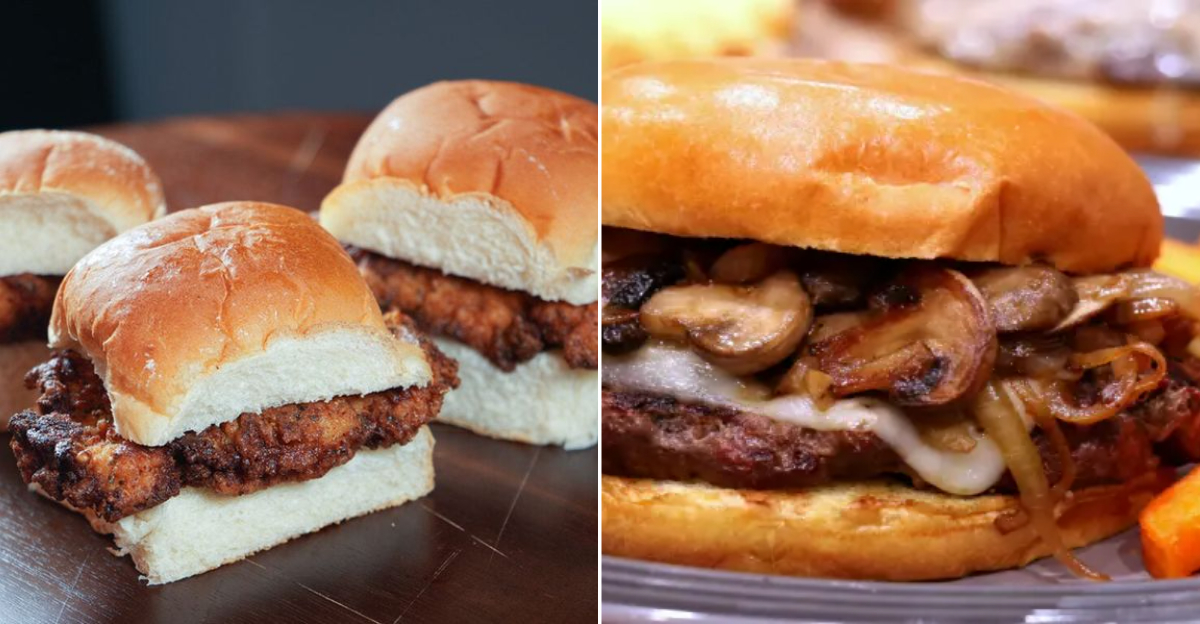
These sliders were cheap, fast, and wildly popular in the ’80s. Kids loved them after school, adults stacked them like tokens of crispy joy. The 2012 revival brought larger versions, losing that mini-charm.
I adored the originals. They felt like treasures, four little sandwiches lined up like jewels in a paper box. Even now, I miss their miniature swagger and the freedom of ordering them by the handful.
10. Hardee’s Big Twin
Two patties mirrored each other under a blanket of sauce, like twins locked in a greasy embrace.
Introduced to rival the Big Mac, it came stacked with lettuce, pickles, and that signature three-bun structure. In Georgia, it offered a familiar silhouette but a slightly different tang in the sauce.
People still argue online about its taste, splitting camps between sweet and sharp. The debate never settles, but that lingering mystery might be the Big Twin’s true legacy.
11. Hardee’s Mushroom And Swiss Burger
The aroma of butter-slick mushrooms announced itself before the sandwich even reached the table.
Launched in the ’80s, it paired earthy mushrooms with creamy Swiss, an unusual sophistication for drive-thru fare. Hardee’s was chasing a more “gourmet” lane, giving fast food a whiff of European flavor.
Ordering it often meant waiting longer, since melted Swiss and sautéed toppings needed time. That patience became part of the ritual, and it rewarded you with richness far above the standard burger baseline.