
8 Abandoned Ghost Towns In New Mexico That Still Whisper Stories Of The Past
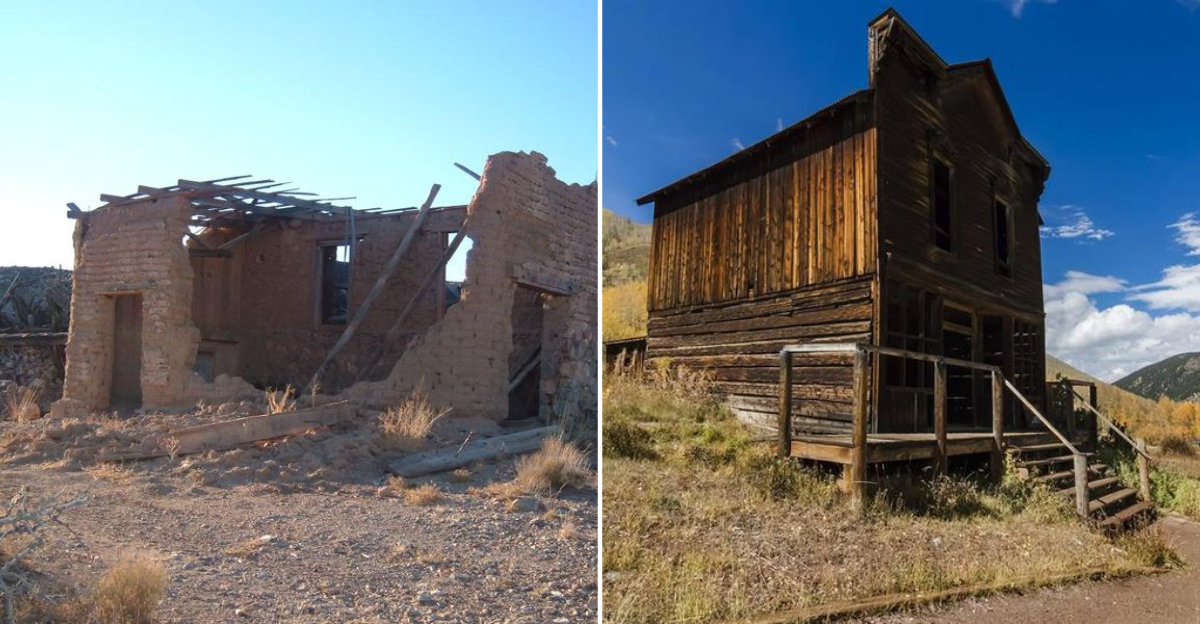
The vast desert landscapes of New Mexico hide secret treasures that time has nearly forgotten. Ghost towns scattered across the state stand as silent witnesses to boom-and-bust cycles of mining, railroad expansion, and the harsh realities of frontier life.
Last summer, I stumbled upon my first abandoned settlement while hiking through the mountains, and felt an immediate connection to those who had walked there before.
These eight ghost towns offer windows into New Mexico’s rich past, where echoes of laughter, commerce, and hardship still linger among crumbling adobe walls and weathered timbers.
1. Lake Valley: Where Silver Dreams Tarnished
Standing in Lake Valley’s dusty main street, I felt goosebumps despite the desert heat. The 1870s silver boom transformed this spot into a bustling hive of activity, with miners flocking to the famous “Bridal Chamber” – a cave of almost pure silver that yielded millions.
The town’s prosperity was short-lived. When silver prices crashed in the 1890s, Lake Valley began its slow decline. The last resident finally turned out the lights in 1994, leaving behind a collection of weathered buildings that tell stories of frontier ambition.
Today, the Bureau of Land Management protects what remains. Visitors can take self-guided walking tours during daylight hours, stepping carefully among the ghosts of saloons, homes, and mining operations.
2. Chloride: The Silver Town That Refused to Die
“You’re standing in my living room,” chuckled a local historian when I visited Chloride last spring. This 1880s silver boomtown west of Truth or Consequences stubbornly clings to life through preservation efforts that would make its founders proud.
Named after the silver chloride found in nearby mines, this settlement once boasted over 3,000 residents, nine saloons, and a notorious red-light district. Unlike many ghost towns, Chloride maintains a handful of year-round residents who serve as unofficial caretakers of its history.
The Pioneer Store Museum stands as the crown jewel among several original structures. Inside, merchandise from the 1880s remains exactly as it was when the doors closed decades ago.
3. Elizabethtown: New Mexico’s First Incorporated Town
My grandmother used to tell stories about “E-Town” that sparked my imagination long before I saw its ruins. Founded in 1866 around promising gold and copper mines, Elizabethtown blazed bright as New Mexico’s first incorporated town before fading into obscurity.
At its peak, nearly 7,000 people called this mountain settlement home. The town boasted two newspapers, multiple hotels, and a notorious dancehall called “The Senate.” A devastating fire in 1903 began the end, with the post office finally closing in 1931.
Today, only foundations and scattered artifacts remain amid the pines. The nearby E-Town Museum in Cimarron houses treasures salvaged from this once-proud community where fortunes were made and lost overnight.
4. Dawson: The Coal Town Marked by Tragedy
The cemetery at Dawson speaks louder than any history book. White iron crosses, hundreds of them, mark the final resting places of coal miners who perished in two of America’s worst mining disasters in 1913 and 1923.
Phelps Dodge Corporation built Dawson as a model company town with schools, a hospital, and even an opera house. At its height, 9,000 people lived here, digging “black diamonds” from the surrounding hills. The mines closed in 1950, and the company sold the entire town for scrap.
Few physical remains exist beyond the haunting cemetery and scattered foundations. Yet standing among the ruins, I felt the presence of families who lived, loved, and ultimately mourned in this place where prosperity and heartbreak walked hand in hand.
5. Old Hachita: A Windswept Frontier Outpost
“Watch for rattlesnakes,” warned the gas station attendant when I asked directions to Old Hachita. This remote Grant County mining settlement feels like the edge of the world, where tumbleweeds reclaim what humans abandoned.
Founded in the 1870s, Old Hachita (not to be confused with nearby New Hachita) boomed with silver, lead, and copper discoveries. Lawlessness plagued the town despite efforts to maintain order. Residents eventually drifted away as ore quality declined, leaving their homes to the mercy of desert winds.
Today, crumbling adobe walls and stone foundations dot the landscape. Ghost town enthusiasts treasure this atmospheric site for its isolation and authenticity. The journey requires determination, but standing alone among these ruins offers a rare connection to frontier life few experiences can match.
6. San Marcial: Washed Away by the Rio Grande
Water, not economic failure, erased San Marcial from the map. My uncle remembers his grandfather’s stories of this once-thriving Socorro County railroad town that stood proudly along the Atchison, Topeka and Santa Fe line until nature intervened.
Founded in 1866, San Marcial grew into a substantial community with hotels, shops, and a roundhouse for servicing locomotives. The Rio Grande had threatened the town with periodic flooding for decades. In 1929, catastrophic floods finally won the battle, destroying most buildings and forcing residents to abandon their homes forever.
A lonely cemetery and partial railroad ruins are all that remain today. The site sits on private property, but the cemetery can sometimes be visited with permission, its weathered headstones telling stories of a community that water couldn’t wash from memory.
7. Bonanza City: The Turquoise Boomtown’s Brief Sparkle
Brilliant blue stones lured prospectors to establish Bonanza City in 1880. When I found a tiny turquoise fragment among the ruins southwest of Santa Fe last fall, it felt like holding a piece of the dream that built—and ultimately doomed—this settlement.
At its peak, nearly 2,000 people called Bonanza City home. The town boasted hotels, saloons, and a newspaper optimistically named “The Bonanza.” The turquoise mines that spawned the community proved less productive than hoped, and by the early 1900s, most buildings stood empty.
Today, only foundations and the remains of a stone smelter mark where ambitious miners once sought their fortunes. The site sits on private land, with limited access requiring permission, preserving what little remains of New Mexico’s turquoise mining heritage.
8. Tyrone: The Planned Town Swallowed by Its Own Mine
“The most beautiful mining town in the world” – that’s how newspapers described Tyrone when Phelps Dodge Corporation unveiled this planned community in 1915. Unlike typical ramshackle mining camps, Tyrone featured Spanish Colonial Revival architecture designed by renowned architects.
Built around copper mining in Grant County, the town included a hospital, schools, and even a Venetian-inspired plaza. The Great Depression forced operations to close in 1921. Though mining later resumed, the company made a fateful decision: expanding the Tyrone open pit mine directly through the townsite.
The irony wasn’t lost on me while peering into the massive excavation that consumed the town it was built to support. Today, only photographs preserve the memory of this unique experiment in corporate town planning that the earth literally reclaimed.