
This Georgia Community Built Its Name On Perfect Fried Chicken
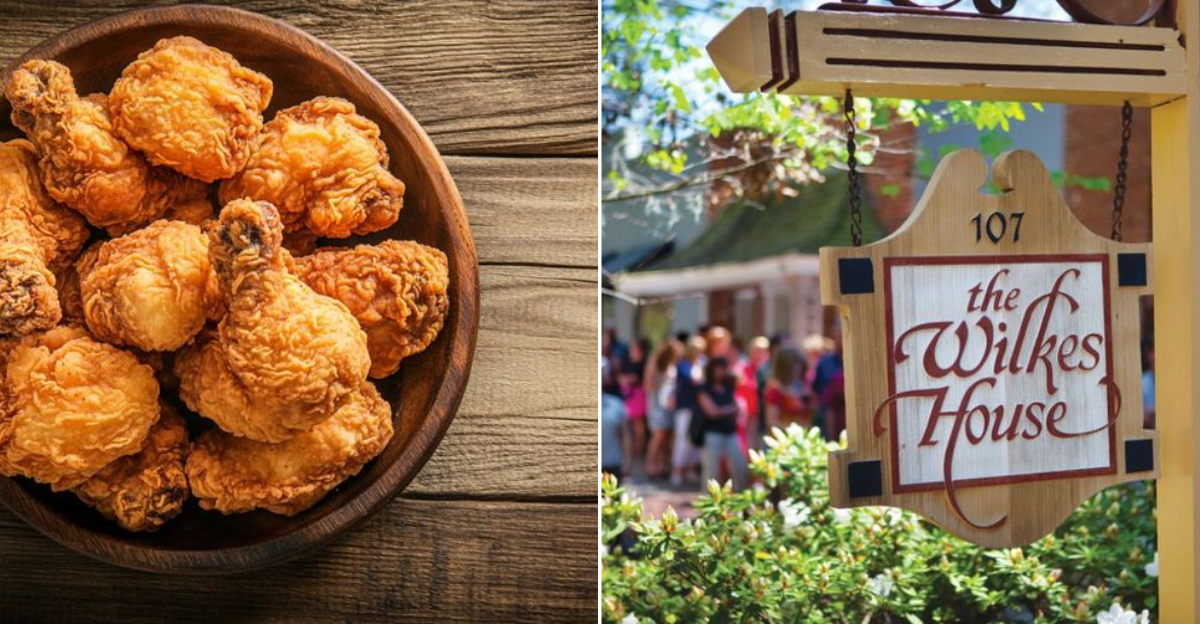
Lunch in Savannah follows a ritual, and at 107 West Jones Street the congregation gathers early. By 11 a.m., the line already bends around the block, travelers and locals waiting for a door that never seems to open fast enough.
Inside, there are no printed menus, only the clatter of bowls and the shimmer of fried chicken so golden it looks lacquered. Long tables bring strangers elbow to elbow, passing dishes until conversation feels inevitable.
This is Mrs. Wilkes’ Dining Room, a boardinghouse turned landmark where the spirit of community still arrives, plated generously, every single day.
Historic District Charm
Cobblestone streets lead you to 107 West Jones Street, where trees stretch long shadows across stately homes. The Historic District wraps the restaurant in its embrace.
This backdrop turns lunch into an event, as if you’ve stepped into a film set before the first bite ever lands.
I think the setting matters as much as the food. Eating fried chicken in a modern strip mall would taste good, but here the city itself seasons the experience.
Boardinghouse Beginnings
The story starts in 1943 when Sema Wilkes took over a downtown boardinghouse and turned it into a family-style table. Hungry workers and travelers crowded in.
She cooked Southern staples, passed them in bowls, and made strangers into temporary kin. That practice never vanished.
If you ask me, this is the restaurant’s secret power: it wasn’t invented by marketers, it was born from necessity. The tradition feels real because it was lived, not designed.
Famous Fried Chicken
Golden crust crackles at first touch, giving way to tender meat that drips with flavor. The fried chicken here commands the table.
Sides may rotate, greens one day, sweet potatoes another, but the bird stays constant, never absent from the feast.
I honestly believe it’s among the finest in the country. Not because it’s flashy, but because it’s disciplined: crisp, juicy, consistent. It’s the rare dish that earns its fame without gimmick or reinvention.
Lunchtime Tradition
By 10:30 a.m. the sidewalk is already lined, tourists whispering and locals nodding in recognition of a routine that never changes.
At 11, the doors open and the shuffle begins, trays and bowls hitting tables in rapid rhythm until every seat is claimed.
I like that there’s no dinner, no late-night option. It forces the meal to be special, compressed into a window of hours that makes fried chicken taste even more deliberate.
Old-School Payment
No card reader hums here, no phone tap at checkout, cash only. Bills pass across the counter like they’ve done for decades.
That policy anchors the restaurant in its past, refusing to bend to the tap-and-go culture outside. It’s a subtle but deliberate rule.
Cash-only feels inconvenient at first, but it fits the experience. A meal this rooted in history shouldn’t end with plastic, it should end the same way it began, with something tangible.
Acclaimed Chicken
Local stations cover it, magazines list it, and food writers keep circling back: Mrs. Wilkes’ fried chicken makes the “best of America” conversation.
Accolades layer onto the dish like seasoning, but the recipe itself never shifts. Crisp skin, juicy meat, simple seasoning, that’s the formula.
For me, the awards matter less than the bite itself. And the bite proves the praise correct. It’s the rare case where reputation and reality match, where you walk away convinced the hype wasn’t enough.
Communal Dining Ritual
Guests sit shoulder to shoulder at long wooden tables, the kind that erase distance between strangers.
Bowls and platters move in steady circulation, collards, mac and cheese, candied yams, no single plate belongs to one person.
This choreography of passing and sharing has been preserved for decades, turning lunch into a ritual of community rather than a private meal.
Historic Setting
The restaurant occupies an 1870s house, its dining room lined with worn floors and vintage décor.
The home’s age shows in every detail, from tall windows that frame soft light to walls that seem to carry whispers of past meals.
The building itself is part of the attraction, setting a backdrop that matches the sense of continuity embedded in every dish.
Take-Home Cookbook
Mrs. Wilkes’ legacy stretches into print with The Boardinghouse Cookbook, filled with the recipes that shaped the table.
Its pages preserve not just fried chicken and biscuits, but the stories of how a boardinghouse meal became an institution.
I see this cookbook as more than a souvenir, it’s a bridge. Holding it at home feels like carrying a piece of Savannah’s dining table into your own kitchen.
Family Legacy
Ownership has shifted since Sema Wilkes first set the table in 1943, but the family’s imprint remains.
The dining style, the bowls passed down the line, the fried chicken as centerpiece, all of it carries the Wilkes name forward.
Each generation has guarded the ritual carefully, ensuring the heart of the experience feels unchanged despite the years.
Local Planning Tips
Lines form early, often before the doors swing open at 11. Locals know to arrive by ten-thirty, cash in hand.
The wait moves steadily once service begins, and seats fill quickly at long tables arranged for communal flow.
I think the planning is part of the fun. There’s satisfaction in showing up prepared, breezing past rookie mistakes, and sitting down knowing you’ve played the game the way Savannah intended.