
The Unassuming Michigan Coney Island Spot Serving Dogs So Good, Locals Say They Can’t Be Matched
I stood on West Lafayette Boulevard in downtown Detroit, staring at two coney joints sitting side by side like siblings locked in an eternal staring contest.
My buddy Mike, a Detroit, Michigan, native, grabbed my arm and steered me toward the left door, muttering something about family honor and chili recipes.
That first bite at Lafayette Coney Island changed everything I thought I knew about hot dogs, and suddenly I understood why people in this city will argue about coney toppings with the same passion others reserve for sports teams.
A Legendary Detroit Coney, Served From a Humble Downtown Counter
Lafayette Coney Island occupies 118 West Lafayette Boulevard in downtown Detroit, operating from the same compact location since 1924.
The restaurant sits directly beside American Coney Island, creating one of the most famous restaurant pairings in Michigan history.
Locals treat this tiny spot with the reverence usually reserved for historic landmarks. The no-frills setup consists of a simple counter and basic seating, yet lines regularly snake out the door during lunch rushes and late nights.
Walking past both restaurants, you will notice Lafayette draws a specific crowd of devotees who swear their version of the Detroit coney cannot be topped anywhere else in the city.
What Detroit Coney Means, And Why Lafayette’s Tastes Iconic
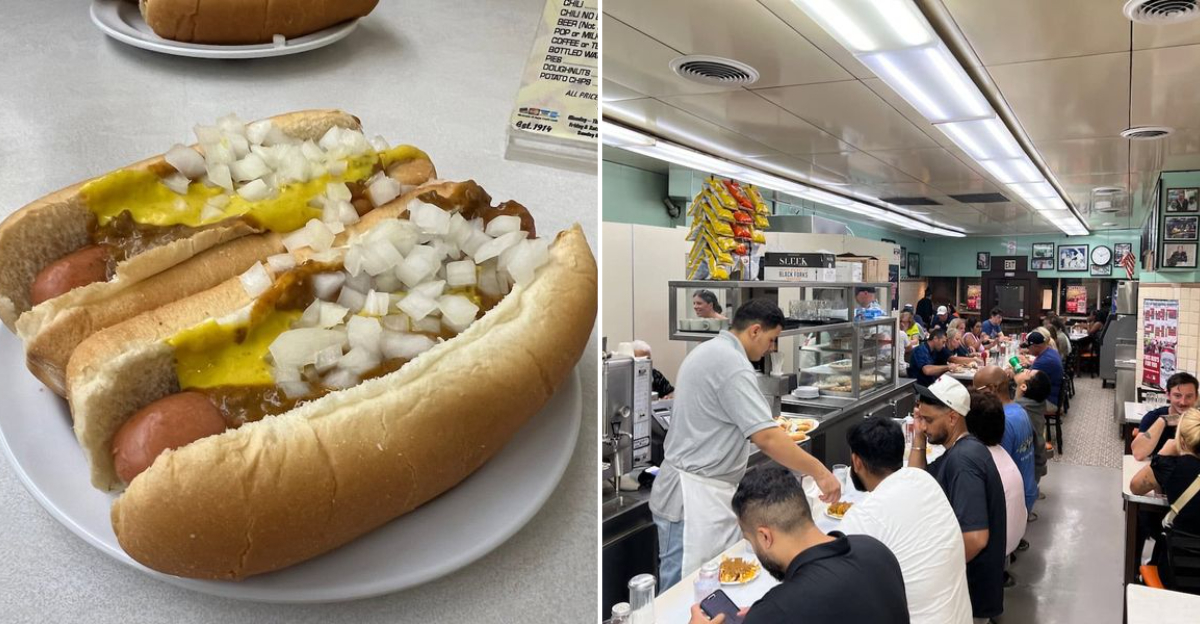
A proper Detroit coney starts with a natural-casing beef frank nestled in a soft steamed bun. The toppings follow a sacred formula: all-meat chili without beans, diced white onions, and bright yellow mustard.
Lafayette’s chili recipe comes from the founding family and delivers a beefier, heartier flavor than competitors. That chili, combined with the satisfying snap of the natural casing, creates the signature taste profile.
The Detroit Historical Society points to Lafayette’s chili as a key reason for its enduring popularity. Each ingredient plays a role, but that rich, meaty chili sauce truly sets Lafayette apart from countless imitators across Michigan.
A Rivalry Born Of Brothers, Still Debated On The Block
Gust Keros, a Greek immigrant, opened American Coney Island in 1917, establishing the Detroit coney tradition. Seven years later, his brother William launched Lafayette right next door, sparking a sibling rivalry that continues a century later.
The brothers’ competing visions for the perfect coney created a natural taste test for generations of Detroiters. Families pick sides, friends argue loyalties, and the debate never truly ends.
This block in downtown Detroit became ground zero for Michigan’s coney culture because of two brothers who couldn’t agree. Their disagreement turned into one of the most delicious feuds in American food history.
Hours, Location, And Late-Night Appeal
Lafayette Coney Island keeps its doors open until midnight from Sunday through Thursday, then extends hours until 2 a.m. on Friday and Saturday nights. The address is 118 W Lafayette Blvd, and the phone number is 313-964-8198.
Those late weekend hours pull in crowds leaving concerts, sports events, and downtown bars. Nothing satisfies post-event hunger quite like a steaming coney at 1 a.m.
I have watched the counter fill up after Tigers games, everyone craving that same comforting combination of chili and snappy frank. The extended hours make Lafayette a downtown institution for night owls and event-goers alike.
Order Like A Local: Chili, Mustard, Onions
Step up to the counter and ask for your coney with everything, which translates to chili, yellow mustard, and chopped onions. That trio represents the canonical Detroit build, and locals order it without hesitation.
The natural-casing frank provides the crucial snap when you bite down, contrasting beautifully with the soft steamed bun. Some newcomers make the mistake of requesting ketchup or other additions, earning puzzled looks from staff.
Stick with the traditional trio on your first visit, then experiment if you must. But honestly, the classic combination exists for good reason, perfected over nearly a century of serving hungry Detroiters.
Old-School Room, Lightning-Fast Service
The interior at Lafayette has barely changed since the mid-twentieth century, featuring a long counter, tile walls, and stainless steel fixtures. Vintage diner vibes dominate the space, from the worn counter stools to the simple menu boards.
Orders move at remarkable speed, with staff working in practiced choreography to plate coneys and deliver them hot. You will rarely wait long, even during rush periods.
Recent reviews and photo features continue highlighting this unchanged aesthetic. The lack of renovation feels intentional, preserving an authentic slice of Detroit history that modern restaurants struggle to replicate with all their design budgets.
Cards Accepted, Tradition Intact
Lafayette operated as a cash-only establishment for decades, requiring customers to hit ATMs before ordering their coneys. Several years ago, management finally installed card readers, modernizing the payment process without touching anything else.
This small concession to contemporary convenience made quick lunch stops easier for downtown workers and tourists. You can now grab a coney between meetings without worrying about carrying bills.
The addition of card payment represents the only significant operational change in recent memory. Everything else, from recipes to room layout, remains frozen in time, exactly how regulars prefer it.
Why Devotees Say It Cannot Be Matched
The Detroit Historical Society documents the century-old argument between Lafayette and American loyalists, with each side defending their choice with remarkable passion.
Lafayette supporters point specifically to the chili recipe and the superior snap of the frank.
This debate itself has become part of Detroit’s cultural fabric, passed down through families and argued over countless meals. The rivalry elevates both restaurants, keeping standards high.
I have listened to grown adults nearly come to blows over which coney reigns supreme. That fierce devotion, sustained across generations, proves these dogs offer something beyond simple fast food, something that touches Detroit identity itself.