
8 Hole-In-The-Wall Kitchens In Louisiana That Still Cook Recipes Passed Down For Generations
Louisiana food tells stories that go back generations, and some of the best places to hear those stories aren’t fancy restaurants with white tablecloths.
I remember my grandmother taking me to a tiny shack near the bayou where the gumbo tasted like pure magic, and I’ve been hunting for that same feeling ever since.
The state’s hole-in-the-wall kitchens serve up recipes that grandmothers taught mothers, who taught their daughters and sons, creating a delicious chain of tradition.
These humble spots might not look like much from the outside, but inside, they’re preserving Louisiana’s culinary soul one plate at a time.
1. The Joint Bywater New Orleans
Barbecue in Louisiana hits different than anywhere else, and this Bywater spot proves it with every smoky, tender bite. The Joint doesn’t mess around with fancy decorations or pretentious menus. Instead, they focus on what matters: meat so tender it falls off the bone and sauces passed down through three generations of pitmasters.
Their brisket has a crust that crunches perfectly before melting into buttery goodness in your mouth. The pulled pork gets piled high on simple white bread, letting the meat be the star of the show without any unnecessary fuss.
What really gets me is their commitment to old-school smoking techniques, using actual wood and actual patience. No shortcuts, no microwaves, just honest food made the way great-grandpa would’ve done it back in the day.
2. Dooky Chase’s Restaurant
Leah Chase turned this restaurant into a legend, serving Creole food so authentic it became a gathering place for civil rights leaders in the 1960s. Her fried chicken and gumbo z’herbes weren’t just meals—they were edible history, recipes refined over generations of her family’s cooking wisdom. The restaurant has survived hurricanes, social upheaval, and changing food trends by sticking to what works.
Every Thursday, the gumbo z’herbes appears on the menu, packed with greens and tradition dating back to West African cooking methods. The flavors are bold, unapologetic, and deeply rooted in New Orleans culture.
I’ve eaten here twice, and both times I left feeling like I’d experienced something sacred. Good food can nourish more than just your stomach—it can feed your soul too.
3. Louie’s Café
Breakfast at Louie’s isn’t just a meal—it’s a ritual that locals have been performing for generations, often in the exact same booths their parents sat in decades ago. The café serves up plate lunches and breakfast platters that stick to your ribs and warm your heart. Their red beans and rice recipe hasn’t changed since Louie’s grandfather first opened the doors.
What makes this spot special is the complete lack of pretension mixed with an abundance of flavor. The coffee is strong, the portions are generous, and the staff remembers your name after just two visits.
I ordered their smothered pork chops once and nearly cried at how perfectly the gravy complemented the tender meat. Sometimes simple food, done right, beats fancy cuisine every single time.
4. Herby-K’s Seafood Shack
Seafood doesn’t get fresher than what Herby-K’s pulls from the nearby waters each morning, and their recipes haven’t changed since Herby’s grandmother started frying catfish in the 1950s. The shack looks like a strong wind might blow it over, but inside, magic happens with cornmeal, hot oil, and perfectly seasoned fish. Their hush puppies alone are worth the drive, crispy outside and fluffy inside with just a hint of sweetness.
Locals know to arrive early because once the day’s catch runs out, they close up shop without apology. No frozen backup fish, no compromises—just honest cooking with whatever the bayou provides.
My favorite memory here involves eating fried shrimp with my hands while watching the sun set over the water. That’s Louisiana living at its finest.
5. Middendorf’s Manchac
Perched over the swamp on wooden stilts, Middendorf’s has been serving thin-fried catfish since 1934, and somehow they’ve kept the recipe exactly the same for nearly ninety years. The catfish here is pounded thin, fried to a golden crisp, and served with tangy tartar sauce that cuts through the richness perfectly. Sitting on their screened porch, watching boats glide by while munching on impossibly crispy fish, feels like time travel to a simpler Louisiana.
Their method of preparing catfish—thin as paper and light as air—sets them apart from every other fish joint in the state. It’s not heavy or greasy; it’s delicate and addictive.
I’ve dragged friends here from out of state, and they always leave converted to the Middendorf’s way of doing catfish. Once you try it, regular fried fish just doesn’t cut it anymore.
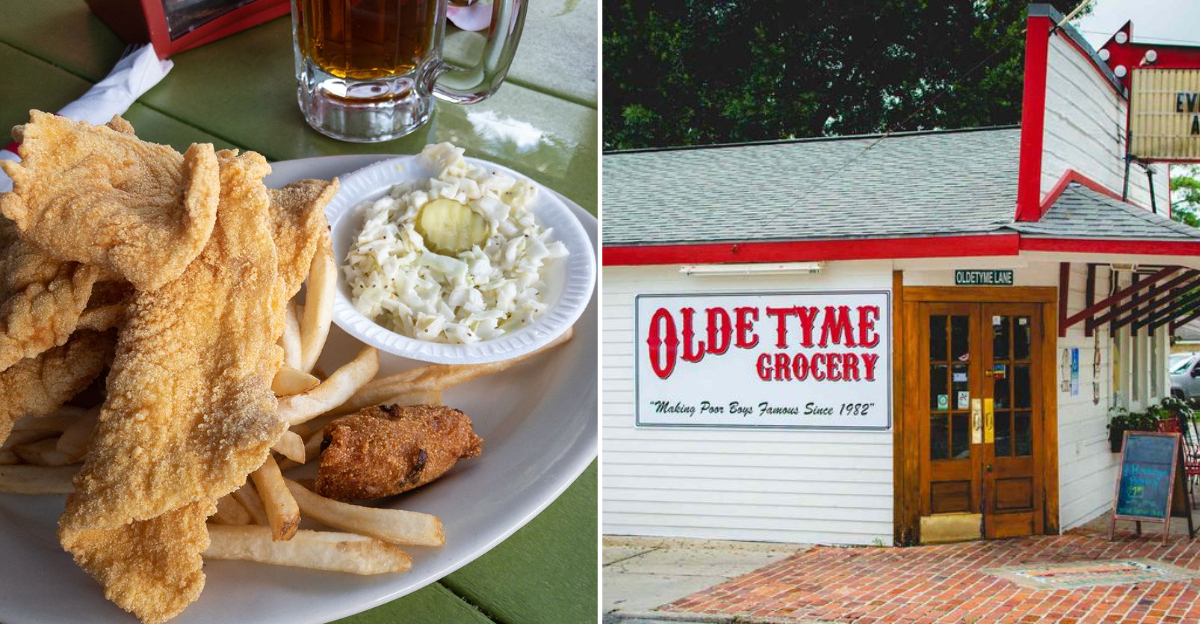
6. Olde Tyme Grocery Lafayette
Hidden in a Lafayette neighborhood, this former grocery store now cranks out po-boys that have locals lining up around the block during lunch hours. Their shrimp po-boy uses a recipe from the original owner’s mother, featuring perfectly seasoned fried shrimp piled onto fresh French bread that crackles when you bite it. The building still has the old grocery store charm, complete with vintage signs and creaky wooden floors.
What sets their sandwiches apart is the attention to every component—the bread, the dressing, the lettuce, tomatoes, and pickles all matter just as much as the main protein. Nothing feels like an afterthought.
I demolished a fried oyster po-boy here in about four minutes flat, which probably wasn’t my most dignified moment, but I regret nothing. When food tastes this good, manners take a backseat.
7. Tony’s Seafood Baton Rouge
Part seafood market, part restaurant, Tony’s represents everything right about Louisiana’s relationship with fresh seafood and family recipes passed through generations. You can buy raw seafood to cook at home or sit down for plates of boiled crawfish, gumbo, and étouffée made the old-fashioned way. The restaurant side stays packed because people trust Tony’s to prepare seafood exactly how their grandmothers would’ve done it.
Their crawfish étouffée has a roux so perfectly browned it looks like melted copper, and the flavor depth suggests hours of careful stirring and seasoning adjustments. No shortcuts exist in their kitchen.
Watching the market side operate is entertainment in itself—locals chatting in Cajun French, debating the best way to season a crawfish boil. That’s community food culture alive and thriving beautifully.
8. Coop’s Place New Orleans
Coop’s doesn’t care if you think it’s too dark, too loud, or too divey—this French Quarter institution serves Cajun food so good that celebrities and locals alike squeeze into the cramped space for a taste. Their jambalaya and rabbit with Creole mustard sauce follow recipes that the owner’s family has been making for generations. The atmosphere screams authentic New Orleans: a little gritty, completely unpretentious, and absolutely delicious.
You might wait for a table, and you’ll definitely leave smelling like fried food, but the experience is worth every minute and every aromatic consequence. Their fried chicken livers are legendary among those brave enough to order them.
I’ve never seen a menu item here that wasn’t cooked with serious skill and zero compromise to modern dietary trends. This is old-school Louisiana eating at its finest and most unapologetic.