
This Florida Garden Turns Quiet Paths Into Pure Escape
There are corners of a city where the noise drops away so quickly it feels like you’ve stepped through a hidden doorway. For me, Sunken Gardens in St. Petersburg is one of those places.
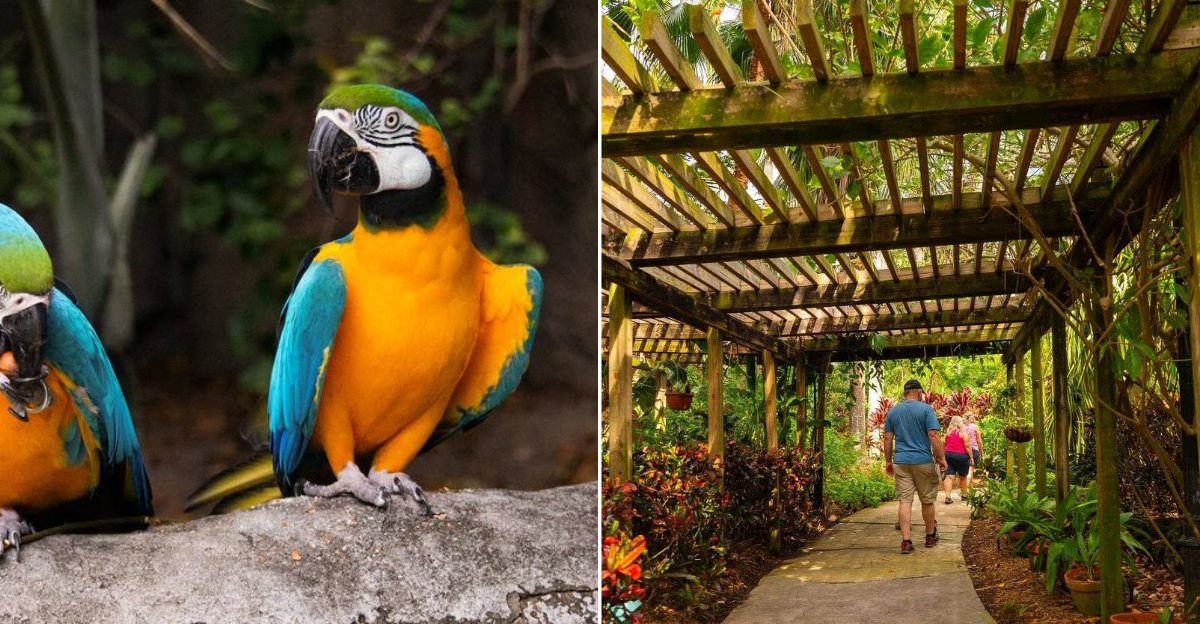
More than a century old, this four-acre sanctuary has been patiently softening the city’s edges and inviting visitors to slow down. The whole garden rests in a natural bowl, so every path leads you downward, under palms that weave a canopy of shade, around pools where lilies float and dragonflies hover.
It’s compact enough that you can wander it in a single afternoon, but layered with stories, history, and living color that reward every pause. Here’s what makes this old Florida retreat worth sinking into.
Over A Century Of Quiet
There’s a stillness in these gardens that feels earned, the kind that only comes with age. You walk under shade that’s been tended and loved for over a hundred years, and the hush seems thicker than in a newer park.
The place began when George Turner Sr. drained a sinkhole in 1903 and started planting. What began as a hobby grew into one of Florida’s earliest attractions.
I found myself slowing down without trying. The longer history sinks in, the gentler your pace becomes.
A True Hidden Bowl
Trails don’t just guide you forward here, they carry you down. The whole garden sits inside a natural sinkhole, a sunken pocket that feels tucked away from the world above.
Pools sparkle below street level, waterfalls echo, and the city is suddenly somewhere else entirely. The depression dates back thousands of years, but people only discovered its potential when settlers saw the lush growth it encouraged.
Turner seized on that advantage, planting what thrived in the sheltered bowl. Wear shoes you don’t mind taking down and back up again, the slopes are mild, but you’ll want to wander every curve.
Flamingos Under The Palms
A flash of coral feathers between glossy fronds catches you before your brain catches up: flamingos. A resident flock of Chilean flamingos struts with theatrical precision, their long necks moving like dancers under the palms.
The vibe here shifts instantly, suddenly the garden feels playful, exotic, even a little surreal. They chatter, they preen, and they make the quiet pathways feel staged for spectacle.
I honestly lingered longer here than I expected. Watching them interact felt like being dropped into a different continent without leaving St. Pete.
50,000-Plus Plants
The numbers don’t lie: more than 50,000 plants crowd into these four acres, and every turn seems determined to surprise you with another shade of green.
Giant rubber plants tower over the trails, while delicate orchids peek out of tucked corners. This lush collection grew steadily after Turner’s first plantings, with new species arriving through decades of careful cultivation.
Some of the originals are still standing, giving the garden a layered, time-travel feeling. Look up often; the tallest specimens are easy to miss if your eyes stay at ground level.
Easy Planning
The rhythm of the garden is shaped by its hours. Monday through Saturday it opens at 10:00, but Sundays begin later at noon. Closing time is 4:30, and the gate shuts at 4:00 sharp.
These hours echo its long history as a roadside stop, limited, deliberate, inviting you to plan. It’s not about marathon visits; the garden knows its worth in a few careful hours.
I came early in the day, and the way sunlight streamed through the palms made the whole place glow. Mornings are my pick.
Give It Two Hours
A visitor might guess it’s a quick stroll, but most end up staying closer to two hours. That’s enough time to weave through the paths, peek into the History Center, and browse the small gift shop at the end.
This habit has been observed for years, enough to become the garden’s unofficial timing. Guides mention it casually, as if it’s just how the place works.
I liked that it wasn’t rushed. For me, it felt like an unhurried pause in the middle of St. Pete, not an obligation.
Map In Hand
At the entrance, a folded map waits, marked with koi bridges, waterfalls, and pollinator beds. It feels almost old-fashioned, the kind of paper you tuck in a pocket and unfold under a palm.
The garden’s history is tied to these points of interest, features added over decades to keep visitors curious.
What began as a sinkhole with plants became a layered landscape of bridges and themed corners. Let the map guide you once, then explore without it. Getting “lost” here is part of the charm.
Peaceful Photo Corners
The sound of dripping water mixes with the rustle of palms, and suddenly you see it, the kind of view that begs for a photograph. Water lilies spread across mirrored pools, and ferns drape like a stage curtain.
This atmosphere wasn’t accidental. Early caretakers designed scenes that felt painterly, perfect for postcards and visitors’ cameras. That tradition lingers, but the serenity is real.
I stopped more than once just to frame a shot on my phone. Not for posting, but because it felt good to hold the stillness.
Birds Beyond Flamingos
Not all the feathered residents are pink. Listen carefully and you’ll hear parrots calling from shaded perches, their colors as loud as their chatter. Some are rescues, given a second life among palms and ponds.
The presence of these birds stretches the garden’s story. It’s not only a botanical museum but also a sanctuary for living creatures who needed a home. Visitors seem delighted by this surprise.
I liked stumbling on them unexpectedly, it felt like the garden was offering up secrets, one corner at a time.
City Oasis, Simple Address
It’s almost funny how easy it is to find: 1825 4th Street North, just a few minutes from downtown St. Petersburg. Cars rush by outside, but inside, it feels like a pause button has been pressed.
The land once seemed ordinary, just another sinkhole lot, but it turned into one of the city’s earliest attractions. Its survival proves how much locals value this patch of green.
If you’re staying near downtown, skip the drive to a faraway park. This sanctuary is right there, hiding in plain sight.
Old Paths, Gentle Pace
Brick and shell walkways wind quietly through the trees, their unevenness telling you they’ve been here a long time. You can sense the garden wants you to slow down, matching its rhythm.
Some paths were laid down decades ago, and not every part has been updated. That history is part of the charm, though it does mean ADA access isn’t available everywhere.
I liked the way the uneven steps forced me to be present. Instead of rushing, I walked like I was carrying something fragile, my own attention.
One Of Florida’s Originals
Before theme parks took over the state, travelers came to see places like this. Sunken Gardens was one of the quirky roadside stops where you marveled at flamingos and exotic plants.
The garden has outlasted countless other attractions, its survival tied to city stewardship and community pride. It’s not retro kitsch; it’s a landmark with roots.
There’s something grounding about walking through a living piece of Florida history. I couldn’t help but feel a little nostalgic for an era I never even lived through.
Family-Friendly Stop
Parents exhale the moment they see shaded boardwalks and short loops, knowing this isn’t a marathon walk. Kids race toward koi ponds, leaning over railings to watch the ripples, while grandparents settle onto benches nearby.
Generations have done the same since the gardens opened, which is why it remains a local favorite for mixed-age groups. It’s built for togetherness, not endurance.
I liked watching families share the space. Everyone seemed to find their own rhythm, and somehow it all worked in harmony.
Small, Perfectly Sized
Four acres doesn’t sound huge, but once inside, it feels exactly right. The scale allows you to see nearly everything without hurrying, and details stand out in a way they might not in a sprawling park.
This size is intentional, dating back to when roadside attractions had to be engaging but manageable. The design rewards attention to small things: a curled fern, a ripple across a pond.
Tip: give yourself permission to slow down. The garden won’t exhaust you, it’ll reset you.