
This Wyoming Desert Oasis Feels Like A Scene From A Different Planet
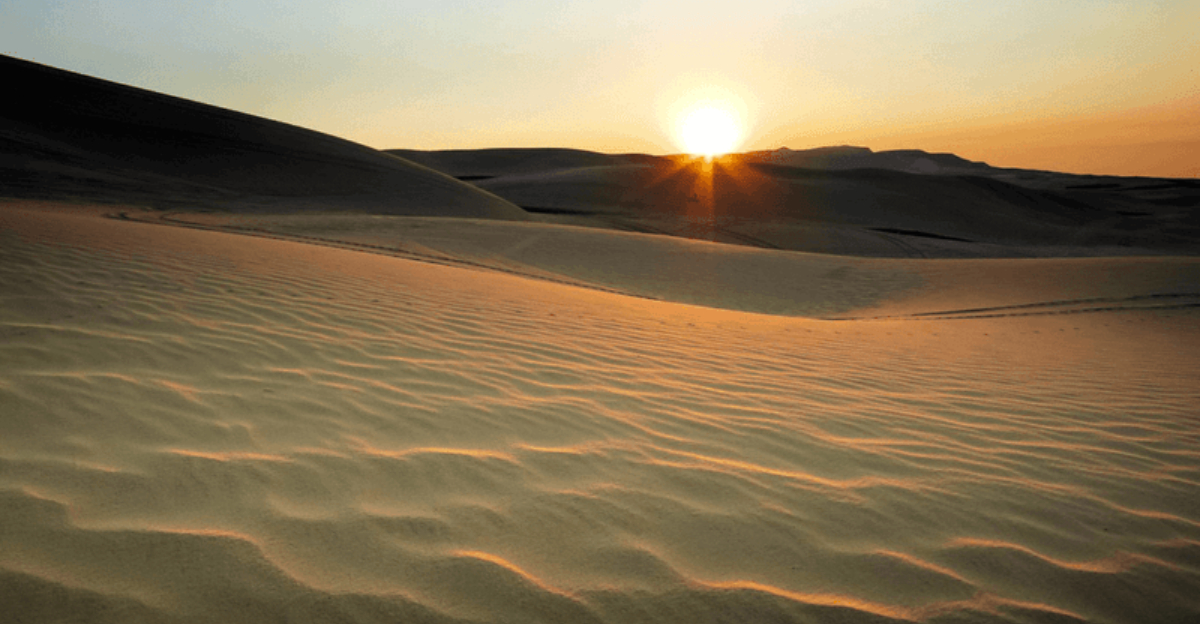
I’ll never forget the first time I drove through Wyoming and stumbled upon what looked like the Sahara had been dropped right into the American West — the Killpecker Sand Dunes near Rock Springs.
Most people picture Wyoming as a land of mountains, cowboys, and endless prairies, but hidden in the state’s southwestern corner lies something completely unexpected — a massive desert full of towering sand dunes that feel absolutely otherworldly.
This strange and beautiful oasis, anchored by the volcanic spire of Boar’s Tusk, is the kind of place that makes you question whether you’ve accidentally wandered onto another planet, and trust me, it’s worth every mile of the journey to see it for yourself.
A Hidden Ocean Of Sand In The Heart Of Wyoming
Picture this: you’re driving through classic Wyoming terrain when suddenly, massive waves of golden sand appear on the horizon like some kind of desert mirage. The Killpecker Sand Dunes stretch across nearly 110,000 acres, making this one of the largest active dune fields in North America. Nobody expects to find a legitimate desert in a state famous for Yellowstone and the Grand Tetons.
The contrast is absolutely mind-blowing. One minute you’re surrounded by sagebrush and prairie grass, and the next you’re staring at towering dunes that could pass for the Arabian Desert. The sand shifts and changes with every windstorm, creating an ever-evolving landscape that never looks quite the same twice.
Locals joke that Wyoming wanted to collect all the landscapes, so it threw in a desert just for kicks.
The Mysterious Origins Of The Killpecker Dunes
Ever wonder how a massive desert ended up in the middle of cowboy country? The story goes back thousands of years to a time when ancient lakes dried up and powerful winds began their endless work. Volcanic activity in the region contributed ash and minerals that eventually broke down into the fine, golden sand you see today.
Wind is the real artist here, constantly sculpting and reshaping the dunes into dramatic peaks and valleys. The prevailing westerly winds push the sand eastward, sometimes moving dunes several feet in a single year. Geologists get positively giddy studying this place because it’s like watching Earth’s natural processes in fast-forward.
The name “Killpecker” comes from a nearby creek, though the origin of that peculiar name remains hotly debated among historians and locals alike.
Boar’s Tusk: Wyoming’s Towering Desert Sentinel
Rising 400 feet from the desert floor like some ancient alien monument, Boar’s Tusk is hands-down the most striking landmark in the entire area. This volcanic plug is all that remains of an extinct volcano, with the softer surrounding rock having eroded away over millions of years. It genuinely looks like something you’d see in a sci-fi movie set on Mars.
I remember parking my truck and just staring at this thing for a solid ten minutes, trying to wrap my head around how impossibly out-place it seemed. The dark volcanic rock contrasts sharply with the pale sand dunes, creating a visual that photographers absolutely lose their minds over. Native American tribes considered this formation sacred, and honestly, standing beneath it, you can understand why.
Climbers occasionally attempt to scale it, though it’s a technical challenge that requires serious skill.
Where Silence Speaks Louder Than Sound
The quiet here is something you feel in your bones. Modern life bombards us with constant noise—traffic, phones, conversations, machinery—but out in these dunes, silence becomes almost tangible. Your ears actually ring a bit at first because your brain isn’t used to processing actual nothingness.
Standing alone on a dune crest, you might hear the whisper of wind across sand or the distant cry of a hawk, but that’s about it. There’s something deeply meditative about this kind of isolation. I’ve seen people come here stressed and frazzled, only to spend an hour sitting in the sand and emerge looking like they’ve had the best therapy session of their lives.
The absence of sound lets your thoughts settle and clear in ways that rarely happen in our noisy world.
Wildlife That Defies The Odds
You’d think a harsh desert environment would be nearly lifeless, but nature has other ideas. Pronghorn antelope bound across the dunes with surprising grace, perfectly adapted to the extreme temperatures and sparse vegetation. Hawks and eagles circle overhead, hunting for the rabbits and rodents that have carved out existences in this unlikely habitat.
Even the plant life impresses with its sheer determination. Hardy desert grasses, sagebrush, and wildflowers somehow thrive where you’d swear nothing could survive. During spring, if you’re lucky, you might catch a brief explosion of color when desert blooms appear after rare rainstorms.
Watching a lizard scurry across sun-baked sand or spotting coyote tracks at dawn reminds you that life finds a way, even in the most inhospitable places imaginable.
The Unexpected Color Palette Of The Desert
Most people think deserts are just endless beige, but Wyoming’s dunes surprise you with an unexpected range of colors. The sand itself shifts from pale cream to deep gold depending on the time of day and angle of sunlight. Volcanic rocks add dramatic blacks and deep reds to the palette.
During different seasons, the surrounding vegetation contributes greens, silvers, and even purples when certain wildflowers bloom. Sunrise and sunset transform everything into shades of orange, pink, and lavender that seem too vivid to be real. I’ve seen photographers literally weep with joy at the color combinations nature casually throws together here.
The sky contributes its own drama too—brilliant blues on clear days, or moody grays when storm clouds roll in from the mountains, creating contrast that makes your jaw drop.
A Stargazer’s Paradise Like No Other
Light pollution has stolen the night sky from most Americans, but not out here. The nearest towns are small and distant, meaning darkness falls completely when the sun sets. On a clear, moonless night, the stars appear so densely packed that the sky looks almost white in places.
The Milky Way arches overhead with such clarity that you can easily spot its dust lanes and bright core. Meteor showers become spectacular shows, with shooting stars streaking across an unobstructed horizon. I’ve spent entire nights lying on my sleeping bag, watching satellites drift by and trying to spot constellations I’d only read about.
Astronomy clubs occasionally organize star parties here, setting up telescopes and sharing views of planets, nebulae, and distant galaxies that urban dwellers never get to see properly.
The Eerie Beauty Of Desert Mirages
Summer afternoons bring temperatures hot enough to create genuine mirages, and experiencing one feels like stepping into a cartoon. The heated air creates shimmering waves that distort distant objects, making rocks appear to float and flat surfaces look like pools of water. Your brain knows it’s an optical illusion, but your eyes insist otherwise.
Walking across the dunes during peak heat, you’ll see the landscape waver and dance in ways that feel genuinely surreal. Distant mountains seem to hover above the horizon, and fellow hikers appear stretched or compressed depending on atmospheric conditions. It’s disorienting and fascinating in equal measure.
The phenomenon happens because light bends as it passes through air layers of different temperatures, creating the visual trickery that has confused desert travelers for millennia.
Ancient Footprints In Modern Sand
Humans have wandered these dunes for thousands of years, leaving behind traces of their passage. Archaeological surveys have uncovered evidence of ancient Native American camps, including stone tools, pottery fragments, and fire pits dating back millennia. These artifacts remind us that what seems inhospitable to modern visitors was once home to people who thrived here.
Petroglyphs on nearby rock formations tell stories we can only partially decipher, depicting animals, geometric patterns, and mysterious figures. Pioneers crossing Wyoming in covered wagons sometimes passed through this area, leaving their own marks in the form of wagon ruts still visible in places where sand hasn’t covered them.
Respect for these historical treasures is crucial—take only photos, leave only footprints, and report any artifacts to authorities rather than disturbing them.
Why Locals Call It Wyoming’s Otherworldly Escape
Ask any Wyoming local about the Killpecker Dunes, and you’ll see their eyes light up with a kind of knowing smile. This place represents an escape from everyday reality, a landscape so different from typical Wyoming scenery that visiting feels like a mini-vacation to another planet. Ranchers and oil workers come here to clear their heads and remember why they love this wild state.
There’s something profoundly peaceful about a place that feels timeless and untouched by human chaos. The dunes existed long before we arrived and will continue shifting and changing long after we’re gone. Standing on a dune crest with nothing but sand, sky, and silence, you feel simultaneously insignificant and deeply connected to something larger.
It’s Wyoming’s secret masterpiece, proof that this state contains multitudes beyond what most tourists ever discover.