
This Montana Desert Oasis Shimmers In The Middle Of Nowhere
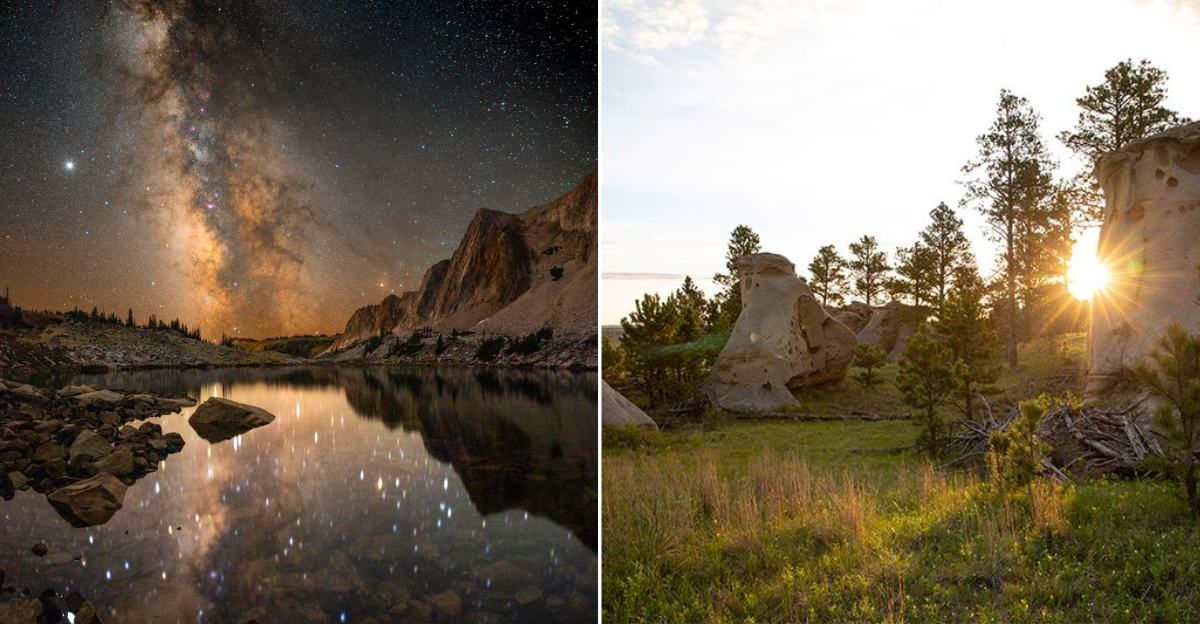
In the far corner of southeastern Montana, Medicine Rocks State Park rises unexpectedly from open prairie, a cluster of sandstone formations that look more like another world than a roadside stop. Hoodoos tower over the grass, their honeycombed walls shifting with every angle of light, shaping tunnels, alcoves, and wind-worn spires.
Walking among them feels like moving through a natural cathedral, each turn revealing a different pattern carved by centuries of weather. When night falls, the prairie quiet deepens, and the sky opens so wide it startles.
Designated an International Dark Sky Sanctuary, this place blends geology and stargazing into one rare experience. Remote, quiet, and humbling, it lingers long after you’ve left its trails behind.
Hoodoos Etched By Wind And Time
The pillars rise like sculptures, riddled with pockets and ledges, some tall enough to cast long morning shadows across the prairie. Each one feels different, like a gallery of stone.
Formed by millions of years of erosion, these hoodoos hold signatures of Montana’s geologic past. Layers of sandstone have been worn into bizarre and beautiful shapes.
Visitors wander through them slowly, cameras ready. I remember brushing my hand along a weathered groove, feeling time itself pressed into stone.
International Dark Sky Sanctuary Skies
Once the sun slips below the horizon, stars take over. The Milky Way arcs sharp and bright across a sky unbroken by city glow.
Medicine Rocks is designated as an International Dark Sky Sanctuary, one of the few worldwide. That status highlights both the quality of the night and the rarity of such darkness.
Astronomers and casual stargazers alike set up tripods in the prairie grass. It’s a place where you finally understand the weight of the word “infinite.”
Day Use Sunrise To Late Evening
The park opens early, catching first light as it hits the towers. Morning glow shifts the stone from cool gray to gold.
Day-use hours stretch until late evening, giving plenty of time to wander the loops, picnic, or watch sunset bleed into starlight.
Regulars say sunrise is best. The formations look sharper in that angled light, and the prairie feels alive with bird calls and breeze.
Primitive Camps Tucked Among Towers
Campsites hide between the rocks, sheltered from wind and open enough to see the stars above. Fire rings and flat ground make them simple but inviting.
These primitive sites suit tents and small rigs. Reservations aren’t required, but space can fill quickly in summer.
I camped here and woke to sandstone glowing pink in the dawn. It felt like living inside a cathedral carved not by hands but by time.
Year-Round Drinking Water On Site
A practical touch balances the remoteness: drinking water stays available all year. It’s a small but crucial convenience in prairie country.
For campers and hikers, filling bottles here means fewer supplies to haul in. It makes longer stays possible without constant resupply.
Travelers still bring extras, but knowing water’s on hand keeps the park accessible. It’s one of the reasons the site feels welcoming, not forbidding.
Easy Loops Through The Formations
Trails curl gently around and through the rocks, weaving short loops that connect pillars and pockets of prairie. Distances are modest, accessible to most walkers.
These paths highlight variety: one moment you’re under towering hoodoos, the next in open grassland with sweeping views.
I liked how unhurried it felt. There’s no pressure to conquer mileage—just time to notice lichen patterns, bird calls, and the echo of your footsteps on stone.
Wildlife From Pronghorn To Mule Deer
In the quiet hours, animals emerge. Pronghorn graze at the edges, mule deer step carefully between towers, and meadowlarks call overhead.
The park’s mix of prairie and rock creates habitat for species that thrive in both open grass and sheltered nooks.
Standing still, I once caught sight of a pronghorn silhouetted against the formations. The pairing of animal and stone made the landscape feel timeless.
Picnic Tables In Wind-Sheltered Nooks
Wooden tables tuck into alcoves between rocks, shaded and protected from gusts that sweep the prairie. They make for cozy lunch spots.
It’s a simple setup, but the contrast of packed food against wild scenery makes eating here feel special.
Families often linger in these pockets. Kids climb nearby while parents sip coffee, the rock walls creating a natural playground.
Address Pin Right Off Highway 7
The entrance sits just off Highway 7, north of Ekalaka. Signs point the way, but the sudden shift from flat prairie to rock maze feels surprising.
The short turnoff makes the park accessible even for travelers passing through. It doesn’t demand a long detour.
Locals say the ease of access is part of its charm, remote in feeling but not in reach.
Small Crowd, Big Horizons
Unlike larger Montana parks, crowds here stay thin. Even in peak season, you’ll find wide spaces empty and trails mostly yours.
The horizons stretch forever, broken only by towers and the occasional cottonwood. That emptiness becomes part of the attraction.
For me, the solitude amplified every detail, the crunch of gravel, the whistle of grass, the silence between gusts. It’s the kind of quiet that feels rare.
Tribal History Written In The Stone
Petroglyphs and inscriptions mark some of the formations, reminders of the long presence of Native peoples in the region. These carvings tie human history into the rock itself.
Tribal traditions identify Medicine Rocks as a sacred space, a place for prayer and connection with the land.
Visitors are encouraged to observe with respect. Standing before those markings, I felt the continuity of lives that had moved here long before mine.
Roosevelt’s “Fantastically Beautiful” Praise
In 1883, Theodore Roosevelt visited and called Medicine Rocks “as fantastically beautiful a place as I have ever seen.”
That description has echoed through time, often quoted in guides and histories. It situates the park in both natural and cultural heritage.
Roosevelt’s words still resonate. Reading them while standing among the pillars feels like sharing an observation across a century.
Pack In, Pack Out: Keep It Pristine
There are no trash facilities here. Visitors are expected to carry everything back out.
This system protects the park’s fragile ecosystem and keeps the formations free of litter.
Most travelers take it seriously. I noticed how clean the site felt, proof that visitors value its preservation.
Check FWP Updates Before You Roll
Montana Fish, Wildlife & Parks maintains the site. Their updates cover road conditions, seasonal access, and any closures.
Because weather shifts quickly in prairie country, these notices can save a wasted trip.
Travelers in the know check online before leaving. It’s a small step that ensures the adventure goes smoothly.