
This Hidden California Beach Town Feels Like The Coast Locals Wish Stayed A Secret
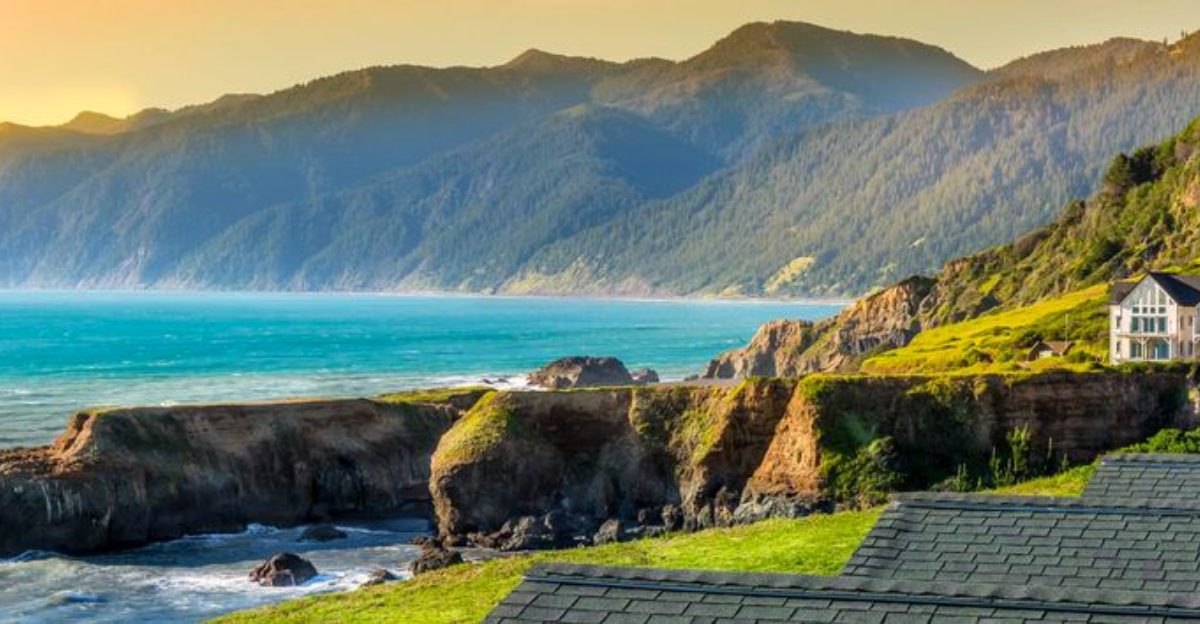
I stumbled into Shelter Cove by accident three summers ago, taking what I thought was a shortcut that turned into a twenty-mile twist through mountains and fog.
By the time I rolled into this tiny village – black sand underfoot, ocean roaring, not a chain store in sight – I understood why locals guard it like a family recipe.
Tucked along California’s Lost Coast, Shelter Cove refuses to play by the usual beach-town rules: no boardwalk, no crowds, no cell signal strong enough to post your sunset shot in real time.
It is the antidote to everything overdeveloped, and once you arrive, you will see exactly why people hope it stays off the radar.
Where It Is – and Why It Still Feels Secret
Shelter Cove occupies a sliver of coastline so wild that Highway 1 gave up and curved inland decades ago.
The village perches at the edge of the King Range National Conservation Area, hemmed in by the Pacific on one flank and steep, forested ridges on the other.
Managed largely by the Bureau of Land Management, the area remains free of resort sprawl and tourist traps. That isolation is both a blessing and a badge: you will not find a Starbucks or a souvenir shop hawking shell magnets.
Instead, you get quiet trails, tide-sculpted rocks, and the kind of solitude that makes you check your watch twice because time moves differently here.
Getting There Is Half the Spell
From US-101 near Redway, a narrow ribbon of asphalt climbs into the King Range, then plunges roughly 2,000 feet in about twenty-one miles.
Locals call it a descent into another world; I call it the best argument for slowing down and cracking the windows.
Hairpin turns reveal glimpses of ocean far below, and the air shifts from redwood-cool to salt-laced as you drop. A small airstrip exists for pilots, but most visitors arrive by car, which keeps traffic light and expectations honest.
That winding approach filters out the hurried and rewards the curious.
The Black-Sand Shore You’ll Have to Yourself
Black Sands Beach stretches beneath the bluffs at the north edge of town, its dark, mineral-rich sand a stark contrast to the white-foam breakers rolling in. On most days, you will share it with gulls and the occasional backpacker starting the Lost Coast Trail.
Tide windows matter here: some trail sections flood at high water, so consulting a tide table before long walks is not optional. I learned that the hard way when a sneaker wave soaked my boots halfway through what I thought was a casual stroll.
Stick to short out-and-backs if the surf looks rowdy.
A Lighthouse With Nine Lives
Mal Coombs Park hosts the Cape Mendocino Lighthouse, which spent its first century on a windswept headland thirty miles north before being dismantled, with the lantern flown by helicopter and the rest transported by truck, and reassembled here in 1998.
It opened to visitors in 2000, and now it stands watch over picnic benches and tidepool basins instead of shipping lanes.
The compact tower is not towering – more cottage than castle – but its story of survival and second chances makes it worth a visit. Kids love scrambling the nearby rocks at low tide, and the views stretch far enough to make you forget your phone exists.
Easy Day Hikes, Big Horizons
You do not need a multiday permit or a forty-pound pack to taste the Lost Coast’s drama.
Short trails spur off the Beach Road/Humboldt Loop area and the Black Sands trailhead, delivering cliff-edge panoramas, tidepool nooks, and that signature feeling of standing at the continent’s ragged edge.
Bureau of Land Management signs remind hikers to respect tide schedules and fragile dunes. I once spent an hour photographing sea stacks from a rocky outcrop, and the only company I had was a harbor seal bobbing in the kelp.
Bring layers; the wind can shift from calm to brisk in minutes.
Eat and Unwind Like a Local
After a day of salt air and scrambling over rocks, follow the hum of voices to Gyppo Ale Mill, the village’s de facto living room.
It is one of the few gathering spots where hikers, pilots, and year-round residents swap stories over plates of fish and chips or burgers that actually taste like someone cared.
The menu is straightforward, the portions generous, and the vibe refreshingly unpretentious. I sat at the bar once next to a woman who had flown her Cessna in that morning and a couple who had just finished a three-day backpack.
Fog drifted past the windows, and nobody checked their watch.
Small Inns, Big Views
Both the Inn of the Lost Coast and Shelter Cove Oceanfront Inn offer rooms that hang over the water, with private balconies built for watching pelicans skim the surf and stars punch through the coastal dark.
Mornings arrive slowly here: coffee in hand, salt breeze ruffling your hair, no alarm clock required.
The sound of waves replaces white-noise machines, and if you wake early enough, you might catch the fog peeling back to reveal a horizon so sharp it looks drawn in ink.
I stayed two nights and extended to four because leaving felt like breaking a spell.