
The Forgotten Gold Rush Village In California That Feels Trapped In The 1800s
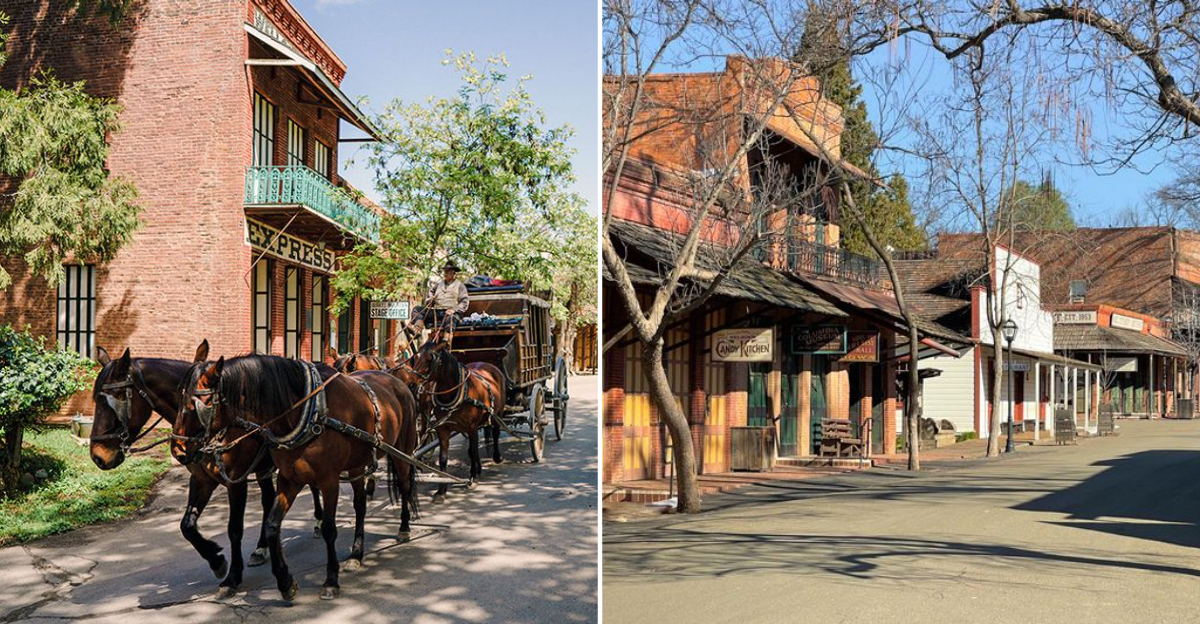
Tucked away in California’s Sierra Nevada foothills lies a place where time stands still and the 1850s come alive.
Columbia State Historic Park preserves one of the most authentic Gold Rush towns in the West, complete with dusty streets, wooden sidewalks, and buildings that have witnessed over 170 years of history.
This living museum offers visitors a chance to step back in time and experience what life was really like when fortune seekers flocked to California in search of gold.
Take A Stagecoach Ride
Climb aboard an authentic stagecoach pulled by actual horses and feel the rumble of wooden wheels on the same roads miners traveled generations ago. The driver shares tales of outlaws and prospectors while you bounce along Main Street.
Kids absolutely love this experience because it beats any theme park ride when it comes to authenticity. You can almost imagine Jesse James appearing around the corner.
Reservations fill up fast during summer weekends, so arrive early or book ahead. The ride lasts about ten minutes and costs just a few bucks per person.
Pan For Gold
Grab a pan and swirl water around like the forty-niners did when California fever gripped the nation. Staff members teach you the proper technique at outdoor troughs fed by running water.
Whatever tiny flakes or nuggets you find are yours to keep in a small vial. My nephew found three flakes on his first try and still carries that vial in his backpack two years later.
The whole process takes about twenty minutes and costs around five dollars. Even if you only find specks, the thrill of discovering real gold never gets old.
Watch The Blacksmith Work
Sparks fly and metal rings against the anvil as the blacksmith demonstrates skills that built the Old West. Using tools and techniques from the 1850s, he shapes horseshoes, nails, and decorative pieces right before your eyes.
The heat from the forge hits you the moment you step inside the shop. You can ask questions between hammer strikes, and most smiths love explaining their craft to curious visitors.
This free demonstration runs several times daily during peak season. The finished pieces sometimes go up for sale in the adjacent gift area.
Make Your Own Candles
Roll up your sleeves at the soap and candle shop where you can hand-dip your own tapers the old-fashioned way. The process involves repeatedly dipping a wick into warm wax until layers build up into a proper candle.
Patience pays off here because rushing means uneven candles that look lumpy. Staff members guide you through each dip and explain how families once relied on candlemaking for basic lighting needs.
The activity costs a small fee and takes roughly thirty minutes from start to finish. Your finished candles make perfect souvenirs or gifts that actually smell amazing.
Bowl At The Historic Alley
Lace up some rental shoes and try your hand at bowling on lanes that have entertained visitors since Gold Rush days. The pins get reset by hand, and the scoring happens with pencil and paper just like great-grandpa did it.
Forget automatic ball returns and digital screens. Here you chase down your own ball and do the math yourself, which somehow makes strikes feel more satisfying.
Open during select hours, the alley charges per game and shoe rental. Call ahead to confirm operating times before making special plans around this quirky attraction.
Meet Costumed Interpreters
Shopkeepers, miners, and tradespeople dressed in period clothing populate the streets and share skills passed down through generations. They stay in character while answering questions about everything from cooking to currency.
One interpreter taught me how to identify real gold versus fool’s gold using a simple scratch test. Another explained why women wore so many layers despite California’s heat.
These volunteers bring history to life better than any textbook ever could. Scattered throughout town, they make every corner worth exploring for spontaneous lessons and entertaining stories about frontier life.
Explore Gold Rush Buildings
Columbia boasts California’s largest collection of surviving Gold Rush structures, many built with imported brick that cost a fortune to haul up the mountain. Wander past the firehouse, schoolhouse, and dozens of commercial buildings that once served thousands of miners.
Wooden sidewalks connect the structures just like they did when Columbia was one of the state’s biggest boomtowns. Peek inside storefronts that still operate using period furnishings and merchandise.
Self-guided walking tours are free and take about an hour. Grab a map at the visitor center to identify significant buildings and their original purposes.
Visit The Fallon Theatre
Catch a live melodrama or musical performance at the Fallon Theatre, where shows run throughout the summer season. Built in the 1880s, this venue hosted everything from Shakespeare to vaudeville acts that entertained rough-and-tumble miners.
Between performances, explore museum exhibits including the Wells Fargo office where gold shipments were once processed and the assay office where ore got tested for purity. Original equipment and documents fill glass cases.
Show tickets cost about twenty dollars and include admission to exhibits. Check the schedule online since performances only run certain months of the year.