
The Hidden Alabama Canyon That Locals Call Their State’s Secret National Park
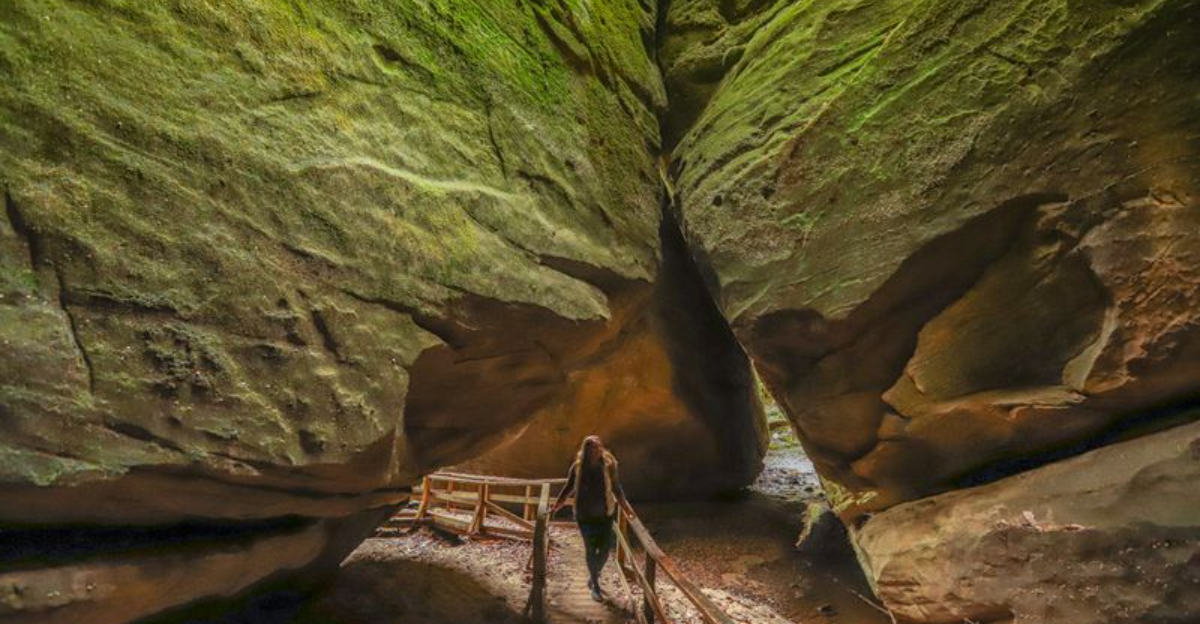
I stumbled across Dismals Canyon on a road trip through northwest Alabama, following a handwritten sign that pointed down a gravel road.
What I found was astonishing: a hidden gorge filled with waterfalls, glowing bugs, and boulder-strewn trails that felt lifted from a fantasy novel. Locals guard this place like a secret handshake, calling it their own national park even though it sits on private land.
This 85-acre canyon holds ancient forests, archaeological mysteries, and bioluminescent magic that transforms ordinary hikes into something unforgettable. Prepare your bags and let’s go on an amazing journey.
A Quiet Gorge That Feels Like a National Park
Dismals Canyon spreads across 85 privately owned acres in northwest Alabama, yet it carries the official title of National Natural Landmark.
That designation means federal recognition of its ecological and geological significance without the crowds you’d find at typical national parks.
House-sized sandstone boulders lean against each other, creating natural rooms and passageways. A clear stream threads through the canyon floor, connecting waterfalls, wooden bridges, and shaded alcoves.
Hemlock branches filter the sunlight into soft green beams. The protected status keeps development away, preserving the wild character that makes visitors forget they’re on private property at all.
Where It Is, How It Works
You’ll find the entrance at 901 County Rd 8 in Phil Campbell, Alabama, tucked into the rural northwest corner of the state. Day hikes along the canyon floor are self-guided, letting you explore at your own pace with a trail map in hand.
After sunset, guided Dismalite Night Tours take over, showcasing the canyon’s famous bioluminescent residents. Admission fees apply for both day and night visits.
Operating hours shift with the seasons, and tour availability changes throughout the year. I learned the hard way to check the schedule online before making the drive, especially if you’re planning a night tour during peak season.
Stone, Water, Time
Sandstone cliffs tower above the canyon floor, their layers recording a Paleozoic past when this region sat beneath ancient seas and swamps.
Tectonic uplift pushed the land skyward, and earthquakes later fractured massive blocks that tumbled into the gorge.
Over millennia, Dismals Branch carved narrow slots and rounded grottos into the rock. Two named waterfalls punctuate the stream’s descent.
Natural bridges span gaps where water once flowed but now arches overhead. Boulder fields create maze-like passages that shift from tight squeezes to cathedral-like chambers.
The geology here tells a story written in stone, water, and millions of years of patient erosion.
Rainbow Falls, Secret Falls, and the Glow After Sunset
Rainbow Falls greets visitors near the canyon entrance, where Dismals Branch tumbles over a rocky ledge into a shallow pool. The falls earned their name from the light that occasionally catches the mist just right.
Downstream, the trail winds through shaded alcoves toward Secret Falls, a quieter cascade tucked behind boulders. After dark, tiny larval flies called dismalites transform the canyon.
Orfelia fultoni larvae glow blue-green on damp rock walls, creating a bioluminescent display that rivals fireflies.
The guided night tours time their walks to catch peak glow hours, and the effect is genuinely magical when hundreds of larvae light up simultaneously.
A Living Relic Forest
The canyon shelters an old-growth forest where Eastern hemlock (also called Canadian hemlock) reaches record sizes. One champion hemlock rises from the canyon floor, its trunk thick enough that three people can barely link hands around it.
Tulip poplars join the canopy, their straight trunks soaring toward filtered light. Botanists have documented remarkable plant diversity here, with micro-habitats supporting specialized mosses and ferns.
Cool, dim conditions prevail even on hot summer days. The forest feels like stepping back centuries, with layered vegetation blanketing every surface.
I spent an hour just photographing the textures: emerald moss, rust-colored bark, and silver lichen painting abstract patterns on stone.
Footprints of Deep Time and Human Story
Archaeological evidence places Paleoamerican peoples in this canyon nearly 10,000 years ago, using its rock shelters for seasonal camps.
Centuries later, Chickasaw and Cherokee groups occupied the same overhangs, leaving traces of their presence in the protected alcoves.
In 1838, U.S. troops used Dismals Canyon as a holding area for Chickasaw people before their forced removal westward on the Trail of Tears. That dark chapter adds historical weight to the canyon’s beauty.
Standing beneath those same rock shelters, I thought about the countless generations who sought refuge in this gorge, each leaving invisible footprints in the stone and soil.
Trail Feel and Safety
The main canyon-floor loop stretches 1.5 miles, but don’t let that modest distance fool you. Stairs descend from the rim to the canyon bottom, and the trail itself winds over roots, rocks, and stepping-stone creek crossings.
Expect to get your feet wet in spots where the stream spreads across the path. Slick surfaces are common, especially after rain or in shaded sections that never fully dry.
Wheelchairs cannot access the canyon floor due to the stairs and uneven terrain. I wore water-friendly hiking sandals and still managed to slip twice on moss-covered rocks, so sturdy footwear that can handle moisture is essential for safe passage.
When to Go and How to Avoid Crowds
Weekday mornings offer the quietest experience, with trails nearly empty and wildlife more active. Weekends and holidays bring larger groups, especially during spring and fall when temperatures are mild.
Night tours fill up fast during peak seasons, so booking in advance is smart if you want to see the dismalites glow. Last admission times vary by day and season, changing with daylight hours.
I made the mistake of showing up on a Saturday afternoon in October without checking the schedule and found myself turned away because they’d reached capacity.
Calling ahead or checking online saves disappointment and wasted driving time through rural Alabama backroads.