
The Spooky Georgia Ghost Tour Locals Say Still Gives Them Chills
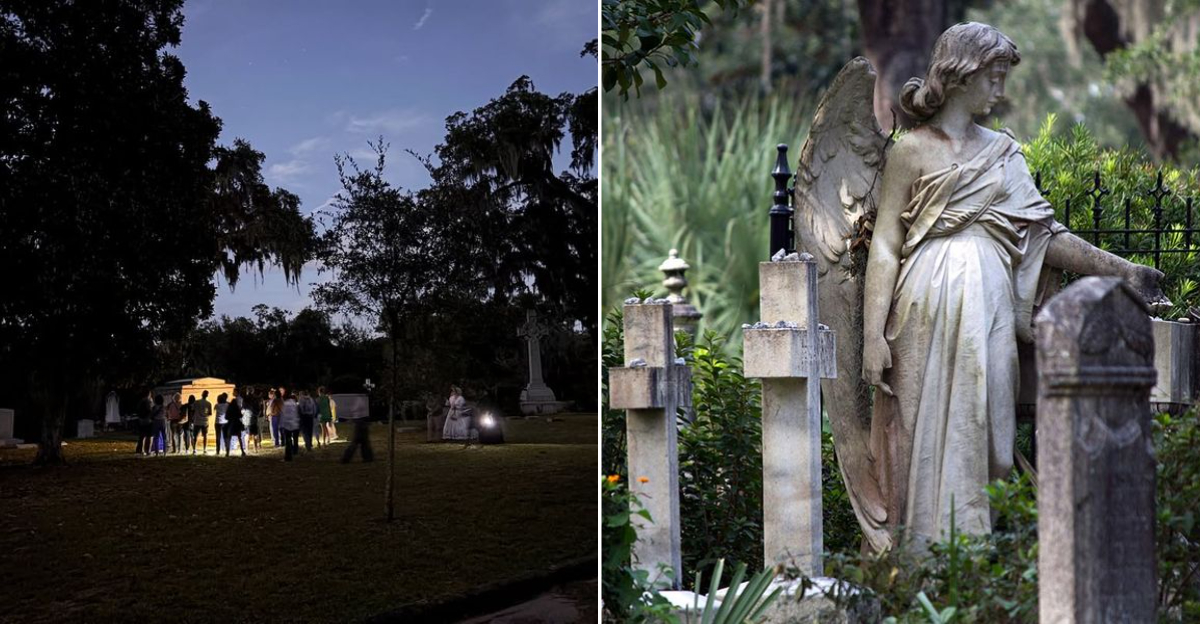
Savannah’s Bonaventure Cemetery transforms into something otherworldly once the sun dips below the horizon. Established in 1846, this historic burial ground sits on a bluff above the Wilmington River and has earned its reputation as one of Georgia’s most haunted locations.
While daytime visitors flock here for its famous connections to Midnight in the Garden of Good and Evil, locals will tell you the real magic happens after dark, when evening tours reveal a side of Bonaventure that makes even lifelong Savannah residents think twice about walking alone among the moss-draped oaks.
The Road In: The Live Oaks Pull You Into Another Century
Turning onto Bonaventure Road feels like crossing an invisible threshold where modern Savannah fades away. The canopy of ancient live oaks closes overhead, their branches twisted into shapes that seem almost deliberate, and suddenly your car is cocooned in green shadow and hanging moss.
When you park and step out, the silence hits you first, thick and expectant. Bonaventure was established in 1846, but the land remembers even older stories.
Your footsteps on the gravel path sound louder than they should. The air smells different here, heavy with river salt and something you cannot quite name, and you realize you have already started whispering without meaning to.
Dusk Changes Everything: The Cemetery Exhales
Gray-blue light replaces the gold of afternoon, and the entire cemetery seems to shift and settle like a living thing finding its preferred position. Spanish moss sways without much breeze, making soft sounds that could be wind or could be something breathing just out of sight.
Damp earth mingles with the brackish smell drifting up from the Wilmington River below. Shadows pool in different places now, deeper and more deliberate, and the monuments take on faces they do not wear during visiting hours.
Your skin prickles, not from fear exactly, but from the sudden awareness that you are standing in a place that belongs more to night than day.
The Guide’s Voice: Stories That Make The Stones Speak
Guide moved through the rows with the ease of someone who knew every name carved into marble. Her voice stayed low, almost conspiratorial, as she wove tales of yellow fever outbreaks and lovers separated by war who supposedly still search for each other among the plots.
One story stopped me cold: a young girl who drowned in the river and whose mother visits her grave every night, rain or shine, leaving fresh flowers that wilt by morning. Whether true or embellished, the guide’s delivery made my pulse quicken.
She paused at certain headstones with a knowing smile, letting silence do half the work, and suddenly every monument felt like it had secrets worth keeping.
Monuments, Secrets, And The Tiny Details That Get Under Your Skin
Bonaventure’s monuments range from simple markers to elaborate sculptures that belong in art museums. Tilted headstones lean like tired sentinels, their inscriptions softened by more than a century of rain, and ironwork gates guard family plots with curlicues that cast strange shadows under your flashlight beam.
The Gaston tomb rises like a small temple, its columns stained with age and lichen. Crouching beside one particular plot, I traced a name with my finger and felt the cold seep through the stone into my palm.
Details you would miss in daylight become hypnotic after dark: a carved lamb missing one ear, initials scratched into marble, wilted roses someone left that morning.
That Moment The Story Caught In Your Throat: A Real Chill I Won’t Forget
Halfway through the tour, standing near a cluster of child-sized graves, the guide told us about a woman in white seen walking this exact path. As if on cue, something rustled in the underbrush behind us, deliberate and close, and every person in our group went rigid.
My friend grabbed my arm hard enough to leave a mark. The guide just smiled and kept talking, but her eyes tracked the darkness over our shoulders. The rustling stopped as suddenly as it started, leaving only our collective held breath.
I still do not know what made that sound, and honestly, I am fine with the mystery staying unsolved.
The Bird Girl And The Book That Brought A Crowd: Why Daytime Fame Doesn’t Ruin The Night
The Bird Girl statue that graced the cover of Midnight in the Garden of Good and Evil made Bonaventure a pilgrimage site for book lovers worldwide. Daytime visitors hunt for photo opportunities and literary connections, crowding the paths with selfie sticks and tour buses.
The statue itself now resides safely at the Telfair Museum downtown, but the spot where she once stood still draws people. After hours, though, the crowds vanish and the cemetery reclaims its quieter identity.
Evening tours skip the celebrity worship and focus on older, stranger stories that predate any bestseller. The contrast makes the night feel like a secret the daytime tourists will never quite access.
Uneven Paths And The Small Gear That Saved The Night
The paths are uneven and the roots turn up like memories tripping you when you’re not looking, so sturdy shoes are not optional. Our walk covered roughly a mile and the tour lasted about two hours, which felt generous enough to slow down and notice details you’d miss in daylight.
Lantern light throws strangely flattering shadows but also hides low branches, so a headlamp or flashlight is helpful if your night vision is still waking up. Accessibility is limited in places because of the terrain, so if mobility is a concern check with the tour operator about route options before you book.
I had a light jacket and comfortable sneakers and I was grateful for both when the temperature dropped and the ground crunched beneath my feet. Small comforts made the whole experience safer and richer.
Why I Left Convinced The Dead Were Only Half The Story
Walking back to the car, I realized Bonaventure’s real power is not just in the graves or ghost stories, but in how the living continue to show up. Fresh flowers appear weekly on plots tended by families generations removed from the original occupants, and the grounds crew maintains the place with obvious reverence.
The natural setting does as much work as any legend: the oaks, the river, the way light filters through at different hours. Savannah treats this cemetery like a living part of the community, not just a tourist attraction.
The last breath of cool night air tasted like salt and earth, and I promised myself I would return, maybe alone next time, to see what the place whispers when no guide is translating.