
The Forgotten Logging Village In Oregon That Feels Trapped In The 1800s
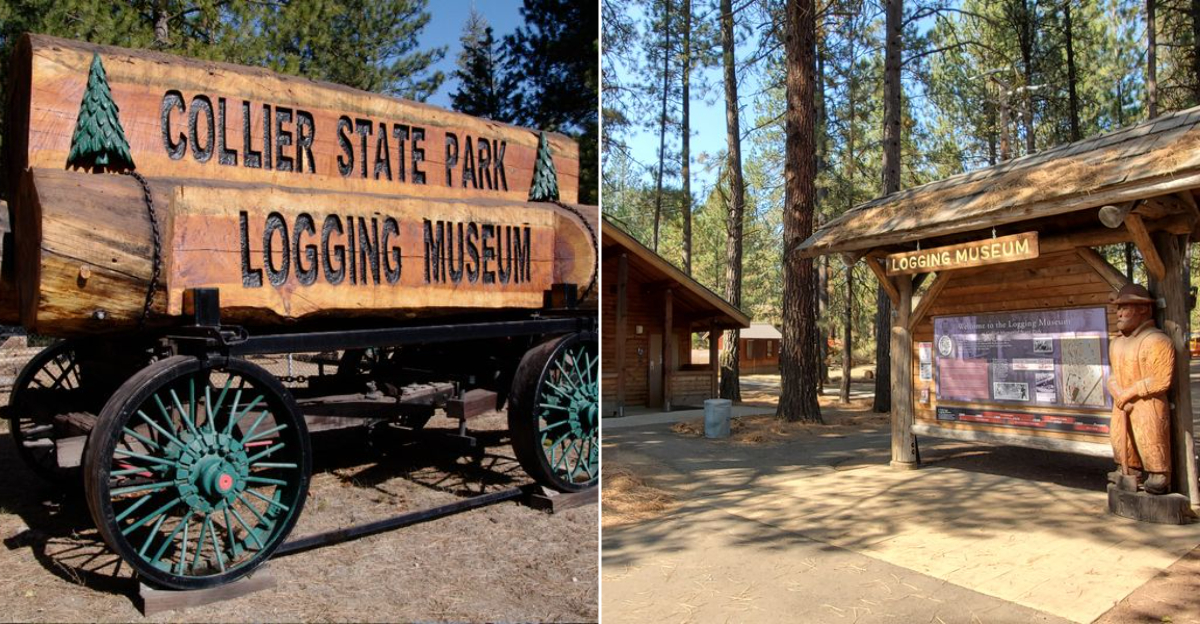
Last summer, I drove down US-97 and stumbled upon something that felt like a portal to another century.
The Collier Logging Museum & Historic Cabin Village at Collier Memorial State Park isn’t your typical roadside stop—it’s a living, breathing tribute to Oregon’s rugged timber past. Between the creaking wagons, the smell of pine in the air, and rows of hand-hewn cabins, you can practically hear the echo of axes biting into old-growth trees.
Every tool and structure tells a story of grit and survival, and as I wandered the grounds, I half expected a flannel-clad logger to tip his hat hello.
Hidden Along a Highway, Frozen in Time
Tucked along US-97 near Chiloquin, the Collier Logging Museum & Historic Cabin Village feels like a secret the highway forgot to mention.
Most people blow right past on their way to Crater Lake, never realizing that a full-blown 1880s timber settlement sits just off the pavement. Tall pines frame the entrance, and the moment you park, the hum of traffic fades into birdsong and creaking wood.
This open-air village isn’t a replica—it’s the real deal. Authentic cabins, barns, and a general store were hauled in from within a hundred-mile radius, reassembled log by log. You’re literally stepping into rooms where trappers slept and doctors stitched wounds by candlelight.
Open Daily and Totally Free to Explore
Budget-friendly adventures are my favorite kind, and this one costs exactly zero dollars. The museum grounds are open every day from 8 a.m. to 4 p.m., and you can grab a free self-guided tour map right from the official state park website. No ticket booth, no turnstile—just park and wander at your own pace.
During summer months, the on-site Cookhouse visitor center and gift shop open up, staffed by volunteers who love sharing stories about the old equipment.
Off-season visits are quieter, which I actually preferred—felt more like I had the whole frontier to myself. Bring your phone or a printed map, and you’re golden.
Real Pioneer Buildings Moved Here Piece by Piece
Walking into the trapper’s cabin, I ran my hand along logs that still bore axe marks from the 1800s.
These aren’t Hollywood sets—they’re ten original structures relocated from homesteads and camps scattered across southern Oregon. Each building tells its own story: a doctor’s cabin with a dusty medicine shelf, a general store stocked with period goods, barns that still smell faintly of hay.
Interpretive panels outside each doorway explain who lived there and how they survived winters without power or plumbing. It’s humbling to imagine families raising kids in twelve-by-fourteen-foot spaces. History books describe frontier life; this place lets you feel the cramped quarters and rough-hewn reality.
Two Trails That Chronicle Logging’s Evolution
Follow the signed loops and you’ll trace the entire arc of Pacific Northwest logging.
The Cut–Move–Mill path showcases hand saws, peaveys, and high-wheel carts that oxen dragged through mud. Around the next bend, the Logging Evolution Trail jumps forward in time: steam donkeys hiss (in your imagination), and hulking internal-combustion loaders rust gracefully under the pines.
Railroad Row is where I lost track of time—actual locomotives, flatcars, and arches line the path like iron dinosaurs. Kids scramble onto footboards while parents snap photos. Each machine represents a leap in efficiency, and together they paint a vivid picture of an industry that built the West one felled tree at a time.
Practical Details Make Visiting a Breeze
Planning your stop is dead simple. The address is 46000 Hwy 97 N, Chiloquin, OR 97624—plug it into your GPS and you’re there.
Day-use parking is free, and the trails are flat enough for strollers or anyone who prefers an easy stroll. I wore sneakers and had no trouble navigating the gravel paths.
Grab the printable walking-tour map from the Oregon State Parks website before you leave home; cell service can be spotty out there. Restrooms are available, and picnic tables dot the grounds if you want to pack a lunch. Donations are welcomed but not required, so toss a few bucks in the box if you loved the experience as much as I did.
Best Times to Visit and Nearby Attractions
Summer and early fall are peak season—volunteers are out in force, and the Cookhouse is buzzing with activity.
But I visited in late September and loved the golden light filtering through the pines, plus I had whole cabins to myself for photos. Spring brings wildflowers; winter adds a hushed, snowy charm if you don’t mind the chill.
Collier sits inside a bigger state park, so after you tour the village, hike down to Spring Creek or cast a line in the Williamson River. Crater Lake is about an hour north, and Jackson F. Kimball State Recreation Site makes a perfect picnic detour. String them together for a full day of Oregon magic.
A Labor of Love That Still Stands Strong
Brothers Alfred and Andrew Collier started this whole thing back in the 1940s by donating land and their personal stash of logging relics.
What began as a passion project grew into one of the finest timber-history collections in the Pacific Northwest. Today, Oregon State Parks manages the site, but volunteers keep the spirit alive—leading tours, cataloging donations, and sharing stories passed down through generations of timber families.
Standing among those towering machines and weathered cabins, I felt grateful someone cared enough to preserve this slice of the past. It’s easy to forget that chainsaws and skidders were once science fiction. This village reminds us where we came from, one hand-forged tool at a time.