
14 Forgotten ’80s Illinois Burgers That Belong Back On Menus
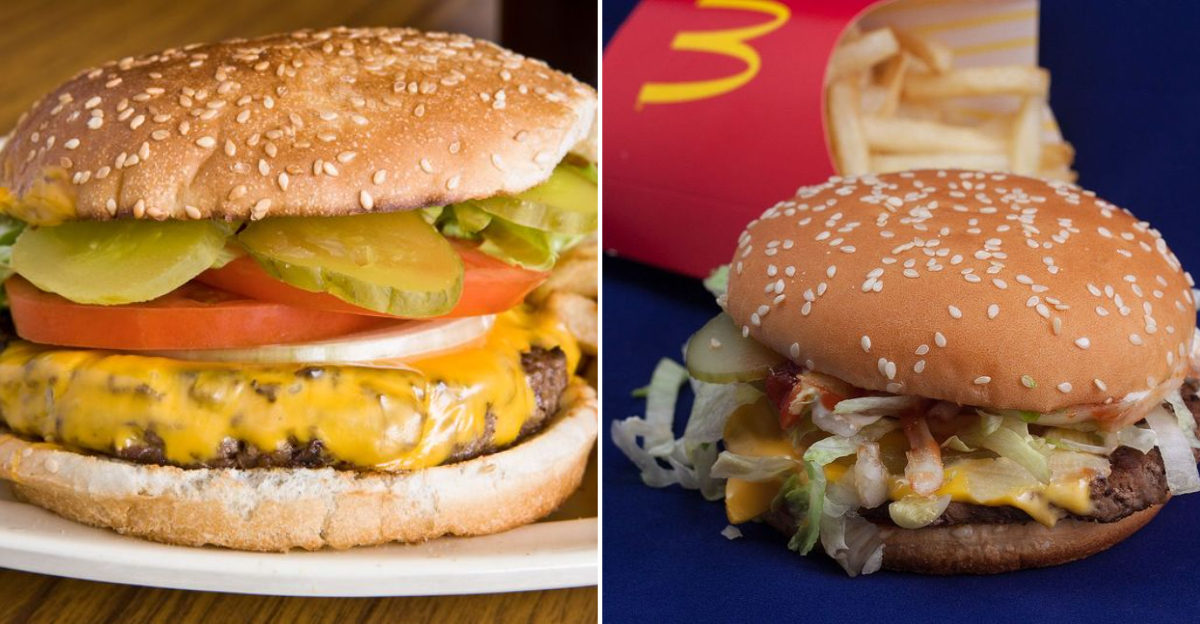
Illinois in the 1980s was a great time to be a burger fan. Fast food chains were testing new ideas, and local diners were building loyal followings around signature creations that regulars still talk about today.
Some of those burgers disappeared when menus got simplified, but the memories stuck around. People still remember the flavors, the wrappers, and the spots that made each bite special.
In Illinois, those old-school burgers weren’t just meals, they were part of everyday life worth bringing back.
1. Mushroom & Swiss, Illinois (Hardee’s)
Hardee’s went upscale with this offering during the burger wars of the ’80s. Sautéed mushrooms and melted Swiss cheese topped a charbroiled beef patty, giving fast food eaters a taste of something fancier without the sit-down restaurant prices.
The charbroiled flavor set Hardee’s apart from competitors using flat-top grills. This burger appealed to adults looking for lunch options beyond basic cheeseburgers.
Some Hardee’s locations still make versions of it, but the original ’80s recipe had a loyal following that remembers it differently.
2. Big Classic, Illinois (Wendy’s)
Wendy’s took aim at the Big Mac with this quarter-pound single-patty burger. Fresh beef, lettuce, tomato, onion, pickles, ketchup, and mayo on a Kaiser roll kept things simple but satisfying.
The marketing emphasized quality over gimmicks. No special sauce or multiple buns, just straightforward ingredients that let the beef shine. Wendy’s founder Dave Thomas appeared in ads promoting it as a return to basics.
The Big Classic stuck around through the early ’90s before Wendy’s replaced it with other premium options that cost more.
3. McDLT, Chicago Area (McDonald’s)
McDonald’s tried something different with this one. They served the hot side hot and the cool side cool in a two-part styrofoam container that kept lettuce and tomato crisp while the burger stayed warm.
The quarter-pound patty came with cheese, pickles, and special sauce. Jason Alexander starred in commercials singing about the divided packaging.
Environmental concerns about the foam clamshell eventually ruined it, but the concept made sense for people tired of wilted lettuce on hot burgers.
4. Super Burger, Chicago (Top Notch Beefburger)
Top Notch Beefburger operated locations around Chicago serving burgers that locals swore by. Their Super Burger packed extra beef with American cheese, grilled onions, pickles, and their signature sauce on a steamed bun.
The family-run chain competed against national brands by keeping quality high. Regulars knew to order it with extra sauce. Most locations closed by the early 2000s, taking the recipe with them.
Old-timers in Chicago still talk about stopping there after high school football games for burgers that tasted nothing like McDonald’s.
5. Double Cheezborger, Chicago (Billy Goat Tavern)
Billy Goat Tavern became famous for more than just inspiring Saturday Night Live skits. Their Double Cheezborger featured two thin beef patties griddled with onions, topped with melted American cheese on a basic bun.
No frills, no vegetables unless you specifically asked. The gruff service became part of the experience. Newspaper reporters and politicians packed the underground location near Michigan Avenue during lunch rushes.
The burger still exists today, but the ’80s atmosphere when Chicago journalism thrived gave it extra character that younger crowds never experienced the same way.
6. Olive Burger, Rockford Area (Beef-A-Roo)
Beef-A-Roo started in Rockford and built a following with unusual toppings. Their Olive Burger combined a beef patty with black olives, mayo, lettuce, and tomato for a Mediterranean twist on the American classic.
The olives divided people into fans and skeptics. Those who loved it became devoted regulars. The chain expanded beyond Rockford but never went statewide, keeping it a regional secret.
The combination sounds odd until you try it, then the salty olives against the beef make perfect sense. Finding it outside northern Illinois remains nearly impossible.
7. Bacon Double Cheeseburger, Illinois (Burger King)
Before bacon became standard on every menu, Burger King made it special. Two flame-broiled patties stacked with American cheese, crispy bacon, ketchup, and mustard delivered serious satisfaction for people with big appetites.
The flame-broiled taste gave it an edge over competitors. At under three dollars, it offered more food than a Whopper for less money.
Burger King eventually phased it out as they shifted focus to premium burgers and chicken sandwiches, leaving bacon lovers with fewer straightforward options on the value menu.
8. Merkts Cheddar Burger, Des Plaines (Paradise Pup)
Paradise Pup earned legendary status among Chicago suburb burger fans. They topped a thick charbroiled patty with Merkts cheddar cheese spread, a Wisconsin product with sharp flavor and creamy texture that melted perfectly over the hot beef.
The tiny stand near Des Plaines attracted lines out the door. Using Merkts instead of regular cheese slices gave it a tangy richness you couldn’t find elsewhere.
Paradise Pup still operates and serves great burgers, but the original Merkts version from the ’80s holds special memories for people who discovered it back then.
9. Hackneyburger, Glenview (Hackney’s On Harms)
Hackney’s on Harms served burgers on dark rye bread instead of buns, making them instantly recognizable. The Hackneyburger featured a half-pound patty with lettuce, tomato, onion, and Hackney sauce between two slices of toasted rye.
The rye bread soaked up juices without getting soggy. Families celebrated birthdays there while regulars claimed favorite booths. The original Glenview location closed in 2021 after decades of service.
Other Hackney’s locations continue, but losing the Harms Road spot felt like losing a piece of north suburban history for people who grew up going there.
10. Cheddar Melt, Illinois (McDonald’s)
Grilled onions made this burger stand out from the usual McDonald’s lineup. A quarter-pound beef patty got topped with melted cheddar, teriyaki sauce, and those caramelized onions, all served on a rye bun instead of the standard sesame seed.
The combination tasted more grown-up than a Big Mac. People who wanted something beyond basic ketchup and mustard appreciated the upgrade.
McDonald’s brought it back briefly in the 1990s, proving folks still remembered it fondly after the original run ended.
11. Whoopercheesie, Chicago (Superdawg Drive-In)
Superdawg became a Chicago institution with its rooftop hot dog statues, but their Whoopercheesie burger deserves recognition too. A quarter-pound patty came with American cheese, pickles, onions, mustard, and their special Superdawg sauce on a toasted bun.
The carhop service made it feel like stepping back to the 1950s even in the ’80s. Families ordered from their cars and ate while parked under the lights. Superdawg still operates and serves the Whoopercheesie, maintaining recipes and traditions that most drive-ins abandoned decades ago for modern efficiency.
12. Char-Grilled Cheeseburger, Chicagoland (Portillo’s)
Portillo’s built its reputation on hot dogs and Italian beef, but their Char-Grilled Cheeseburger held its own. A half-pound patty cooked over open flames came with American cheese, lettuce, tomato, onion, pickles, ketchup, and mustard on a toasted bun.
The char-grilled flavor separated it from steamed competitors. Portillo’s expanded across Chicagoland through the ’80s, bringing the burger to more suburbs.
The restaurant still serves it, though some longtime fans insist the original recipe tasted better before the chain grew into a regional powerhouse with locations across multiple states.
13. Patty Melt, Chicago (Ed Debevic’s)
Ed Debevic’s recreated a 1950s diner with singing waitstaff and attitude. Their Patty Melt featured a beef patty with Swiss cheese and grilled onions on grilled rye bread, served with a side of sass from servers who danced on counters.
The burger tasted as good as the entertainment. Tourists packed the place while locals brought out-of-town visitors for the full experience.
Ed Debevic’s closed its Chicago location in 2015, ending an era of theatrical dining. The Patty Melt represented classic diner food elevated by an atmosphere you can’t replicate at home.