
8 Missouri BBQ Terms That Outsiders Just Can’t Get Right
Missouri barbecue has its own language, and if you’re not from around here, you might as well be reading hieroglyphics.
I learned this the hard way when I first moved to Kansas City and confidently ordered ribs, only to realize I had no clue what half the menu meant.
From burnt ends to snoots, the Show-Me State takes its smoked meat seriously, and the vocabulary that comes with it can leave outsiders scratching their heads.
Whether you’re planning a pilgrimage to a legendary pit or just want to sound like you know your stuff, these terms will help you speak fluent Missouri BBQ.
1. Burnt Ends
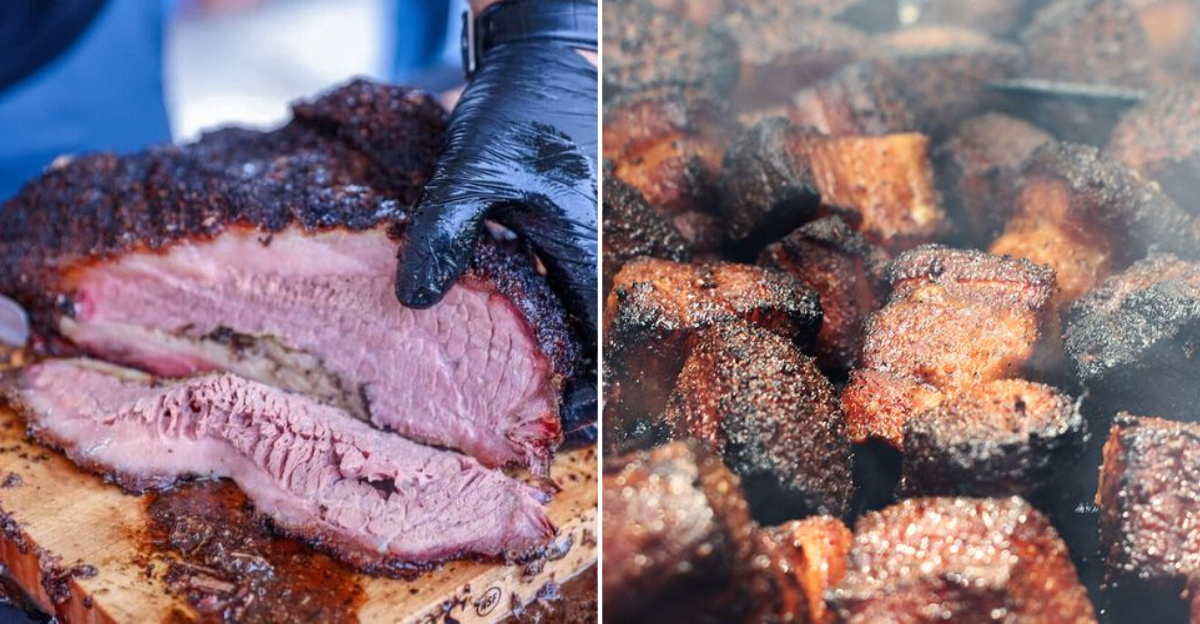
Most folks hear the word “burnt” and think something went terribly wrong in the kitchen. In Missouri, though, burnt ends are pure gold—the crusty, caramelized cubes cut from the point of a smoked brisket. I once watched a tourist send them back, thinking they were overcooked scraps.
Kansas City pitmasters know these fatty, flavorful nuggets are the ultimate prize. They’re tossed back on the smoker, glazed with sauce, and transformed into candy-like bites of heaven. The bark gets crispy, the inside stays juicy, and every piece is packed with smoky perfection.
Outsiders often confuse them with regular chopped brisket or assume they’re mistakes. Real BBQ lovers know burnt ends are intentional masterpieces worth every calorie and every penny you’ll pay for them.
2. Snoots
Snoots sound like something Dr. Seuss invented, but they’re actually pig snouts—and they’re a St. Louis delicacy that’ll make outsiders do a double-take. The first time someone offered me snoots, I thought they were joking until a plate of crispy, fried pig faces appeared before me.
These cartilaginous cuts get smoked low and slow, then deep-fried until they’re crunchy on the outside and tender inside. You’ll find them at old-school joints where tradition trumps trends. They’re usually served with hot sauce and a side of white bread.
Most visitors can’t get past the name or the idea of eating snout. Locals, however, treat them like chips—addictive, salty, and impossible to stop munching once you start your first bite.
3. St. Louis-Cut Ribs
When you order ribs in Missouri, you better know your cuts or risk looking like a total rookie. St. Louis-cut ribs are spare ribs trimmed into a neat rectangular shape, with the cartilage and brisket bone removed for even cooking and easier eating.
I used to think all ribs were basically the same until a pitmaster schooled me on the difference. This cut creates uniform bones that cook consistently and present beautifully on a plate. The trimmed bits don’t go to waste—they often become rib tips, another Missouri favorite.
Outsiders frequently mix them up with baby backs or assume any spare rib qualifies. The St. Louis cut is all about precision and presentation, turning a wild slab into something restaurant-worthy without sacrificing that meaty goodness everyone craves.
4. The ‘Cue
Calling it “the ‘cue” isn’t just lazy pronunciation—it’s a badge of honor that separates insiders from tourists trying too hard. Real Missouri folks don’t waste syllables on “barbecue” when two letters do the trick just fine.
I remember using the full word at my first backyard cookout here and getting friendly ribbing from my neighbors. They corrected me fast: it’s always “the ‘cue,” whether you’re talking about the food, the restaurant, or the weekend plans. It rolls off the tongue with the same ease as sweet tea on a summer afternoon.
Outsiders either over-pronounce it or avoid the slang altogether, worried they’ll sound silly. Embrace it, though, and you’ll instantly fit in at any smoker-side conversation where meat and smoke reign supreme over proper grammar rules.
5. Bark
Bark has nothing to do with dogs and everything to do with that gorgeous, crusty exterior on properly smoked meat. The Maillard reaction creates this dark, flavorful crust when rub meets smoke and heat over hours of patient cooking.
My first attempt at making bark resulted in something closer to charcoal than perfection. Good bark should crack when you bite it but yield to tender meat underneath. It’s where most of the flavor lives—smoky, spicy, slightly sweet, and completely addictive.
Newcomers often think it’s burnt or scrape it off like it’s some kind of mistake. Seasoned BBQ veterans know that bark is the crown jewel, the part you fight over, the reason you’d never dream of trimming away that precious dark layer of pure magic.
6. Rub
Rub is the secret handshake of Missouri pitmasters, a carefully guarded blend of spices that gets massaged into meat before it hits the smoker. Every pitmaster has their own recipe, passed down through generations or perfected through years of trial and error.
I once asked a BBQ legend for his rub recipe, and he laughed like I’d asked for his bank account password. Typical ingredients include paprika, brown sugar, garlic powder, black pepper, and cayenne, but the exact ratios remain sacred mysteries. The rub creates flavor and helps form that coveted bark.
Outsiders think it’s just seasoning or confuse it with marinade. Real BBQ folks know rub is applied dry, sits on the meat, and transforms during smoking into something far greater than its individual parts combined.
7. Low & Slow
Low and slow isn’t just a cooking method—it’s a philosophy, a lifestyle, practically a religion in Missouri BBQ circles. We’re talking temperatures around 225 degrees and cooking times measured in hours, not minutes, where patience pays off in fall-off-the-bone tenderness.
I learned this lesson when I tried rushing a brisket at 350 degrees and ended up with leather instead of dinner. Low heat breaks down tough connective tissue while smoke penetrates deep into the meat. Slow cooking allows fat to render properly, keeping everything juicy and flavorful.
Impatient outsiders crank up the heat, thinking they’ll save time. They end up with dry, tough meat that tastes more like disappointment than dinner. Missouri pitmasters know good things come to those who wait beside the smoker with a cold drink.
8. Sauce-Slather
Sauce-slathering is the final flourish, when thick, sweet, tomato-based Kansas City sauce gets painted onto meat in generous layers during the last stage of cooking. This isn’t a delicate drizzle—it’s a full-on coating that caramelizes into sticky, sweet perfection.
My uncle taught me to slather sauce on during the final thirty minutes, letting it set up without burning. The sauce should be thick enough to cling to every surface, sweet enough to balance the smoke, and tangy enough to cut through the fat. It’s what gives Missouri BBQ that signature glossy finish.
Outsiders either skip the sauce entirely or drown cold meat in it afterward. True Missouri style means applying it hot, letting it cook onto the meat, creating that perfect sweet-smoky crust that defines Kansas City BBQ across the entire country.