
13 Vermont Foods Only Locals Truly Appreciate
Vermont has always been a place where food traditions run deep, and locals know which flavors truly capture the spirit of the Green Mountain State.
Outsiders might think they understand Vermont cuisine, but there are certain foods that only people who grew up here or have lived here long enough can really appreciate.
I moved to Vermont five years ago, and it took me a while to understand why some of these foods matter so much to the people here.
These are the dishes and treats that define what it means to eat like a true Vermonter.
1. Maple Creemees
Soft-serve ice cream gets a Vermont makeover when real maple syrup joins the mix, creating what locals call a creemee.
This treat tastes nothing like the artificial maple flavor you find elsewhere. Real maple syrup gives it an earthy sweetness that perfectly balances the creamy texture.
Every farm stand and roadside shop serves these during the summer months. The best ones use Grade A Amber (Rich Taste) or Dark (Robust Taste) syrup for that robust flavor. Tourists often pass them by for fancier desserts, but locals know better.
I remember my first creemee tasted so different from regular soft-serve that I went back the next day for another. The maple flavor lingers just right without being too sweet or overwhelming.
2. Cheddar Cheese from Local Creameries
Sharp, crumbly, and intensely flavorful cheddar comes from Vermont dairies that have perfected their craft over generations.
The state produces more artisan cheese per capita than anywhere else in America. Local creameries age their cheddar for years, developing complex flavors that mass-produced versions never achieve.
Cabot, Grafton Village, and Shelburne Farms make some of the most celebrated varieties. Each creamery has its own aging process and flavor profile.
Some cheddars are so sharp they almost tingle on your tongue.
Vermonters put this cheese on everything from apple pie to burgers.
The tradition of pairing cheddar with apple pie might sound strange, but one bite proves why locals swear by it.
3. Fiddlehead Ferns
Springtime in Vermont means foraging season, and fiddleheads are the prize everyone hunts for along riverbanks and streams. These tightly coiled fern shoots only appear for a few weeks each year.
Their flavor combines asparagus, green beans, and something uniquely earthy that you cannot find anywhere else.
Locals sauté them in butter with garlic or pickle them for later. The texture stays slightly crunchy even after cooking. You have to clean them thoroughly because they grow near water and collect grit.
My neighbor taught me where to find the best patches, and now I look forward to fiddlehead season every spring like it is a holiday.
4. Apple Cider Donuts
Fall brings out the best in Vermont orchards, and apple cider donuts are the ultimate seasonal treat that locals crave all year.
These cake-style donuts get their moisture and flavor from fresh apple cider, reduced down to concentrate the taste. The outside gets coated in cinnamon sugar while still warm.
Cold Hollow Cider Mill makes some of the most famous versions, but nearly every orchard has its own recipe. The donuts taste best when eaten within hours of frying. They pair perfectly with hot cider on a crisp autumn morning.
I once ate six in one sitting at a harvest festival and regretted nothing except not buying more to take home.
5. Sugar on Snow
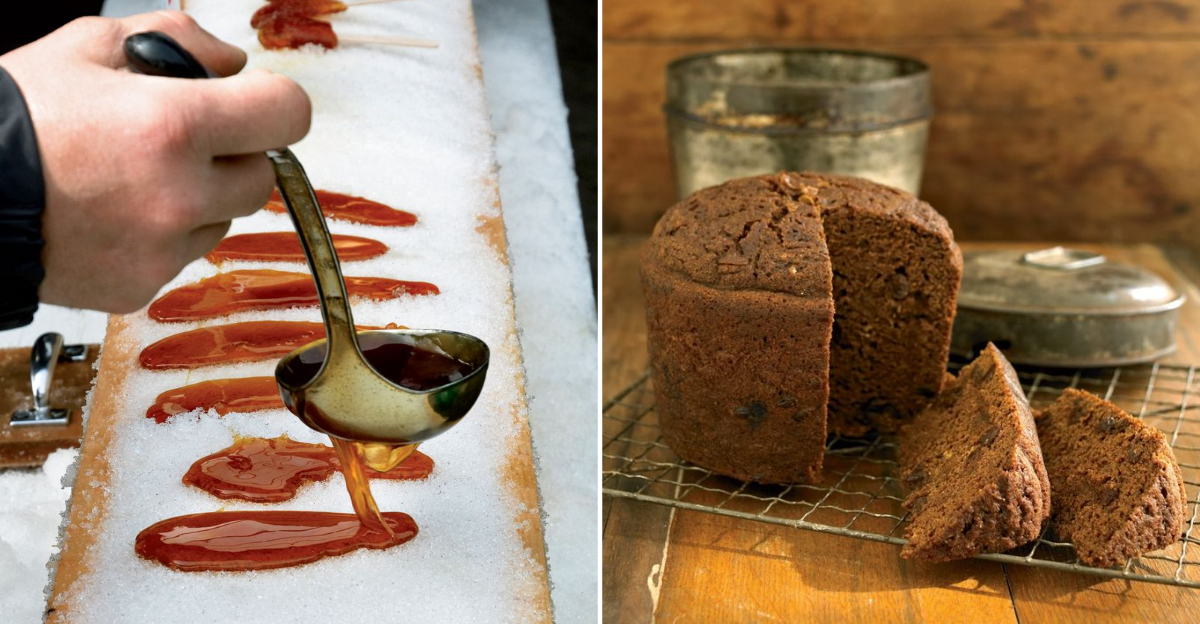
Hot maple syrup poured over fresh snow creates chewy ribbons of candy that you roll onto wooden sticks. This old-time treat appears at sugar shacks during maple sugaring season in late winter.
The syrup hardens just enough on the cold snow to become taffy-like without crystallizing.
Traditional sugar-on-snow parties include sour pickles and plain donuts to cut the sweetness. The contrast helps your palate reset between bites. Kids and adults alike line up for this simple but magical combination.
The first time I tried it, I understood why Vermonters wait all year for sugaring season. Nothing else tastes quite like maple syrup transformed by snow into something completely new.
6. Boiled Dinner
This one-pot meal of corned beef, cabbage, potatoes, carrots, and turnips might sound plain, but it represents Vermont comfort food at its finest.
Families have been making this dish for generations, especially during cold months. Everything cooks together in one pot, letting the flavors meld into something greater than the sum of its parts.
The key is cooking it low and slow until the meat falls apart. Vermonters often serve it with horseradish or mustard on the side. Leftovers get turned into red flannel hash the next morning.
My grandmother used to make this every Sunday, and the smell still brings me right back to her kitchen table.
7. Maple Syrup Grades
Locals can tell you the difference between Golden Delicate and Very Dark Strong maple syrup without even tasting them.
The grading system changed a few years ago, but serious maple fans know exactly which grade works best for each purpose. Golden works for delicate dishes, while Very Dark brings robust flavor to baking and glazes.
Each grade comes from different points in the sugaring season. Early-season sap produces lighter, more delicate syrup. Later-season sap creates darker, more mineral-rich versions.
I keep three different grades in my pantry because using the right one really does make a difference in how your food tastes.
8. Venison and Game Meats
Hunting season fills Vermont freezers with venison, and locals know dozens of ways to prepare it properly. The lean meat requires different cooking techniques than beef to avoid toughness.
Slow-roasted venison shoulder, grilled backstrap, and venison sausage all appear regularly on Vermont dinner tables.
Many families have been hunting the same land for generations. Wild game tastes completely different from farm-raised meat because of the animal’s natural diet. The flavor is richer and more complex.
My coworker brings in venison jerky he makes himself, and it tastes better than any store-bought version I have ever tried.
The meat connects people to the land in a way that grocery store protein never could.
9. Diner-Style Poutine
Vermont sits right next to Quebec, so poutine found its way into local diners decades ago. French fries get topped with fresh cheese curds and smothered in hot gravy.
The curds should squeak when you bite them, which means they are fresh enough to be worth eating.
Every diner makes gravy slightly differently, and locals have strong opinions about which place does it best. Some use beef gravy, others prefer chicken or vegetarian versions. The fries need to be crispy enough to hold up under all that topping.
I judged poutine harshly before trying the real thing at a tiny diner in St. Johnsbury. Now I understand why people drive miles out of their way for the good stuff.
10. Switchel
This old-fashioned drink combines water, apple cider vinegar, ginger, and maple syrup to create a tangy, refreshing beverage.
Farmers used to drink it while haying because it replenishes electrolytes better than plain water. The ginger settles your stomach, and the vinegar quenches thirst in a unique way.
Modern Vermonters have rediscovered switchel as a healthy alternative to sports drinks. Some people add lemon or adjust the sweetness to their preference. It tastes strange at first if you expect something sweet, but the complex flavor grows on you.
I started making batches to bring to summer work parties, and now people specifically request it. The recipe is simple, but getting the proportions right takes practice.
11. Johnnycakes
Cornmeal pancakes called johnnycakes have been a Vermont staple since colonial times. These flat cakes cook up crispy on the edges and tender in the middle.
The cornmeal gives them a slightly grainy texture and sweet corn flavor that wheat pancakes lack completely.
Traditional recipes use stone-ground cornmeal, milk, and just a touch of sweetener.
Some people add eggs, others keep them simple. They pair perfectly with maple syrup or eat them alongside savory dishes like beans.
I learned to make these from a cookbook published in 1890, and the recipe still works perfectly today. They connect you to Vermont food history in a tangible, delicious way that feels almost sacred.
12. Pickled Everything
Vermont winters are long, so locals pickle everything they can get their hands on during the growing season. Pickled beans, beets, cucumbers, fiddleheads, and even ramps fill pantry shelves.
Each family has secret recipes passed down through generations. The vinegar brine preserves vegetables while adding tangy flavor that brightens up winter meals.
Farmers markets sell dozens of varieties made by local producers. Some pickles are sweet, others are dilly, and some pack serious heat. Opening a jar in January brings back memories of summer gardens.
My basement shelves now hold 30 jars of various pickles, and I feel like a true Vermonter every time I add another batch.
13. Brown Bread
Steamed brown bread made with molasses, rye flour, and cornmeal used to appear at every Vermont supper table.
This dense, slightly sweet bread gets cooked in a can set in boiling water rather than baked. The molasses gives it a deep, rich flavor and dark color.
Locals slice it thick and serve it with baked beans or cream cheese. The texture is moist and heavy, nothing like regular bread. Some recipes add raisins for extra sweetness.
I found my great-aunt’s recipe card tucked in an old cookbook, and making it felt like bringing a piece of Vermont history back to life. The bread tastes exactly like she described in her notes.